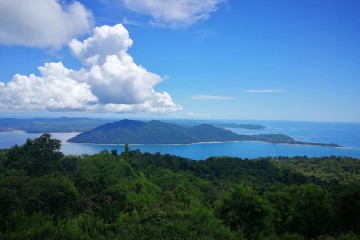
8 days
Madagascar's Northern Highlights
Unveil the natural wonders of northern Madagascar. From the verdant Montagne d'Ambre and dramatic Ankarana to the enchanting tropical isle Nosy Be.
Madagascar might be famous for lemurs and baobabs, but its coasts deserve equal acclaim. With clear warm seas and reef-fringed islands, the northern hub of Nosy Be makes for one of the most rewarding beach extensions with the best snorkelling in the country. Its proximity to Africa's coast also makes it an easy add-on to African safaris.
Our guide helps you choose the right coast to explore, whether you wish to snorkel with whale sharks and turtles, sail by traditional pirogue at sunset, or simply lounge on a remote, impossibly idyllic sandbar.
In this guide:
Madagascar’s coastlines at a glance
Best time for Madagascar’s beaches
The best beaches around Nosy Be
Diving and snorkelling in Madagascar
Other water-based activities in Madagascar
Where and when can you swim with whale sharks in Madagascar?
Where and when can you see humpback whales in Madagascar?
How to plan a coastal stay in Madagascar
Madagascar is the fourth-largest island on earth, with a coastline that stretches around 4,800 kilometres. Each of its coastal regions offers a different kind of seaside escape which is the reason it works particularly well as a relaxing finale after a wildlife tour through northern Madagascar or a longer journey across the mainland. No matter what kind of beach escapade you’re after, be it very active or relaxing, or a mix of both, you’ll find your ideal beach here.
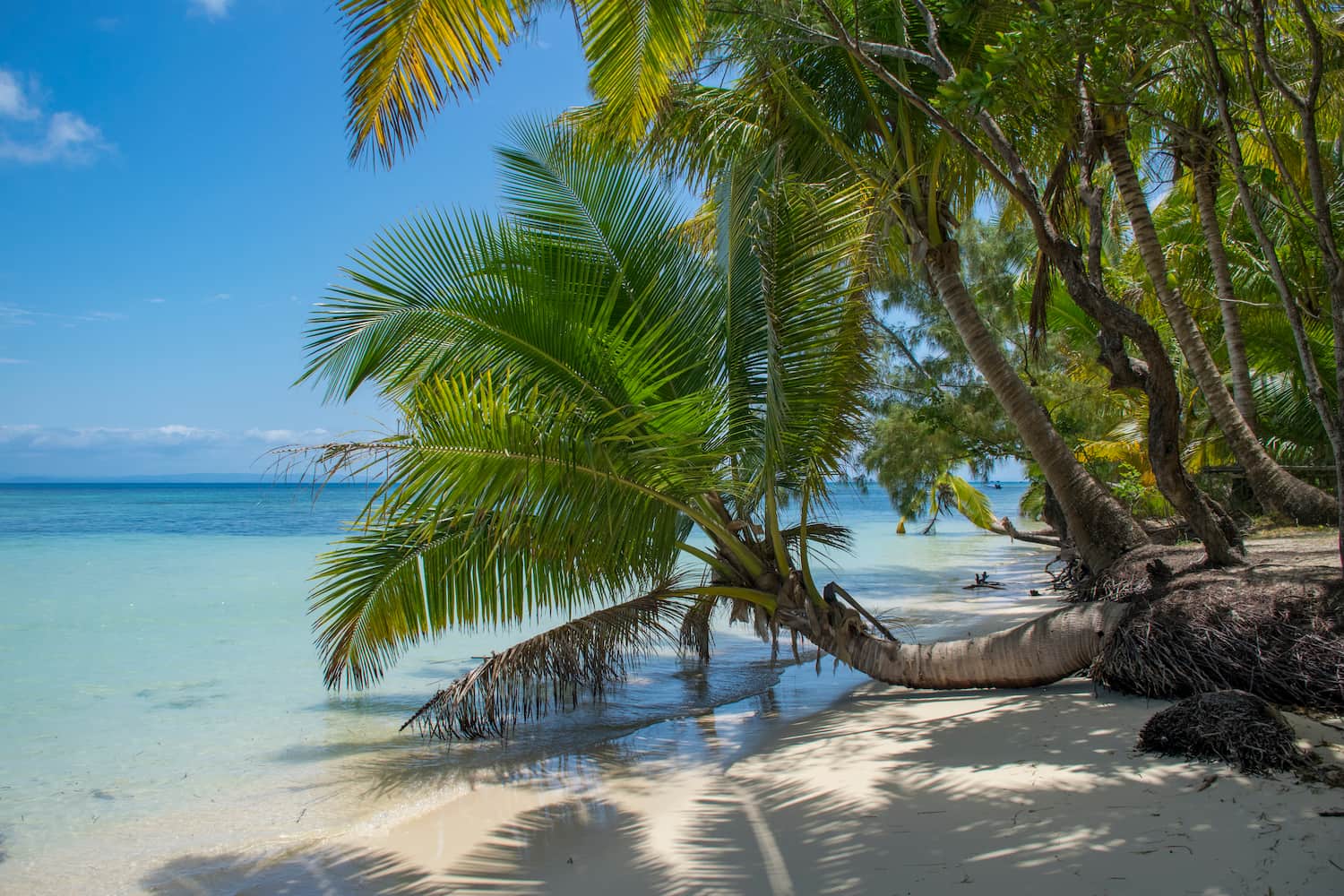
Most travellers gravitate to the island’s north-west along the Mozambique Channel, home to the world-famous Nosy Be archipelago and the most established infrastructure anywhere on the coast. This pocket of paradise offers the perfect Madagascar beach holiday combination of warm and calm seas, island-hopping excursions, fantastic snorkelling and diving, great flight connections and the broadest range of dining and accommodation options, from simple beach lodges to 5* luxury resorts.
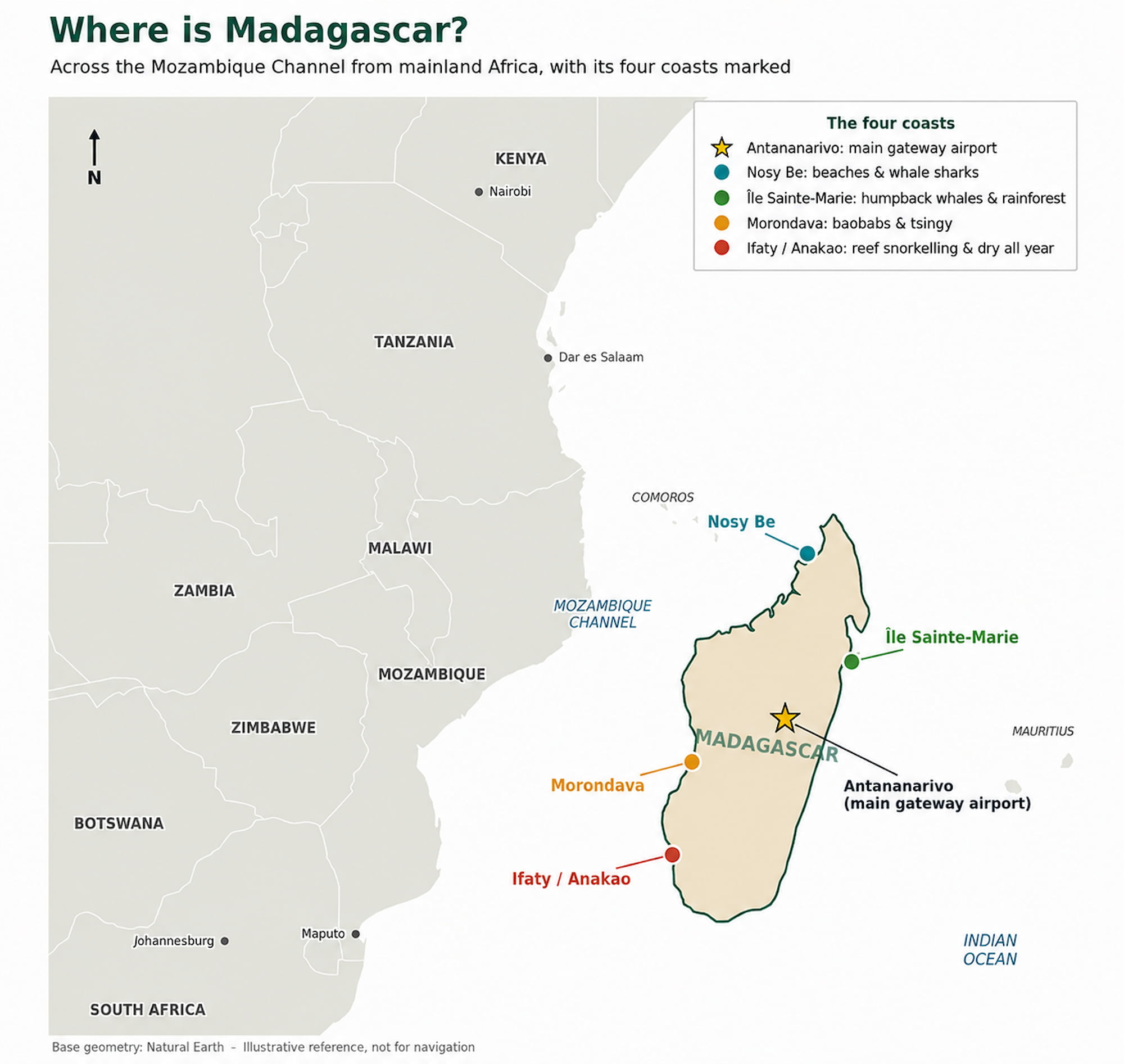
Madagascar’s Four Coasts Guide Map
Here’s a quick look at the coastlines of Madagascar and what each side has to offer.
| Coast and best base | What's it all about | Good for... |
|---|---|---|
|
North / north-west, Nosy Be |
A tropical island-holiday region with calm bays, clear water and Madagascar's most established beach infrastructure |
Beaches, snorkelling and diving, whale sharks and easy logistics |
|
East, Île Sainte-Marie |
Lush, green and more exposed to the Indian Ocean, with a distinctly slower pace |
Humpback whale watching and rainforest escapes away from the crowds |
|
West, Morondava |
Dry, open and beautiful at sunset, better known for the landscapes just inland |
Baobabs and Tsingy, with calm channel sunsets |
|
South / south-west, Ifaty or Anakao |
The arid and windy coast fringed by a 450km-long barrier reef. Isolated and remote, so expect long drives and basic services |
Reef snorkelling and diving, traditional Vezo culture villages. Attracts intrepid and experienced kite surfers looking for real adventure |
At Viva Expeditions, we often build beach extensions around Nosy Be because we think the islands just off its shores offer the best snorkelling in Madagascar, but we can also add coastal stays to itineraries through the west and south-west. Our Best of the West tour passes near Morondava, while our Classic Madagascar itinerary) can easily be tailored with a beach add-on.
Our Madagascar experts at Viva Expeditions recommend September and October as good overlap months if you want a trip that combines national parks, lemurs and baobabs with a Nosy Be whale-shark beach extension.
Madagascar has two quite distinct seasons, wet and dry. The wettest months are at the beginning of the year (Jan-March) when cyclones can affect northern and eastern Madagascar and their related boat-based activities. Planning your trip between May and December is best and, within that period, the ideal time to visit will depend on what it is you want to do on the coast.
| Experience | Where | When |
|---|---|---|
|
Beach time, snorkelling, island-hopping |
Nosy Be archipelago |
Generally May – October for drier and calmer conditions |
|
Swim with whale sharks |
Nosy Be |
From September to December, peak in Oct and Nov |
|
Humpback whale watching |
Sainte-Marie Island |
From around mid-June to late September (and even early Oct) |
|
Diving & longer offshore excursions |
Nosy Be, Mitsio, Radama Islands |
Highly dependent on site and experience |
Since Nosy Be is the most popular option, we thought we’d concentrate our recommendations on this region, first and foremost. If you want a beach stay with every service and activity nearby, it’s the perfect base.
Best for: Relaxed beach days, swimming and sunsets
On Nosy Be’s north-west tip, Andilana is a beautiful half-moon bay with brilliant white sand and calm turquoise water. The beach is home to several established resorts, so it is not a secluded hideaway as such, but with that comes easy access to dining and activities. Plus, the long, wide curve of sand can feel more spacious than the smaller, busier beaches farther south.
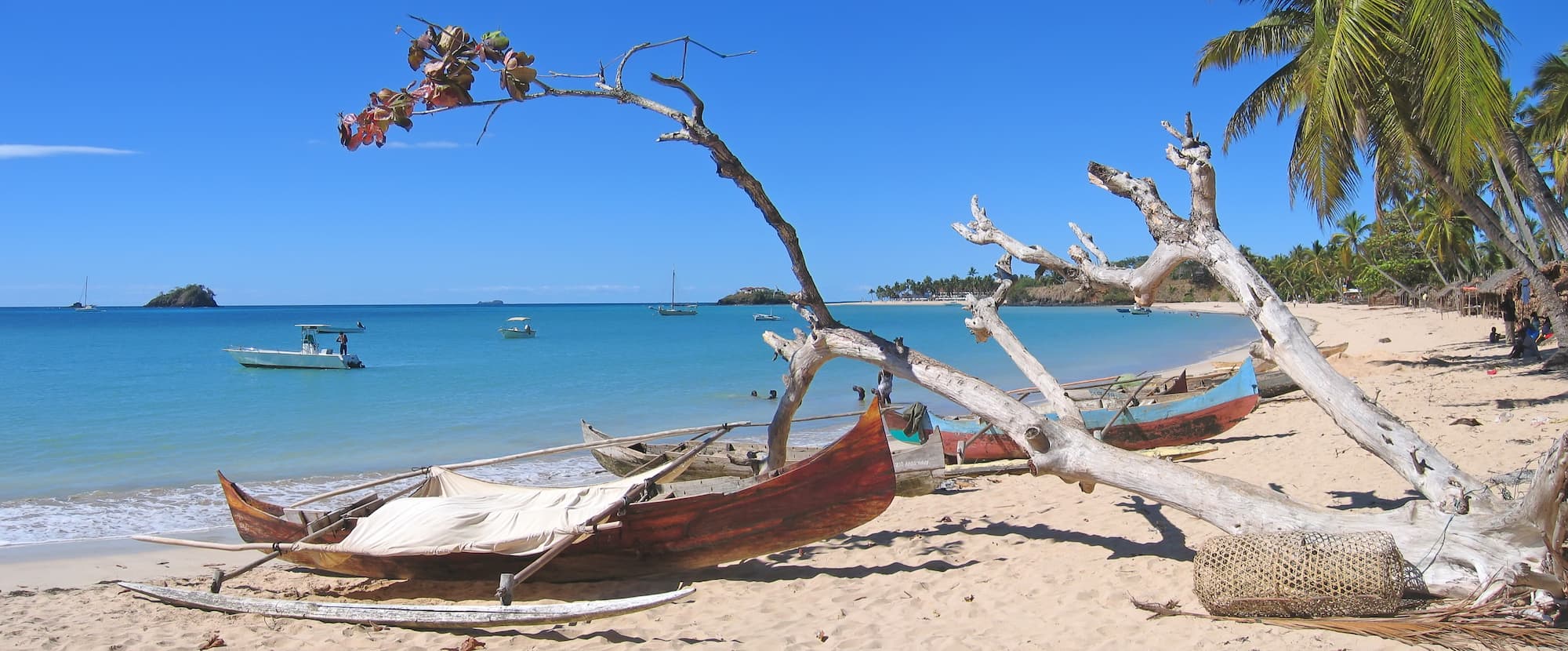
If you’re looking to add a few easy and relaxing beach days to your Madagascar tour, with excellent swimming and kayaking (and spectacular sunsets), Andilana is an obvious pick.
Best for: Restaurants, nightlife and easy access to boat trips
On the south-west coast and Madirokely and Ambatoloaka, which offer a much livelier beach scene. Ambatoloaka is the island’s main evening hub, with the greatest concentration of beach bars, casual restaurants, live music and late-night venues. Neighbouring Madirokely offers a slightly quieter place to stay, but still close enough to the action.
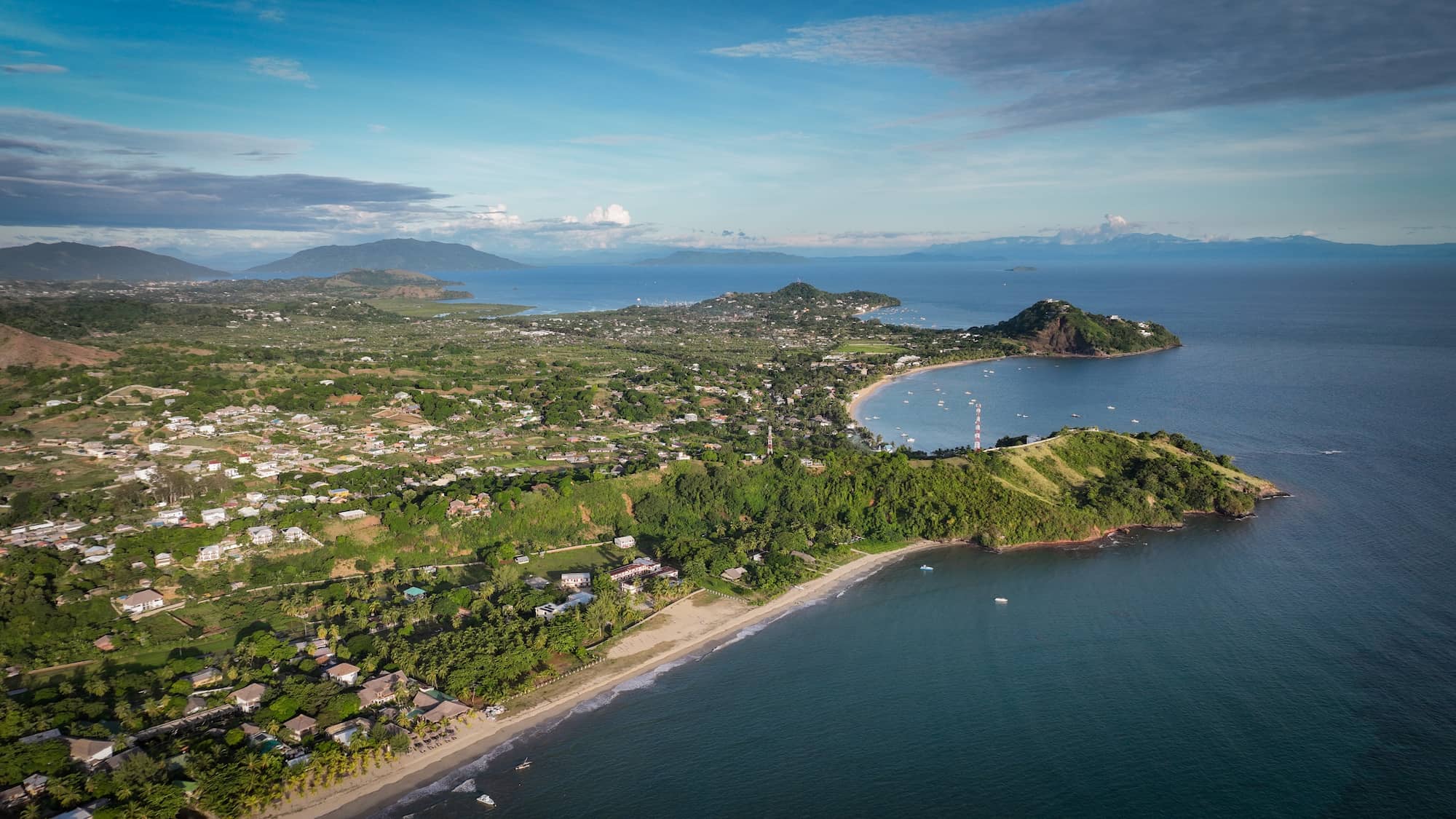
Bustling Ambatoalaka is perfect if you want an idyllic beach and a bit of nightlife in one spot.
Best for: A castaway-style island day trip and iconic sandbar views
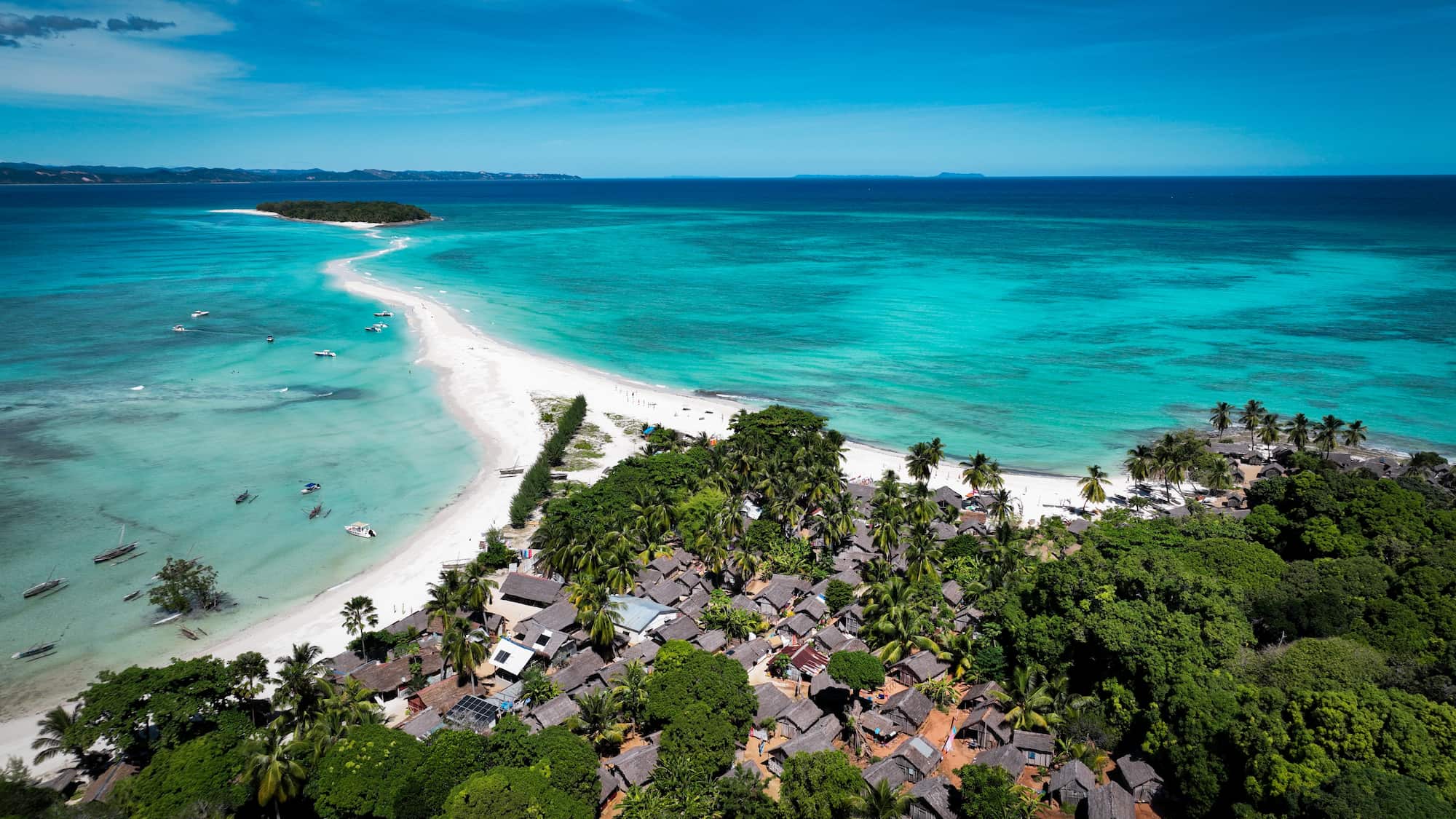
Nosy Iranja is made up of two small islands joined by a spectacular white sandbar that appears at low tide. The boat crossing usually takes around 1.5 to 2 hours, depending on your departure point, vessel choice and sea conditions. Most visitors arrive on organised guided excursions, but if you opt for an earlier private transfer, you can arrive before the main group boats and enjoy the sandbar in relative peace.
Madagascar is famous in diving circles for offering some of the most extraordinary multi-day live-aboard experiences in Africa, yet more accessible reefs, perfect for snorkelling and occasional diving, are found on the islands around Nosy Be. What makes this base stand out is the sheer convenience of brilliant sites and the fact that protected bays abound. Visibility is fantastic during the drier months and you don’t need much experience to see all the really good stuff. Many reefs and mangroves are in shallow water and some can be reached straight from the beach.
If your idea of a great day at the beach involves fins and a snorkel, you’ll love it. Here are a few of the best beaches in Madagascar our guests rave about.
Best for: classic reef snorkelling, suitable for first-timers
Often described as a real-life aquarium, Tanikely is a 20-minute boat ride from Nosy Be and boasts exquisite coral which begins close to the shore and is inhabited by clouds of reef fish (including the endemic Madagascar clownfish), sea turtles and schools of barracuda. Divers do get to spot more rays and moray eels, but even the shallows boast fantastic marine life.
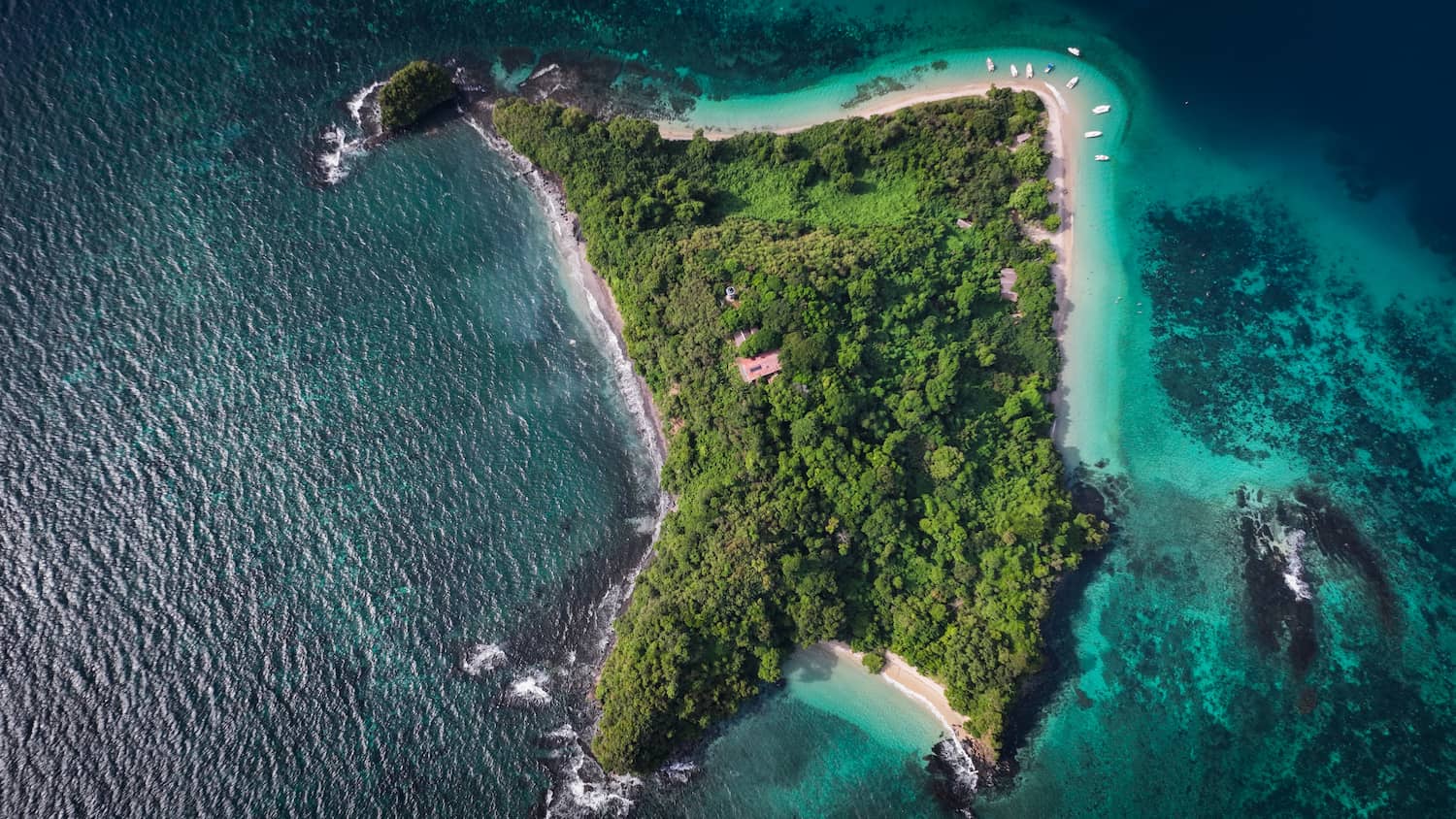
Nosy Tanikely has a small beach and a picturesque lighthouse walk for when you want to dry off.
"The snorkelling around Nosy Tanikely can catch you off guard. You slip off the boat and there are turtles right there, with more fish than you can take in. It was the easiest wildlife to spot of my whole trip."
- Tracy Davidson, Viva Expeditions Destination Specialist.
Best for: snorkelling with green sea turtles in shallow water
If you want a near-guaranteed swim with green sea turtles, then Sakatia, known locally as Turtle Island, is the beach you’ll want to add to your itinerary. The gentle sea giants feed on the seagrass in the shallows just off the shore, so you can snorkel out to them right off the beach, always remembering to keep a respectful distance. Despite the fact that Sakatia is barely one kilometer from Nosy Be, crowds are still typically thinner here than at Tanikely.
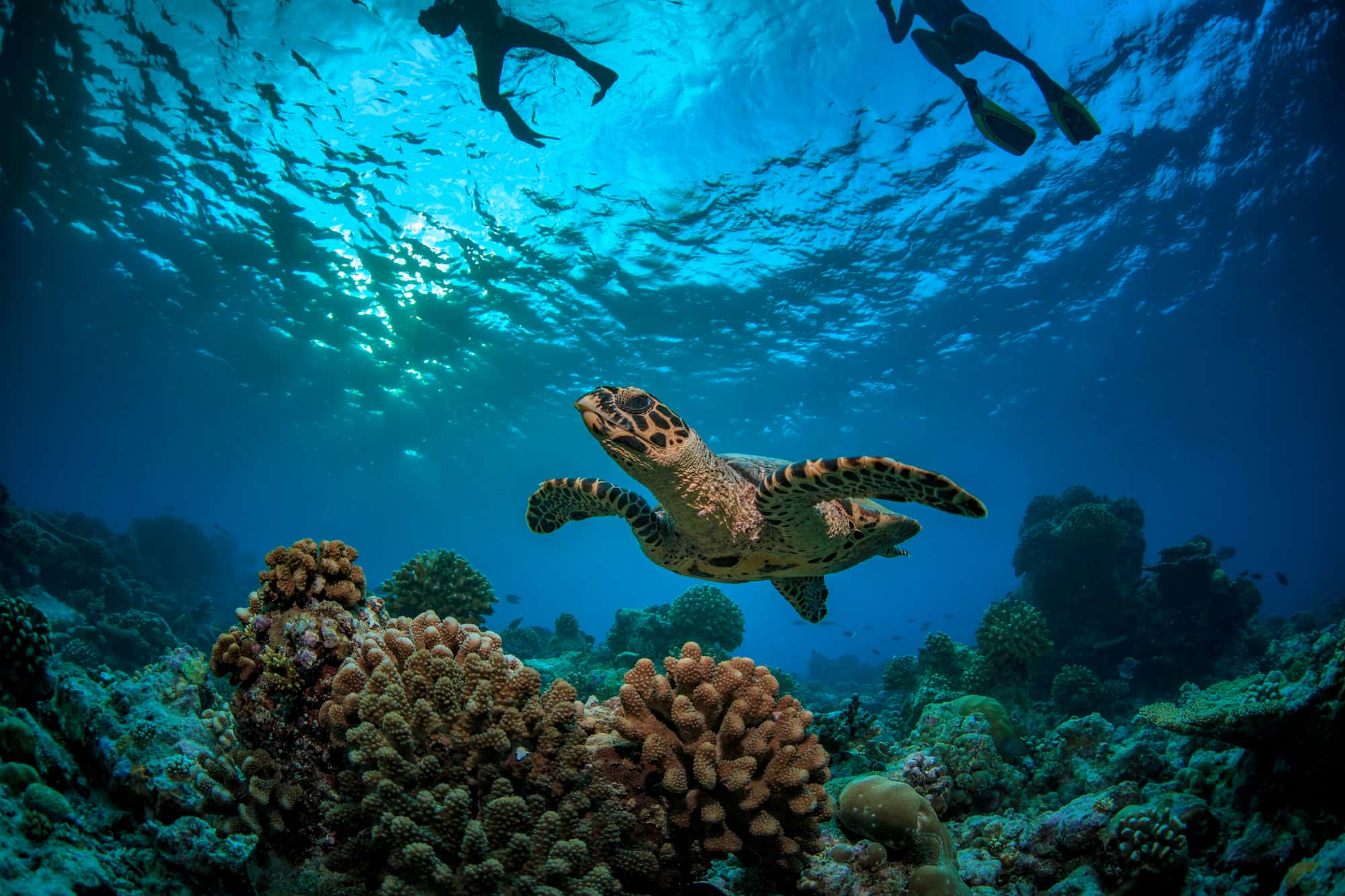
Fewer people, more turtles. That’s Nosy Sakatia in a nutshell.
Best for: a mix of snorkelling, lemur spotting and traditional village visits
Halfway between Nosy Be and Tanikely is Nosy Komba, easily added on a day trip with other islands though it offers more than enough to fill a full day. The cone-shaped volcanic island is famous for its black lemurs and the handmade crafts sold in picturesque coastal villages, but the offshore snorkelling is just as memorable. Perfect if you’re looking for a day trip that offers a variety of experiences.
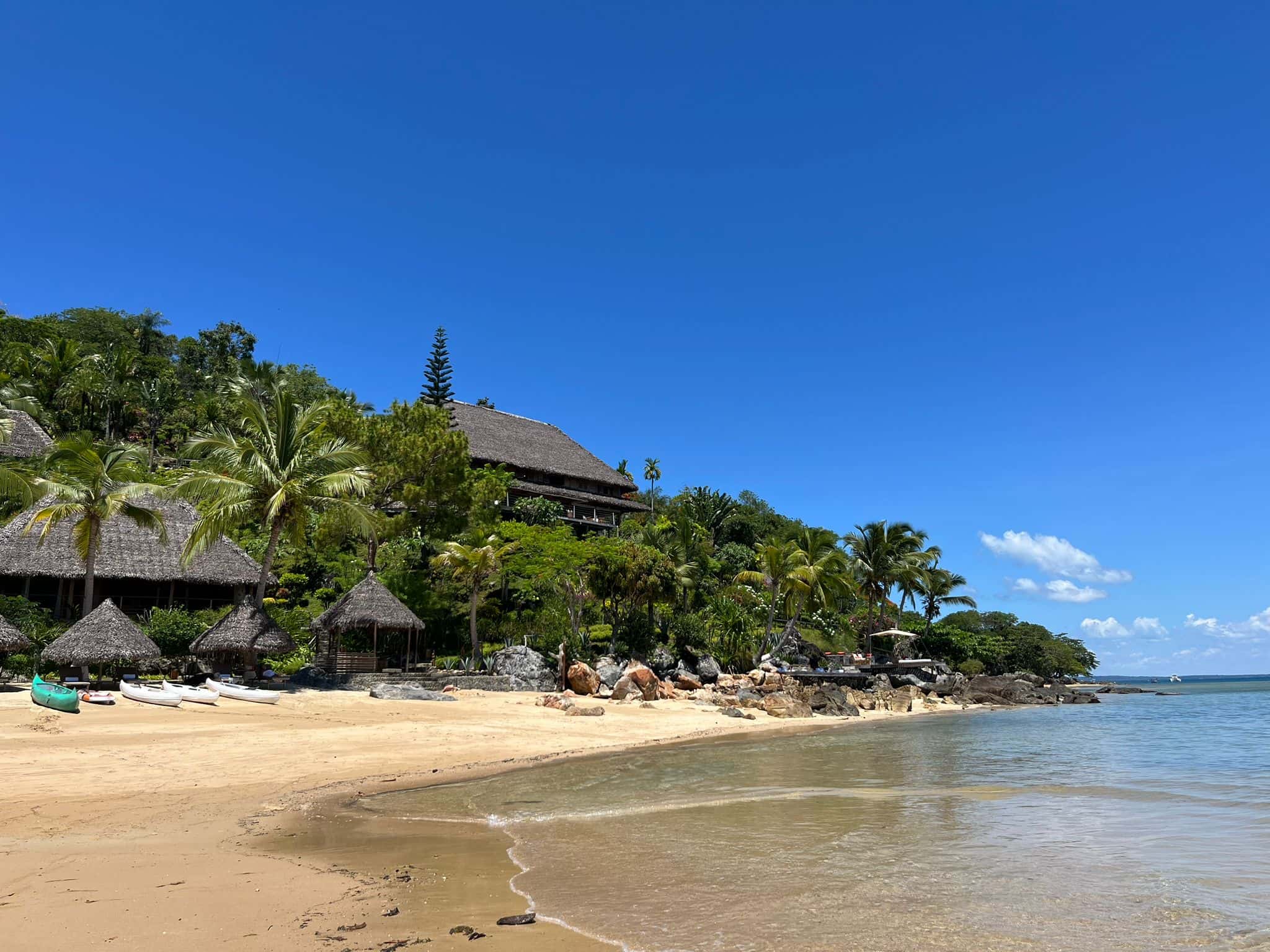
Nosy Komba is ideal for families and first-time visitors wanting a well-rounded day of Malagasy culture and nature.
Best for: remote reefs and multi-day liveaboard trips for experienced divers
The island clusters of Mitsio (to the north) and Radama (to the south) are home to remote and less-visited reefs, with striking underwater canyons and volcanic rock formations cloaked in vibrant gorgonians. These two world-class diving destinations are usually reached on longer excursions and liveaboard-style trips because it takes 2-5 hours to reach them by speed boat (one way). Divers usually plan around 4 days for each and more than a week when combining them.
Plan your diving trip for October and November if you wish to explore this off-shore region with the best weather conditions.
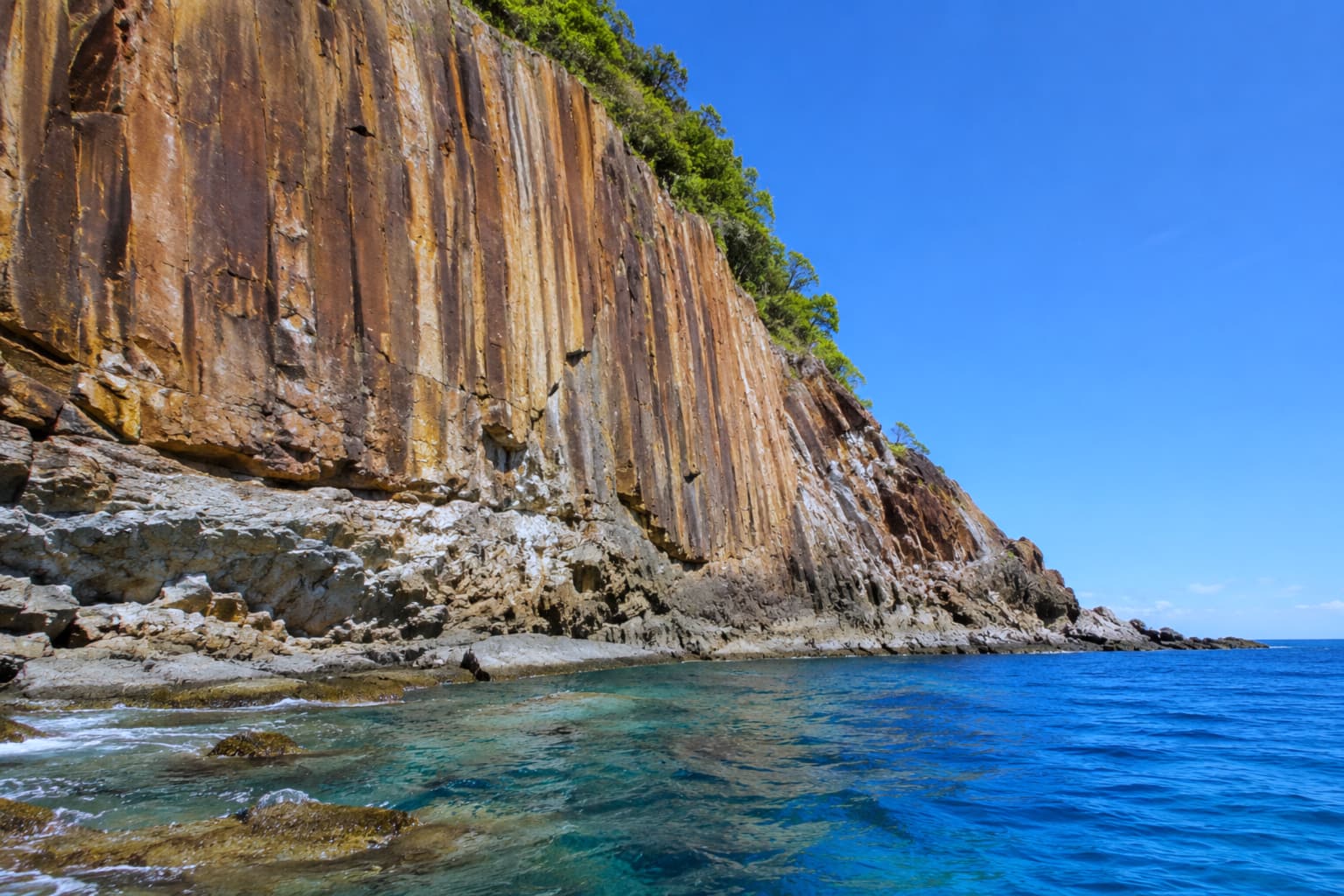
Madagascar’s outer islands are a destination all their own and usually visited on dedicated, multi-day diving trips.
Although you will have an amazing time diving and snorkelling in Madagascar, there are also plenty of other water activities that are every bit as fun.
Island-hopping day trips. Many boat excursions link two or even three islands in one day, with a lunch break in between and options for swimming and snorkelling.
Kayaking and paddleboarding. Most mid- and up-market lodges have boards and kayaks available for guests and can point you to the closest sheltered bays and mangrove channels.
Sunset sailing. Catamaran cruises and traditional pirogues make for a slow, breezy way to explore the archipelago in the coolest and most photogenic hours of the day. A brilliant option for families.
Kitesurfing. Steady trade winds in the north around Diego Suarez and the Emerald Sea are a kitesurfing mecca, and an easy add-on if you want wind as well as water.
Deep-sea fishing. Serious anglers know Madagascar is a world-class sport-fishing destination and many visit on dedicated charter trips. There is plenty to chase offshore, including Giant Trevally and grouper, king mackerel, dogtooth and yellowfin tuna, mahi-mahi, black marlin and many more, depending on the season.
Dolphin and whale watching. Dolphins show up sporadically in these waters year-round and often join boat trips of their own accord, while humpback whales pass through in the southern winter (more on them below).
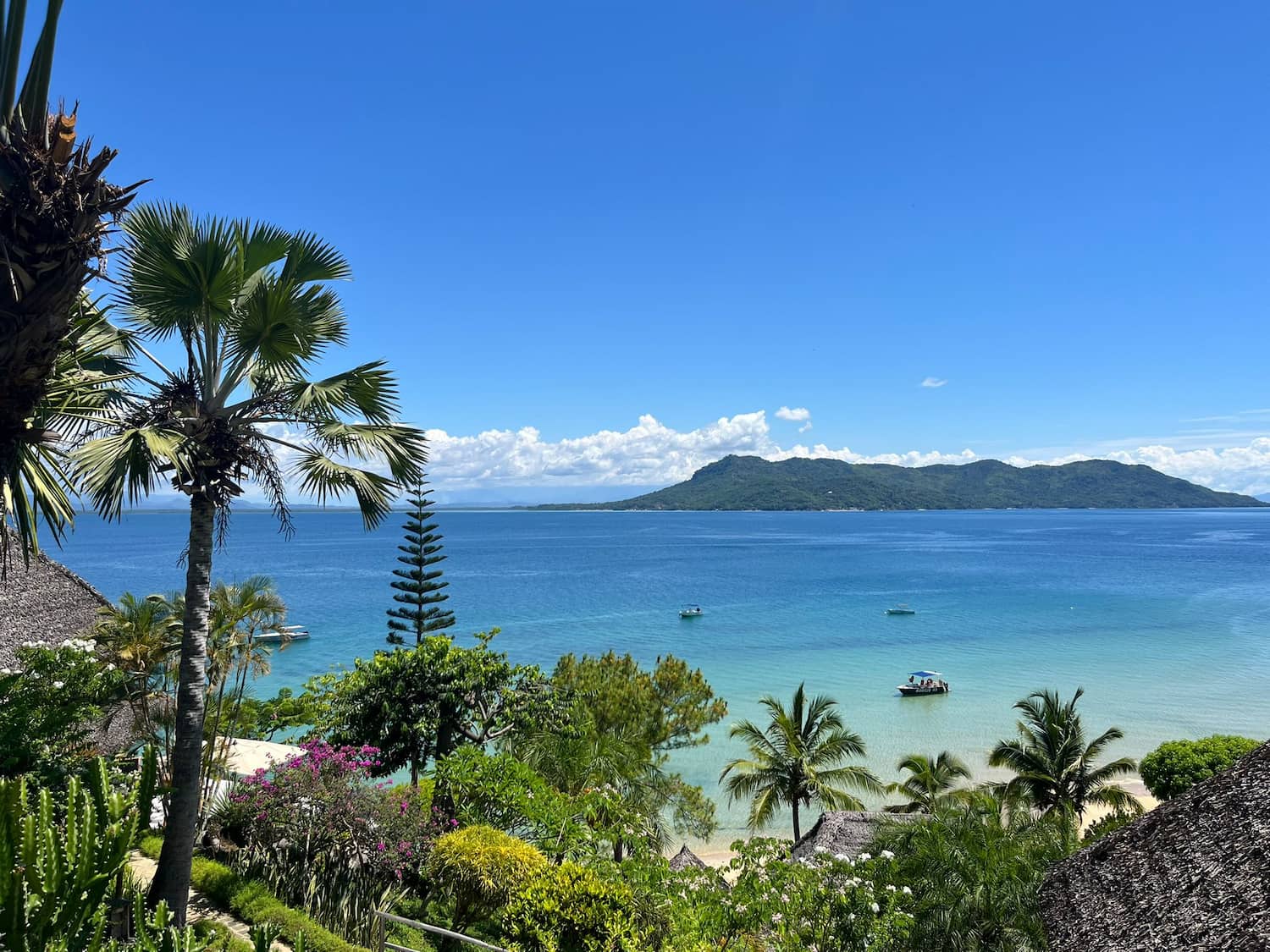
Island hopping and endless water adventures, all planned just for you. One itinerary, countless ways to explore Madagascar.
Madagascar offers two standout marine-wildlife experiences, but they take place in different regions and at different times of year. While whale sharks draw travellers to Nosy Be in the north-west, humpback whale watching tours are best around Île Sainte-Marie on the east coast.
The waters off Nosy Be are one of the more reliable places in the world to snorkel alongside whale sharks, the largest fish in the ocean and, we’re happy to report, also one of the most placid. The ones that gather here are mostly juveniles, drawn in by seasonal blooms of nourishing plankton.
The season runs from September to December, give or take a couple of weeks, with the best sightings in October and November, when the plankton is thickest. Whale sharks feed near the surface, so you snorkel alongside them while they slowly plod along. Dedicated snorkelling trips usually run in the morning and last three to four hours, in small boats with a guide who reads the water and positions you on the right path.
While you don’t need to be an experienced snorkeller to enjoy the experience, you should be comfortable doing so in open water. You’ll also need to be comfortable getting yourself in and out of a boat a few times, since you follow the animals as they move. If you’d rather just join a whale-watching boat trip, where snorkelling is not the main activity, those are offered as well.
"It’s almost impossible to describe what it feels like to float next to a whale shark. They are absolutely enormous but so gentle. They are totally unbothered by your presence nearby and simply continues feeding as you drift alongside them. It's a surreal and very, very memorable experience."
- Tracy Davidson, Viva Expeditions Destination Specialist.
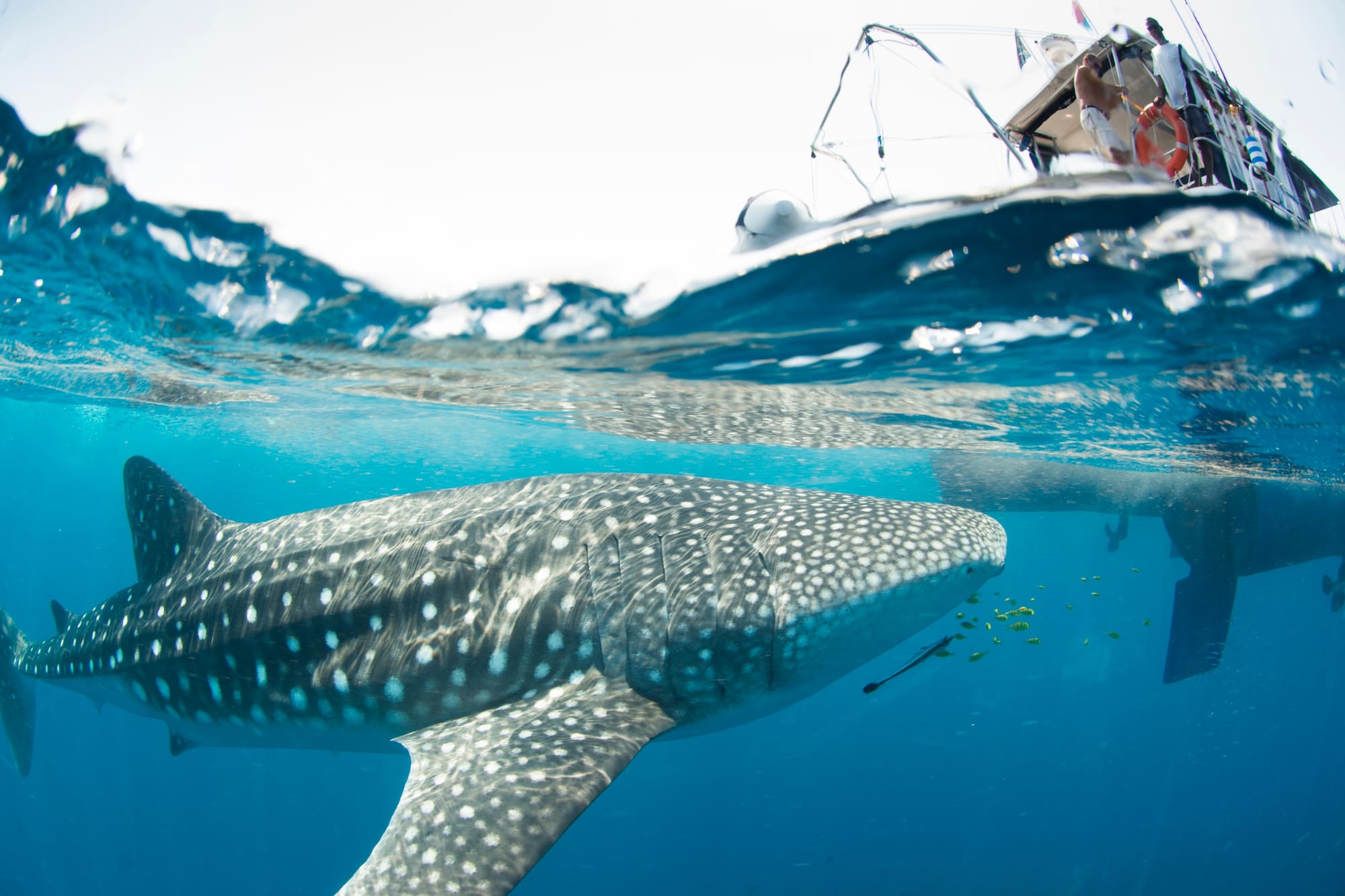
Strict rules apply on whale shark swims and they make for a much better encounter, since undisturbed sharks tend to hang around longer.
Viva Expeditions books whale shark excursions only with licensed operators who follow the strict national code, which is there to keep you and the animals safe and happy.
Each southern winter, humpback whales migrate from Antarctic feeding grounds to Madagascar's warmer waters to breed and calve. They pass through the channel around Nosy Be from around July to September, and even into October some years. A boat trip at any time during this period offers a good chance of spotting breaching whales and mothers with calves, although August is typically the peak month.
For the best chances of seeing humpbacks, though, the east coast holds the winning card. Around the same time, large pods of whales meander in the waters around Nosy Boraha, also known as Île Sainte-Marie.
Whale-watching is very much a boat-based activity in this case. Swimming with humpbacks is not permitted, and that is as it should be.
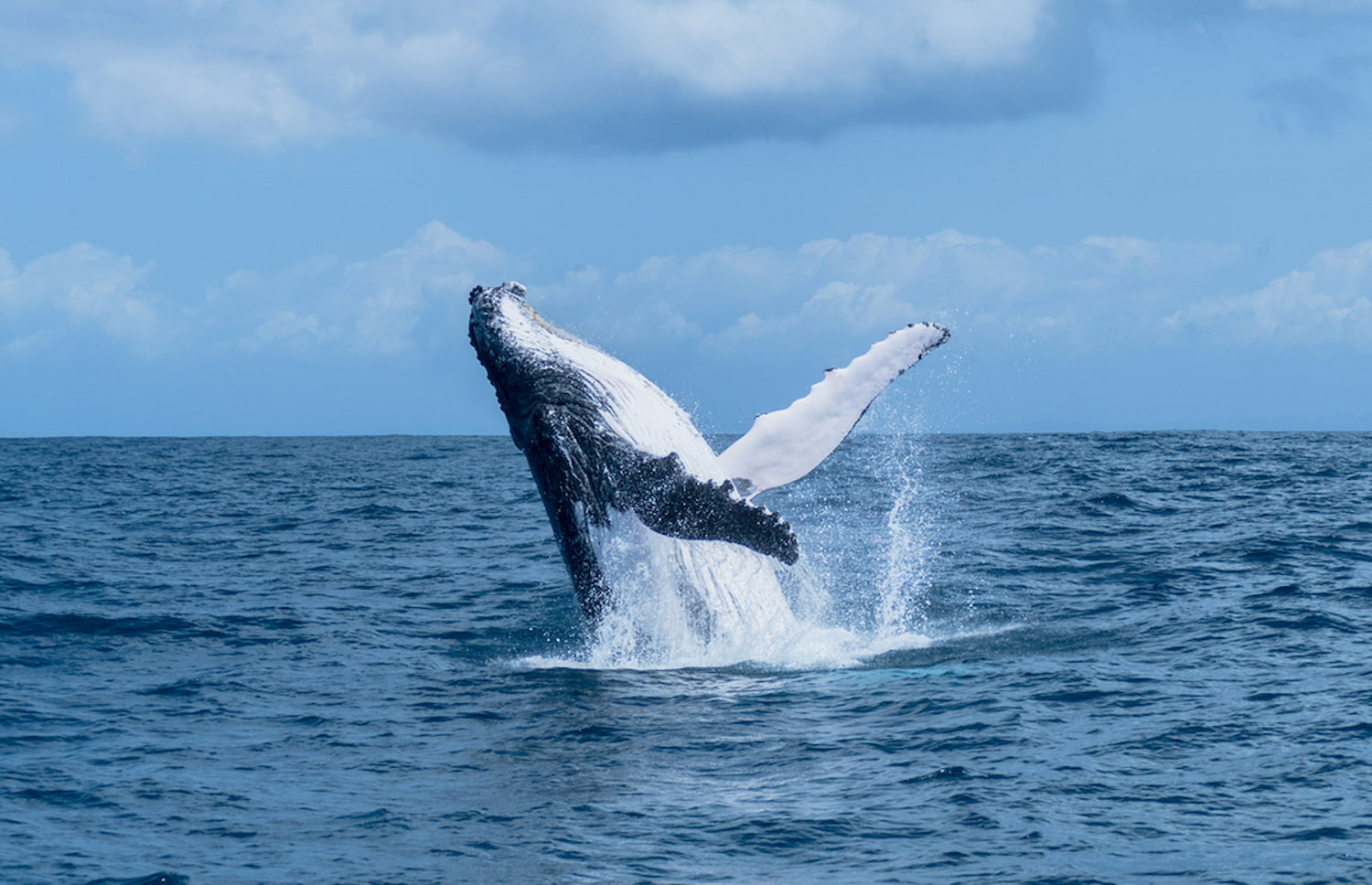
If you are ever lucky enough to see a 15-metre marine mammal launch itself clear of the water from a respectful distance, you might also feel that is more than close enough.
A few practical considerations will make your beach trip run smoothly. For a broader picture on health concerns, crime, cyclones and how to get around the mainland, our guide to whether Madagascar is safe to visit is a useful read.
Here, we'll stick to what matters most for the coast and the water.
How to reach Nosy Be. Most Madagascar itineraries start in the capital, Antananarivo, from where you can take a short domestic flight (60 min) to Nosy Be. If you are taking a tour itinerary through the island’s north, you might be close enough to reach the port of Ankify by road, from where you can cross to the island by speedboat (around 30 min).
When to go. The dry season, from around April to November, is the sweet spot for coast and beach trips in general, with calm, clear water and a very low chance of rain. Our best time to travel guide can help you fine-tune the timing depending on what you want to experience.
What to pack for the water. Bring a reef-safe sunscreen and a rash vest for longer snorkelling sessions, plus your own mask if you are fussy about fit or have a wonky head (real words from one of our guests!). Reef shoes help on rocky beach entries, and a dry bag keeps phones and cameras safe on boat days. When heading out on day trips to outer islands, ask what services, if any, are available at the destination, so you know what to take in your day pack.
Respect for the reef and the wildlife. Follow your guide’s recommendations which include not standing on or touching coral, keeping your distance from marine life, and skipping the flash when photographing animals in general, be it on land or underwater.
Book ahead. Whale shark operations in Madagascar are small-scale and boats are few, so excursions fill out fast. It is always infinitely easier to arrange an excursion before you arrive rather than having to chase last-minute availability once you are already there.
Bring sunscreen from home. Supply is limited and expensive in the capital, and hard to find elsewhere. Choose reef-friendly sunscreen lotions to be kind to the fragile marine ecosystem in Madagascar.
Get more tips on what to bring and how to plan your trip on our general Madagascar Travel Guide.
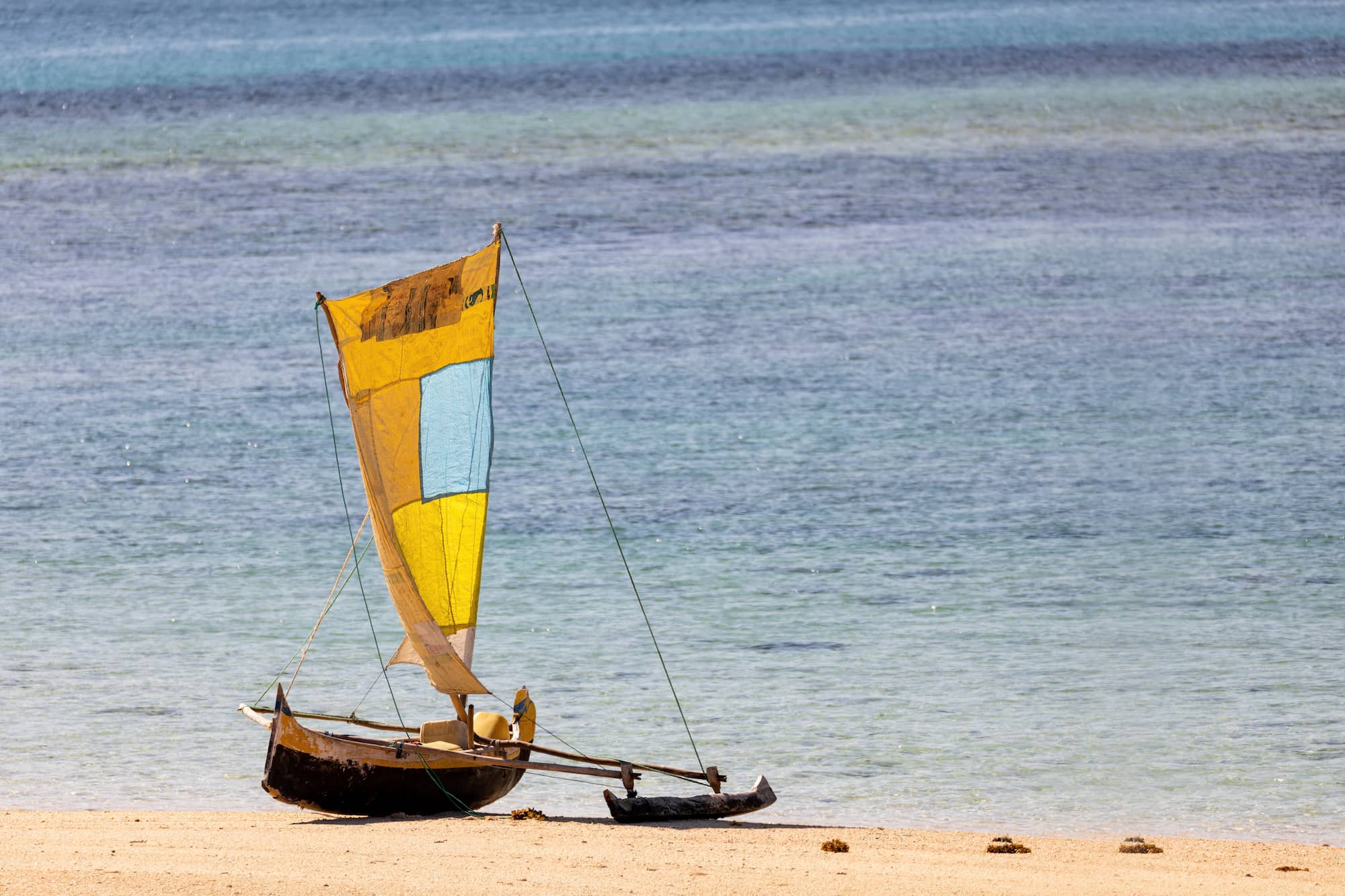
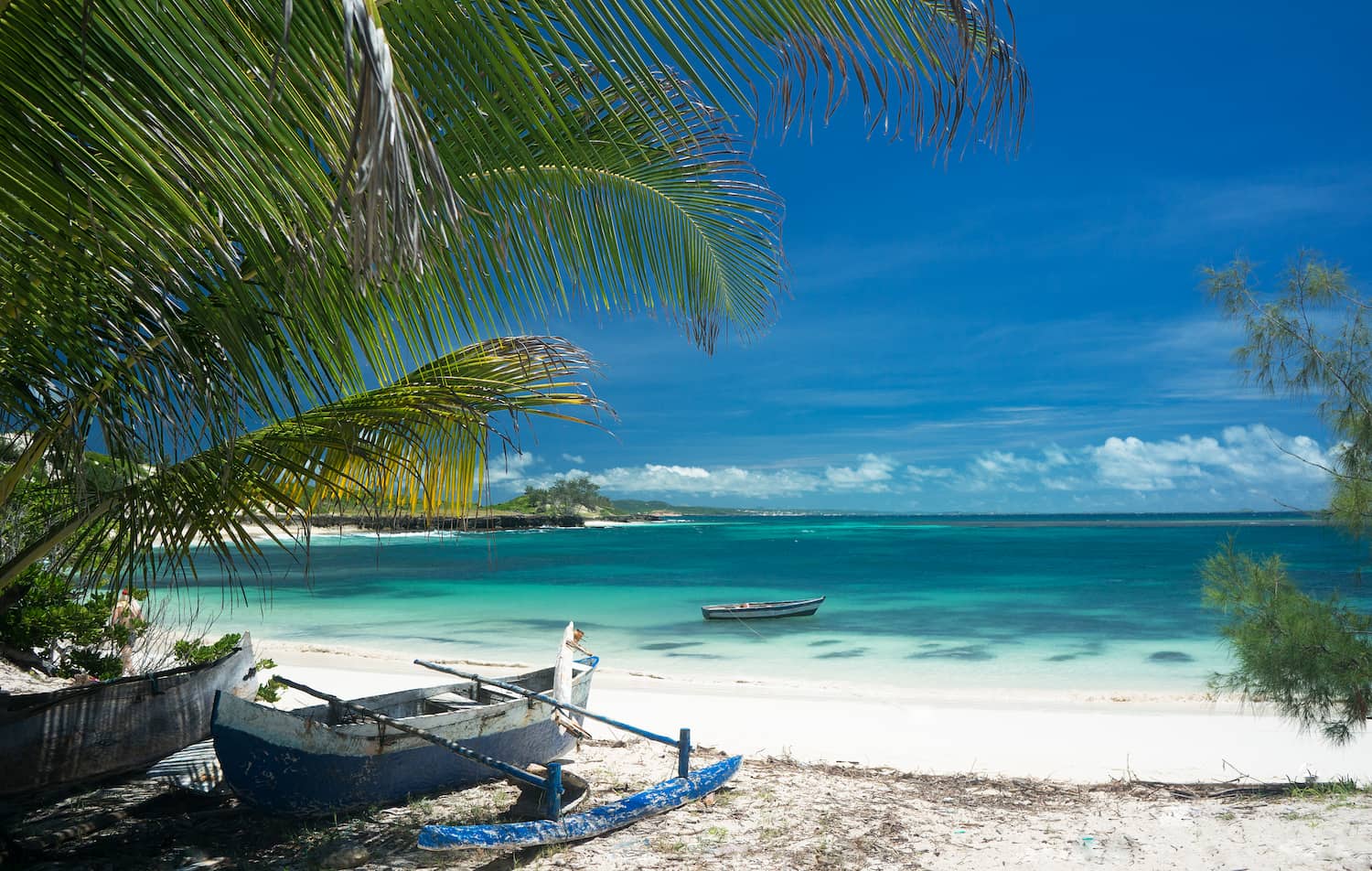
A tour on a traditional pirogue is a must-do on a beach stint in Madagascar.
Madagascar's coast is one of those places that shatters every expectation, the kind of place you come to see lemurs and end up raving about reefs and whale sharks. At Viva Expeditions, our Destination Specialists have built plenty of these trips, and we know how to line up the marine highlights with the right season and the right islands. Nosy Be also slots neatly onto our Madagascar's Northern Highlights tour if you want reefs and rainforest in one trip, and we can weave the coast into any of our Madagascar tours.
Get in touch and tell us all about your Madagascar beach dreams. We will take care of the rest.
Laura PattaraLaura Pattara has guided overland trips across Africa and now focuses her writing on the continent for Viva Expeditions. She once camped beneath a marula tree that an elephant tore apart during the night, yet somehow she still sleeps best in a tent. But make it glam! From sunrise balloon rides over the Serengeti to following the rhythms of wildlife migrations, Laura brings the wild heart of Africa to life with warmth, depth, and the occasional muddy boot. |
Unveil the natural wonders of northern Madagascar. From the verdant Montagne d'Ambre and dramatic Ankarana to the enchanting tropical isle Nosy Be.

Small Group Tours: Embark on an escorted small group tour to explore in a fun and exciting environment surrounded by like-minded travellers.
Uncover the wonders of Madagascar on an 18-day small group tour through vibrant cities, lush rainforests, and stunning coastlines.
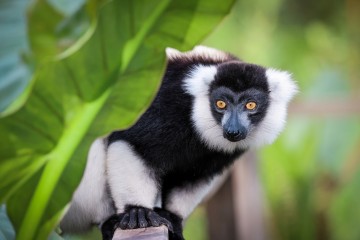
Discover Madagascar’s wild east with iconic lemurs, the peaceful Pangalanes Canal and tropical Sainte Marie Island.