Antarctica is the big star of the show, no doubt, but the cabin you pick can still make or break your trip. Learn what to ask before you book your berth to the south.
Choosing the right ship and itinerary for your expedition to Antarctica feels a little like winning a battle. Then you book and even more questions arise: which Antarctica cruise cabin type is best Is a balcony worth it in freezing conditions? Are suites worth the extra cost? Does it matter if your cabin is near the stairs, at the front or midship?
After years of combined expedition cruising, our team at Viva Expeditions agrees on one thing: the best Antarctica cruise cabin type depends on
1) the ship you have your heart set on,
2) the itinerary you have chosen, and
3) the kind of traveller you are.
In this guide, we'll compare all the options, so you know exactly what to expect (and what to ask) before booking. We’ll also share our Antarctica Specialists’ opinions on what they would consider paying more for, and where one could save if budget is a priority.
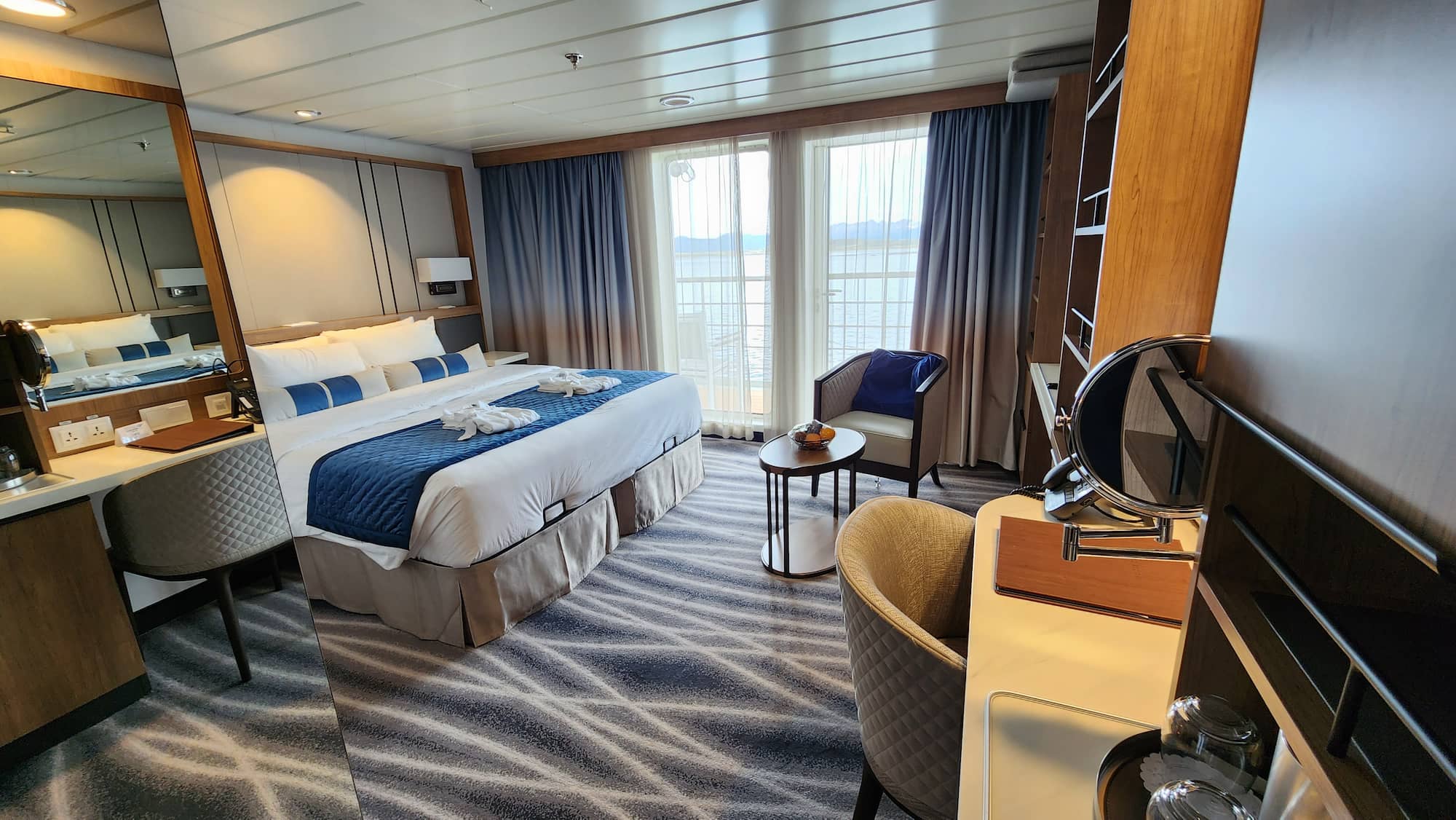
On an expedition cruise, your cabin is your basecamp. When choosing, consider the length of the trip and how many full days at sea are included in your itinerary.
In this guide:
What cabin types are available on Antarctica cruises?
Are balcony cabins worth the money in Antarctica?
Are suites worth the money on an Antarctica cruise?
What to expect inside your cabin
What is worth spending more on, for you?
Where on the ship should your cabin be?
What is it like sharing a cabin, or travelling solo?
Which Antarctica cruise cabin is right for you?
What cabin types are available on Antarctica cruises?
Antarctica cruise cabin types are not standardised across ships. Even when two vessels use the same name (such as Junior Suite), cabins can differ significantly in size, layout, amenities and location.
Generally, older ships (including many converted research vessels like the MV Ushuaia) tend to offer more porthole or picture-window cabins because they were originally designed for work, not pleasure cruising. Newer, purpose-built expedition ships typically offer a wider choice, including French (Juliet) balconies, full balconies, dedicated solo cabins and larger suites.
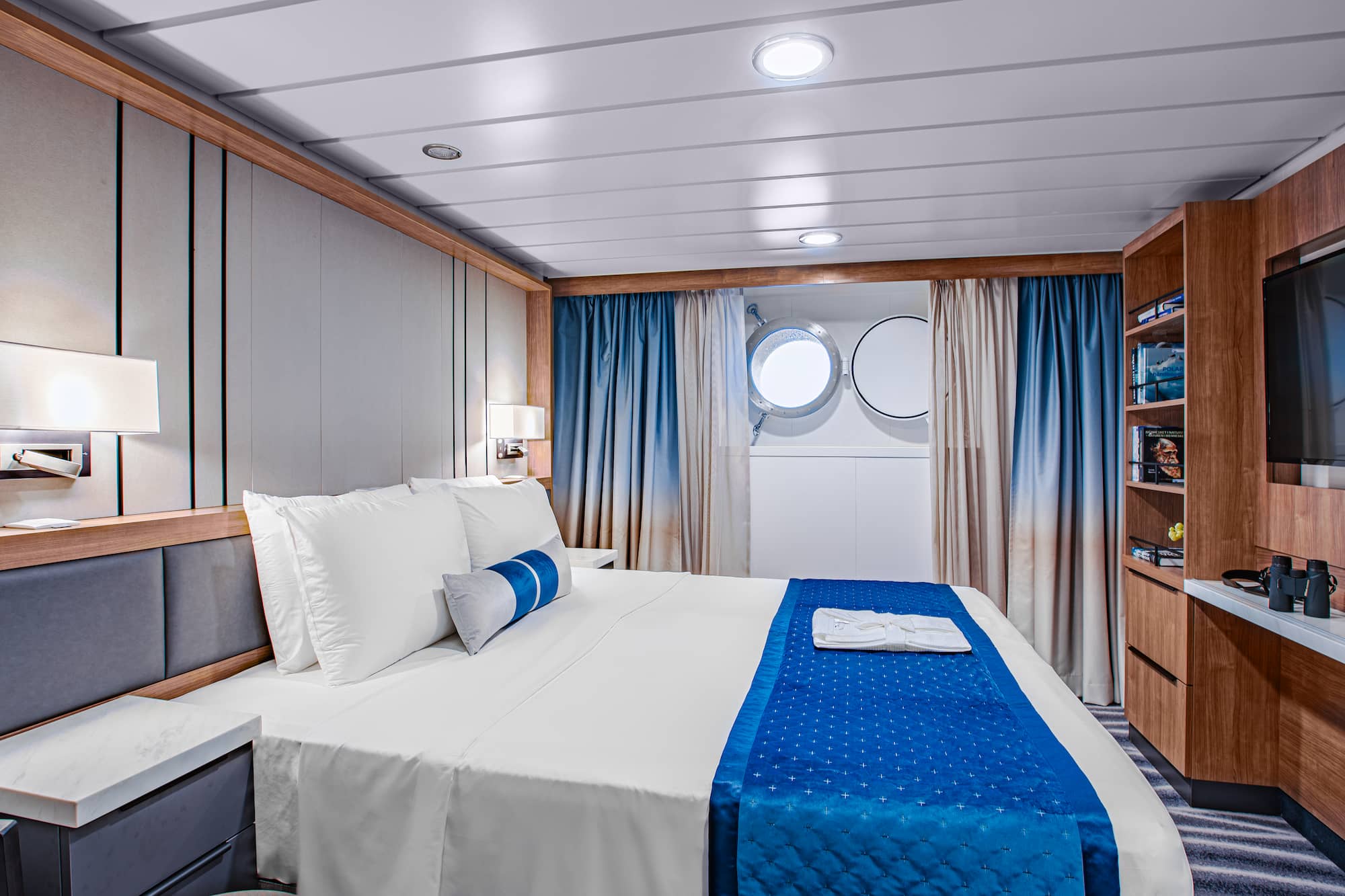
Porthole cabins are common on older ships and are often the most budget-friendly option.
On the newer sister-ships Ocean Albatros and Ocean Victory, there are 90+ staterooms in 9–10 categories spread across several decks. These vessels were built for tourism, with almost every cabin offering an ocean view and most a private balcony. Lower decks house singles and doubles with fixed portholes, close to the mudroom (where you change into your landing gear) and the Zodiac boarding area. The most common cabin is the mid-category balcony, simply because that’s what most people prefer.
There are always small differences between ships of similar category and luxury (the Albatros, for example, has a panoramic window sauna that the Victory doesn’t), but both offer solo cabins with no single supplement and a similar level of comfort.
Because cabin categories vary so much between ships, we recommend choosing your itinerary and vessel first, then comparing that ship’s specific cabin types.
|
Cabin type
|
What you usually get
|
Best for
|
|
Porthole or window
|
A sea view from inside, no outdoor access, usually on lower decks
|
Travellers on a tighter budget, or those who plan to be out on deck or common areas most of the day
|
|
French (Juliet) balcony
|
A floor-to-ceiling window that opens for fresh air, but no step-out space
|
A great middle ground: fresh air without paying for a balcony
|
|
Full balcony
|
A private step-out space with room for a small table and a chair or two
|
Anyone who values a private view and a quiet moment off the shared decks, out in the fresh air
|
|
Suite
|
The most spacious, often with a separate lounge area and premium amenities. May or may not include a balcony
|
Travellers who want extra comfort, or families needing space
|
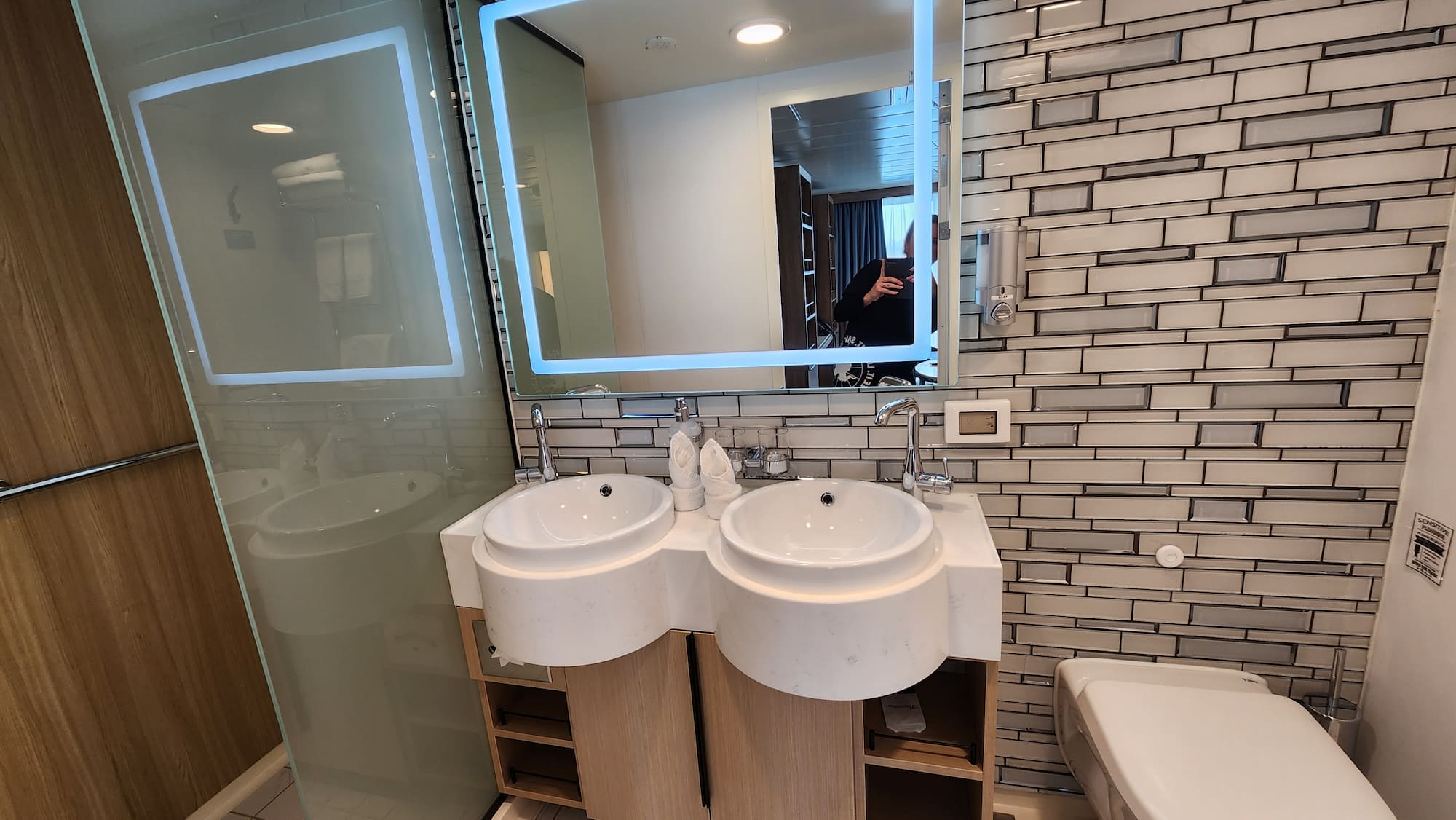
His & Hers sinks aboard an expedition ship? What luxury!
Are balcony cabins worth the money in Antarctica?
For many travellers, yes, but our Antarctica Specialists think only if you will thoroughly take advantage of having private outdoor space.
If you picture yourself rushing to the public decks whenever there is ice, a spectacular sunset, or someone yells “WHALE!”, then a window or porthole cabin may offer better value. You can then put the cost difference toward a spectacular extra excursion, like a kayaking outing.
On Antarctica cruises, balconies are private spots to step outside, breathe in the cold air and watch for wildlife or ice slipping past, something plenty of travellers love. Viva Expedition’s General Manager, Tara Sutherland, sailed in a balcony cabin and woke each morning to a new view drifting by her window. She came back completely enthused about the experience.
"If you can make it work, I wholeheartedly recommend going for a balcony cabin. Sitting in bed sipping my first coffee of the day while an iceberg floats by was a whole other level of unforgettable."
– Tara, Viva Expeditions General Manager (read her Ocean Albatros review)
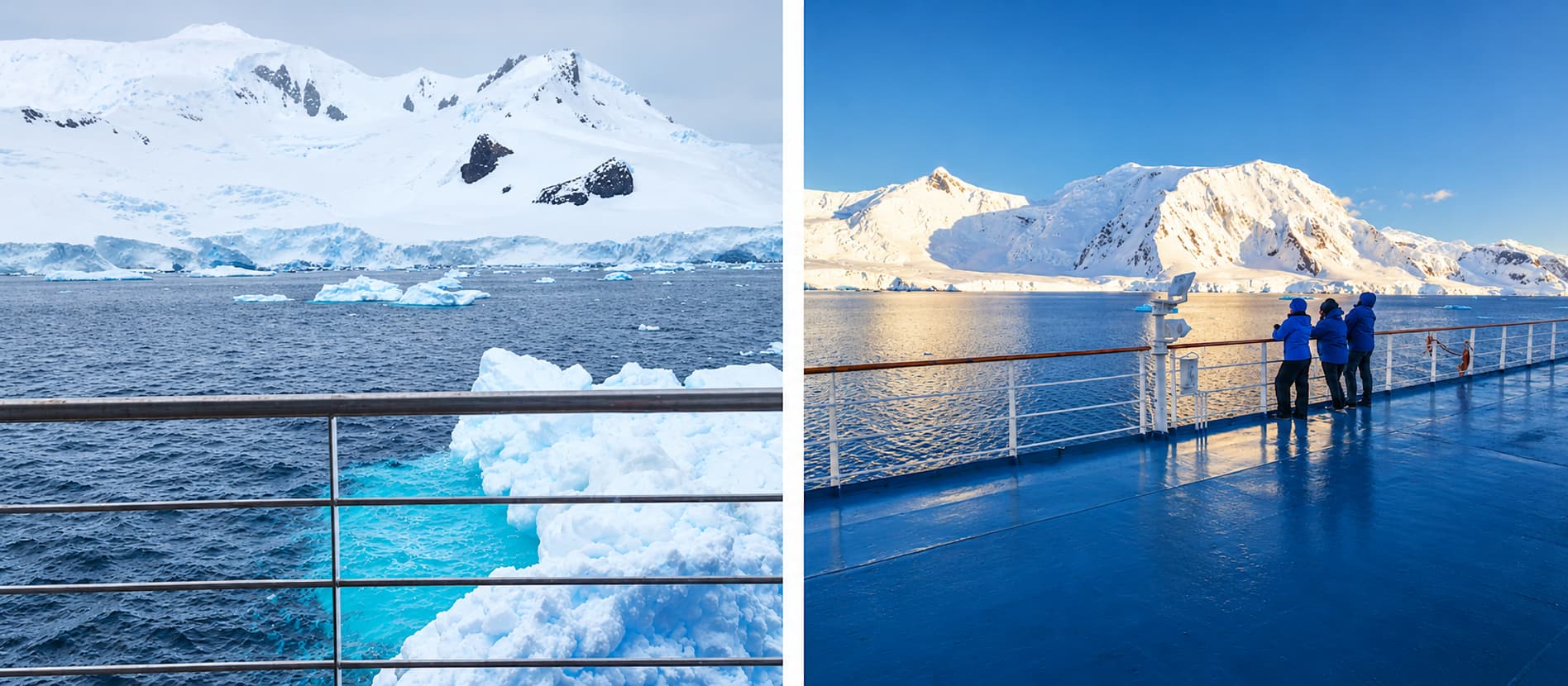
Views from a cabin balcony VS views from public outdoor deck.
Before you settle on a balcony cabin, keep in mind two important caveats.
1. Balconies are often locked in rough seas
Balconies are usually locked in rough seas, including during your Drake Passage crossing. If you pay extra for a balcony, know that you may not set foot on it for the first two days of your trip and the last two as you head back, that’s one-third of a classic 12-day Antarctica expedition. Not guaranteed but a real possibility, and that’s enough to sway some travellers.
2. The best wildlife views are still from the public decks
When there is a major wildlife sighting, your best view is still from the top public decks. Up there, you have the widest and most uninterrupted field of view; a cabin balcony cannot compete.
“On the extra cost, though, the issue isn’t nearly as major as it used to be. Paying for a balcony cabin once meant taking a big leap up in price, but that gap has narrowed a lot on the newest ships. Nowadays, and on some vessels, balcony cabins are so common they are no longer considered the luxury splurge. They can be the better-value option overall.”
– Tara, Viva Expeditions' General Manager.
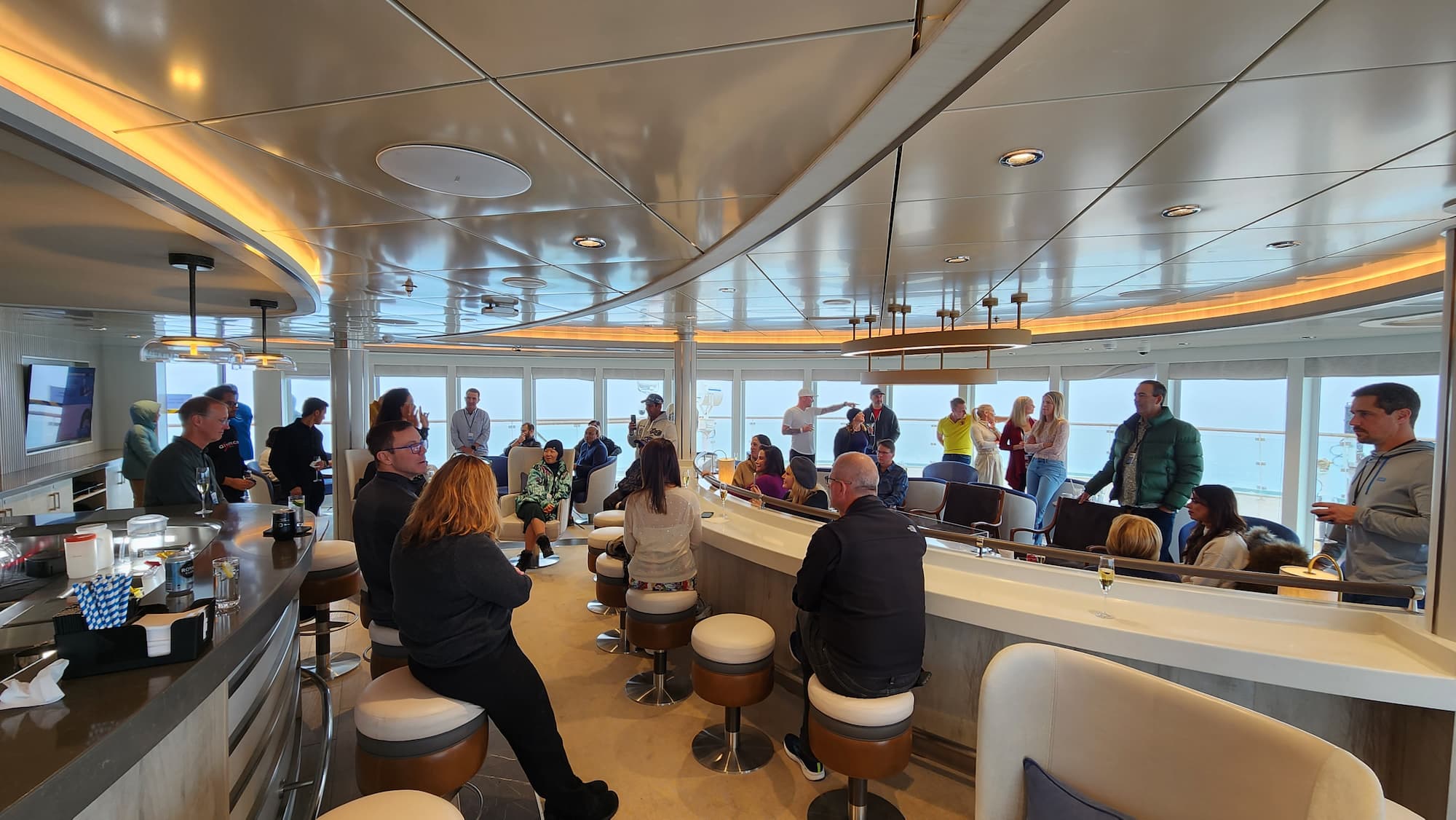
Small-ship cruises can be intimate, social experiences. If you think you’ll spend more time socialising with your cruise mates, putting your travel funds toward more activities rather than a bigger cabin makes sense.
Are suites worth the money on an Antarctica cruise?
If you plan to spend considerable time in your cabin in-between excursions, upgrading to a suite can be worthwhile.
The extra space in suites makes a real difference on longer voyages, during full days at sea, and for families or anyone who wants a comfortable place to spread out between excursions.
We think suites are especially worth the cost if:
-
You value a larger bathroom, premium location or additional luxury amenities offered on selected ships. On the higher end, that can mean floor-to-ceiling panoramic windows, hot tubs, wrap-around verandas and even outdoor dining tables, plus extra-large marble bathrooms with double vanities and heated floors.
-
Cabin size examples: On the Ocean Albatros, the Junior Suites are around 36–39 m² (390–420 sq ft) and the Premium Suite is 42 m² (450 sq ft). The Family Suite, which can sleep five, is larger again at 50 m² (540 sq ft). The extra room, although not earth-shattering, can still mean a lot, but it isn't essential to the expedition experience itself. Every guest in every cabin shares the same guided landings, Zodiac cruises, lectures and wildlife encounters, so it really comes down to how much personal space you want and who you're travelling with.
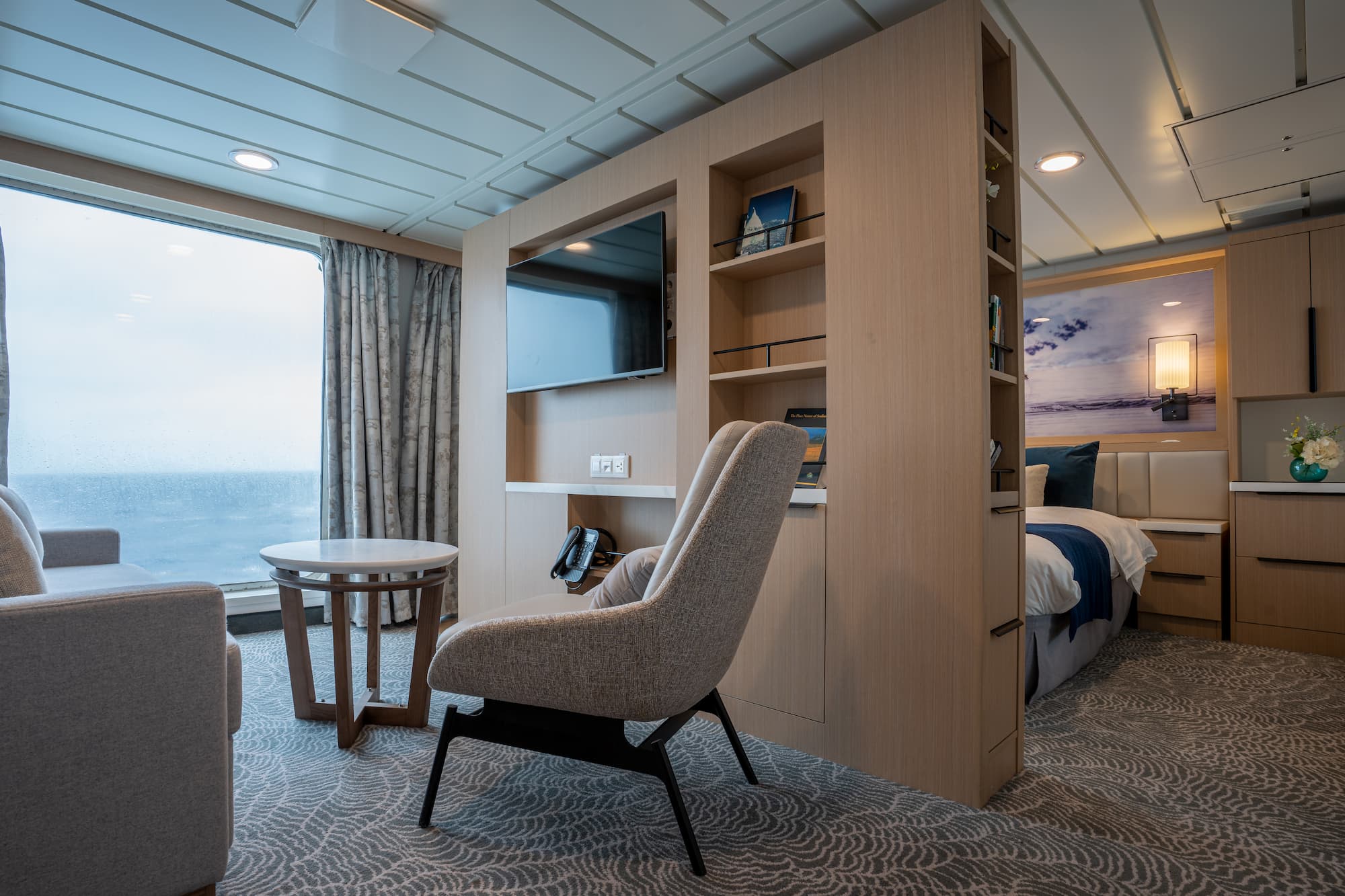
Luxury suites add separate living areas and premium touches. Worth it if you value space and comfort on long sailing days.
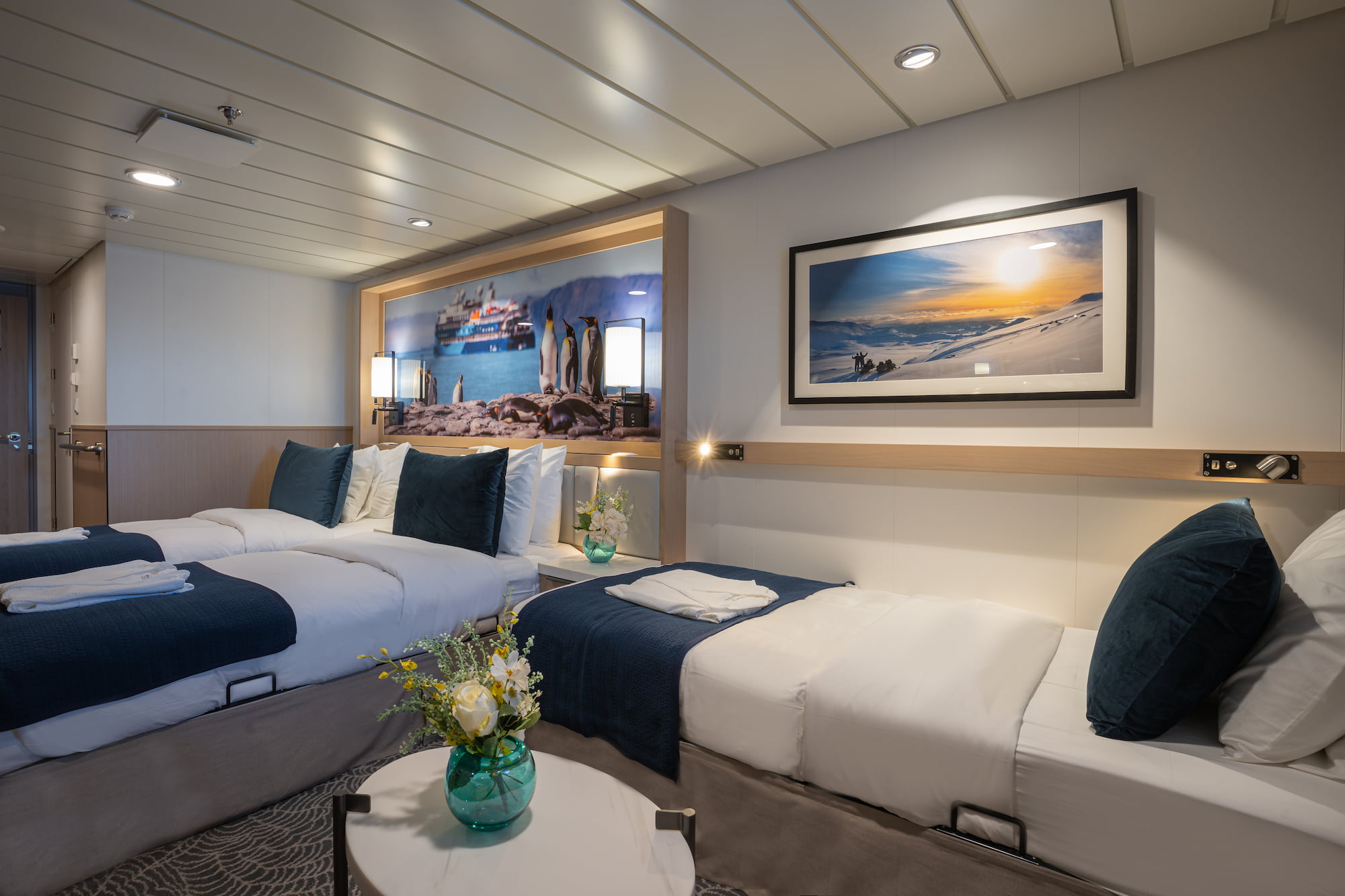
A functional and comfortable triple cabin.
For most, a standard balcony cabin is the ideal compromise and offers a pretty good return. You’ll still benefit from the private view and a more spacious feel than a porthole cabin, but it will leave you with more in the budget to spend either on a longer itinerary or a few more optional extras.
In the end, the key question is not "Is a suite better?" (because it usually is). The more useful question is whether more comfort will improve your trip enough to justify the fare difference. If it does, you will not regret the splurge.
What to expect inside your cabin
Modern expedition ship cabins are overall much more comfortable than most first-timers imagine. While exact facilities and comforts vary by ship, here is what tends to come as standard, with a note on what is worth paying up for.
-
Convertible beds: Most cabins can be arranged as either twin or double beds, so you can mix and match as you wish.
-
En-suite bathroom: Most often with a walk-in shower; a standard inclusion on newer ships.
-
Useful storage & workspace: A desk or dressing table in a corner, and a wardrobe for your gear plus a little extra space to store your luggage.
-
Power for your tech kit: Sockets (standard and USB).
-
A fridge and a TV: The mini-fridge is handy for drinks and snacks, and the TV is a surprisingly lovely extra. On some ships, the daily lectures are live-streamed directly to the cabin TV, so you can rest up after a landing without missing the talk.
What is worth spending more on, for you?
At Viva Expeditions, we think that opting for a higher category cabin is ideal if you want proper space to spread out and a sunlit room.
If you are prone to seasickness, however, save your money and choose a usually cheaper, lower cabin at mid-ship rather than a more expensive upper cabin. You will feel the sway of a high swell significantly less when you are down below, where the ship is closer to water level.
Another way to think about value is to consider the ship itself, not only the cabin. Some guests happily book a lower-category cabin on a higher-end vessel, figuring a modest room on a well-appointed ship beats a top cabin on a basic one. If you can picture yourself spending more of the voyage in a panoramic sauna or fitness centre than in your cabin, this could be your best-value route.
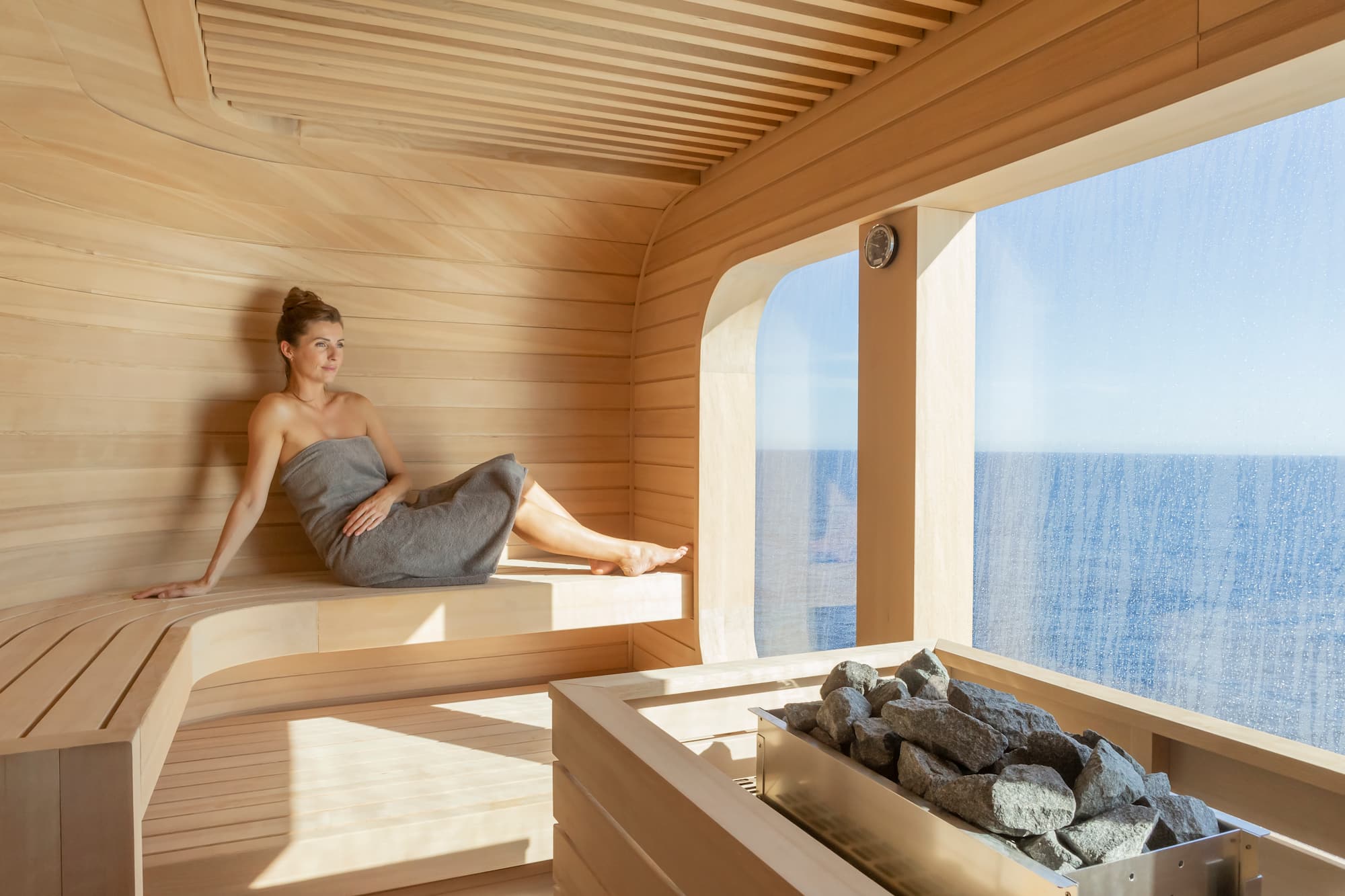
For some, the smarter spend is on the ship, not the cabin.
Where on the ship should your cabin be?
As just mentioned, the location of the cabin can also affect your voyage in unexpected ways.
-
Front, middle or rear of the ship can also make a difference, as the bow takes the brunt of high waves (and of Drake Passage motion). A midship cabin is the steadiest default and a safe choice if you’re a nervous sailor.
-
Close to the stairs or lift is worth considering if you would rather not walk long corridors, or have any mobility issues, though keep in mind those spots are also busier, so not always the quietest nook on any ship.
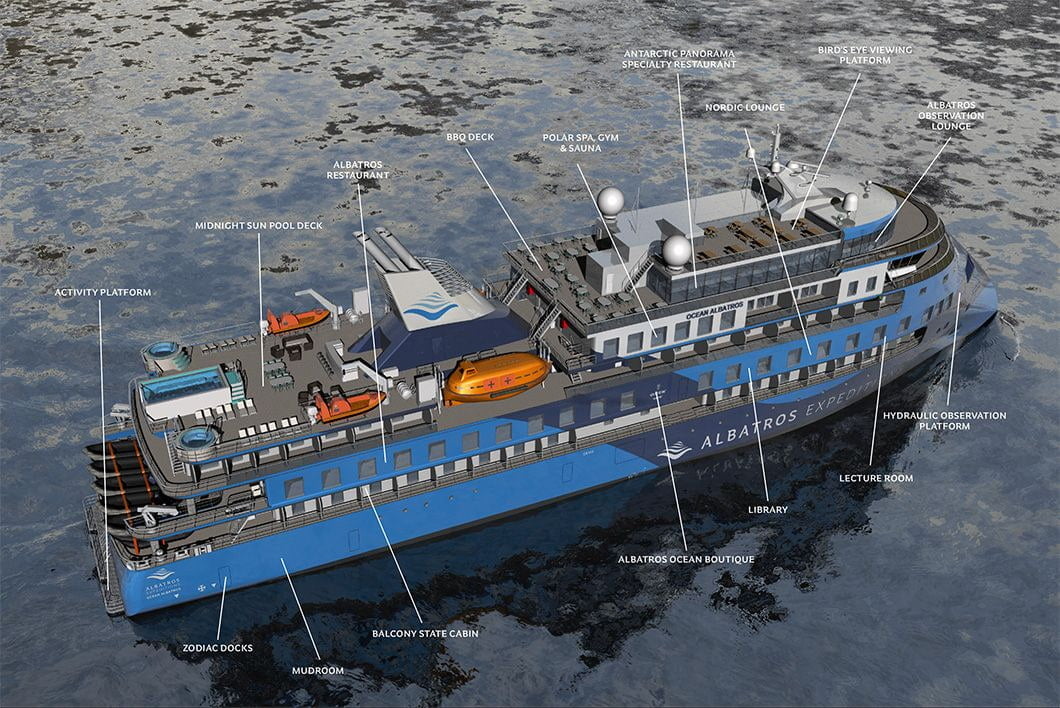
Most expedition ships share a similar layout with the MV Ocean Albatros, as seen above, with public viewing decks on the top floor (front and rear) and mudroom/Zodiac docks in the rear.
On the small expedition ships we recommend for Antarctica, cabin location is rarely a dealbreaker. These vessels are compact, so you’re never far from anywhere. Do remember, while some vessels allow you to request a specific cabin number, not all can guarantee cabin allocations in advance. If you have your heart set on a particular cabin, check with the team at the time of booking and we’ll do our best to secure it for you.
What is it like sharing a cabin, or travelling solo?
Sharing a cabin is one of the easiest ways to reduce the cost of an Antarctica cruise, and it can be a wonderfully social experience if you are travelling alone. If you’d rather not pay a single supplement (an extra fee solo travellers pay to have a twin cabin to themselves), you can be matched with another traveller of the same gender in a twin cabin
Viva Antarctica Specialist Pia Knarston did exactly that on her expedition, and thoroughly enjoyed the experience.
“I was a bit worried about sharing with someone I'd never met before, but we turned out to have a lot in common; we got on well immediately and are still in touch years later. If cost is a concern, do not let the thought of sharing a cabin with a stranger put you off; we had great fun.”
— Pia Knarston, from her Antarctica trip diary
Viva Expeditions offers voyages designed for solo travellers in Antarctica and can help you find the right solution, be that a dedicated solo cabin, a ship with no single supplement, or a shared-cabin fare.
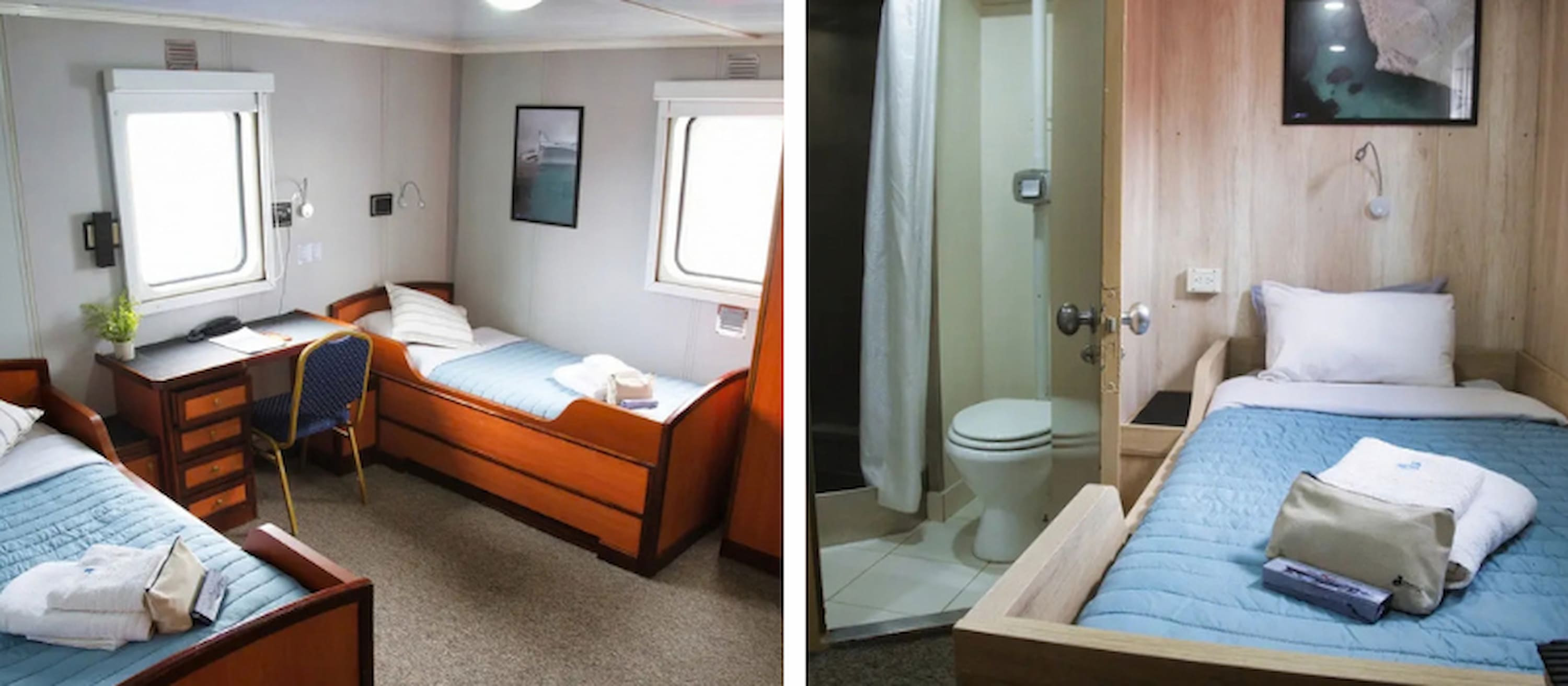
Sharing a cabin is a great way to slash costs but if you prefer to be on your own, you’ll find quite a few ships offering single cabins. Pictured here are a Superior Twin (left) and Premium Single (right) on the MV Ushuaia, a former scientific research vessel turned expedition cruiser.
Travelling with family or friends? Ask us about expedition ships with interconnecting cabins and family suites.
Which Antarctica cruise cabin is right for you?
By now, it’s clear there’s no single “best” cabin on an Antarctica cruise. The right choice depends on what you prioritise.
See if the below helps:
|
If this sounds like you...
|
Then start by looking at...
|
And here’s why...
|
|
“I want to keep the fare down as much as possible.”
|
Porthole or window cabin
|
You will still enjoy the same guides and experiences but might be able to do a longer journey or add more optional activities to your experience.
|
|
“I want a quiet, private view of Antarctica.”
|
Full balcony cabin
|
You can step outside in your robe (and puffer jacket), watch ice drift past and take in the scenery without heading out to the public decks.
|
|
“I get seasick or worry about the Drake Passage.”
|
Lower-deck, midship cabin
|
Generally the calmest place to be when the sea is anything but.
|
|
“I am travelling solo.”
|
Dedicated solo cabin or shared twin
|
Compare the privacy and potential no-supplement benefit of a solo cabin against the savings and social aspect of sharing.
|
|
“I am travelling with children or friends.”
|
Triple, interconnecting cabin or family suite
|
More practical space and sleeping flexibility can save your sanity on long sailing days.
|
|
“I like room to unwind and do not mind paying more.”
|
Suite
|
The extra living space is worth its weight in gold.
|
|
“I will be out on deck all day.”
|
Window or porthole cabin
|
If you don’t think you will fully utilise the extra space, and you are after a cost-saving tip anyway, then this cabin type is ideal.
|
It really all comes down to what you like and which ships are servicing the specific itinerary you are after. The sooner you book, the more options you’ll find still available (note that many book 12-18 months in advance).
On the upper end, we offer a bevvy of luxury voyages on exquisite vessels that follow unique and exclusive itineraries. Check out Le Commandant Charcot, the world’s first hybrid-fuel luxury icebreaker that offers gourmet cuisine and an impressive wine list alongside a heated pool and fire pit, sauna and a wellness centre.
Ready to pick your cabin? Call Viva Today.
Our Antarctica Specialists can listen to your “musts” and your “rather-not-thanks” and guide you through the deck plan of your chosen ship, pointing out where the best value can be found in your specific case.
Most of our team members have multiple expeditions under their belt and can advise you from experience. Above all, we know that an Antarctica expedition is a once-in-a-lifetime trip for most, and the only thing that matters to us is that you have the time of your life.
Browse our full range of Antarctica cruises and contact us when you’re ready to chat.
→ 10 Questions About Expeditions to Antarctica - What to know before you go
Laura Pattara
Laura Pattara has spent more than a decade writing about polar cruising at Viva Expeditions. While she has not yet set foot on the southern ice herself, she has mastered the art of turning expert accounts and field notes into guides that feel like the next best thing. Laura has a soft spot for penguins, perfectly packed duffel bags, and a well-earned cocktail in a wild place.
|