Researching Antarctica expedition ships means looking beyond the thread count on the sheets and the size of your private balcony. When you’re heading to the southernmost end of the planet, other things must take priority, which is why most ship descriptions lead with ice class ratings and bow shapes long before they show you nice photos of their cabins.
So, what are all these technical terms you keep reading about and do any make any meaningful difference to your voyage? We explain all the major aspects of ships below and what each one does out there in the open ocean, to make comparing Antarctica cruise ships easier.
Newsflash: some features can affect your trip a great deal, while a few count for less than the marketing suggests. Read on, and we'll tell you which is which.
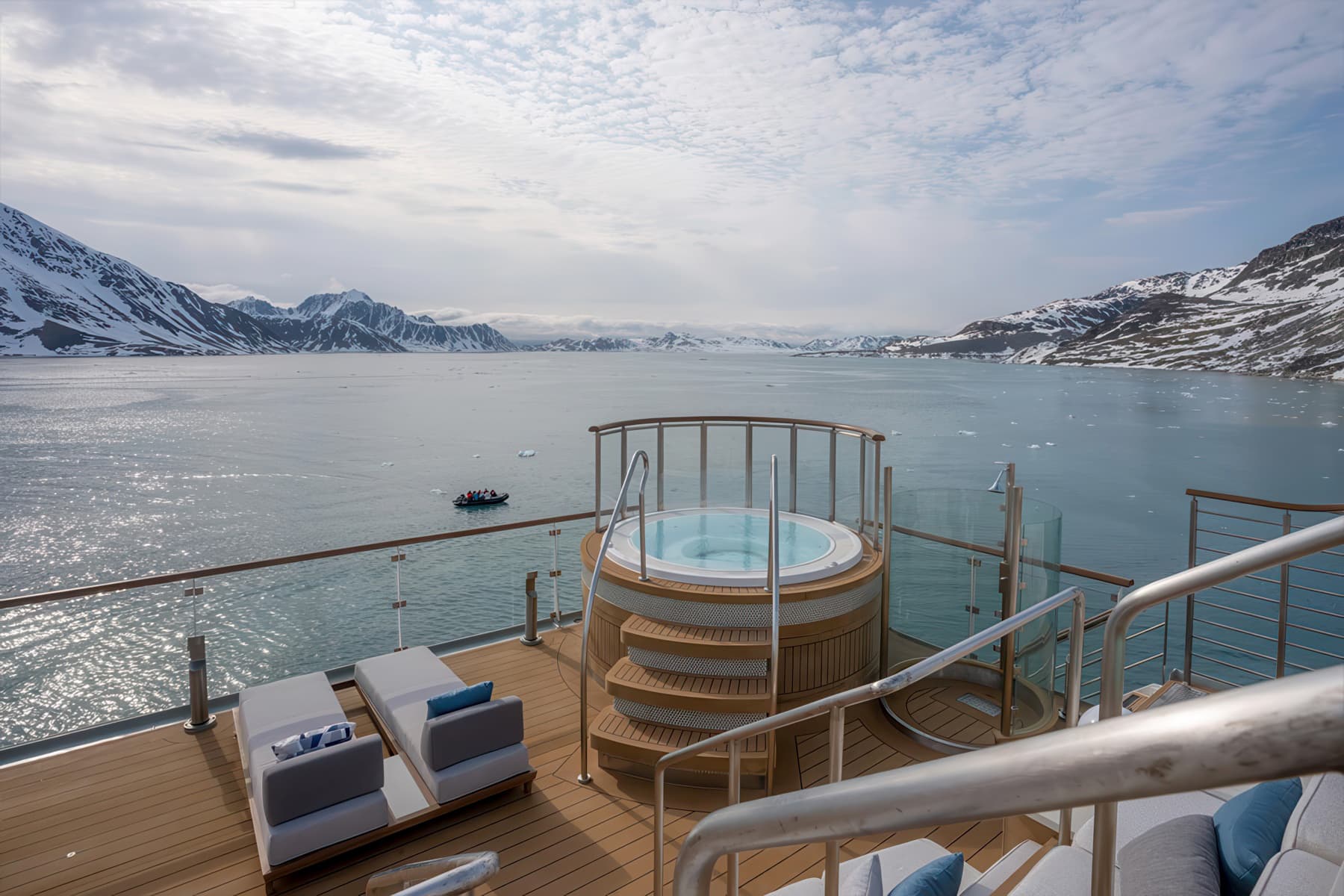
Ice class might get you to Antarctica but it’s the jacuzzi, like the one on the Ocean Albatros, that makes you never want to leave.
Here’s all you’ll learn from this guide:
What do ice class and polar class mean on Antarctica expedition ships?
Ice-strengthened or icebreaker: what's the difference?
What is an X-bow, and does it make the Drake Passage easier?
How do stabilisers work, and do they make a difference?
What is a Zodiac, and why do expedition ships carry them?
What size ship is best for an Antarctica cruise?
What fuel do Antarctic expedition ships use?
Who is on board an expedition ship, and what do they do?
How do the Polar Latitudes Expeditions ships compare?
Which Antarctica expedition ship should I choose?
What do ice class and polar class mean on Antarctica expedition ships?
Any ship heading south of 60 degrees has to cope with ice, even in the heart of summer. A ship’s class rating tells you how much ice its hull is built to handle.
You'll usually see two ratings.
Ice class is the one you'll come across most often when researching Antarctica ships. The common rating of 1A means the hull has thicker steel and stronger frames around the waterline than regular cruise liners, so the ship can push through loose, broken ice with ease and without suffering any damage.
Polar class is a newer scale that runs from PC1 to PC7, which works backwards: the lower the number, the tougher the ship. Most purpose-built expedition ships sit at PC6 or PC7, which suits summer cruising in Antarctica. The MV Hondius and the Ocean Victory, for example, are both Polar Class 6. Perfect for that end-of-year Antarctica expedition cruise.
Ice-strengthened or icebreaker: what's the difference?
Nearly all the ships sailing to Antarctica are ice-strengthened. They can move through scattered ice and shrug off the odd knock from a floe, but they won't force a path through solid pack ice. When the ice closes in, the captain finds another route around it.
A true icebreaker, however, is built to ride up onto thick ice and crush it under its own weight. Le Commandant Charcot is the best-known example in Antarctica, and its Polar Class 2 rating lets it go far into the Weddell Sea, where other ships rarely get to go.
The inevitable question is, does ice class matter for you?
If you’re on a classic Antarctic Peninsula voyage in December or January, not really. Any ice-strengthened ship does the job comfortably and safely. A higher rating will matter more if you were to explore the region early in the season, or on any voyage aiming for the Antarctic Circle, where sea ice can block the way.
And just so you know, most Circle voyages are timed for later in the season, when the sea ice has shrunk back the most, which gives you the best possible odds. Even so, operators still describe the crossing as an “attempt” and not a guarantee. If the ice doesn’t cooperate, your expedition team will always have other landings lined up.
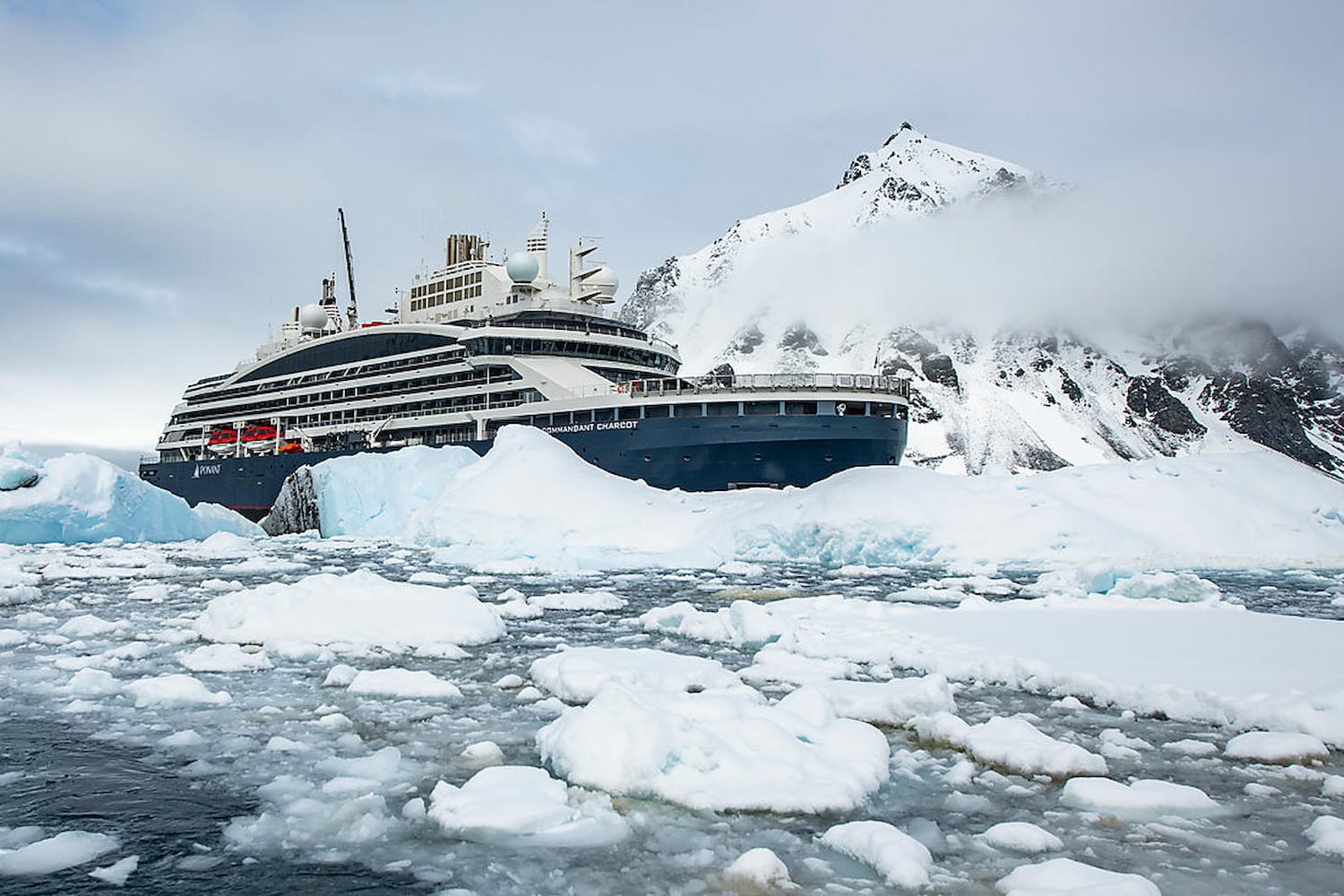
Most ships find a path around pack ice. With its Polar Class 2 hull, Le Commandant Charcot just carves its own.
What is an X-bow, and does it make the Drake Passage easier?
If you've seen a modern expedition ship with a bow that seems to lean backwards, you've seen an X-bow. It first appeared on a passenger ship in 2019, when the Greg Mortimer launched, and several sister ships now share the design, including the Sylvia Earle and the Ocean Albatros.
Here’s a simple visual of the difference between a back-leaning X and a conventional, forward-leaning bow.
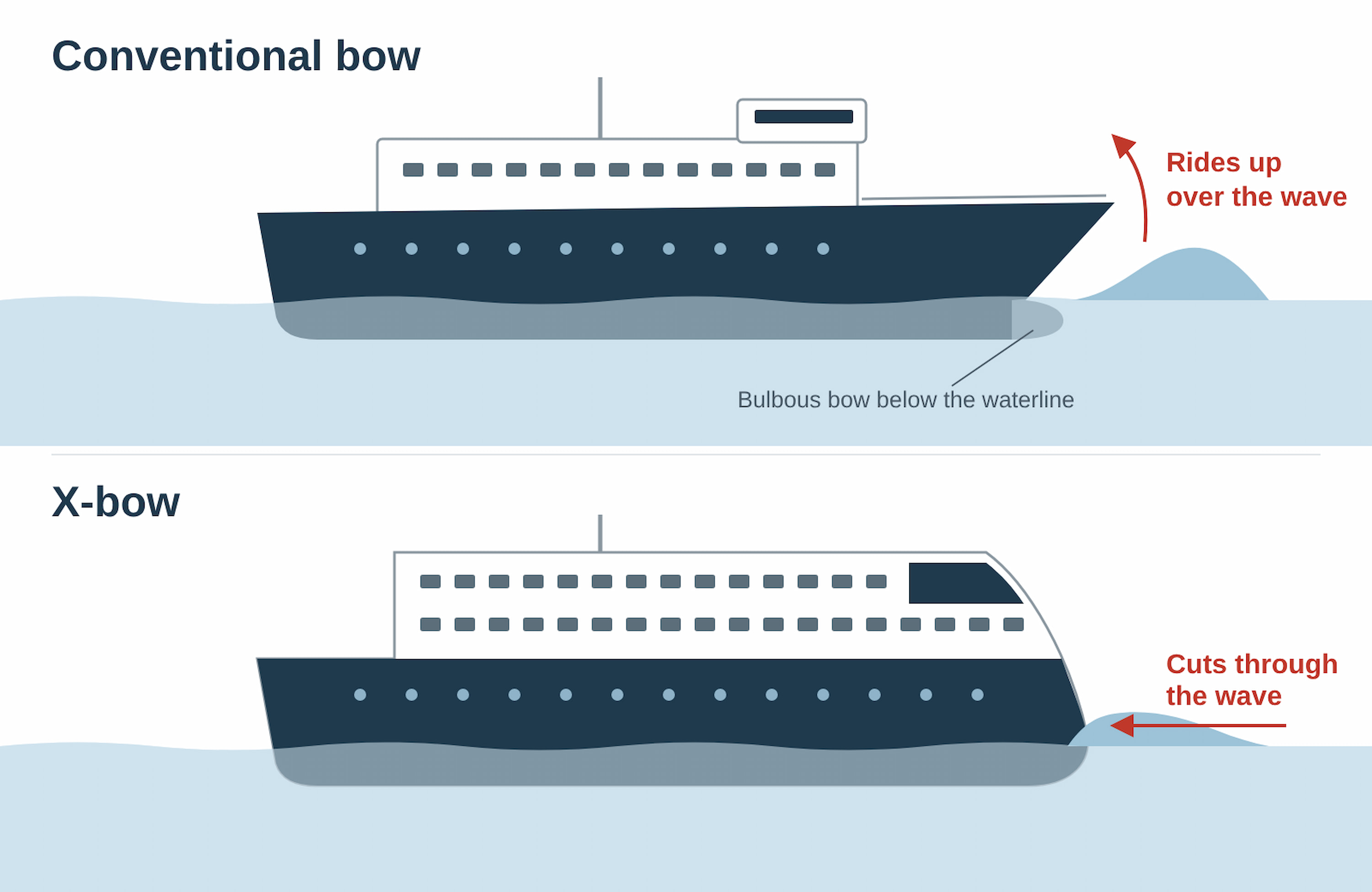
Diagram comparing a conventional ship bow, which rides up over waves, with an X-bow, which cuts through them.
A conventional bow rides up the face of a big wave and comes down hard on the other side. On a rough day, you can get that rollercoaster lurch in your stomach, followed by a thud and a shudder as it lands. The X-bow is designed to slice into the wave instead and lets the water roll right over the bow, so the ship pitches far less and slams much, much less. And because the vessel isn’t fighting the sea as hard, it also burns less fuel.
Will an X-bow stop you feeling the Drake? Well, no, no ship can quite do that, but it can take the edge off the up-and-down motion and, for many passengers on a rough sea day, it can be the difference between a tiring day and a miserable one. It’s important to note that an X-bow does little to combat any side-to-side roll, which is the job of the stabilisers (more on that further down).
Our Drake Passage cruise guide covers the crossing in all its wonderful moods.
Tara, whose tips for dealing with seasickness have seen plenty of travellers through the Drake, sailed on the Ocean Albatros in 2023.
“I get seasick really easily, so I was curious to see how the Albatros would handle the Drake. I still felt the swell, of course, but didn't get such big drops at all. The ship just seemed to slice through a wave and then settle down again. By the second morning I was out on deck with a ginger tea, which isn't something I'd have managed on some of the older ships.”
Tara Sutherland, General Manager, Viva Expeditions
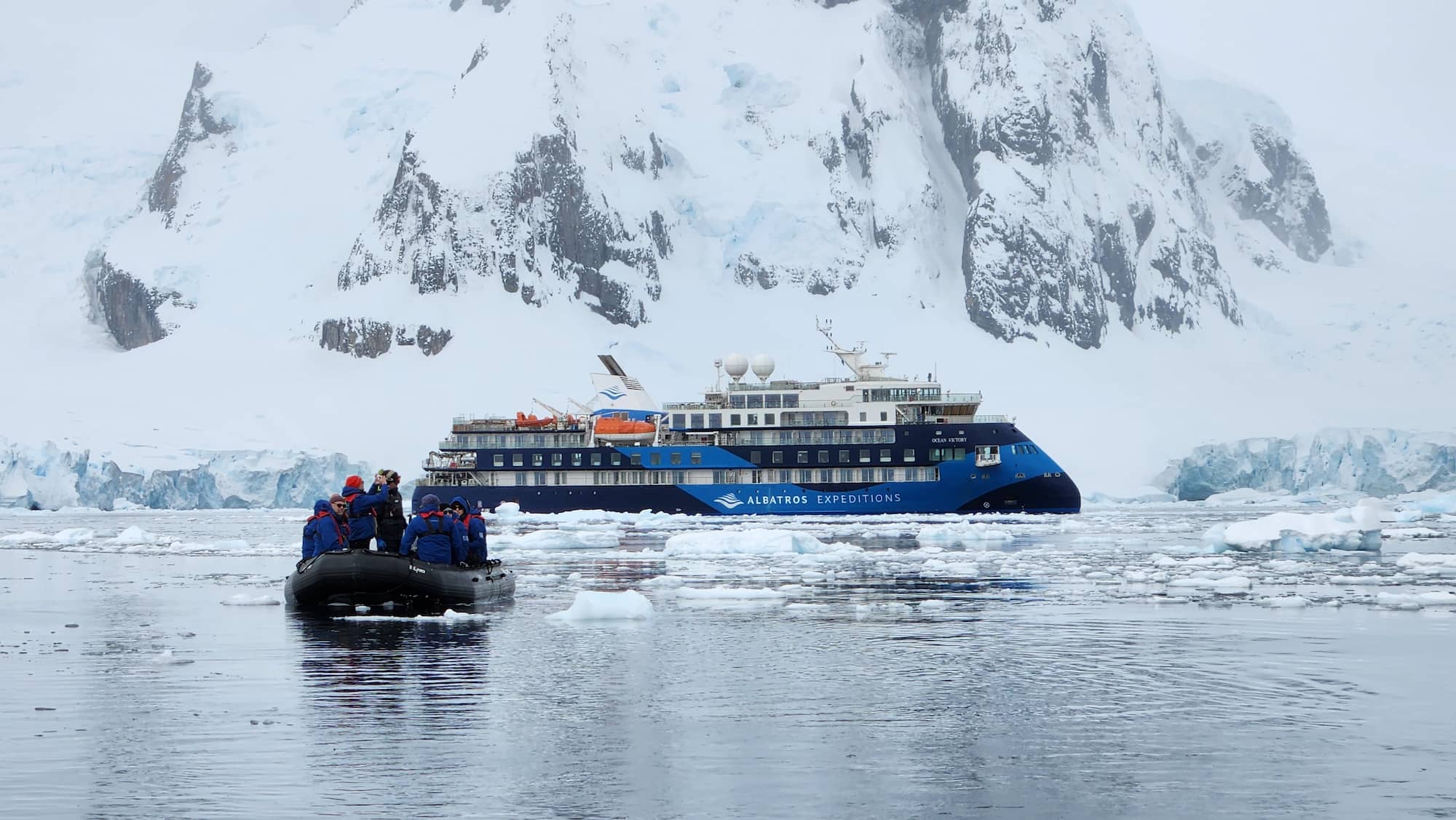
The Ocean Victory’s rear-leaning bow means crossing the Drake is usually a calmer affair. The Albatros Expeditions name on the hull dates from before the company became part of Polar Latitudes Expeditions.
How do stabilisers work, and do they make a difference?
While the shape of the bow determines the back-and-forth ride, stabilisers deal with the sideways dance, the kind that sends you reaching for the handrail. Most expedition ships have two short fins that extend from the hull below the waterline. As the ship starts to lean one way, the fins tilt to push it back, not dissimilar to the flaps on an airplane wing.
The most effective are called active fins, which are constantly adjusted by a computer as the ship moves. Some ships also have what are known as zero-speed stabilisers, which keep working even when the ship is at anchor or drifting while the Zodiacs head out. Older ships can be upgraded too, as the Sea Spirit was in 2019. The fins fold back into the hull before the ship enters icy waters, but by then you're usually in the sheltered water around the Peninsula.
Do high-tech active stabilisers help you enjoy a much smoother ride? Yes, and by some considerable margin, though they help with roll far more than they help with pitching. That's why an X-bow and good stabilisers work so well alongside each other.
Something else that helps is being in a lower, midship cabin, as our guide to Antarctica cruise cabins clearly explains.
Viva Expeditions recommends that travellers prone to seasickness look for a ship with both an X-bow and active stabilisers. The two features tackle different kinds of motion, so a ship with both will feel noticeably steadier on an open-ocean crossing like the Drake Passage.
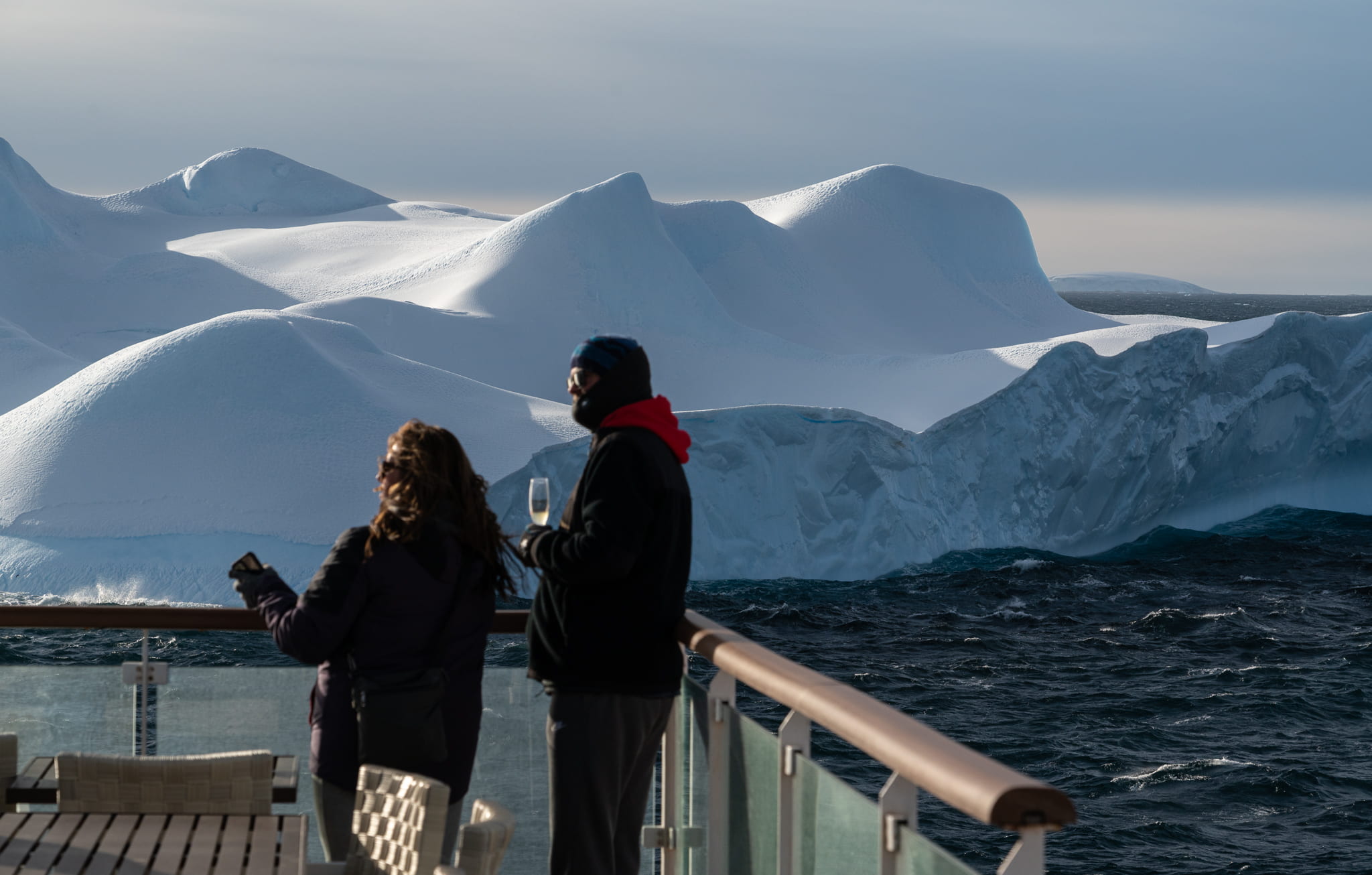
The true test of stabilisers at work. Not a drop of champagne spilled.
What is a Zodiac, and why do expedition ships carry them?
Zodiacs are exceptionally sturdy inflatable boats, and the most trusted sidekicks of all expedition cruise ships. Since there are no piers or harbours to step onto in Antarctica, every landing and close inspection of icebergs and fjords starts and ends with a Zodiac. The name belongs to one manufacturer, but it has now become the everyday word for this unique type of skiff: a small open boat with an outboard motor, used to ferry people between the ship and the shore. Air-filled tubes along each side make them stable and hard to tip.
A Zodiac carries around ten guests plus a driver, usually one of your expedition guides. The two main things you should check while you're researching Antarctica expedition ships are 1) how many Zodiacs the vessel carries (for how many passengers) and 2) how you board them. On sister ships like the Ocean Albatros and Ocean Victory, which each carry 18 Zodiacs for fewer than 190 guests, you never have to wait long.
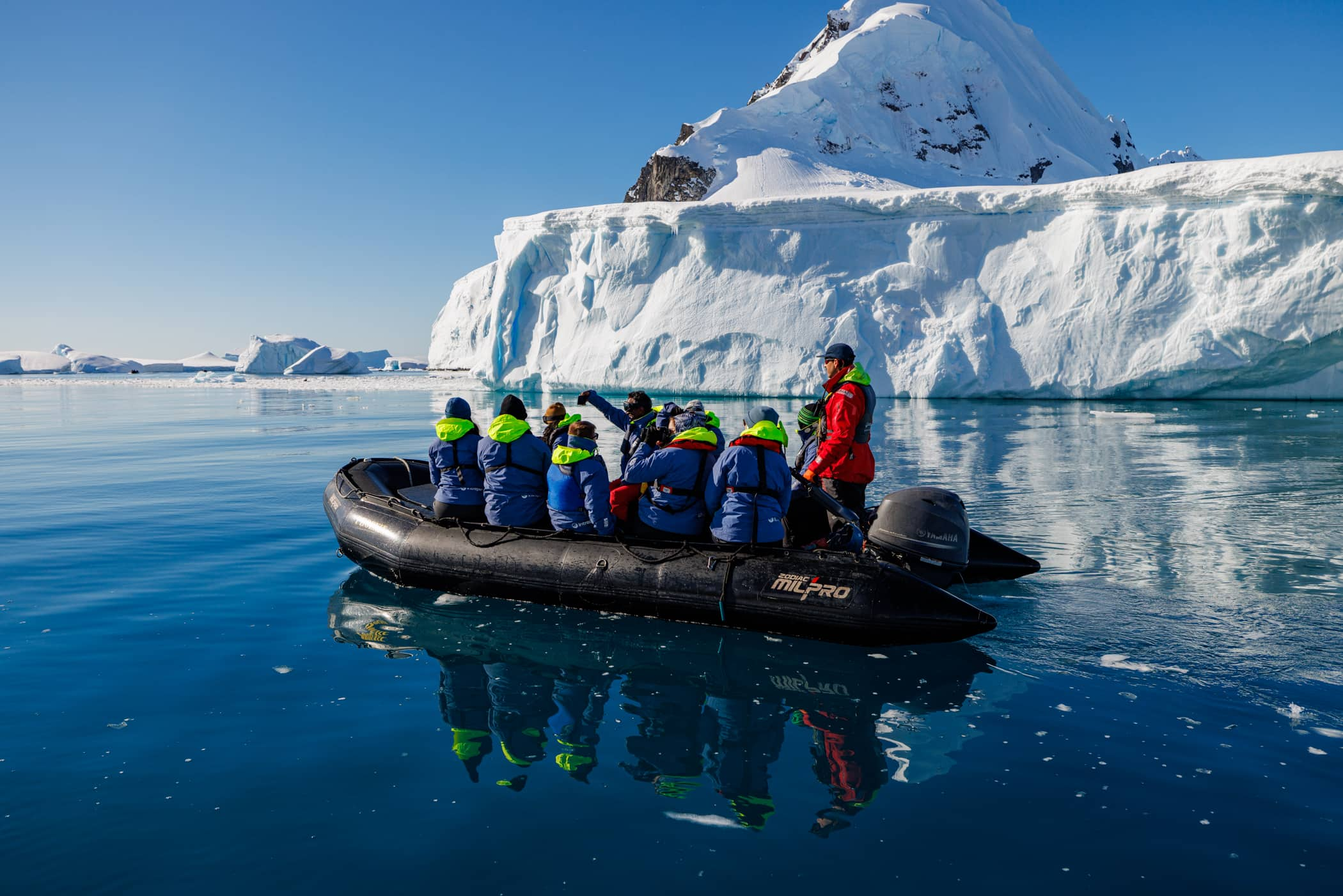
Down at water level, Antarctica’s icy landscapes are even more imposing.
Some newer ships have a sea-level platform you step across from, while others use a gangway down the side of the ship. If you’re at all worried about your balance, it’s worth choosing a vessel with a sea-level platform. Our article on whether you're fit enough for a polar expedition cruise goes into more detail, but rest assured that getting in and out of a Zodiac is not all that difficult and there are always plenty of firm hands ready to help.
“Nearly everyone is a bit nervous before their first Zodiac ride, and by the end of the trip it's the part they miss most. The guides help you in and out every single time, so you never feel rushed. Once you're down at water level among the ice, with a seal lifting its head to watch you go by, the nerves are long gone.”
Pia Knarston, Antarctica Travel Specialist, Viva Expeditions
What size ship is best for an Antarctica cruise?
Size changes your trip more than you might expect, because of rules agreed through the Antarctic Treaty and IAATO, the industry body for Antarctic tour operators. No more than 100 people from a ship can be ashore at one site at any given time, and there must be at least one guide for every 20 guests. The harshest restrictions are for vessels with over 500 guests, which are not allowed to make landfall in Antarctica, ever.
Those are the kind of rules that can directly shape your experience, so choosing a ship by size and guest count becomes very important.
-
Between 100 and 200 guests: the ship splits into groups, with half ashore while the others go Zodiac cruising, then you swap. Most modern expedition ships sit in this range and work within the landing limit by alternating onshore walks with shoreline cruising. The perfect compromise.
-
Between 200 and 500 guests: your time ashore is usually shorter as stricter landing limits apply. That's why some ships, like Le Boréal, cap their numbers at 200 in Antarctica even though they can carry more in other destinations. The HANSEATIC inspiration does the same, sailing with 199 guests in Antarctica, and adds a few unusual touches, including a glass-floored viewing balcony.
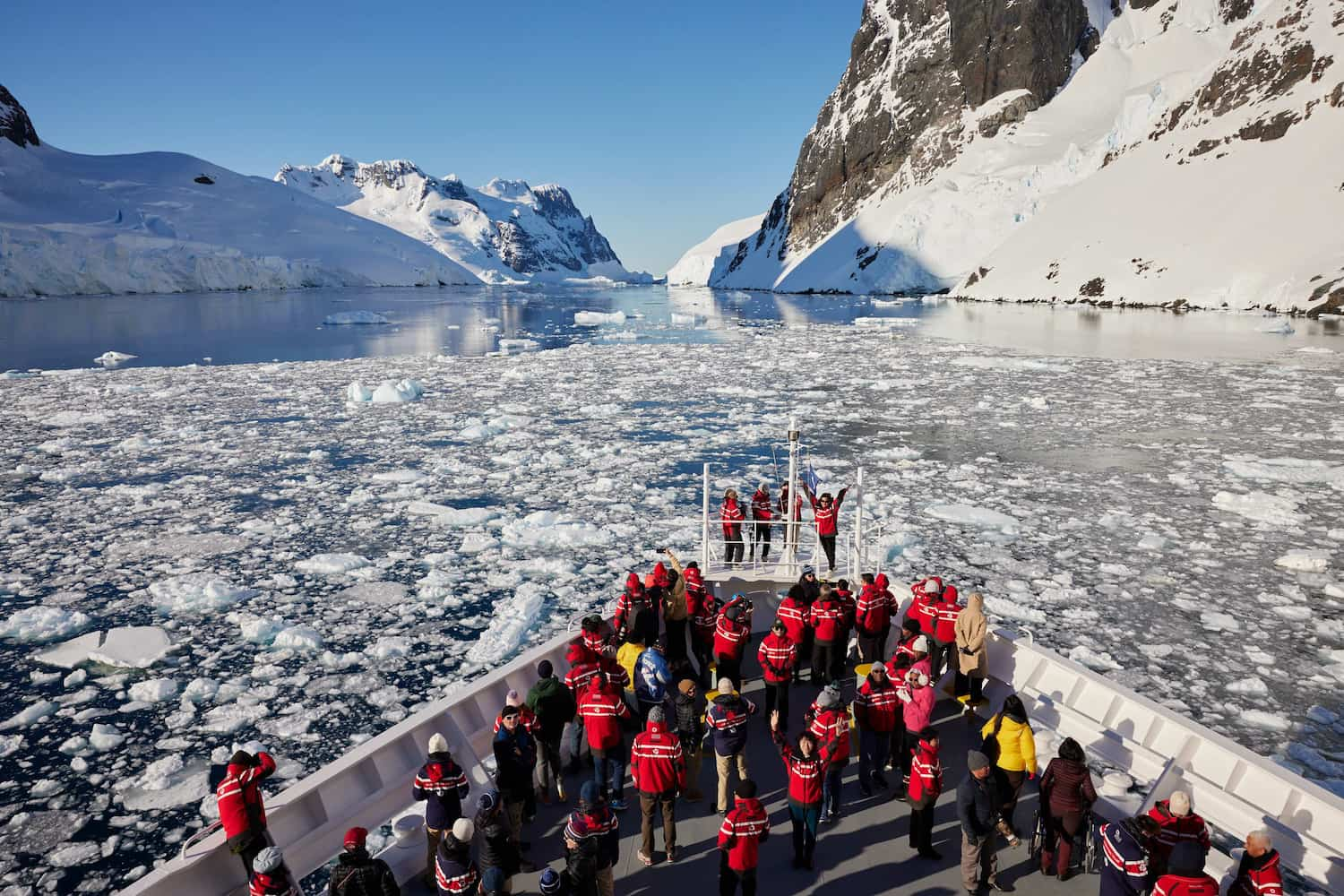
On a small Polar Latitudes Expeditions ship, everyone gets the best viewpoint.
Larger ships do tend to move less in a swell, and they have more room for restaurants and spas, which some might prefer. Still, it's a long way to go to just admire the landscape from a deck.
Size is one part of choosing an Antarctica cruise, and our full guide covers the rest.
Viva Expeditions recommends ships carrying fewer than 200 guests for Antarctic Peninsula voyages. Because no more than 100 people can be ashore at once, a smaller ship gives each guest regular landings and more time at each site.
What fuel do Antarctic expedition ships use?
Since 2011, international rules have banned ships from using or even carrying heavy fuel oil (the thick, cheap fuel many cargo ships still run on) south of 60 degrees. A spill in freezing water would be extremely slow to break down and would have catastrophic consequences in such a fragile environment.
Any ship you sail on in Antarctica runs on lighter marine diesel while it's there. Some newer ships go further still, with operators claiming up to half the carbon footprint of traditional expedition ships. Among the most technologically advanced is Le Commandant Charcot, which runs on liquefied natural gas with high-capacity batteries, a first for a polar cruise ship.
When comparing ships, it’s well worth having a quick look at the kind of fuel used, alongside aspects like bow shapes, stabilisers, Zodiacs and cabins. Every Antarctica cruise we offer is run by an IAATO member, so the wildlife and landing guidelines are a given.
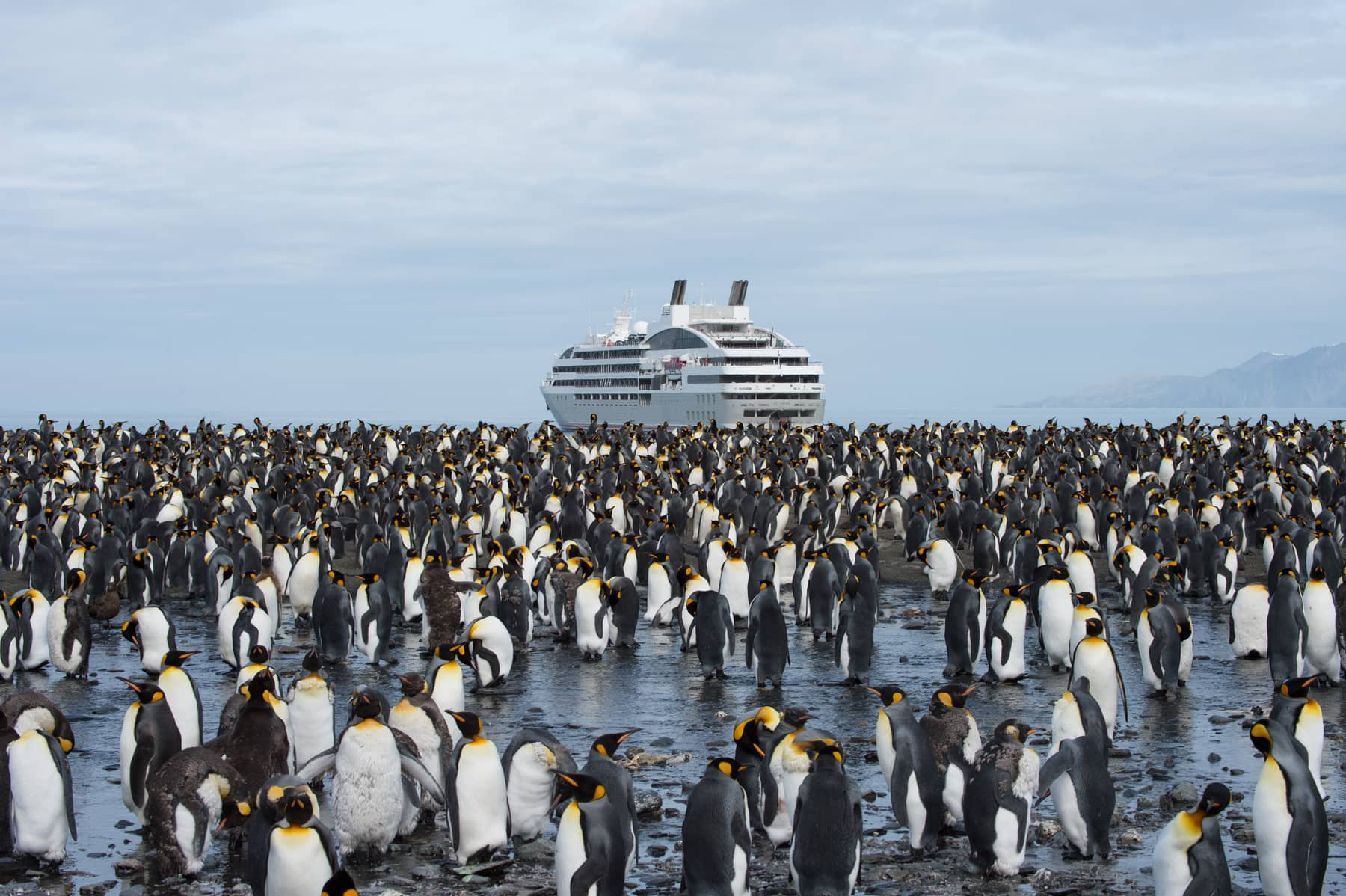
Here are thousands of reasons to care what your Antarctica expedition ship runs on.
Who is on board an expedition ship, and what do they do?
Because every landing and activity is guided, and the core jobs on board (from the bridge to the galley) need much the same team whether a ship carries 80 guests or 800, small expedition ships have a higher crew-to-guest ratio than regular mega cruise liners.
-
The captain and bridge officers are trained specifically for polar waters. They run the ship and have the final say on where to go and where to safely land guests. Most ships, including the MV Ortelius, have an open bridge, so you can drop in and have a look-see.
-
The expedition team are your guides and Zodiac drivers, as well as specialists such as marine biologists or polar historians. They lead the landings and activities, and give talks on sea days and in the evenings.
Of all the crew on board, the expedition team will shape your days the most, so we’d suggest asking how many guides sail on your departure. Recent reviews are also worth reading. See what past guests say about the guides and the landings, as that gives you a good feel for how the operator runs its expeditions.
Our Ocean Albatros trip and ship review, written after Rachel and Tara's own voyage, shows what it means to be guided by an exemplary team.
“The ship gets you to Antarctica, but the expedition team makes the trip. The guide who drove our Zodiac in the morning would be giving a talk on whales that afternoon. You get to know them, and they quickly learn what each of you is hoping to see, and they go out of their way to make everyone happy.”
Rachel Williams, Founder and Managing Director, Viva Expeditions
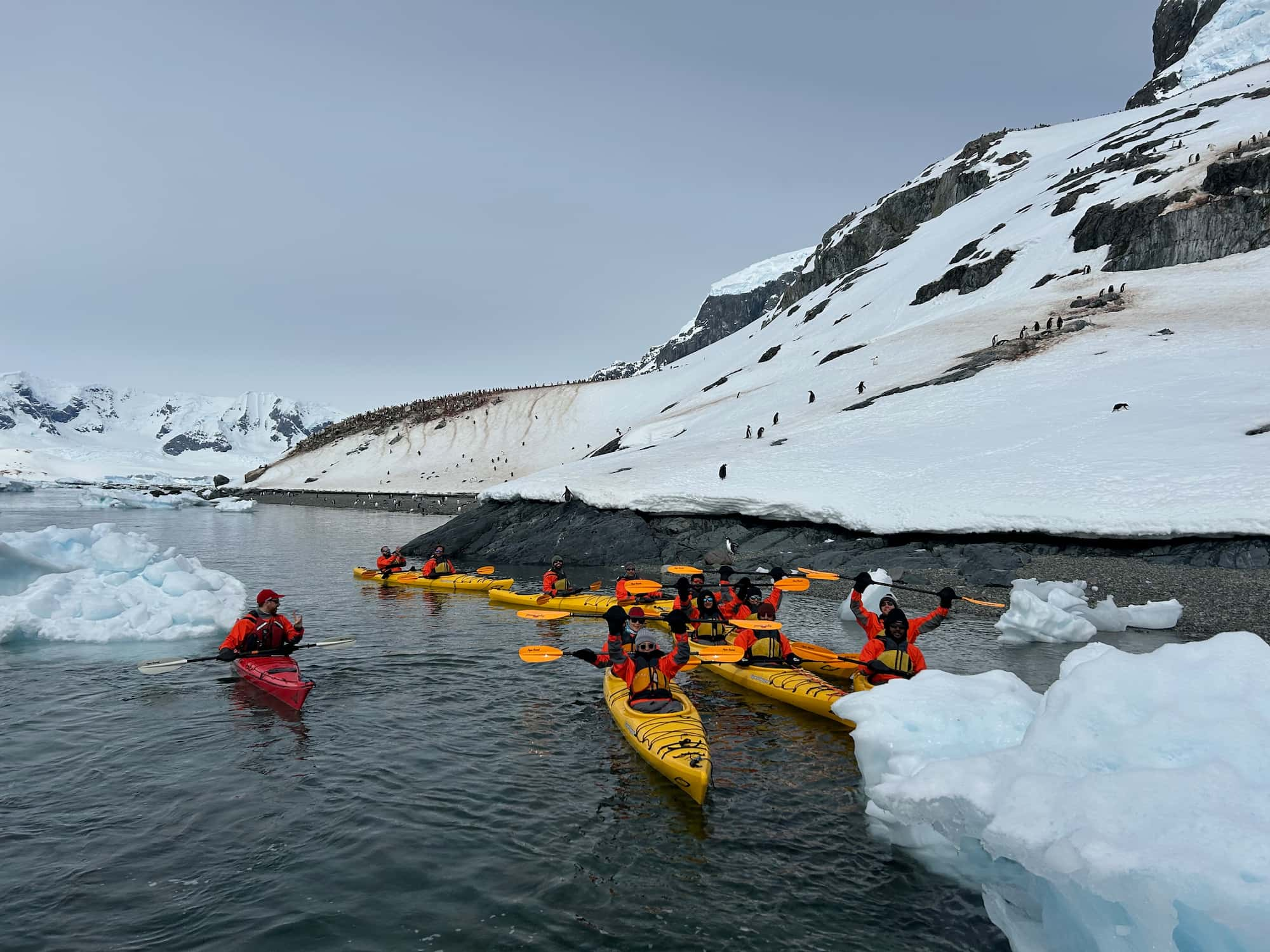
With expert guides on the ship, in Zodiacs, on land and in kayaks, you’re always in good hands.
How do the Polar Latitudes Expeditions ships compare?
When Polar Latitudes and Albatros Expeditions merged in 2025, two respected polar fleets became one. Its four Antarctic ships range from a pair of modern X-bow sisters to two more classic designs, one of them small enough to carry just 80 guests. Between them they cover almost every feature we’ve covered in this guide.
|
Ship
|
Guests
|
Ice rating
|
What stands out
|
|
Ocean Albatros
|
175
|
Ice Class 1A, Polar Class 6
|
X-bow, plus 12 dedicated solo cabins
|
|
Ocean Victory
|
186
|
Ice Class 1A, Polar Class 6
|
X-bow design shared with its sister ship
|
|
Discoverer
|
140
|
Ice Class 1A
|
Boutique feel, with a spa and sauna
|
|
Ocean Nova
|
80
|
Ice-strengthened hull (1A)
|
Small enough for everyone to land at once
|
What this means, in a nutshell:
-
Ocean Albatros: With an X-bow and zero-speed stabilisers, this is a strong choice if you're worried about the Drake. Solo travellers do well here too, with 12 dedicated solo cabins and no single supplement. Check out the panoramic sauna; it's incredible.
-
Ocean Victory: The Albatros’s sister ship shares the same steady X-bow design, and around 90% of its cabins have a balcony. It suits travellers who want a private view of the ice from their own room. After a cold landing, the outdoor jacuzzis and heated pool on the rear deck are hard to beat.
-
Ocean Nova: With around 80 guests, everyone goes ashore together. Built in Denmark for the ice-choked waters off Greenland, it’s ideal if a traditional expedition feel matters more to you than onboard extras.
Which Antarctica expedition ship should I choose?
Although specs are great to know, they only ever tell one part of a much bigger, more comprehensive story. Two ships with the same ice rating and the same number of guests can feel completely different once you're on board, from the mood in the lounge to the way the expedition team runs its landings.
At Viva Expeditions, our Antarctica specialists have sailed on many of these ships themselves, and comparing them is what we do every day. Tell us what you're most looking forward to, and what you're nervous about, whether that's the Drake or stepping into a Zodiac for the first time. We'll match you with a ship that suits the way you like to travel.
Talk to our Antarctica specialists about the right ship for you
Laura Pattara
Laura Pattara has spent more than a decade writing about polar cruising at Viva Expeditions. While she has not yet set foot on the southern ice herself, she has mastered the art of turning expert accounts and field notes into guides that feel like the next best thing. Laura has a soft spot for penguins, perfectly packed duffel bags, and a well-earned cocktail in a wild place.
|