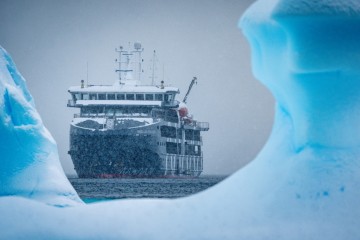
Deciding to visit the southern end of the world usually deserves a celebration. Then comes that one, inevitable question: how does one get to Antarctica with no scheduled commercial flights to the continent and an infamously wild stretch of ocean in the way? The good news is that there are more ways than most people realise, and finding one that will suit you won't be all that difficult. The tricky part is collating all the moving parts of your intended trip and finding a way to make them all fall into place.
The distance to Antarctica is considerable no matter where you cast off from, but there are myriad ways to make the most of your departure point, no matter where that may be.
So how do most tourists get to Antarctica? There are three main ways to travel to Antarctica — cruise from Argentina or Chile (the most commonly taken route), fly-cruise from Chile, or cruise from New Zealand or Australia to the Ross Sea.
This article is meant as a general overview of your options for travelling to Antarctica. For every route, whether by air or sea, we'll point you to more thorough, dedicated guides so you can get the nitty-gritty details.
Happy planning!
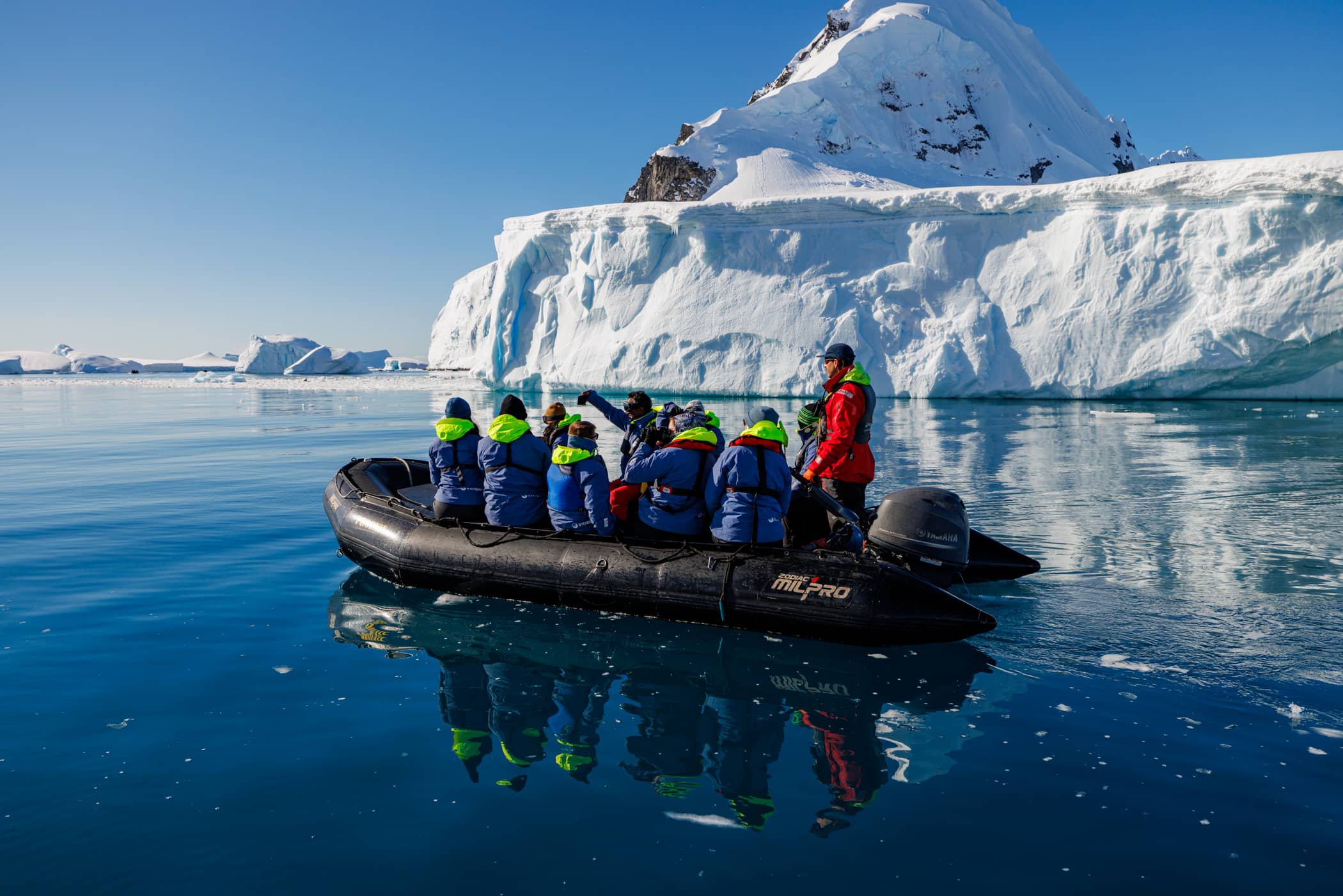
Getting to Antarctica isn't the hard part. Deciding to go is!
In this guide:
The ways in, at a glance
Distance to Antarctica
What is the BEST way to get to Antarctica?
Cruise from Argentina
Cruise from Chile
Fly-cruise (skip the Drake Passage)
Cruise from New Zealand or Australia
Should you cross the Drake Passage or fly over it?
Can you get to Antarctica from New Zealand and Australia?
The most important piece of advice
Which Antarctica gateway suits you best?
FAQs
The ways in, at a glance
There are three main ways to cover the distance to Antarctica and we list them in order of popularity, before comparing them.
-
Cruise from South America (Ushuaia (Argentina) or Punta Arenas (Chile))
-
Fly & cruise from South America (mostly Punta Arenas)
-
Cruise from New Zealand or Australia
Here's how the options compare, splitting the two main South American options.
|
Way in
|
Departs from
|
Time to ice
|
Good for / trade-off
|
|
Classic cruise
|
Ushuaia, Argentina
|
About 2 days at sea
|
Biggest choice of ships and dates + the full Drake experience (two crossings per journey)
|
|
Cruise
|
Punta Arenas, Chile
|
About 2 days, as above
|
Also crosses the Drake twice, easy to plan a Patagonia add-on and convenient if in Chile. Fewer departures & ships than Ushuaia
|
|
Fly-cruise
|
Punta Arenas, Chile
|
About 2 hours by air
|
Fly to King George Island, join a cruise there. Skips the Drake & saves days but pricier, and flights are weather-dependent
|
|
Cruise from NZ/Australia
|
Bluff, Dunedin, Christchurch or Hobart
|
About 7 days at sea
|
Ross Sea, historic huts, fewer people / limited departures, long, costly, sells out early
|
How far away is Antarctica, really?
From the southern tip of South America, Antarctica is about 1,000 kilometres (620 miles) away — roughly the distance from Paris to Barcelona — making this the shortest route from anywhere on Earth to the White Continent. Most expedition ships make the crossing in about two days, sailing the famously unpredictable Drake Passage.
From New Zealand or Australia, it's around two and a half times more open water, taking closer to a week of sailing each way. These long voyages, which visit the remote ice fields in East Antarctica and across the Ross Sea, tend to be three to four weeks in total.
The Antarctic Peninsula is that long arm reaching up towards South America, the part most travellers picture, and it is by far the easiest and fastest to reach. That is why most trips south begin in Argentina or Chile.
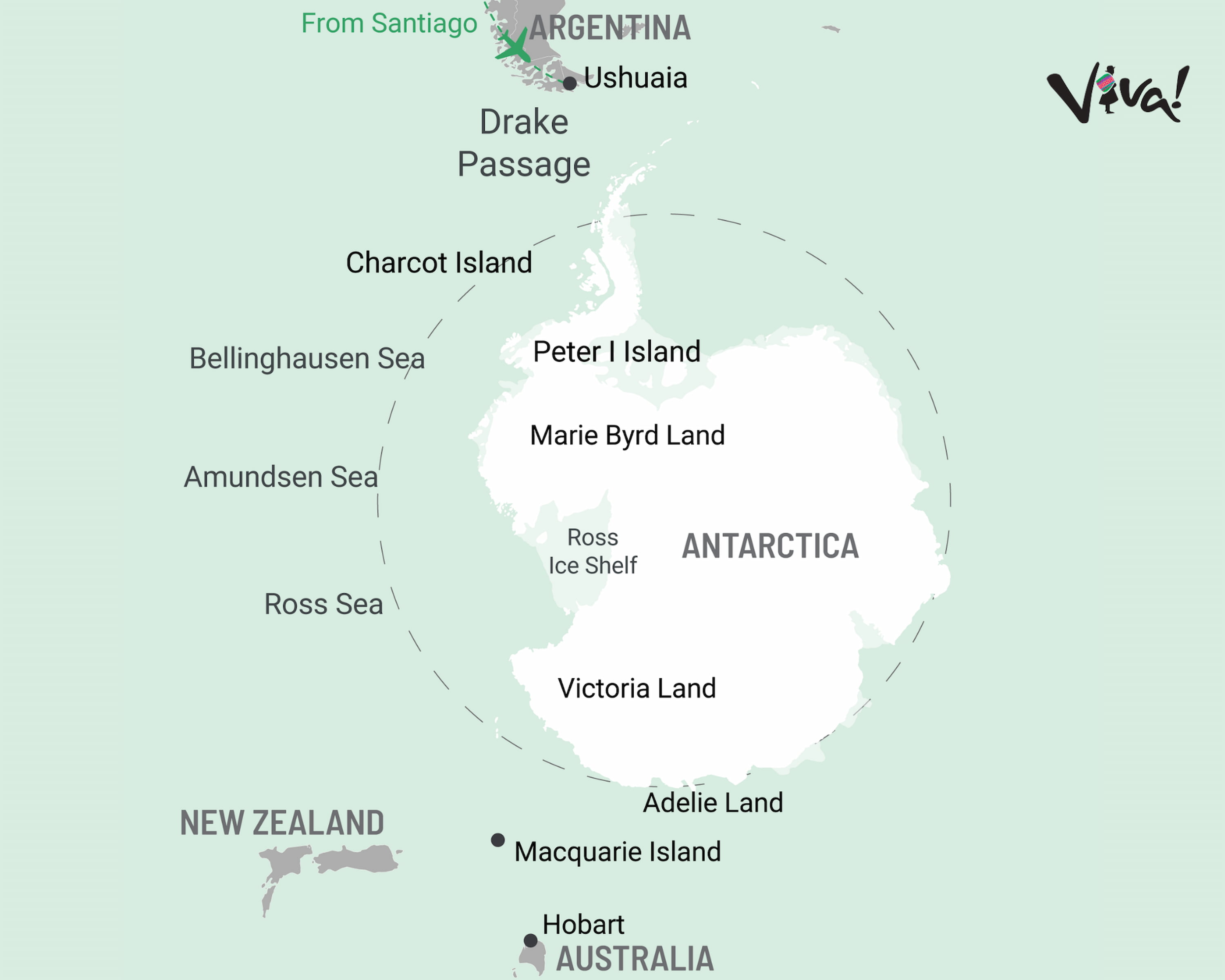
The Peninsula sits closest to the southern tip of South America, and that's the fastest way to reach the ice without flying.
“As opposed to what many people imagine, Antarctica is not the hardest-to-reach place on earth. There are several ways to get there, and our whole job is matching each traveller to the route that fits their time, their budget and their sea legs."
- Rachel Williams, Founder and Managing Director, Viva Expeditions
What is the BEST way to get to Antarctica?
The best option is always subjective and depends on several factors. Every option outlined below lands you in the same extraordinary place, so the choice comes down to time, budget, sea tolerance, where else you wish to explore and how far off the beaten track you want to go.
Here is a short read on each, with a link to the full guide when you want the detail.
Cruise from Ushuaia, Argentina
Ushuaia is the capital of Argentina’s Tierra del Fuego province, at the very bottom of South America. This is the southernmost city on earth and the closest launch pad for expedition cruises to Antarctica. As such, it offers by far the widest choice of ships, dates and trip lengths, from your classic 10- to 12-day Peninsula voyages like a Classic Antarctica cruise up to longer expeditions that add South Georgia and the Falkland Islands.
From here, you cross the Drake Passage by ship in both directions. Many travellers come to see this legendary stretch of water as an inherent part of the adventure rather than a hurdle to overcome. However, the very thought of it understandably gives some people pause. We'll get into what to expect, and how to decide, a little further down.
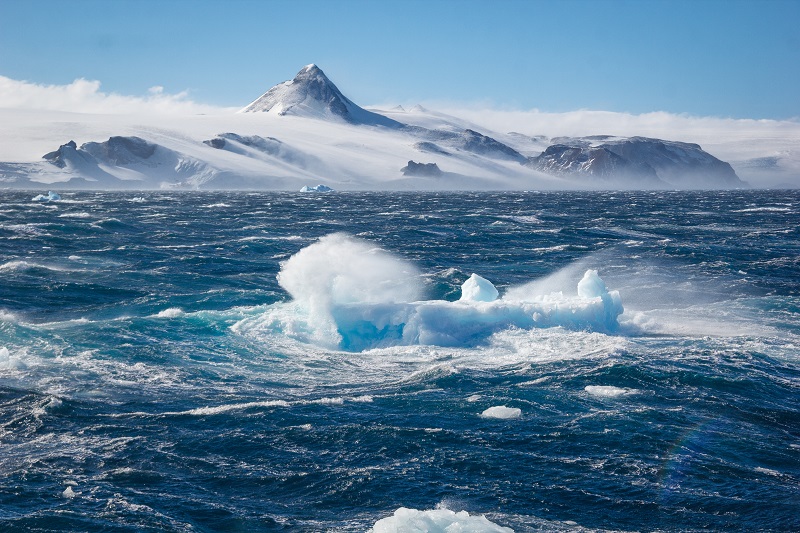
Antarctica is a remote and wild-as-can-be destination, so choppy conditions can happen even once you reach the peninsula. Captains are used to adjusting itineraries so they can get you exploring in calmer waters.
Cruise from Punta Arenas, Chile
Punta Arenas in Chile is the other major southern gateway, and here is where you’ll find Antarctica cruises that also explore the Chilean Fjords. Combined expeditions that cover both run for about 19 days.
Santiago is the usual entry point into Chile and connects well with flights from Oceania and North America.
Fly-cruise (skip the Drake Passage) from Punta Arenas (mostly) and Ushuaia (sometimes)
If two days of open ocean does not appeal, you can fly it instead. A charter flight from Punta Arenas reaches King George Island, just north of the Peninsula, in about two hours, from where you can join your expedition ship. Fly-cruise options save days at sea and sidestep the roughest water, so they’re a good choice for anyone short on time or prone to seasickness. You can also fly one way and sail the other, a nice middle ground that gives you one Drake crossing without committing to two.
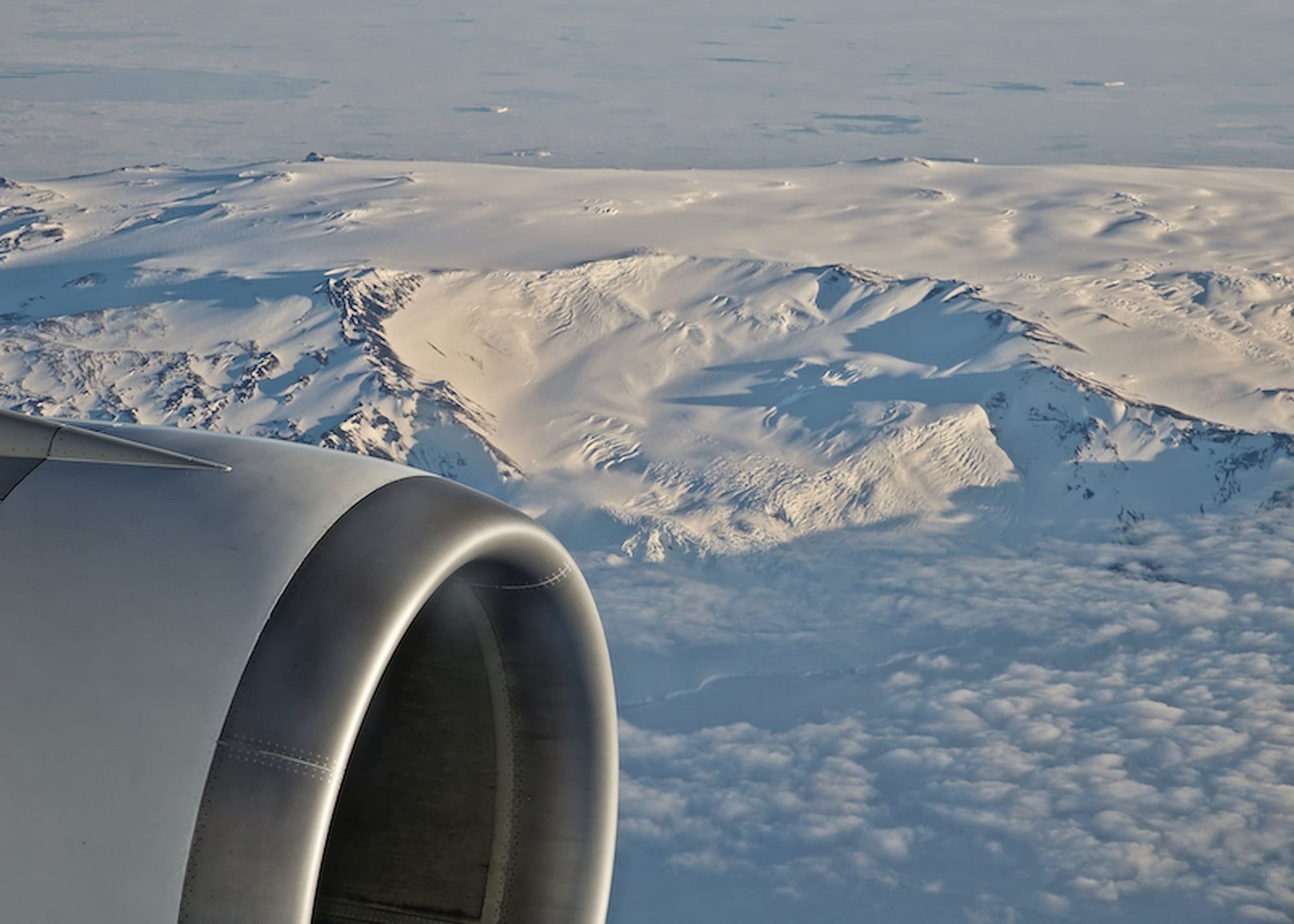
Two hours in the air instead of two days at sea? Your call to make.
“If the idea of the Drake fills you with dread, a fly-cruise changes everything, and you are stepping onto the ice within hours rather than days. Fear of the Drake (founded or not) should never get in the way of you experiencing Antarctica.”
- Pia Knarston, Antarctica Travel Specialist, Viva Expeditions
Cruise from New Zealand or Australia
A handful of voyages each season sail south from Bluff (near Invercargill), Dunedin, Christchurch or Hobart, heading to the Ross Sea region of East Antarctica. This is the remote, historic side of the continent, with the preserved huts of Scott, Shackleton and Mawson, huge tabular icebergs, and sub-Antarctic islands full of wildlife along the way. It takes around seven days of sailing to get there, so these are three- to four-week expeditions for travellers who want the wildest version of the trip. These expeditions sell out early, often a year or more in advance.

Expeditions to East Africa cross the Ross Sea, the world’s largest and remotest protected marine region, home to an ice shelf roughly the size of France, the world’s southernmost colony of Adelie penguins and the ever-elusive Emperors.
Should you cross the Drake Passage or fly over it?
This is the decision most people wrestle with, so it is worth its own dedicated mention. The Drake Passage has a fearsome reputation and, we won't lie, it sometimes deserves it. The most formidable water passage on earth suffers from a type of personality disorder, swinging between two moods that sailors have nicknamed the Drake Lake (when it is glassy and calm) and the Drake Shake, when it more than lives up to the legend.
The great thing is that the Heroic Age of Antarctic Exploration is long behind us and modern expedition ships nowadays are purpose-built to absorb the worst of the Drake on a bad day. Fitted with high-tech stabilisers and captained by crews who cross it constantly, a rough passage might be a tad uncomfortable at times, but it is not dangerous. Most of our guests come home raving about their passage as a highlight, not a trial.
That said, you do have the option of skipping it altogether, trading the sense of arrival, and the seabirds and whales that normally follow the ship, for speed and calm. Neither choice is wrong, per se, and all entirely dependent on you.
For a proper look at what a crossing is like, how rough it really gets, and how to prepare, read our Drake Passage cruise guide.
“Guests spend weeks worrying about the Drake, and then they spot their first iceberg or penguin colony and it's like "The Drake, who?!” My advice is to prepare for the Shake, hope for the Lake and take your medication early.”
- Tara Sutherland, Operations Manager, Viva Expeditions
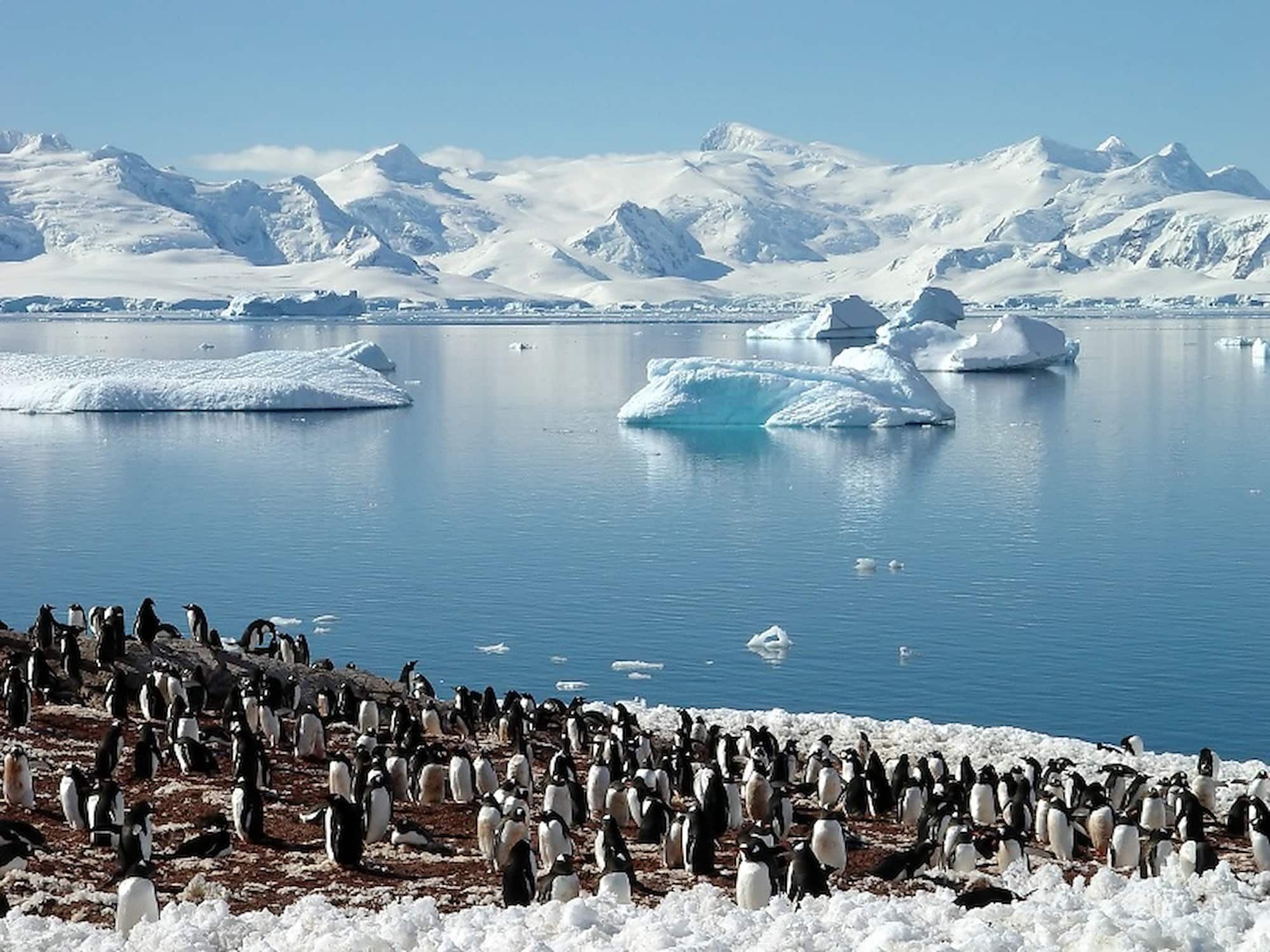
If it were easy, it wouldn’t be this jaw dropping.
Can you get to Antarctica from New Zealand and Australia?
Yes, and in two very different ways. The first is to fly to South America and join a Peninsula cruise from its southern tip, which is how most travellers from our part of the world reach the ice. It’s typically the fastest and most affordable route. A non-stop flight from Auckland to Santiago connects onward to the southern gateways.
The second is to sail all the way from Bluff, Dunedin, Christchurch or Hobart to the Ross Sea in East Antarctica. It is a far bigger commitment of time and sea miles, and a far more remote experience, and for the right traveller it is the trip of a lifetime.
Our dedicated guide, How to get to Antarctica from New Zealand, walks through all four options for Kiwis and Australians side by side. Travelling from further afield? How to get to Antarctica from the USA covers the routes, costs and timing for North American travellers.
“The voyages that sail straight from New Zealand take you somewhere hardly anyone gets to see. It is colder, wilder and much further, but you are following the great explorers into a part of Antarctica that stays with you for good.”
- Bryony Legg, Antarctica Travel Specialist, Viva Expeditions.
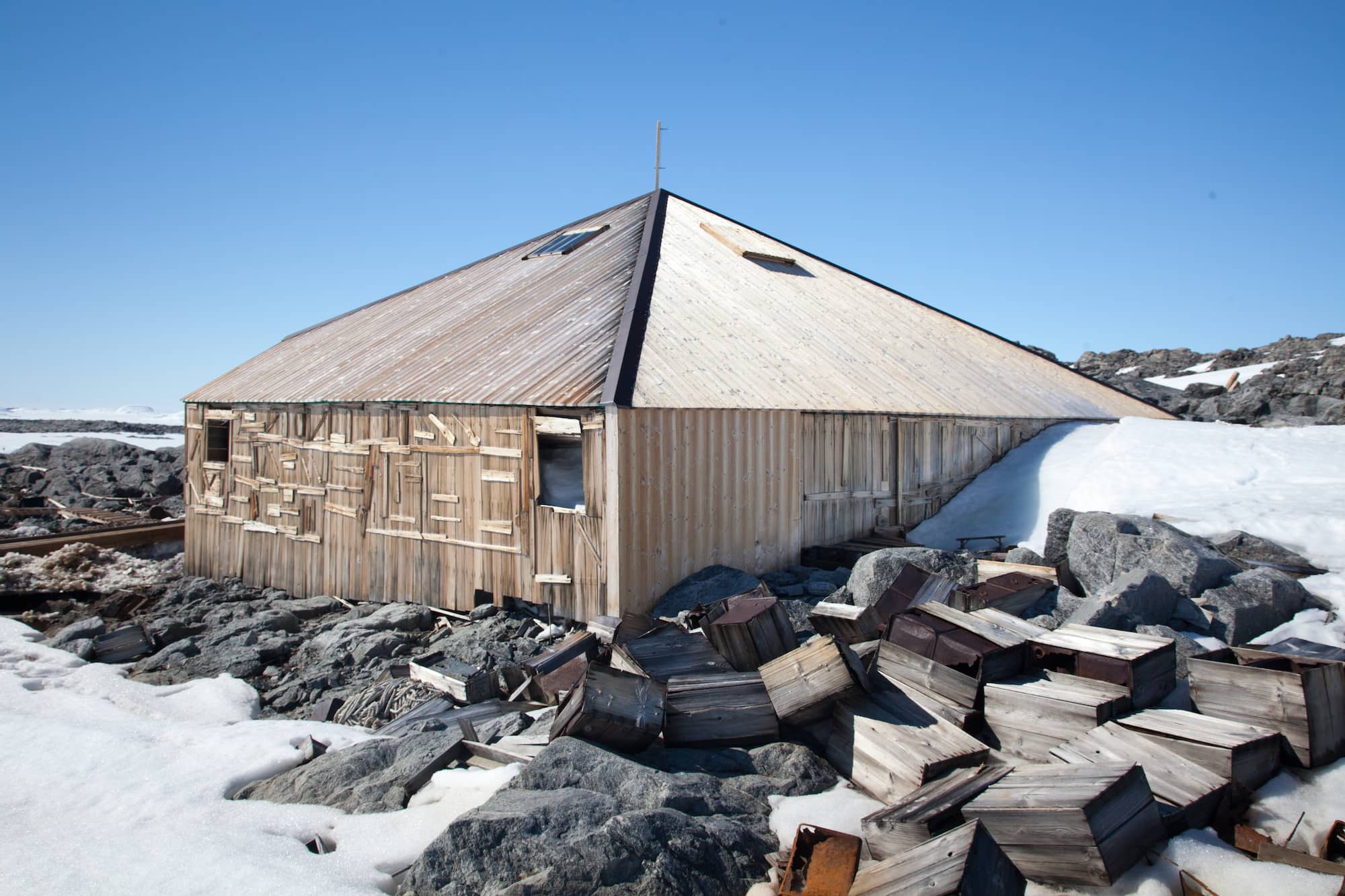
Mawson’s Huts, one of only six relics left from the Heroic Era of Antarctic Exploration, only reachable on expeditions to East Antarctica from New Zealand & Australia.
The most important piece of advice
Viva Expeditions recommends you plan in a buffer day (or more) no matter which city you choose as your preferred springboard, be it Ushuaia, Punta Arenas, Hobart, Bluff, Christchurch or Dunedin. Antarctica expedition ships do not wait, ever. If your flight is delayed or cancelled, you will thank all your lucky stars that you have a safety margin to reach your departure port in good time.
Which Antarctica gateway suits you best?
From experience, we can confidently say that your overall travel plans often tip the scales toward a particular starting point. Those planning only an Antarctica expedition often fly to Ushuaia and sail from there. Keep in mind that every gateway also opens the door to a very different second experience (before or after the cruise) that you may not have considered yet.
Here are the most popular tour combinations that might help you decide which Antarctica gateway is best for you:
Sailing from Ushuaia or Punta Arenas
You are already at the bottom of South America, so this is the moment to add Patagonia. Torres del Paine, the granite towers, the glaciers and the guanaco-dotted steppe sit right on your doorstep, at the best time of year to explore them all. A few days here before or after your cruise turns a single trip into a grand tour of the far south.
Entering via Santiago for a Chilean departure
Chile stretches almost the length of the continent, so there is plenty of room to build in the Atacama Desert, the Lake District or the wine valleys on the way through. Santiago is a brilliant city to explore for a few days and easily links all the above.
Cruising from New Zealand or Australia
Tack your East Antarctica voyage onto a longer look at New Zealand, from Fiordland and Queenstown to the dark skies of Stewart Island. Many of these polar voyages depart the deep south near Invercargill, so a South Island road trip slots in without backtracking.
There is no single best way to get to Antarctica, only the best way for you, and that’s the kind of puzzle Viva Expeditions love solving. Tell us how much time you have, how you feel about that passage, and what you most want to see, and our Antarctica Destination Specialists will point you to the route that fits.
Get in touch and we can help you map out your route south.
FAQs: Getting to Antarctica
How do you get to Antarctica?
Most people reach Antarctica by expedition cruise ship from Ushuaia, Argentina or Punta Arenas, Chile, crossing the Drake Passage in about 2 days. You can also fly from Punta Arenas to King George Island in about 2 hours and join a ship there, or sail from Bluff/Christchurch/Dunedin, New Zealand or Hobart, Australia to the Ross Sea, a 7-day crossing each way. There are no scheduled commercial flights to Antarctica.
How long does it take to get to Antarctica?
By ship from Ushuaia or Punta Arenas, about 2 days each way across the Drake Passage. By fly-cruise from Punta Arenas, about 2 hours by air. By ship from New Zealand or Australia to the Ross Sea, about 7 days each way.
Can you fly directly to Antarctica?
No scheduled commercial flights land on the Antarctic continent. You can fly on a charter flight from Punta Arenas, Chile to King George Island, just off the Antarctic Peninsula, in about 2 hours, then join an expedition ship from there.
Is the Drake Passage dangerous?
Modern expedition ships are purpose-built with stabilisers to handle the Drake Passage, and experienced crews cross it year-round. It can be uncomfortable when rough (the "Drake Shake"), but it is not considered dangerous, and most travellers describe it as a highlight rather than an ordeal.
Do you need a visa to visit Antarctica?
No. Antarctica isn't owned by any country, so no visa is required for the continent itself. However, you will need a valid passport (with at least 6 months' validity) and any visa required for your country of embarkation and disembarkation — typically Argentina, Chile, New Zealand or Australia — so check the entry requirements for whichever gateway country your trip departs and returns from. Travel insurance covering polar evacuation is also essential.
Can you get to Antarctica from New Zealand or Australia?
Yes, a small number of expeditions sail directly from Bluff, Dunedin, Christchurch or Hobart to the Ross Sea in East Antarctica. However most Kiwi and Australian travellers fly to South America and join a cruise to the Antarctic Peninsula from Ushuaia or Punta Arenas.
Laura Pattara
Laura Pattara has spent more than a decade writing about polar cruising at Viva Expeditions. While she has not yet set foot on the southern ice herself, she has mastered the art of turning expert accounts and field notes into guides that feel like the next best thing. Laura has a soft spot for penguins, perfectly packed duffel bags, and a well-earned cocktail in a wild place.
|