
9 days
Jewels of Zambia: South Luangwa & Victoria Falls
Experience the untamed wilderness and breathtaking landscapes of South Luangwa National park and Victoria Falls in one extraordinary journey.
There is something incredibly special about slowing your travel pace enough to match the rhythm of the African bush. A walking safari lets you step away from the hum and speed of a motorised vehicle and immerses you in a world where the only sounds and scent are from nature. You notice things you would never pick up from a game drive and connect to the landscape in a way that is hard to describe until you have actually tried it. This is one of the most unique safari experiences you can have in Africa. If you're a lover of slow travel and intense moments, it is unrivalled.
Before we explore where you can go and what to expect, it helps to understand how walking safaris work and why they have become one of the most rewarding ways to experience wildlife in Africa.
Here’s what we'll cover in this guide.
What Is a Walking Safari And How Does It Work?
Walking Safaris vs Game Drives
Where Can You Go On a Walking Safari
What A Walking Safari Feels Like: Real Moments From the Bush
Tips for Your First Walking Safari
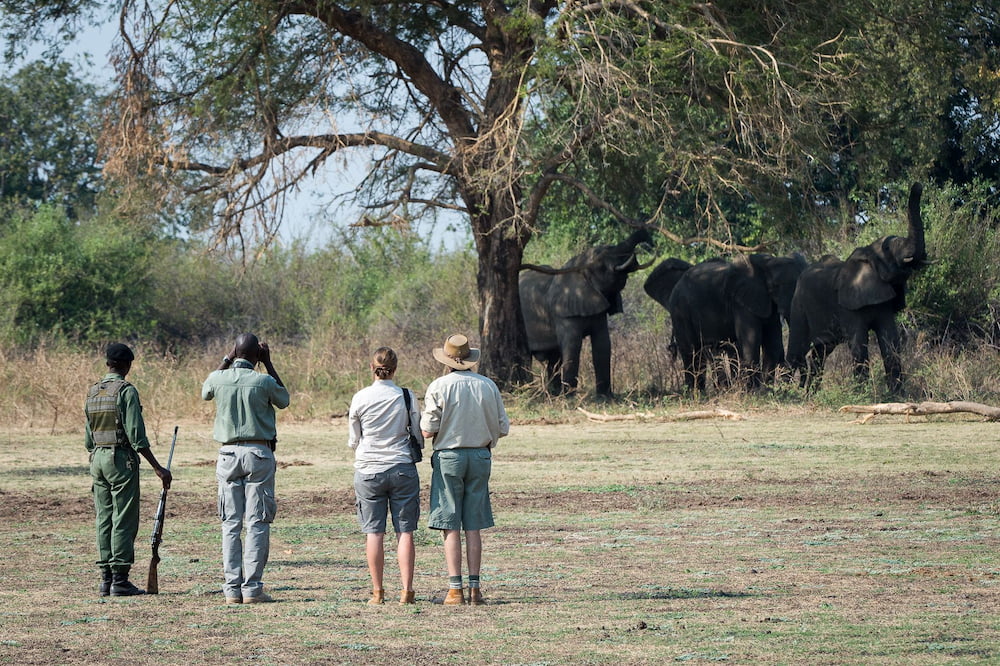
The name is pretty self-explanatory, although it still tends to leave prospective travellers a little puzzled. What do you mean...you walk in the African savannah? Yep, exactly that! Instead of driving from sighting to sighting, you explore the bush on foot with an expert guide and an armed scout. The pace is slow, steady, and immensely enjoyable. You’re not out there hiking or marching diligently but walking with intention, taking the time to see and smell everything.
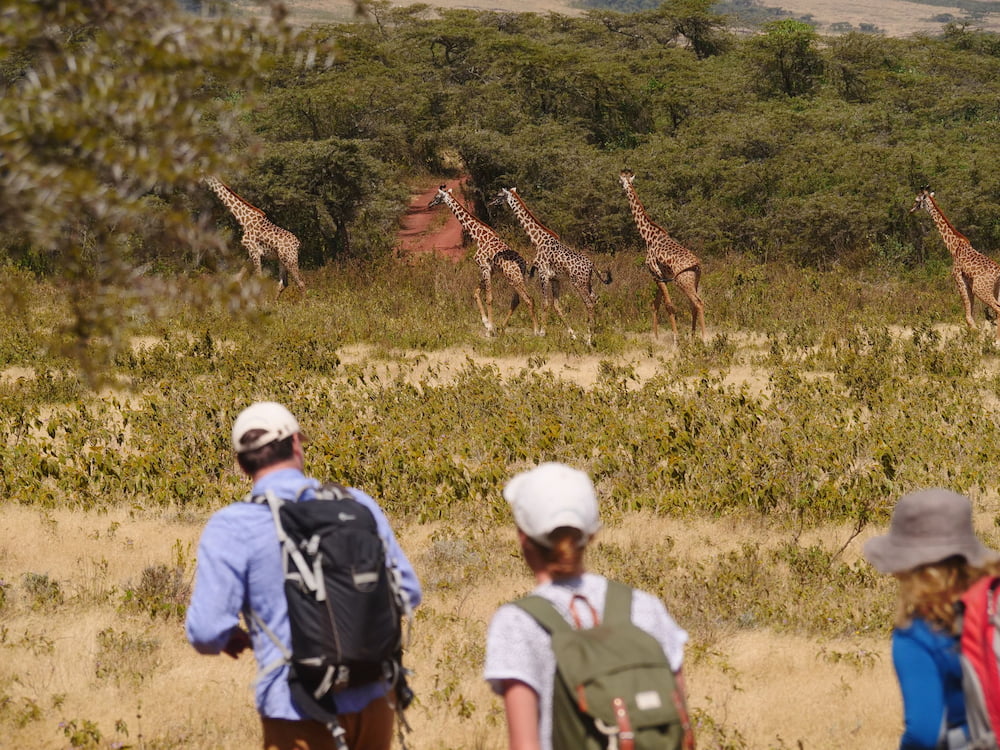
Exploring the savannah on foot is an extraordinary way to learn how the African ecosystems fits together.
Your guide teaches you how to read footprints, listen for alarm calls, smell changes in the wind, and understand animal behaviour. You might stop to examine a cheetah track or watch a herd of elephants from a respectful distance. Every moment feels more intense because, rather than being an observer from afar, you feel part of the very environment you've come to see.
Given their slow pace, walking safaris don't require supreme fitness. Most walks last two to four hours at an easy speed, followed by plenty of time to rest.
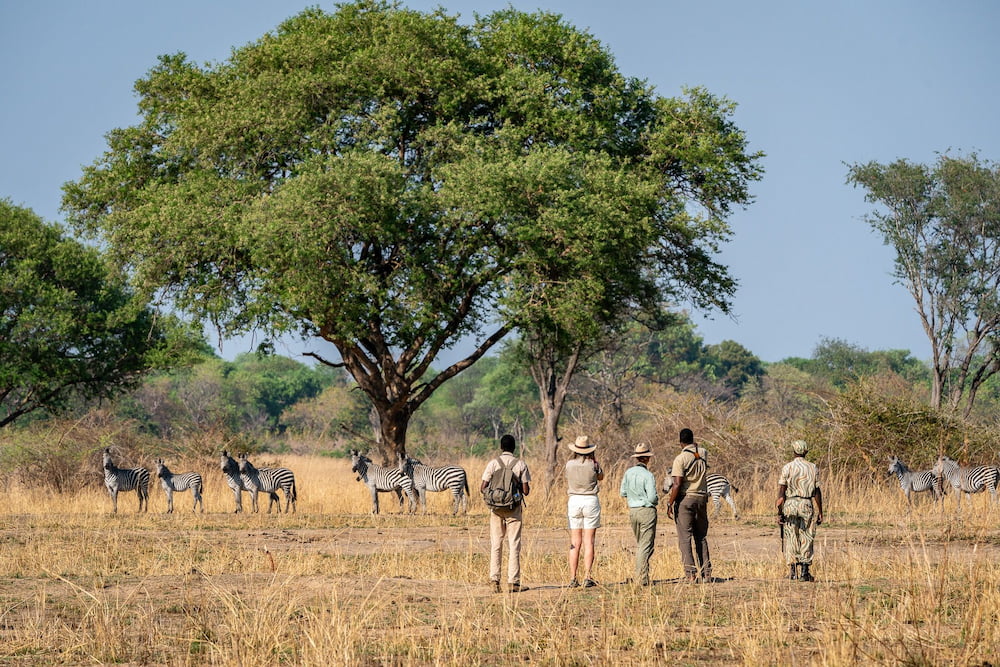
The focus of a walking safari is not on speed or step-count but on awareness, connection, and enjoyment.
Walking safaris give you a depth of experience that is very different from a traditional game drive. You begin to notice the smaller details that bring the bush to life. After just a couple of days, you'll be able to tell the difference between fresh and old animal tracks, or pick up a particular bird alarm call hinting at a predator nearby. You’ll also experience the temperature change when you step from open grassland into a shady grove, and understand why wildlife is so active at first light.
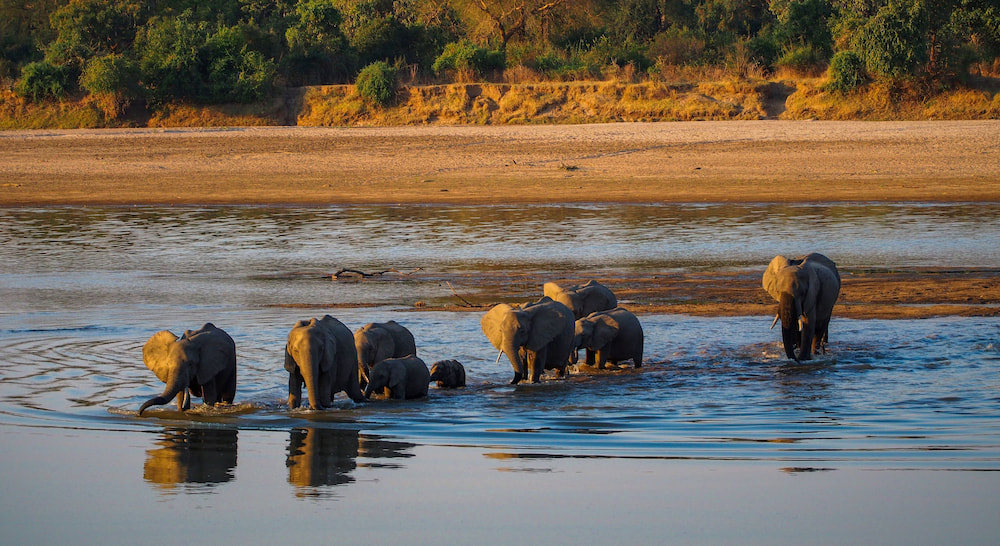
Dawn and dusk are when wildlife is on the move, and on a walking safari, so are you.
Guides often say that walking safaris turn guests into naturalists. Everything becomes interesting, from tiny flowers and termite mounds to the scatter of antelope dung on a path. And because you are on foot, the wildlife encounters you do have feel incredibly authentic. Seeing a giraffe look down at you from a distance or watching a herd of zebra move silently past you through tall grass are the kind of memories that’ll stay with you for many years to come.
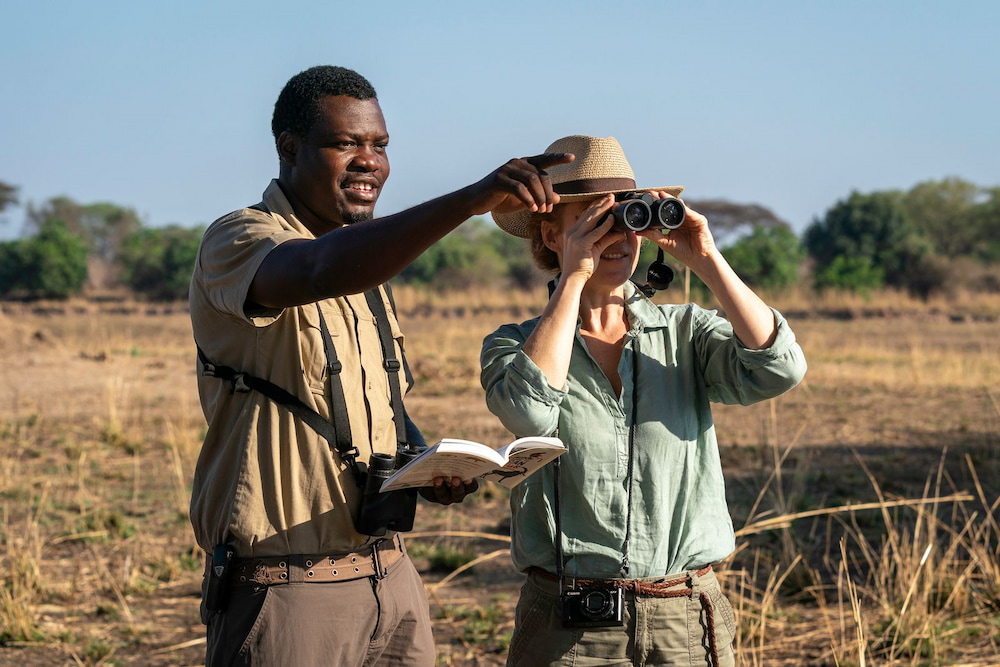
A walking safari in Zambia, or anywhere in Africa, is slow travel at its purest, where you’re not just ticking sightings but you are learning from the bush, at ground level.
Both experiences offer something different, and that’s why the best itineraries tend to blend the two.
Game drives cover more ground and give you the chance to see large wildlife quickly. They are ideal for lion sightings, big herds of elephants, and wide photographic views.
Walking safaris, on the other hand, are about feeling the bush around you. You might spend twenty minutes learning about a single tree or listening to a pair of hornbills call to each other. Some days serve up more sightings than others, but the quieter days are perfect for learning more about the bush.
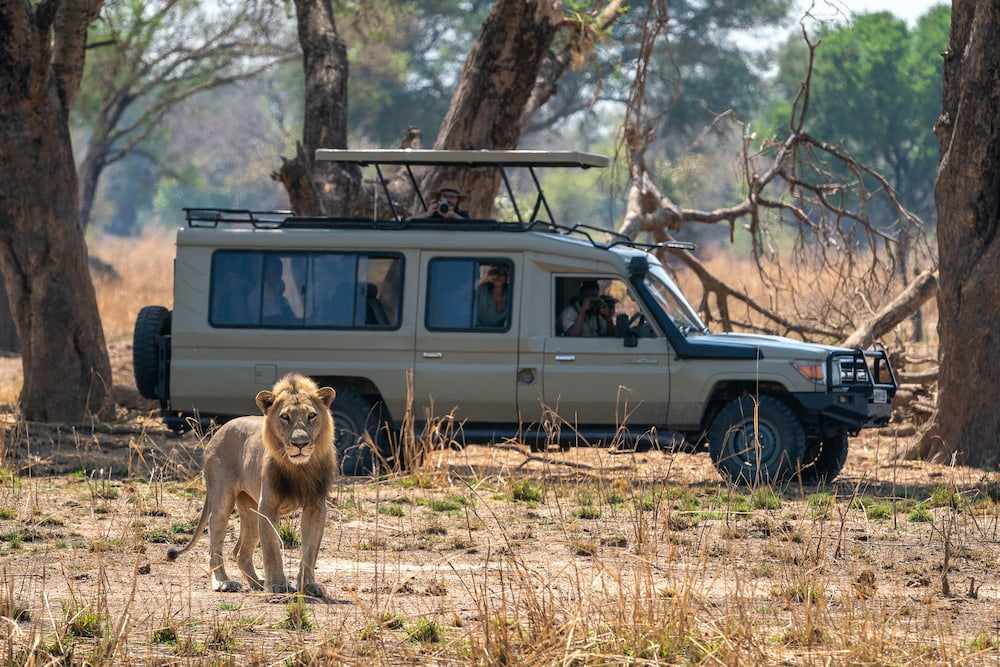
It's not a matter of having to choose a walking safari over a traditional 4WD safari – the two complement one another to deliver the ultimate, complete safari experience.
> Learn more about Animal Migrations in Africa
While walking safaris exist in several African countries, a few destinations stand out for their guiding expertise, top-notch infrastructure, and outstanding landscapes.
Often called the birthplace of the walking safari, Zambia is still one of the very best places to experience it. South Luangwa National Park is world famous for its experienced guiding teams, rich wildlife, and natural beauty. Lower Zambezi offers equally rewarding walking opportunities, combined with river-based activities like canoeing.
This is also where longtime walking safari guide Kanga Banda leads Robin Pope Safaris’ mobile adventures. As he puts it, “Every walk brings something new. No day is ever the same.” His knowledge, calmness, and warm personality are a big part of why so many guests fall in love with walking safaris in Zambia.
For the record, Kanga is one of Zambia’s most experienced guides and the proud recipient of the prestigious Chairman’s Award from the Zambia Tourism Agency.
> Experience Zambia on foot with Viva’s Two Rivers Walking Safari
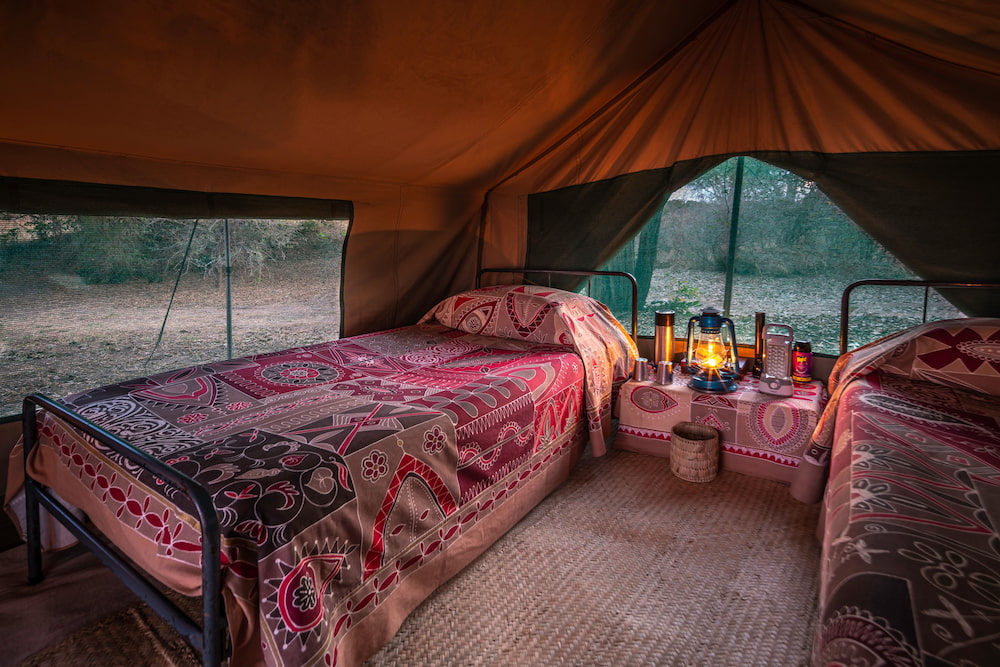
Two Rivers offers a classic walking safari experience with plenty of comfort in all the right places.
Northern Tanzania offers extraordinary walking opportunities in places like the Serengeti, Ngorongoro Conservation Area, and Tarangire. The walking experience here is about solitude, wide open landscapes, and the pleasure of exploring remoter areas that vehicles rarely reach. The mobile Wayo Walking Camp creates a real sense of a classic safari, with lightweight camps that move ahead each day to new wilderness areas.
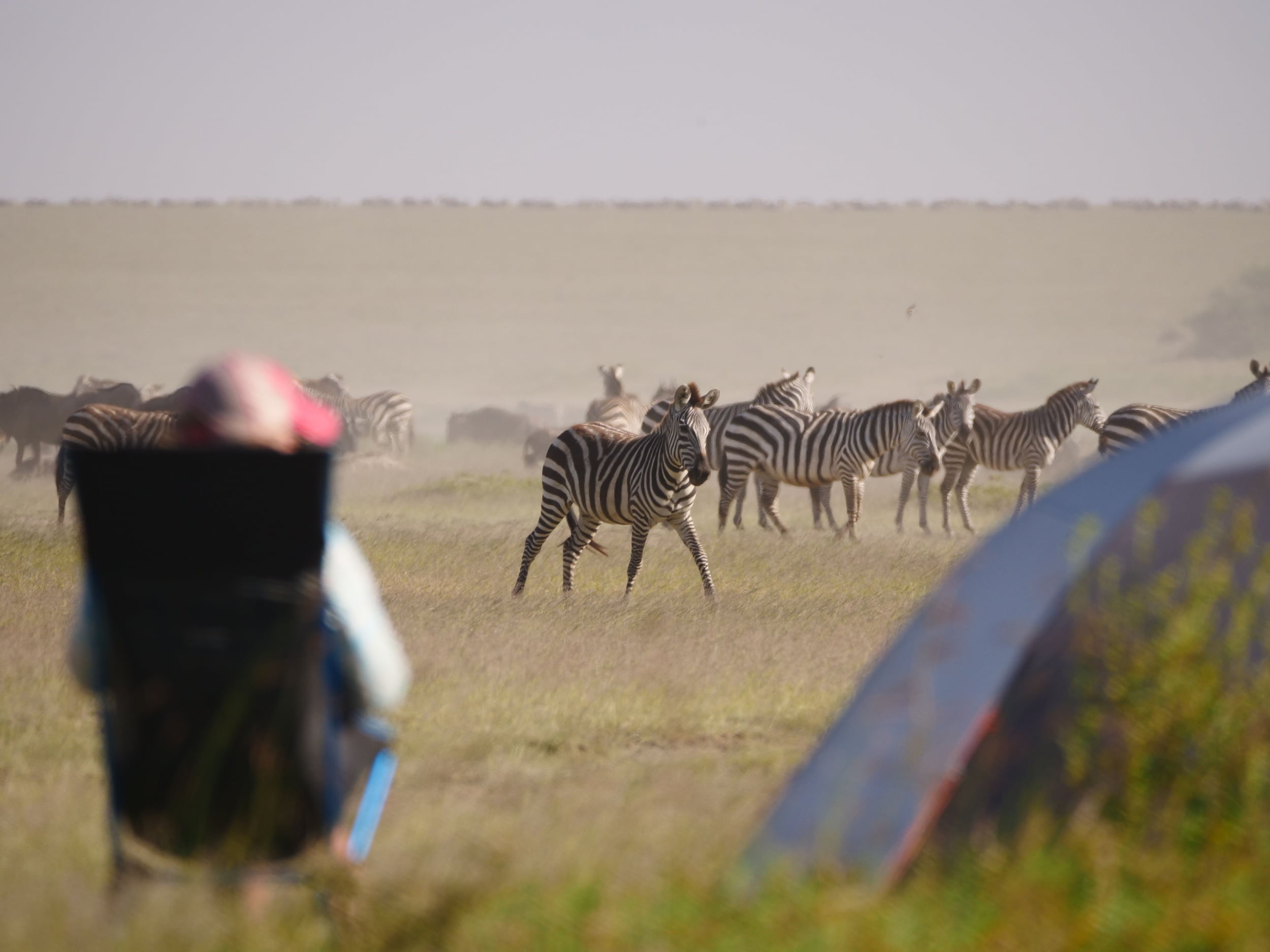
The Wayo Walking Camp is a more off-grid experience – light camp, big landscapes, and pure Serengeti freedom.
> Our Wayo Walking Camp Tour offers a beautiful way to explore the Serengeti on foot
Zimbabwe, Kenya, and South Africa also offer reputable walking safaris, but Zambia and Tanzania remain the top choices for the best and most established walking safari tours.
> Discover the Best Safari and Beach Combos in Africa
One of the best ways to understand a walking safari is to hear it from the people who lead them. Kanga Banda describes the early mornings on a mobile safari as a favourite part of the day.
“We are up before sunrise getting everything ready for guests,” he says. “Hot water outside the tent, Zambian coffee, porridge, and toast cooked on the fire. It surprises people how comfortable it all feels.”
While guests are out walking, the team moves the entire camp to a new location. As Kanga explains, “Guests always laugh when they find their book sitting exactly where they left it the night before. The team makes it look effortless!”
It's these small details that really make walking safaris feel magical. They are rustic, but in the best way, and with the team's dedicated service, you are left wanting for nothing.
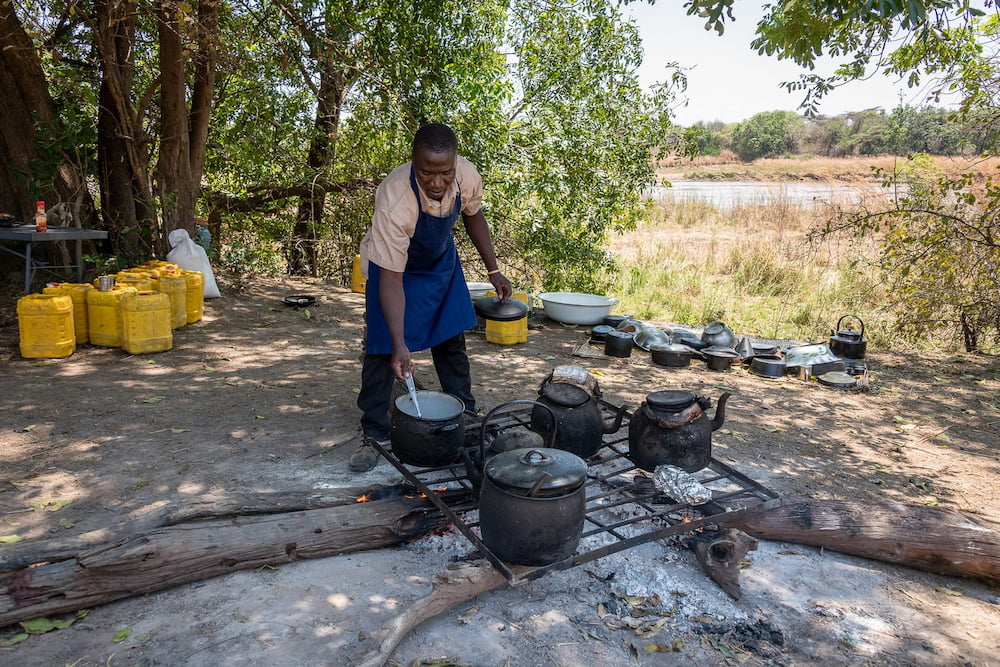
Well-organised walking safaris are comfortable and thoughtful, and run by teams who take enormous pride in their work.
> How to Stretch Your Budget on an African Adventure
Walking safaris are ideal for anyone who enjoys being active, curious, and present. You don’t need to be a seasoned hiker, but you do need to be comfortable walking at a relaxed pace for a couple of hours at a time.
They are perfect for travellers who enjoy learning, exploring, and understanding the land. They are the ones who tend to fall in love with this style of safari and keep returning to do more.
Note that families with younger children may find game drives more suitable and comfortable, although many operators offer short guided bush walks for older teens who are keen to join.
• Best time to go
If you love cool mornings and clear skies, June to October is the sweet spot. Days are dry, and wildlife viewing is excellent. Tanzania varies by region, but June to October is also a solid choice for most parks in the north.
• What to pack
Light, neutral clothing (no bright colours), proper walking shoes, sunscreen, a hat, a refillable bottle, and binoculars.
• How far you walk
Usually two to four hours in the morning at an easy pace, with optional shorter walks in the afternoon, which you don’t have to join if you prefer to rest.
• Safety
Walks are led by licensed guides and scouts trained to read animal behaviour. Safety briefings are always given beforehand.
• Weather
Mornings can be cool, and afternoons warm. Layers are your best friend on walking safaris – and actually on any safari trip.
• Wildlife encounters
Don't worry: you will never approach dangerous animals closely. Instead, you'll watch them from a safe distance and learn how animals behave in their natural habitat.
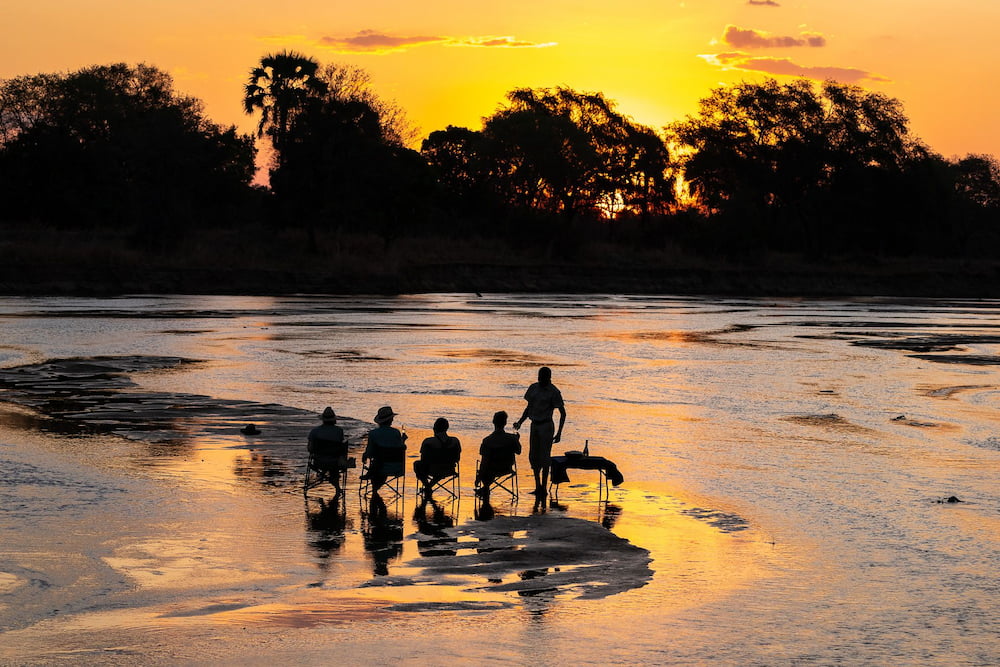
Surprising guests with sundowners by the shores of a river known to have no hippos or crocodiles – every step of the adventure is carefully planned by your guide and security scout.
What is a walking safari?
A walking safari is a guided exploration of the bush on foot, led by a qualified guide and an armed scout. The pace is gentle, and the focus is on observing, learning, and enjoying the small details you may miss from a vehicle.
Is a walking safari safe?
Yes, very much so. Guides are highly trained in animal behaviour and situational awareness, and strict safety protocols are followed. You walk in safe areas, and your guide explains exactly how everything works.
How close do you get to wildlife?
You always keep a respectful distance. The goal is to watch wildlife behaving naturally rather than approaching them closely.
Do I need to be fit?
A moderate level of fitness helps, but most walks are relaxed and taken at an easy pace. If you can walk comfortably for a couple of hours, you'll be perfectly fine.
What should I wear?
Neutral clothing (no bright colours), comfortable walking shoes, sun protection, and a light daypack for water and essentials. See more on What to Wear on Safari.
Where can I do a walking safari in Zambia?
South Luangwa and Lower Zambezi are the top choices and two of the best walking safari destinations in Africa.
What is a mobile walking safari?
It is a safari where the camp moves location while you walk, so a fresh, fully set-up camp is waiting when you arrive. It feels a little like magic.
How far do you walk each day?
Usually around 3 – 6 km (1.8 – 3.7 mi) in the morning, and optional shorter walks in the afternoon.
Can walking safaris also include game drives?
YES! In fact, most itineraries blend the two experiences, so you enjoy both close-up learning on foot and broader wildlife viewing from a vehicle.
What is the accommodation like?
Comfortable, low-impact tents with proper beds, private portable toilets, hot water, and delicious meals prepared on the fire.
Are children allowed?
Some camps accept older teens but do have age restrictions for safety. It is best to check with us first.
Still unsure which style suits you best? Our Africa Specialists can help! Whether you want Zambia’s rich wildlife encounters or Tanzania’s remote walking routes, our expert walkers can help you plan a journey that feels personal, immersive, and unforgettable.
Laura PattaraLaura Pattara has guided overland trips across Africa and now focuses her writing on the continent for Viva Expeditions. She once camped beneath a marula tree that an elephant tore apart during the night, yet somehow she still sleeps best in a tent. But make it glam! From sunrise balloon rides over the Serengeti to following the rhythms of wildlife migrations, Laura brings the wild heart of Africa to life with warmth, depth, and the occasional muddy boot. |
Experience the untamed wilderness and breathtaking landscapes of South Luangwa National park and Victoria Falls in one extraordinary journey.
Safari Tours: Embark on a remarkable safari tour in Africa, where untouched wilderness and incredible wildlife encounters await. Book your safari tour with Viva Expeditions for expert advice and carefully curated African adventures.
Unique Stays: Explore a world of extraordinary experiences with our Unique Stays, each tailored to enrich your journey with unforgettable adventures and authentic encounters.
Discover the heart of the wild Tanzania on this customisable walking safari. Enjoy immersive wildlife experiences and explore remote regions on foot.

Experience the untamed beauty of Zambia’s Lower Zambezi and South Luangwa National Parks, two of Africa’s most iconic wilderness areas