Peru trekking covers everything from a single morning’s climb to five days crossing high Andean passes. The Classic Inca Trail is the name everyone knows, but it’s only one of several Machu Picchu trail options, and each suits a different kind of walker. On some, you camp in the mountains while a trekking crew cooks your meals. On others, you finish the day at a lodge with an outdoor hot tub facing the peaks. Choosing well comes down to how you like to travel as much as how fit you are.
We asked our client Fiona Hillhouse, who has done both, how they compare. She camped along the Inca Trail in 2024, then came back with her friend Tracey for a lodge-to-lodge walk through the Lares Valley. She now has a firm favourite.
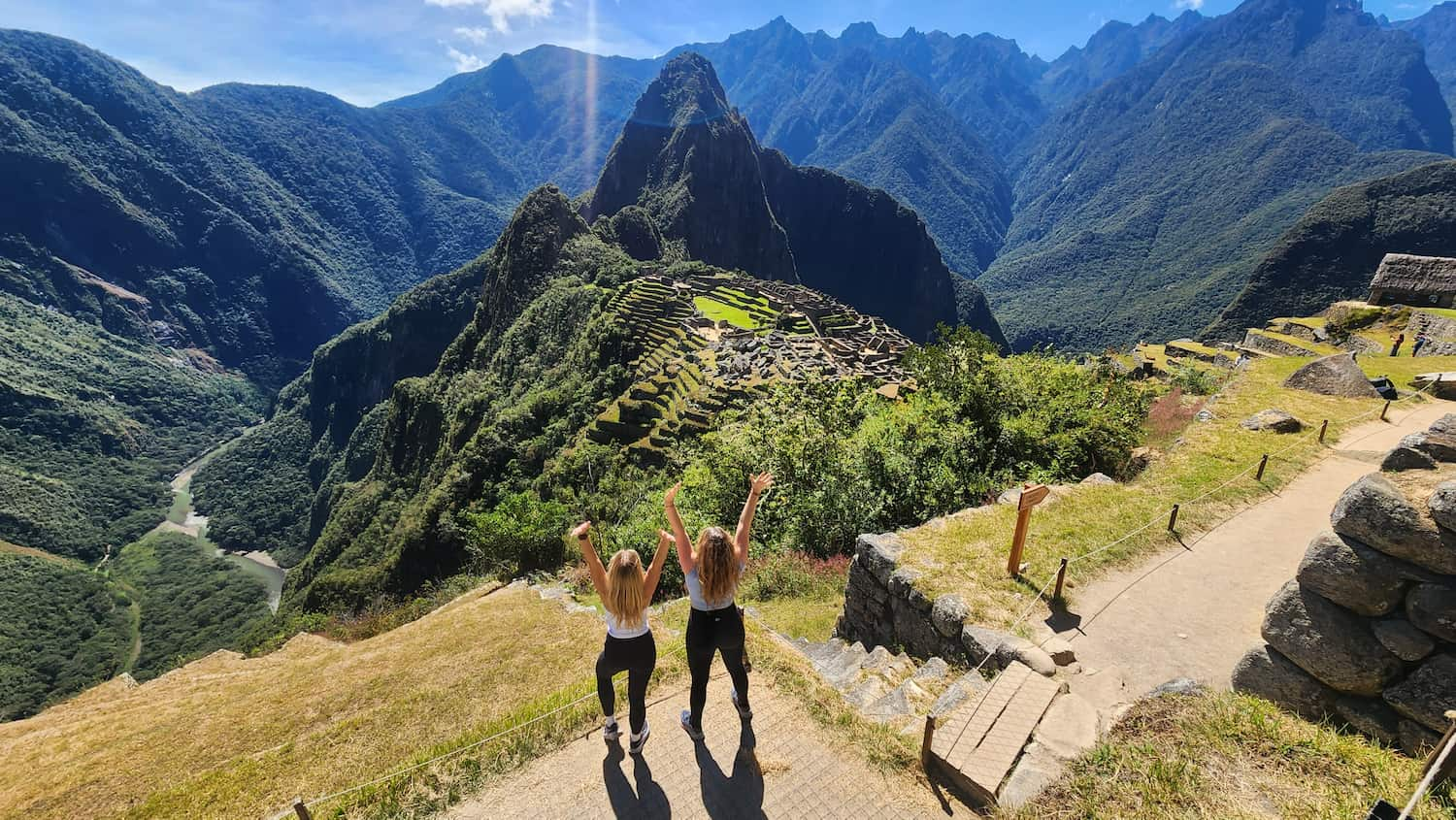
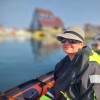
Fiona and Tracey celebrate reaching Machu Picchu on a gloriously sunny morning.
Most Peru trekking routes have Machu Picchu in their sights, one way or another. So the question is...which will you choose?
In this guide:
What are the main Machu Picchu trail options?
Who is the Classic Inca Trail best for?
What is lodge-to-lodge trekking in Peru?
What is the Lares trek like?
What is the hardest trek to Machu Picchu?
Is the Machu Picchu Mountain hike worth adding?
How do you prepare for walking in Peru?
What are the main Machu Picchu trail options?
Most treks to Machu Picchu start from Cusco or the Sacred Valley. From there, the experience varies quite a bit. Your first major decision is where you want to sleep.
Choose the Classic Inca Trail or the remote Choquequirao route, and you'll camp overnight. Porters carry the bulk of your gear and all the camping essentials like tents and supplies, so you only need a daypack. Cooks prepare your meals, which are enjoyed under a large, communal canvas.
On the lodge-to-lodge routes through the Salkantay and Lares regions, however, you sleep in a comfortable lodge, where you can have a hot shower and sleep in a proper bed. Again, you hike with a daypack while mules or vehicles move your luggage from lodge to lodge.
The challenge of trekking in Peru is not solely down to sleeping options. Some trails are also inherently harder than others.
Here's a general overview of what to expect:
|
Trek
|
Where you sleep
|
Effort
|
Best suited to
|
|
Classic Inca Trail (4 days)
|
Camping, 3 nights
|
Challenging
|
History lovers happy to camp for the thrill of reaching the Sun Gate on foot
|
|
Short Inca Trail (1 day on the trail)
|
Hotel in Aguas Calientes
|
Moderate
|
Anyone who wants the WOW factor of hiking into Machu Picchu without committing to a multi-day trek
|
|
Salkantay lodge to lodge (5 trekking days)
|
Mountain lodges
|
Challenging
|
Strong walkers who want glacier scenery and a comfortable bed
|
|
Lares lodge to lodge (4 active days)
|
Lodges and hotels
|
Easy to challenging, you choose each day
|
Friends or couples with different energy levels who enjoy village life
|
|
Choquequirao (8-10 days)
|
Camping
|
Very challenging
|
Experienced trekkers chasing solitude and a more remote Inca ruin alongside Machu Picchu
|
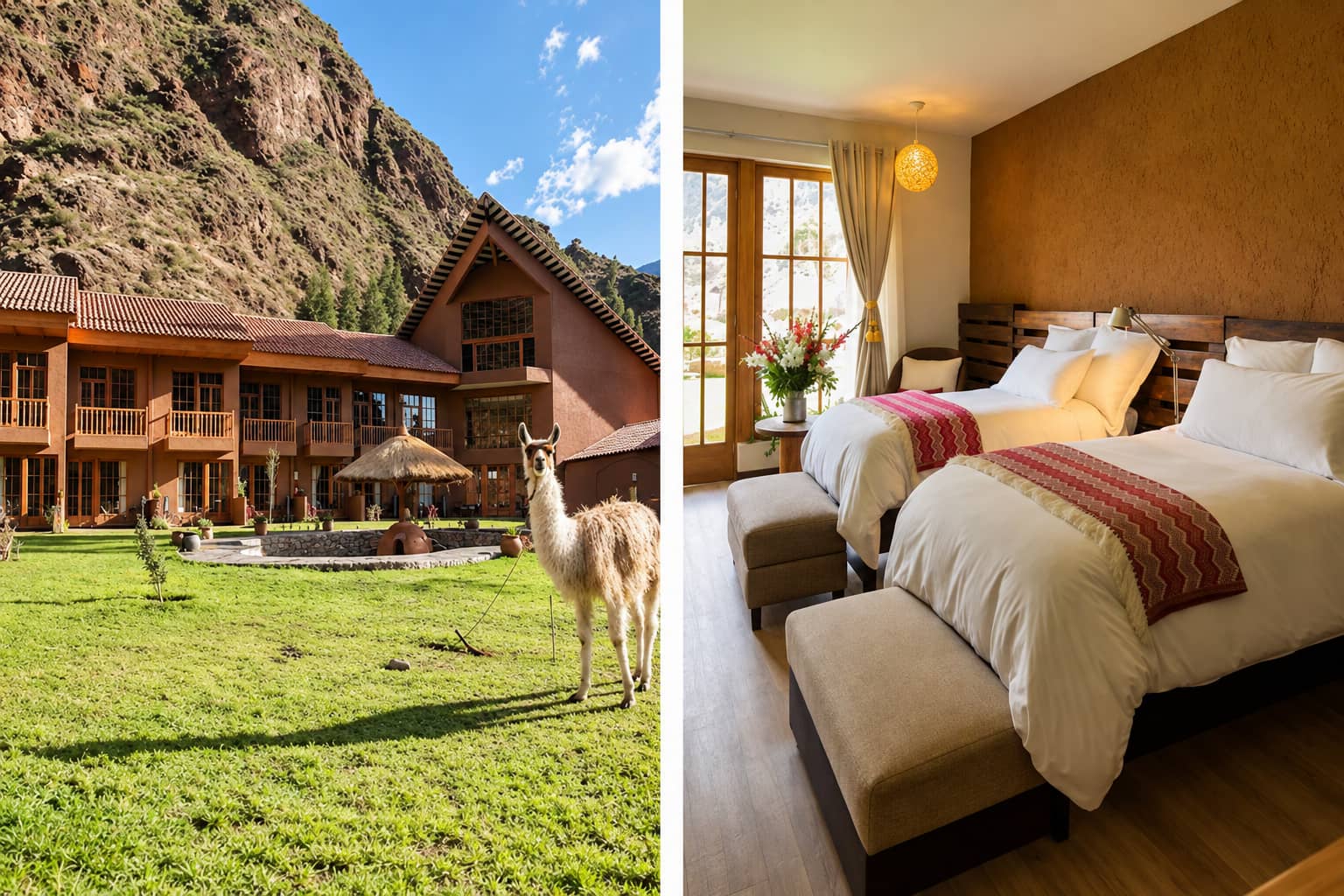
The beauty of a lodge-to-lodge trek in Peru? A comfy bed at the end of the day, and sometimes a llama welcoming committee too. Pictured: Lamay Lodge in the Sacred Valley.
Who is the Classic Inca Trail best for?
The Classic Inca Trail is the walk most people picture when they think of Peru and is considered a rite of passage for first-time travellers. Over four days and around 42 kilometres, it follows original Inca paving through cloud forest and past ruins you can only reach on foot. On the last morning, you arrive at the Sun Gate with Machu Picchu spread out below. The hardest day (day 2) crosses Dead Woman's Pass at roughly 4,200 metres.
Rachel Williams, founder of Viva Expeditions, has walked the Inca Trail three times. For her, the trail is as much of a draw as the destination:
"Walking the Inca Trail feels like following in the footsteps of the Incas. Along the way you come across ruin after ruin, some half-swallowed by forest. There's so much mystery and history that Machu Picchu ends up feeling like the cherry on top."
— Rachel Williams
It suits travellers who care about the history and don't mind roughing it for three nights. You sleep in tents, and porters carry the camping gear from one camp to the next. Facilities are basic, and the trail is busy in the dry season, although only relatively speaking. The trail is long, and groups start at different times, so you do trek in blissful peace for most of the way, even at the height of tourist season.
Our Signature Peru with Classic Inca Trail tour builds the trek into a comprehensive 10-day trip, with time in Cusco beforehand to help you acclimatise. It also adds a second, private guided tour of the citadel after you arrive, so you see parts of the site the standard trekkers' visit doesn't cover.
Before you set your heart on it, though, keep this in mind:
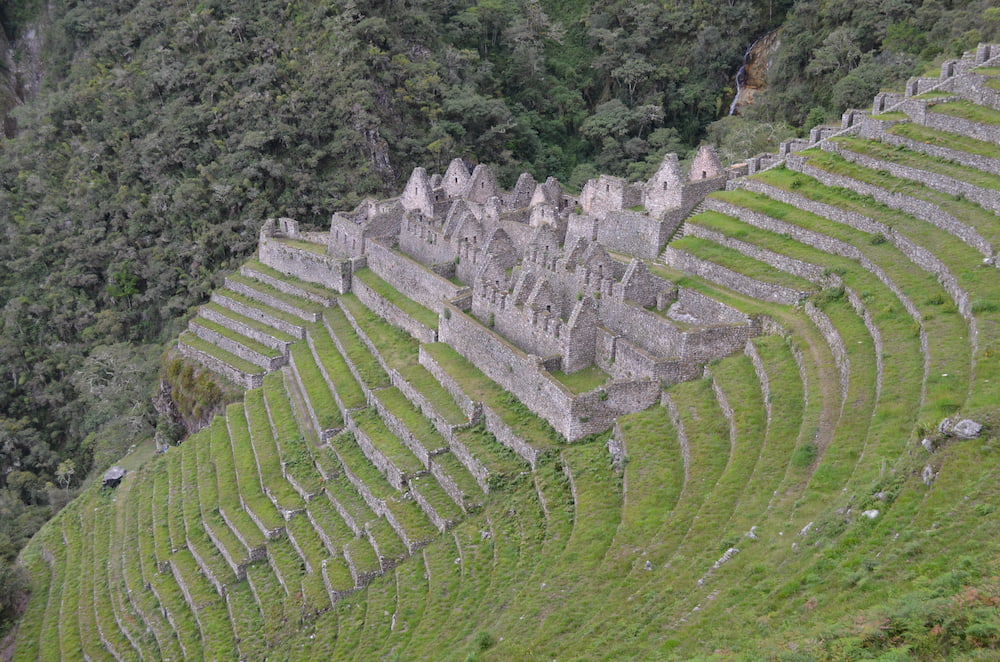
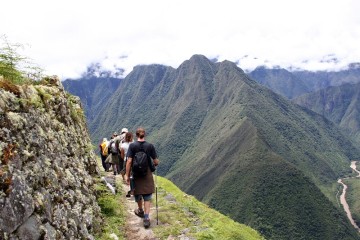
The Classic Inca Trail can be hard going, but it does guide you past ancient ruins, like the stone terraces at Wiñay Wayna, that you could not visit any other way.
What about the Short Inca Trail?
If the thought of camping for four days doesn't appeal, the Short Inca Trail gives you the best-loved final stretch in just a single day of hiking. You step off the train at Kilometre 104 and walk roughly 12 kilometres past Wiñay Wayna, arriving at the Sun Gate in the afternoon. After a night in Aguas Calientes, aka Machu Picchu Town, you return for a full visit to the citadel.
This trail also closes in February and requires permits yet they are much easier to secure than for the four-day trail. That makes it a fantastic fit for many of our travellers: you still walk into Machu Picchu on foot, with a hotel bed and a hot shower waiting at the end of the day.
What is lodge-to-lodge trekking in Peru?
The best-known operator of lodge-to-lodge treks is Mountain Lodges of Peru, which runs routes through the Salkantay and Lares regions with its own lodges along the way. You carry only a daypack while your main bag goes ahead by mule or vehicle.
Viva Expeditions recommends the lodge-to-lodge routes for travellers who want to walk hard by day and sleep in comfort at night.
Rachel has also walked both lodge routes, and first wrote about them in our lodge-to-lodge trekking to Machu Picchu article. For her, what sets them apart goes beyond comfort:
"What I love about Mountain Lodges of Peru is the partnerships they build with the communities whose land you walk through. Locals are trained and employed at the lodges, and in Huacahuasi the community are part-owners of the lodge. So you're giving something back, not just passing through."
— Rachel Williams
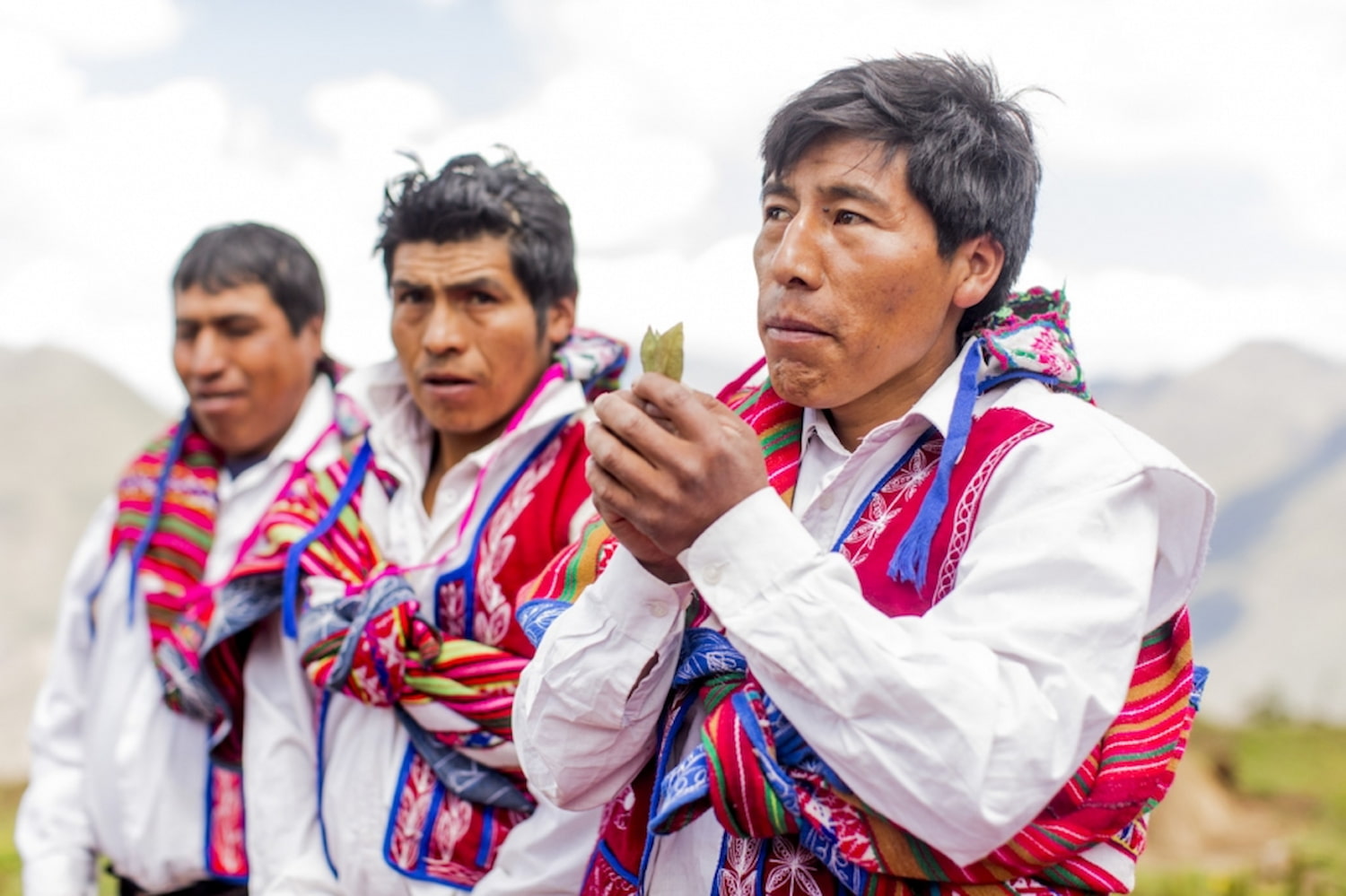
Trekking through community land means you get the chance to not only soak up the beauty of the Andes but also connect with locals.
Salkantay: for big mountain scenery
The Salkantay Lodge to Lodge Trek to Machu Picchu is the more demanding of the two. The trip is 10 days overall, with a few nights in Cusco and five nights in mountain lodges. The hardest day is around six hours on foot, over the Salkantay Pass at 4,636 metres. The lodges along the way have outdoor hot tubs, and massages are on offer when your legs need them. Near the end, the trail goes over the Llactapata Pass, with Machu Picchu in view across the valley.
"The Salkantay is my favourite for sheer beauty. You get snow-capped mountains on a massive scale and glacial lakes in colours you don't expect. Then the trail drops you down into lush rainforest. I also love that you arrive at Machu Picchu from behind, a view most people never see."
— Rachel Williams
The trail suits fit, experienced walkers who want the Andes at their most dramatic. And note that gratuities for lodge and field staff are included, which is one less thing to think about on the trail.
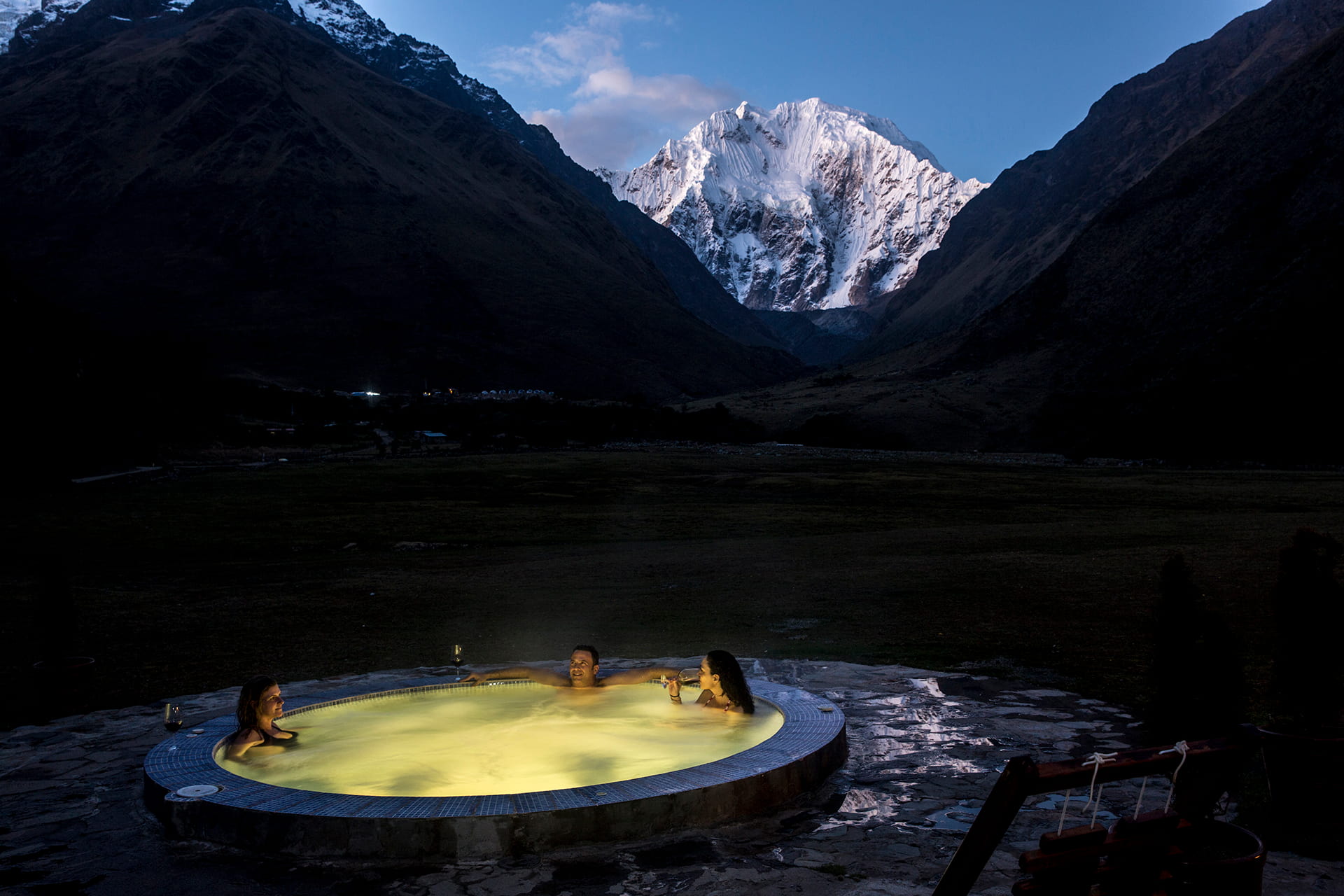
Aching legs meet mountain views. Hard not to be impressed.
Lares: for village life and flexibility
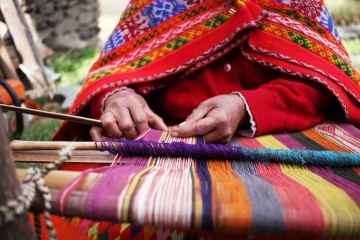
The Lares route trades some altitude for more time with Andean communities. Each day comes with a choice: a longer hike, or a shorter cultural outing such as a visit to a weaving community, with both groups meeting up again later. That makes it a good fit for friends or couples with different energy levels who won't mind splitting up for a few hours so everyone gets the Andes experience they want. Mountain Lodges of Peru runs it in two lengths: the six-day version Fiona chose, and a longer Lares 8-day trek.
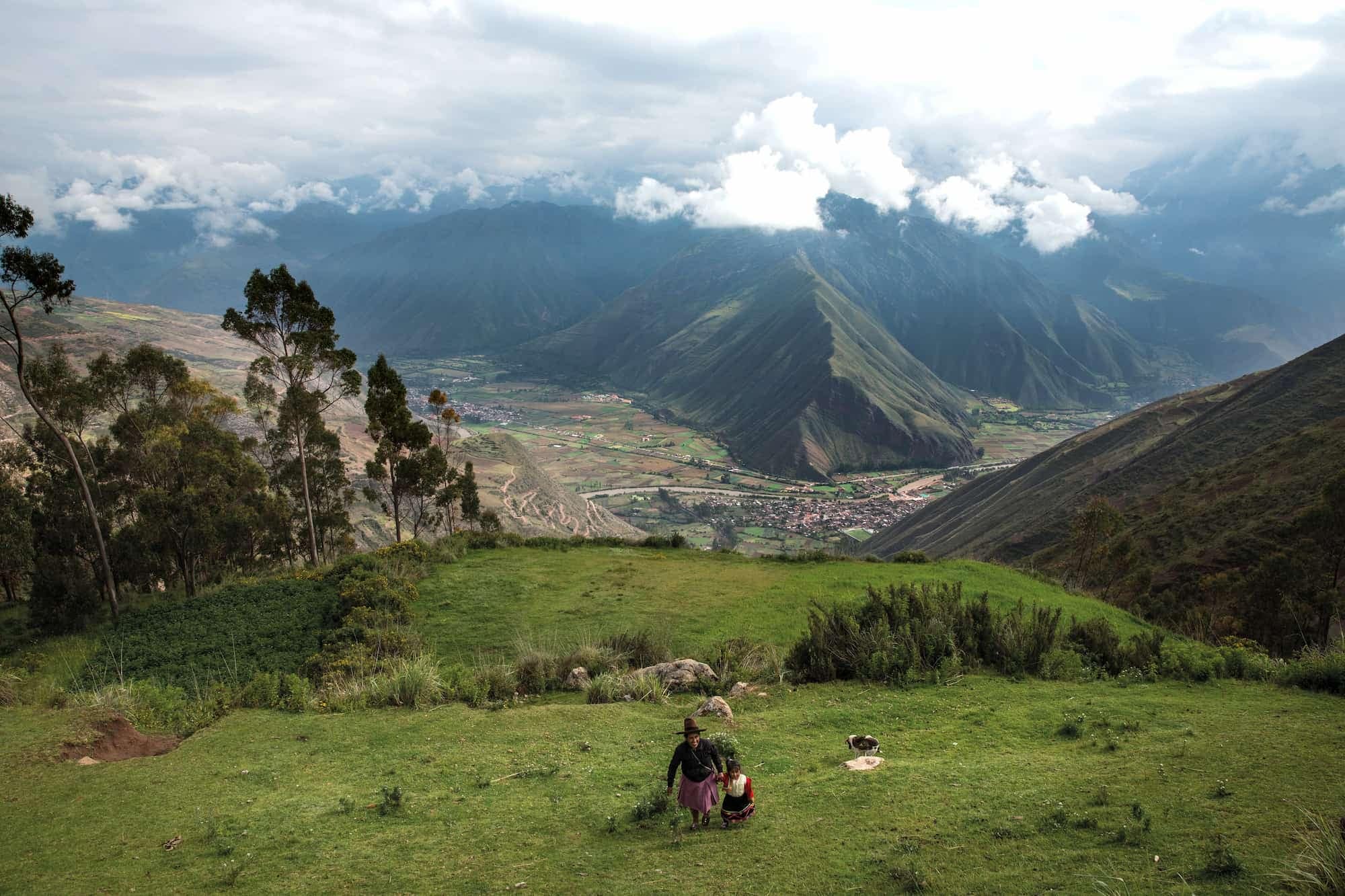
The Lares trail passes through more Andean villages than any other route to Machu Picchu.
What is the Lares trek like?
When Fiona returned to Peru with her friend Tracey, both keen hikers, they booked the Mountain Lodges of Peru Lares 6-day trek with us.
“After hiking the Inca Trail back in 2024, I have to say this was more my type of holiday: hiking through stunning scenery and fascinating ruins, then finishing the day in luxurious accommodation. It leaves you feeling refreshed and energised each day to tackle the next mountain climb!”
— Fiona, Viva Expeditions traveller
The trip runs from Cusco to Cusco, with the first full day in the Sacred Valley. You can hike or spend the morning at the Pisaq artesan market before a guided visit to the Pisaq ruins. Day three heads deep into the Lares Valley to Ancasmarca, a quieter site well off the well-trodden tourist circuit. A hike past turquoise lakes brings you to Huacahuasi and the community-owned lodge Rachel mentioned earlier.
From there, the route drops towards Ollantaytambo via the Pumamarka ruins. On day five, you take the train to Aguas Calientes, or pay extra to walk the Short Inca Trail to the Sun Gate. The last morning is spent on a guided tour of Machu Picchu before the journey back to Cusco.
As regular hikers, Fiona and Tracey loved how active the itinerary was. Fiona also singles out their guide, Carlos, and says her fellow group mates also felt the trip was worth every dollar. Her summary of who it suits is simple: anyone with a thirst for adventure in the great outdoors who would rather skip the camping.
Hard to argue with that!
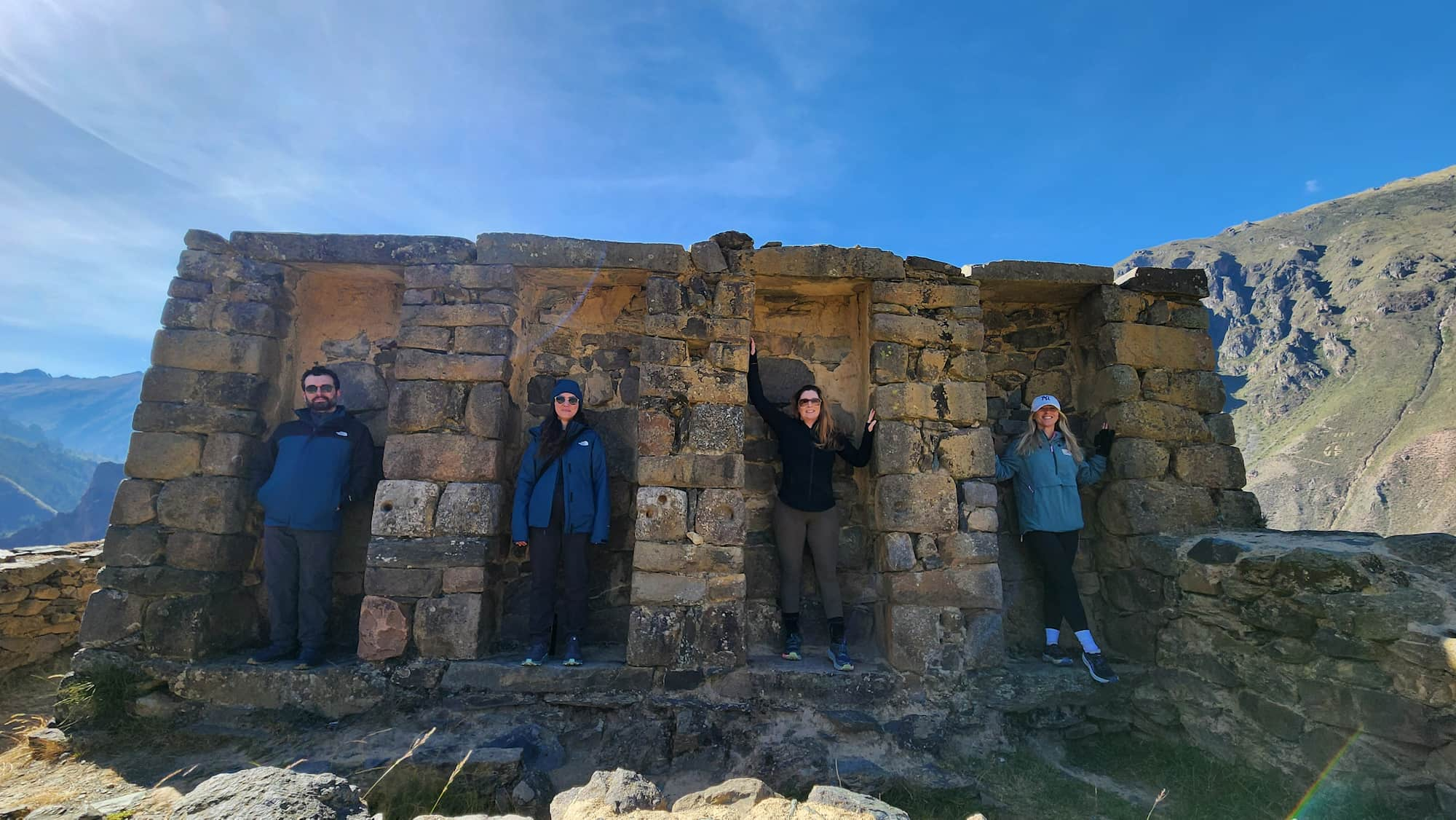
Fiona and Tracey's group at the Inca ruins of Pumamarka on the Lares route.
What is the hardest trek to Machu Picchu?
If you've already walked to Machu Picchu, or you'd trade comfort for solitude, Choquequirao is one of the best hikes in Peru for experienced trekkers. By most accounts, it's also the toughest way to reach the citadel.
Choquequirao is the name of a sprawling Inca site, one that sits on a high ridge above the Apurímac canyon. It rivals Machu Picchu in size and, possibly due to its relative obscurity, can be even more impressive. Archaeologists are still uncovering new sections, including terraces set with stone llamas. Since there is no road in, getting there means dropping to the river and climbing up the other side, close to 2,000 metres down then the same back up. That effort keeps the crowds away, so you normally end up sharing the ruins with just a handful of other walkers.
There are two options for this route:
-
Hike all the way to Machu Picchu: The full route continues from Choquequirao through the Cordillera Vilcabamba, crossing high passes beneath snow-covered peaks. This option means camping for 8-10 days. The final pass has a somewhat distant view of Machu Picchu before you drop down to the train for Aguas Calientes, from where you can visit the citadel the next morning. The last stretch joins the Salkantay route, so after days of near-solitude, you can expect some company.
Either way, Choquequirao is a serious undertaking. Days are long and steep and the camps are remote, so it's best reserved for seasoned trekkers who are well acclimatised. We don't run Choquequirao as a set departure, but our Destination Specialists can build either version into a tailor-made Peru trip.
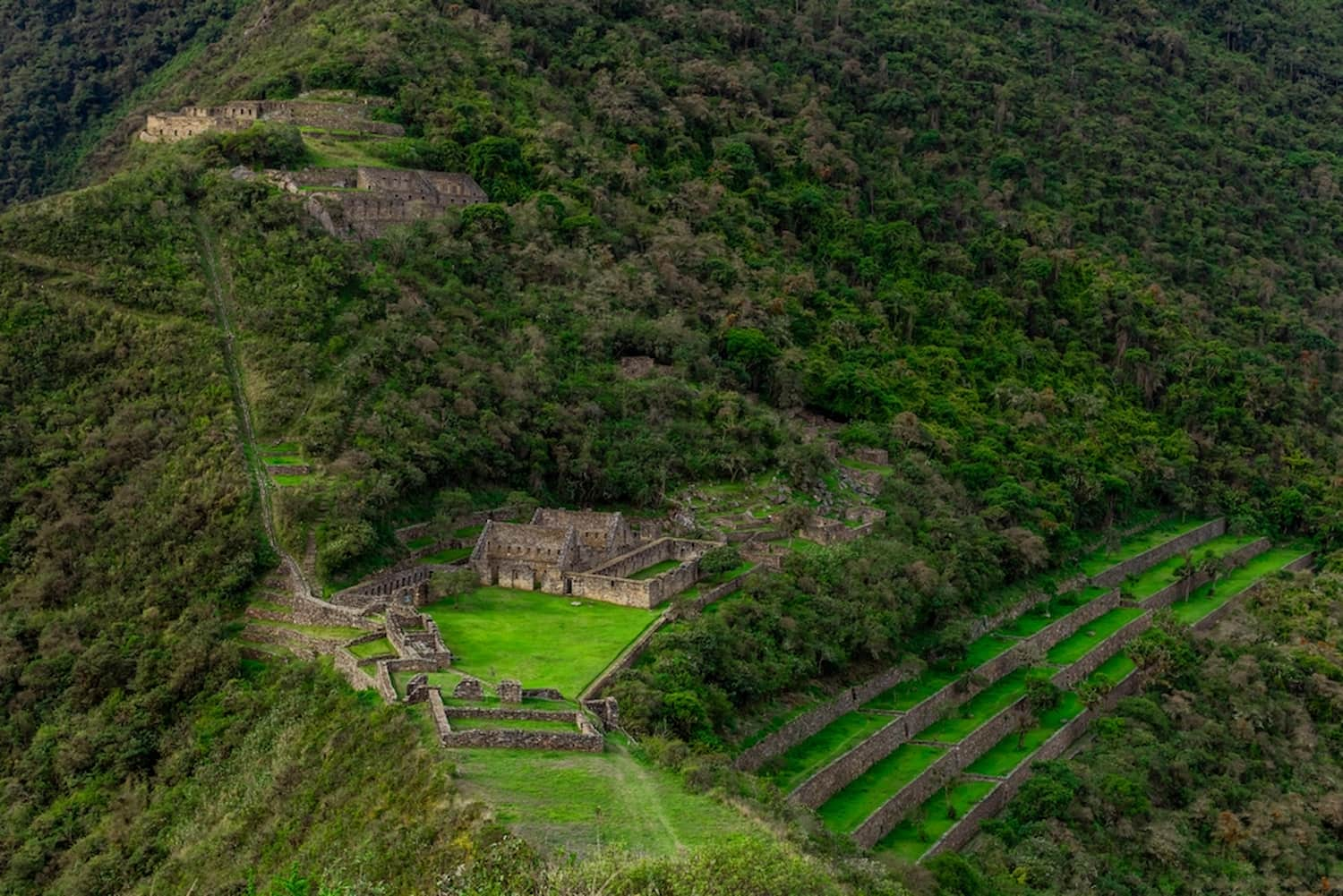
Often called Machu Picchu's sister city, Choquequirao sees only a fraction of the visitors. Reaching it on foot, and having it almost to yourself, is an indescribable treat.
Is the Machu Picchu Mountain hike worth adding?
Once you're at Machu Picchu itself, you have the option of hiking two peaks inside the sanctuary, both of which need a separate, timed ticket. Huayna Picchu is the steep, pointed summit behind the classic postcard view. Machu Picchu Mountain, on the opposite side, is the higher of the two at around 3,100 metres, and most people take a couple of hours to climb to the top.
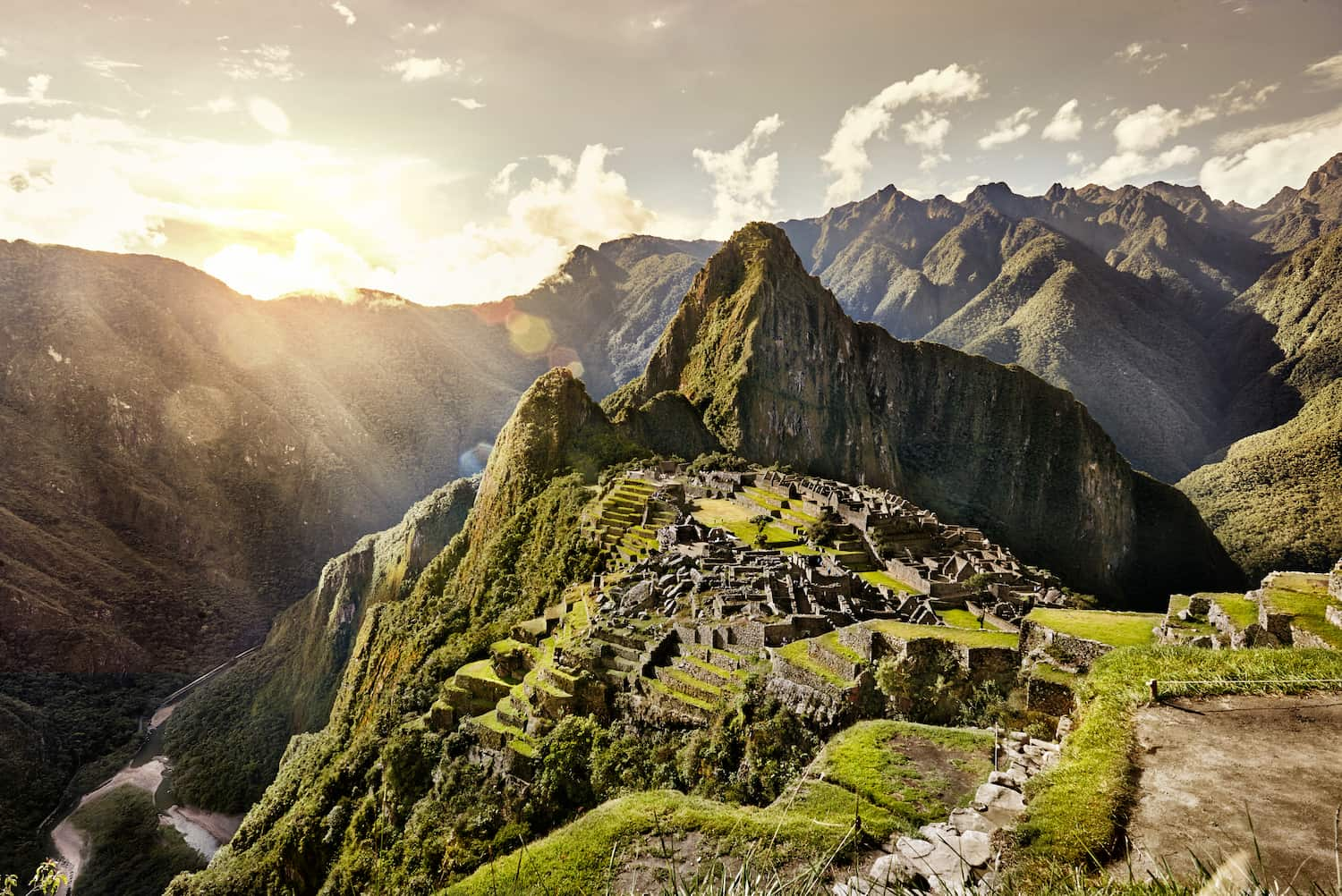
Most people assume the big peak in this view is Machu Picchu Mountain, but it’s actually Huayna Picchu. Machu Picchu Mountain sits behind the camera, looking back at this view.
On the Lares 6-day trek, it's the alternative when Huayna Picchu tickets are sold out. Fiona added it to her day at the citadel.
“The Machu Picchu Mountain hike was well worth the add-on, with incredible views! I would say it's a harder hike than the Inca Trail, due to the steep and long climb up, but so worth it.”
— Fiona, Viva Expeditions traveller
That comparison might surprise you, but the route packs roughly 600 vertical metres of stone steps into a single morning, whereas the Inca Trail spreads its climbing across four days. Tickets for both peaks are limited, so let us know when you confirm your booking if you'd like one.
→ Our guide to climbing Huayna Picchu covers the other peak in more detail.
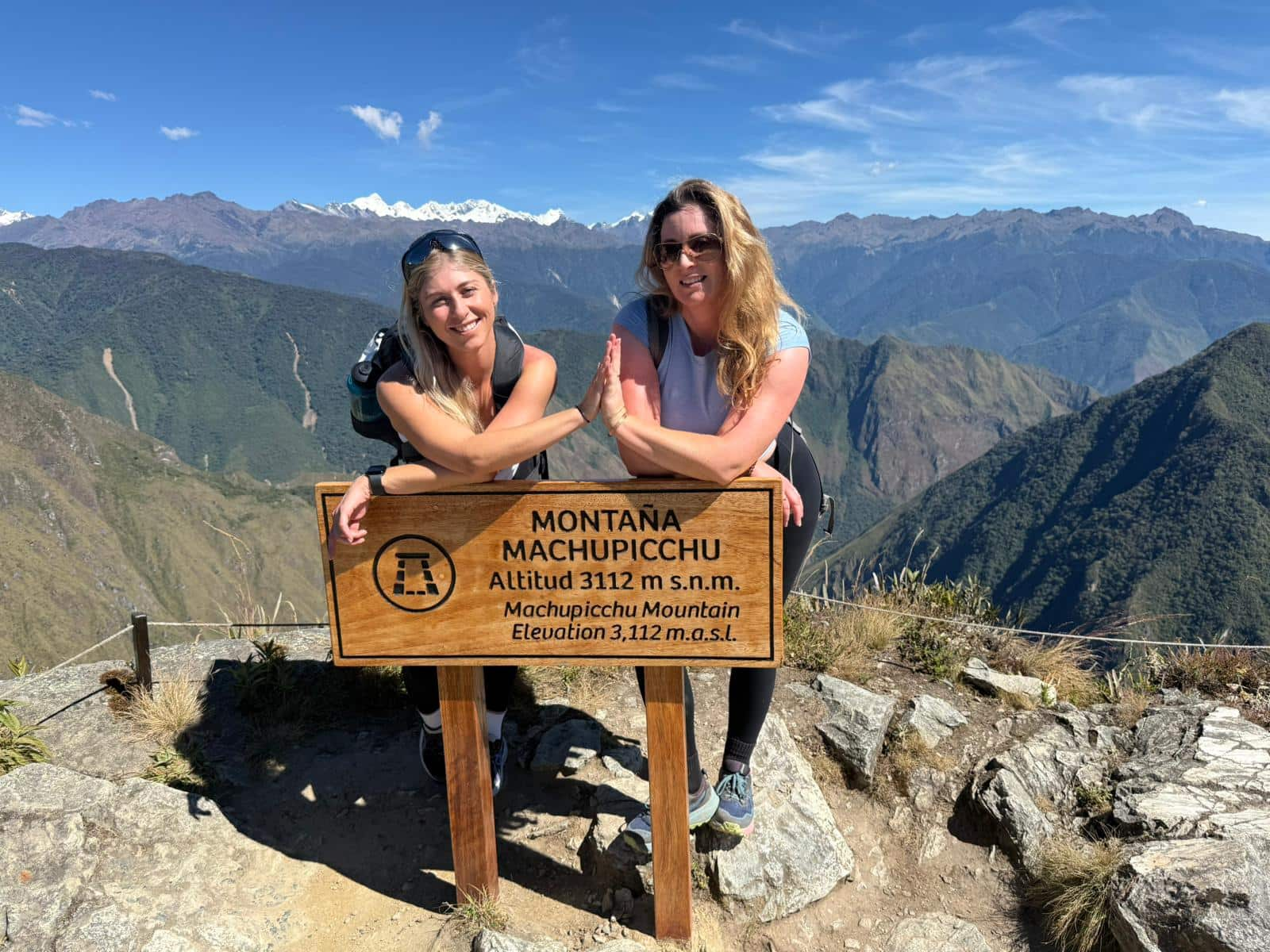
Huffing and puffing, but worth every step: Fiona and Tracey at the top of Machu Picchu Mountain.
How do you prepare for walking in Peru?
Viva Expeditions recommends at least two nights in Cusco before starting a multi-day trek to Machu Picchu, so you're acclimatised before the first climb.
Altitude affects everyone differently, and being fit is no guarantee you'll escape its wrath. The reason spending a few days in Cusco really helps is that the city sits at around 3,400 metres, higher than Machu Picchu itself. It is the perfect place to get your body used to the altitude. Medication can also help.
“Altitude is something to be mindful of. This time, by taking the altitude sickness pills, I managed much better than in my previous visit. It is important to take things slowly to allow your body to adjust.”
— Fiona, Viva Expeditions traveller
Some tips to help:
-
Pack layers: Mornings at altitude can be close to freezing, while afternoons in the cloud forest turn warm and humid. By midday, you'll be hiking in a T-shirt, so layers are the only way to go.
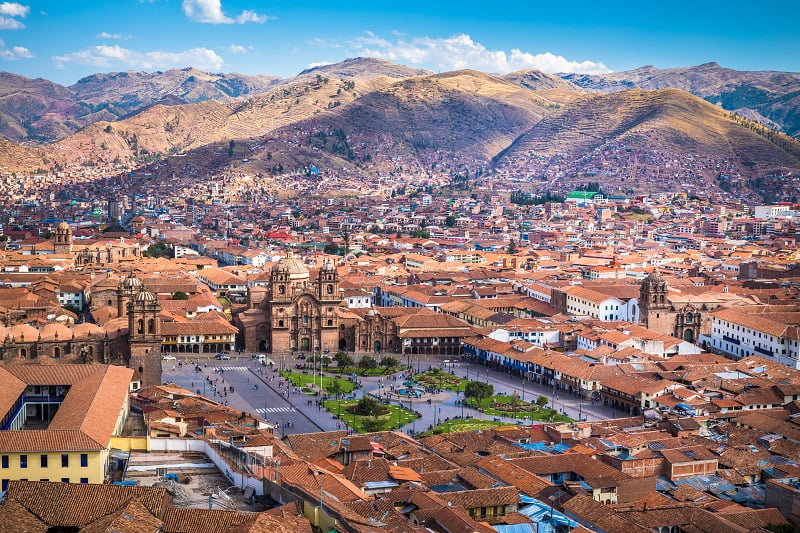
Cusco is the best place to let your lungs catch up.
Which Peru trekking route is right for you?
The right trail comes down to how hard you wish to trek and where you'd like to be when you’re done walking for the day. Want more personalised advice? Treach out to our Destination Specialists and they can lay out all your options, then build the rest of your Peru journey around the experience.
Talk to us about your Peru trek plans!
Laura Pattara
Laura Pattara has guided overland trips across Africa and now focuses her writing on the continent for Viva Expeditions. She once camped beneath a marula tree that an elephant tore apart during the night, yet somehow she still sleeps best in a tent. But make it glam! From sunrise balloon rides over the Serengeti to following the rhythms of wildlife migrations, Laura brings the wild heart of Africa to life with warmth, depth, and the occasional muddy boot.
|