What does a small ship cruise give you that a road trip can't? In South America, it gives you access to some of the continent's wildest and most inaccessible highlights.
In much of the world, a cruise is usually a fancier way to see places you could otherwise drive or fly to. Small ship cruises in South America are a different proposition altogether. Many of the continent’s best places have no road in, so the ship is the only way to do them justice. Groups are small, and most of each day is spent off the ship with a naturalist or local guide, landing among nesting seabirds one day and walking through a riverside village the next. Destinations range widely, from river cruises deep in the Amazon to expedition cruises past glaciers spilling off the Patagonian ice fields.
In this guide, we look at where a small ship can take you in South America, and what to expect once you’re on board.
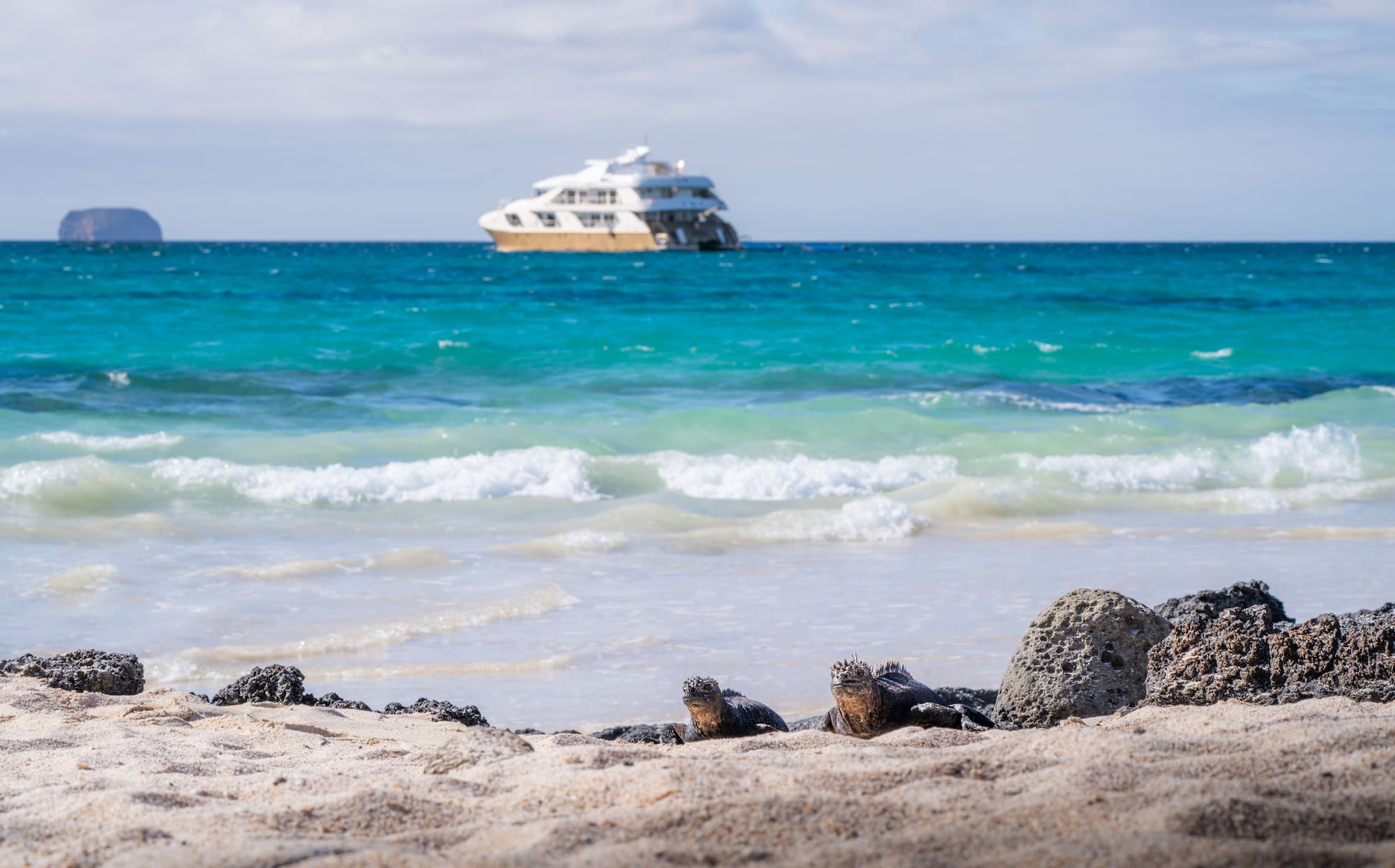
Luxury catamaran exploring the Galapagos. Small ship, big access!
Here’s what we’ll cover:
What do we mean by a small ship cruise?
What is included on a small ship cruise?
Why choose a small ship cruise over a land-based itinerary?
Is a small ship cruise the best way to see the Galapagos?
Should you cruise the Amazon or stay in a jungle lodge?
What are AmaWaterways' new Magdalena River cruises in Colombia like?
Why cruise Patagonia's fjords rather than drive?
Who are small ship cruises in South America best suited to?
What should you know before booking a small ship cruise?
What do we mean by a small ship cruise?
In cruising terms, ‘small’ is any vessel carrying up to around 200 passengers. At Viva Expeditions, our collection of small ship cruises covers a wide range of options, from luxury yachts taking just 12 guests around the Galapagos to ice-strengthened expedition ships carrying 200 in the continent’s far south. Either one is a world away from ocean liners, which can carry several thousand people at a time.
The benefits of a small ship are hard to argue with, and not only if you’re averse to crowds. Smaller vessels can slip into bays and landing sites that larger ships can’t get near. Getting on and off the ship takes a fraction of the time too, so you can explore more, and for longer.
In South America, ship size even decides where you’re allowed to go. The Galapagos National Park caps vessels at 100 passengers, so here we stick to small, intimate boats. And in Antarctica, ships carrying more than 500 people can’t land guests at all, and no more than 100 people may be ashore at any one site at a time.
Put simply, the smaller the ship, the more of the destination you get to stand on.
Small ships in South America fall into one of three groups:
-
Yachts and catamarans (12 to 20 guests): the backbone of Galapagos cruising. The M/C Endemic, for example, takes just 16 guests.
-
River ships (18 to 64 guests): used on the Amazon and, since 2025, on Colombia's Magdalena River. The shallow draft lets them nose into side channels a bigger boat wouldn’t even attempt.
-
Coastal expedition ships (up to about 200 guests): the workhorses of Patagonia's fjords, such as the Ventus Australis and Stella Australis.
Two terms you’ll often hear (or read) about when researching small ship cruises in South America are ‘expedition cruises’ and ‘river cruises’.
Expedition cruises are built around landings and wildlife, with naturalist guides and an itinerary that bends to the weather, since they sail to remote places where conditions can change quickly.
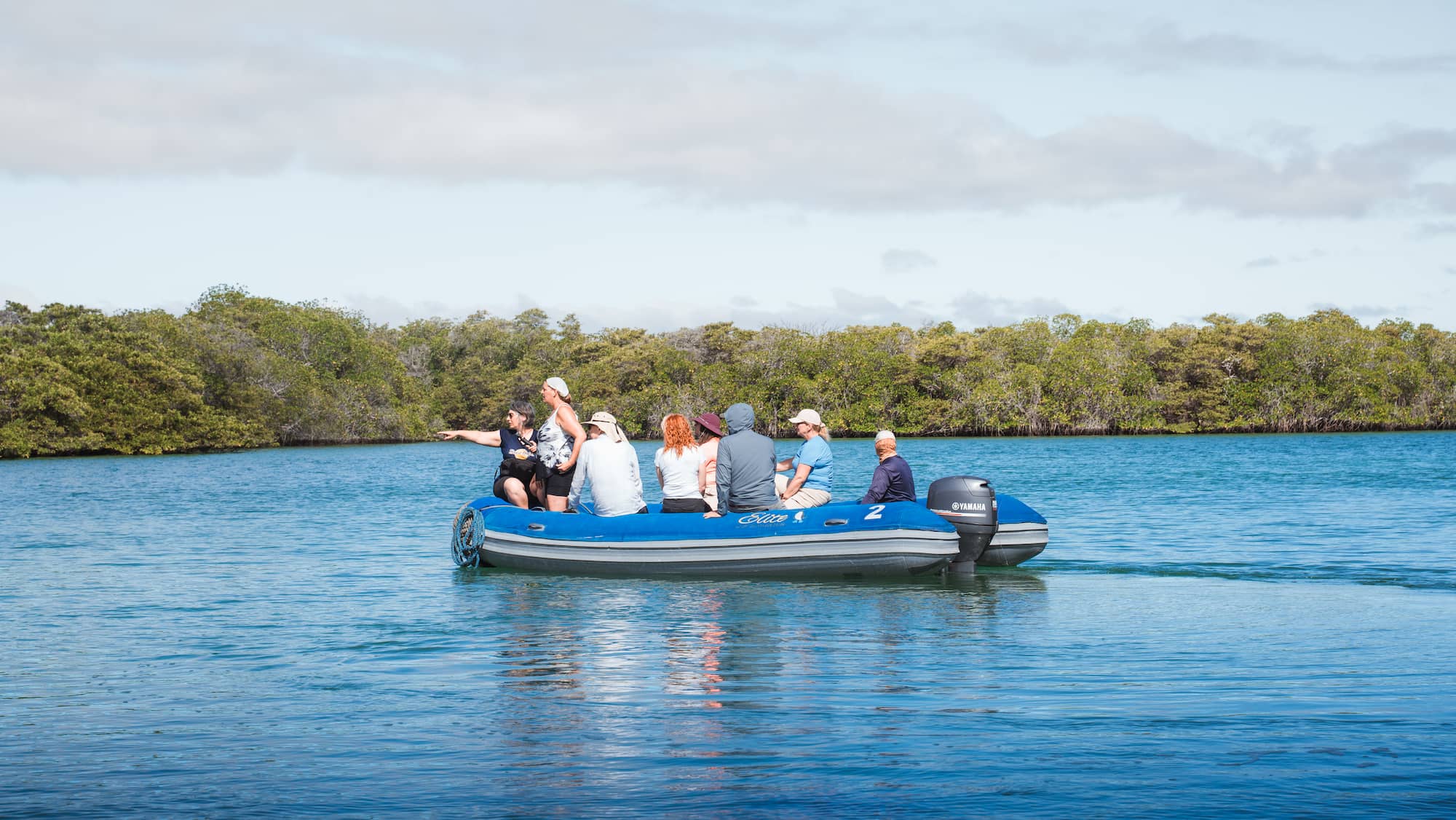
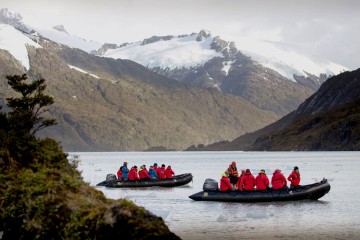
Expedition cruises put the wild places front and centre, and much of each day is spent exploring by dinghy.
River cruises follow calmer water, with daily outings that lean towards culture on Colombia’s Magdalena and towards wildlife and wilderness in the Amazon. Plenty of trips blend a little of both.
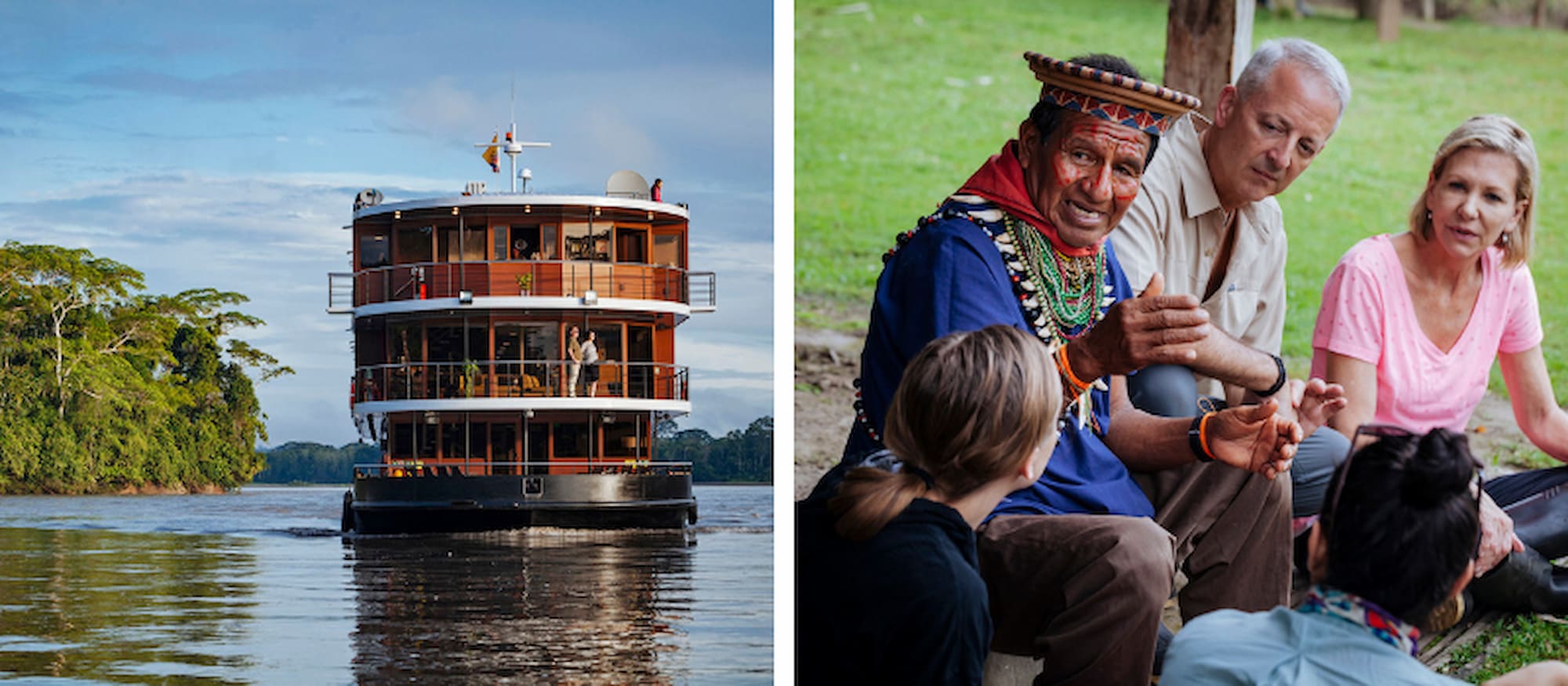
Cruises on the Napo River explore Ecuador’s pocket of the Amazon, where outings are as much about the people along the river as the scenery.
What is included on a small ship cruise?
Most small ship cruises are close to all-inclusive, and there’s a very practical reason for it. When you’re anchored off a volcanic island or moored on a remote stretch of river, there’s nowhere to go ashore for dinner, so meals and guided outings come as part of the fare. What does vary from ship to ship is the fine print, mostly around drinks, flights and park fees.
We’d suggest reading the inclusions closely before comparing prices, because two cruises that look similar on paper can work out quite differently once the extras are added.
Usually included
-
Your cabin and all meals on board: most ships also keep coffee, tea and snacks going through the day, which you’ll appreciate between outings.
-
Guided excursions: every landing, walk and dinghy ride is led by a naturalist or local guide. On most ships you’ll head out twice a day.
-
Activity gear: in the Galapagos, snorkelling kit and kayaks are standard on most boats, and some add wetsuits and paddleboards too. For expedition cruises in Patagonia, plan to your own waterproofs and sturdy boots.
-
Briefings and talks: each evening, the expedition team runs through the next day’s plan. Longer voyages tend to add lectures from historians and biologists.
-
Some drinks: this is where ships differ most. Many of the higher-end Galapagos yachts include a glass of wine or beer with dinner, while AmaWaterways' Magdalena cruises in Colombia include a nightly cocktail hour with complimentary drinks. You will have to pay for anything beyond that, such as cocktails and nightcaps at the bar.
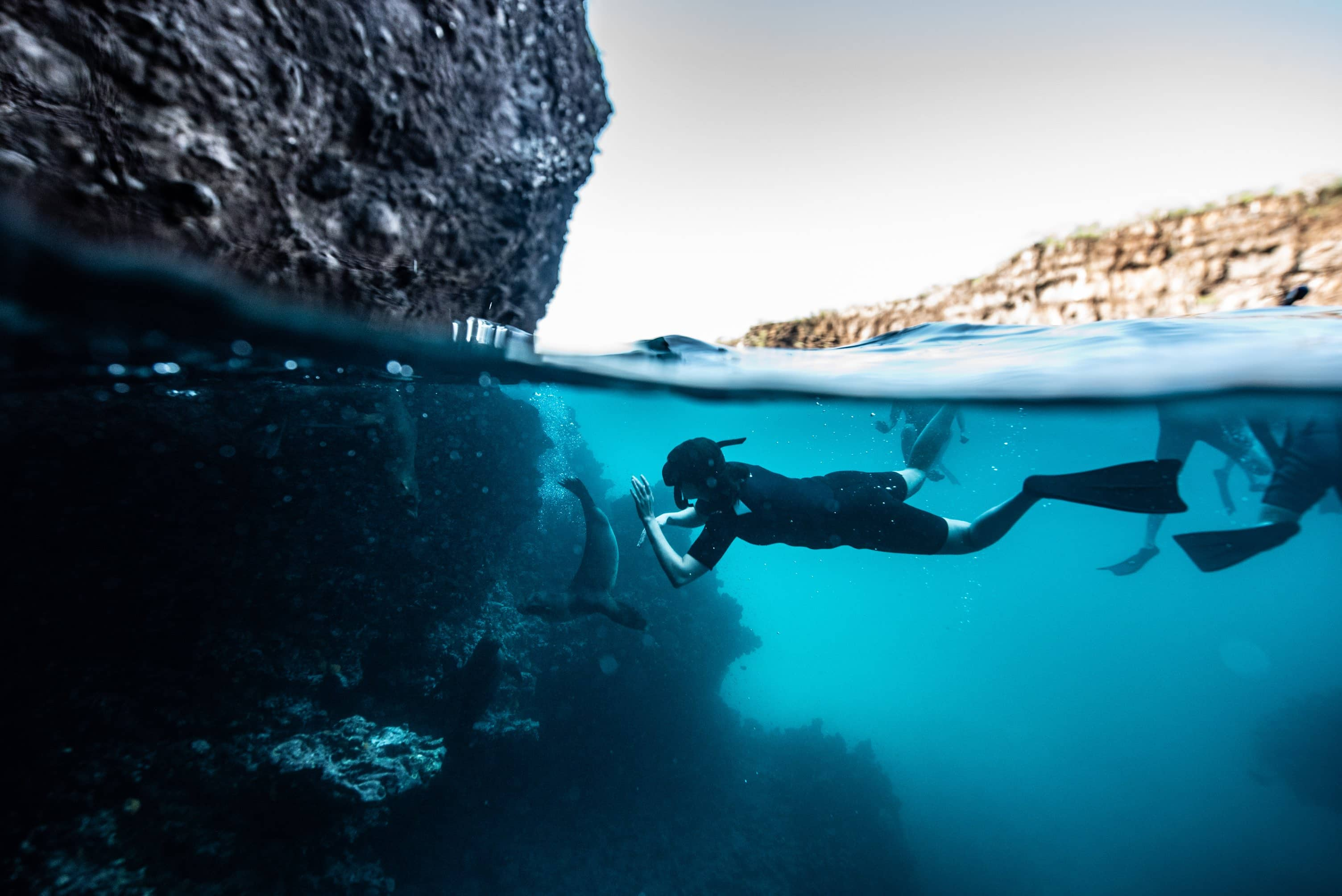
Snorkelling is such a big part of the Galapagos experience that almost every cruise lends you the gear and includes time into each day to slip into the water for close encounters with the marine life.
Usually extra
-
Flights: international flights aren’t included, and neither are internal ones such as Quito to the Galapagos or Lima to Iquitos (Amazon). These can add a fair amount, so factor them in early.
-
Park fees: the Galapagos National Park entry fee (US$200 per adult at the time of writing) is usually paid in cash on arrival. There’s also a US$20 transit card, bought at the airport in Ecuador before you fly out.
-
Gratuities: tipping the crew and guides is customary on most ships, and our guide to tipping in South America has suggested amounts for each region.
-
Travel insurance: essential on any cruise. For more remote destinations, make sure your policy covers medical evacuation.
-
Optional extras: premium drinks and spa treatments are usually charged separately and, while some ships include the use of gear like kayaks and paddleboards, some include them in the price.
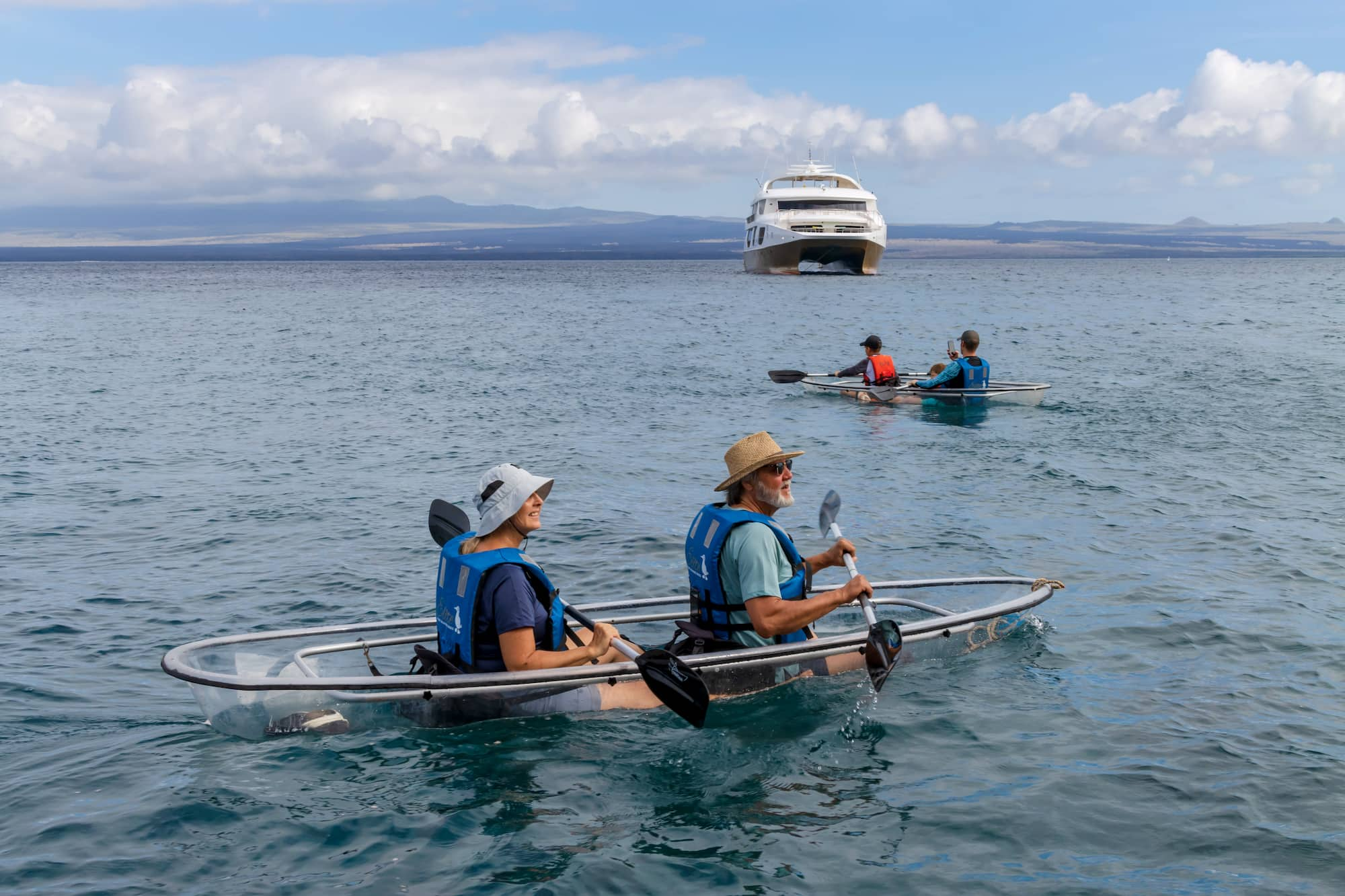
Many Galapagos small ship cruises include the use of kayaks, and some, like the Endemic, have transparent ones, so you can watch turtles and rays glide beneath you as you paddle.
“Before you book, check how many excursions are included each day. If one ship gets you out twice a day and another spends much of its time in transit, you’ll come home with a very different picture of the place, even if the two looked much the same on paper.”
- Tara Sutherland, General Manager, Viva Expeditions
Why choose a small ship cruise over a land-based itinerary?
We love a good overland trip, and in places like Peru’s Sacred Valley or the trails of Torres del Paine, travelling by land is absolutely the right call. But where the highlights are scattered across islands and waterways, exploring by ship makes more sense.
Ease of access is by far the biggest advantage. Many of South America's finest wildlife and natural highlights sit on remote islands or far up rivers and fjords, well away from any lodge, so you'll only ever see them from the water. Cruising is also very time-efficient. On sea voyages, you often sail overnight and wake somewhere new, while river ships tend to move between stops in the heat of the day, when you'd rather be resting on deck anyway. Either way, you avoid long road transfers.
Plus, there's the small but blissful advantage of checking in and unpacking once for the whole trip. If transiting and moving hotels with a new bed every other day is not your idea of a good time, this alone can make all the difference.
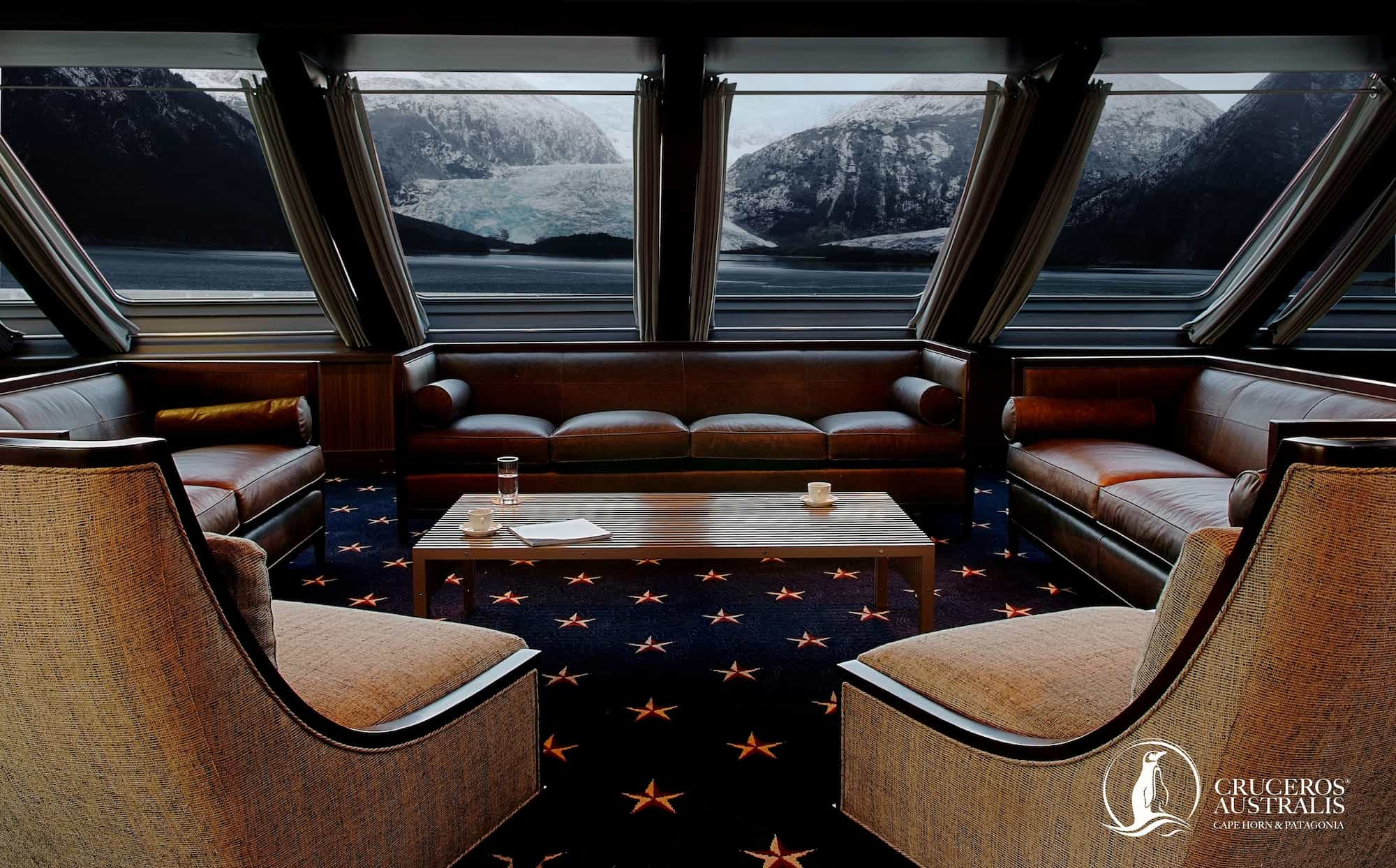
The indulgent comforts of small ship cruises are appreciated most when exploring the harshest places, be it the sticky tropics or the icy fjords of Patagonia.
There are a few trade-offs to weigh up, too. Itineraries are set in advance (in the Galapagos, by the national park itself), so you'll have less time to wander towns at your own pace. Open-water crossings can also be lively (and even spicy) if you're prone to seasickness. Lastly, a small ship cruise usually costs more per day than a land trip in the same region, although once meals and guiding are included, the gap is often much smaller than anticipated.
The table below shows how a small ship compares with travelling overland in each region covered in this guide.
Small ship or overland? South America at a glance
|
Region
|
Best seen by ship
|
Better done overland
|
Main season
|
|
Galapagos Islands
|
Outer islands such as Genovesa and Fernandina
|
Santa Cruz and Isabela, with island hotels and day trips
|
Year-round
|
|
Peruvian Amazon
|
Pacaya-Samiria reserve, from Iquitos
|
Tambopata’s jungle lodges, a short flight from Cusco
|
Year-round; high water roughly November to May
|
|
Brazilian Amazon
|
Remote Rio Negro tributaries
|
Lodge stays near Manaus, such as Anavilhanas
|
Year-round
|
|
Magdalena River, Colombia
|
River towns such as Mompox and Palenque
|
Bogotá, Cartagena and Medellín
|
Year-round
|
|
Patagonia and Tierra del Fuego
|
Glacier Alley and Cape Horn
|
Torres del Paine and El Calafate
|
Late September to early April
|
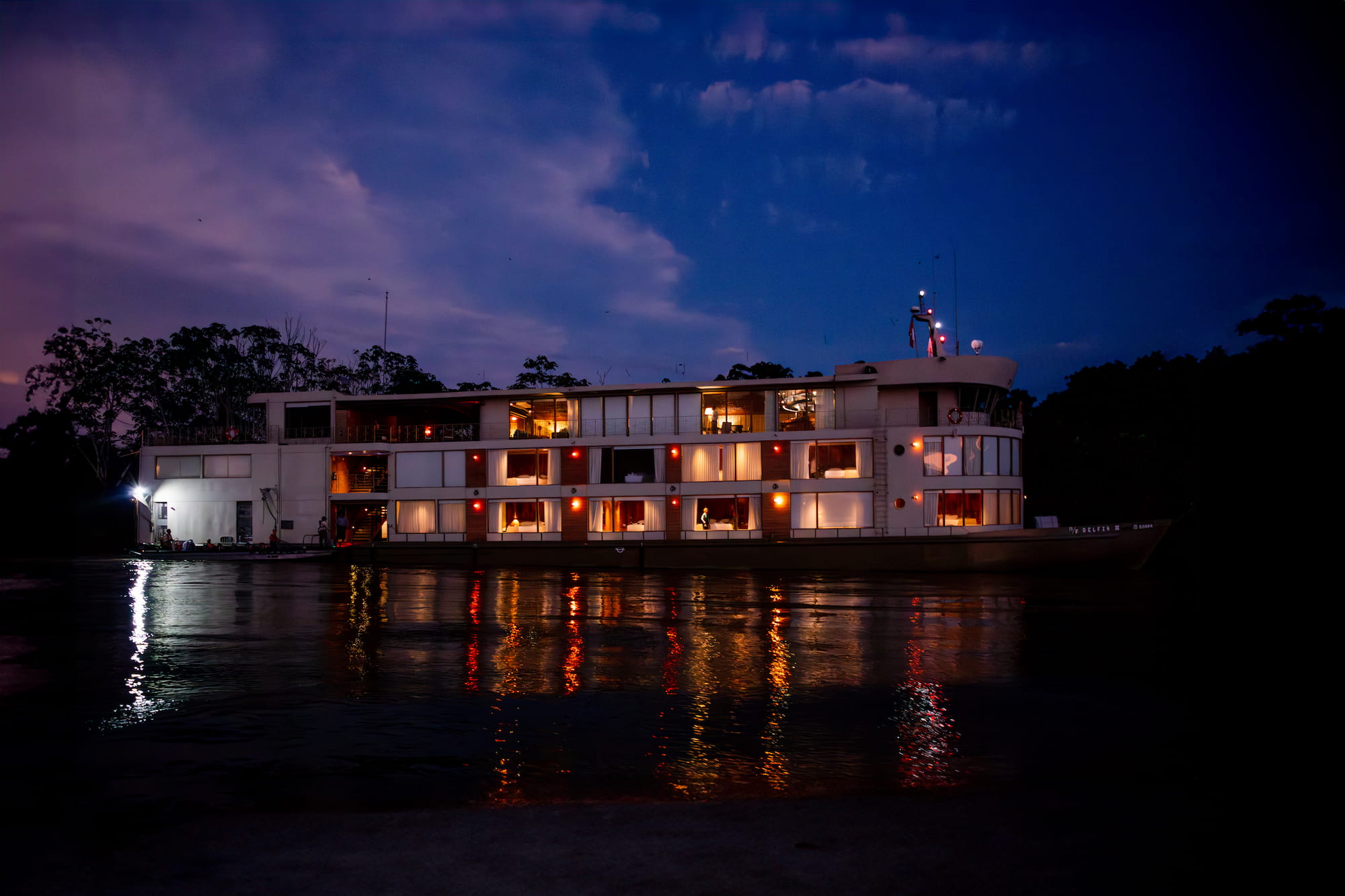
For as long as people have lived along the Amazon, the river has been their main highway.
Is a small ship cruise the best way to see the Galapagos?
For most people, yes. You can see the Galapagos on a land-based trip, staying on Santa Cruz or hopping between island hotels, and that works well if you're watching the budget or wary of the sea. What you can't do from land is get to the outer islands. Genovesa's seabird colonies and the flightless cormorants of Fernandina sit too far out for a day trip, as does much of the archipelago's wild western edge.
On a cruise, long crossings happen overnight, so each morning starts at a new island with a full day ahead of you. Park rules also limit each naturalist guide to 16 visitors ashore, which means a 16-guest yacht like the Endemic lands as one small group with its own guide.
“With only sixteen of us on the boat, it took us minutes to get ashore, and we never had to rush along to make room for the next group. We had every landing to ourselves and that felt really special."
- Beke Grossmann, Destination Specialist, Viva Expeditions
Beke combined her cruise with time in Quito and a stay at an Amazon lodge, and her Ecuador trip review is a good read if you're tempted to do the same.
To choose a boat, read our guide to the best Galapagos cruise ships which compares sizes and comfort levels. Our piece on how long a Galapagos cruise should be will help you settle on the right number of days.
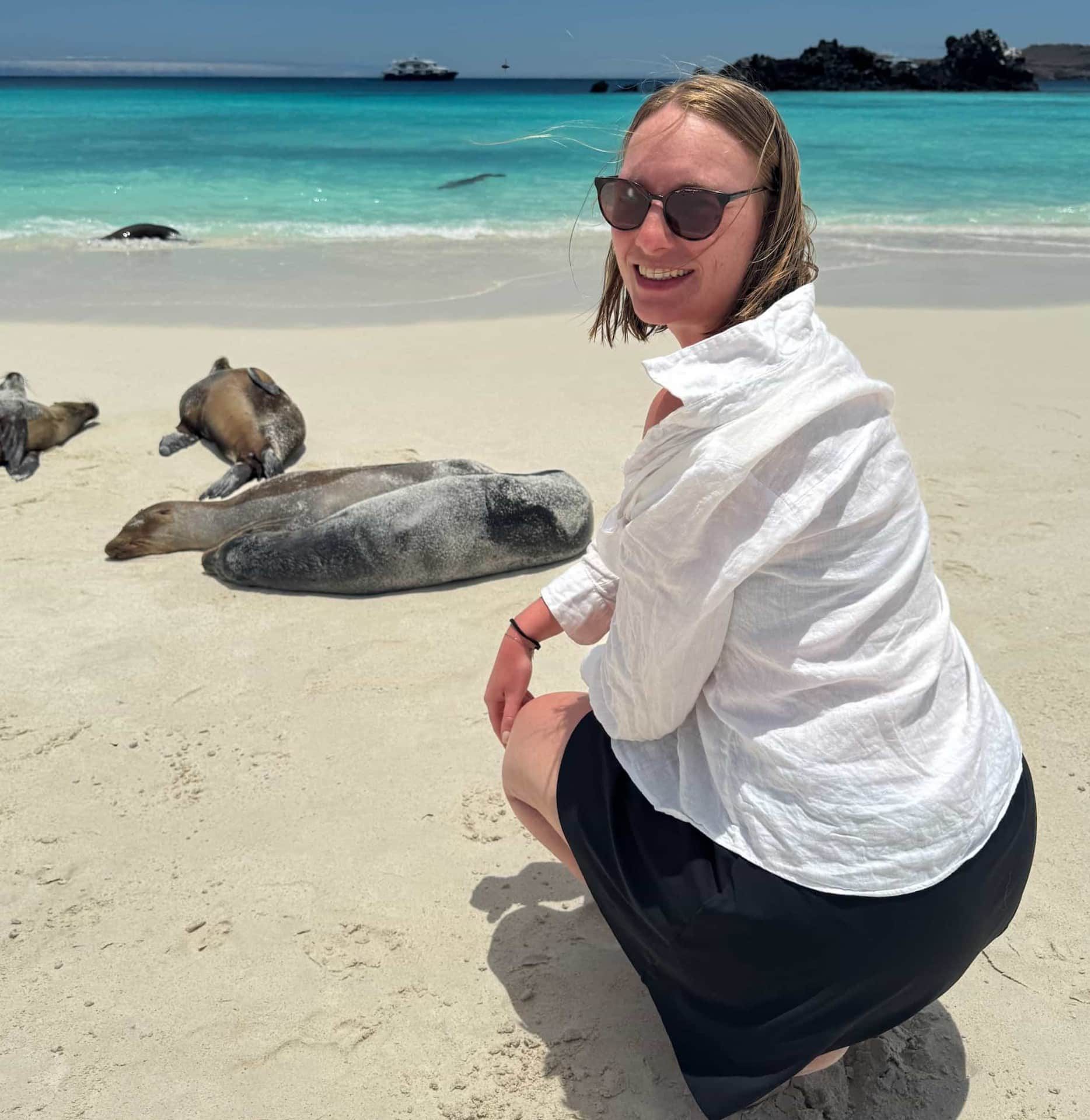
The other arrivals hall in the Galapagos.
Should you cruise the Amazon or stay in a jungle lodge?
Both are wonderful but they suit different travellers. A lodge gives you one base, usually with its own network of walking trails and canopy tower, and an easy routine of dawn and dusk outings. A river cruise, on the other hand, covers a lot more ground. The ship carries you into the forest without long canoe transfers between bases, and after each outing you come back to an air-conditioned cabin, which is very welcome in the Amazon’s heat and humidity. By the way, if you like the idea of air-conditioning but would rather stay put in one place, a few lodges have it in the rooms (Anavilhanas near Manaus among them), although most rely on ceiling fans.
River cruises in Peru cast off from Iquitos, the largest city in the world that can’t be reached by road. Journeys take you into the Pacaya-Samiria National Reserve, Peru’s largest national reserve and a vast wetland that floods for several months each year. Ships such as the Delfin III, with only 44 guests, feel more like floating boutique hotels than riverboats, with wildlife-spotting excursions taken on smaller skiffs. The time of year you cruise changes how your day-to-day activities are set out. In high-water seasons, roughly November to May, skiffs can glide through the half-submerged forest and explore further inland, while the drier months bring lots more jungle walks.
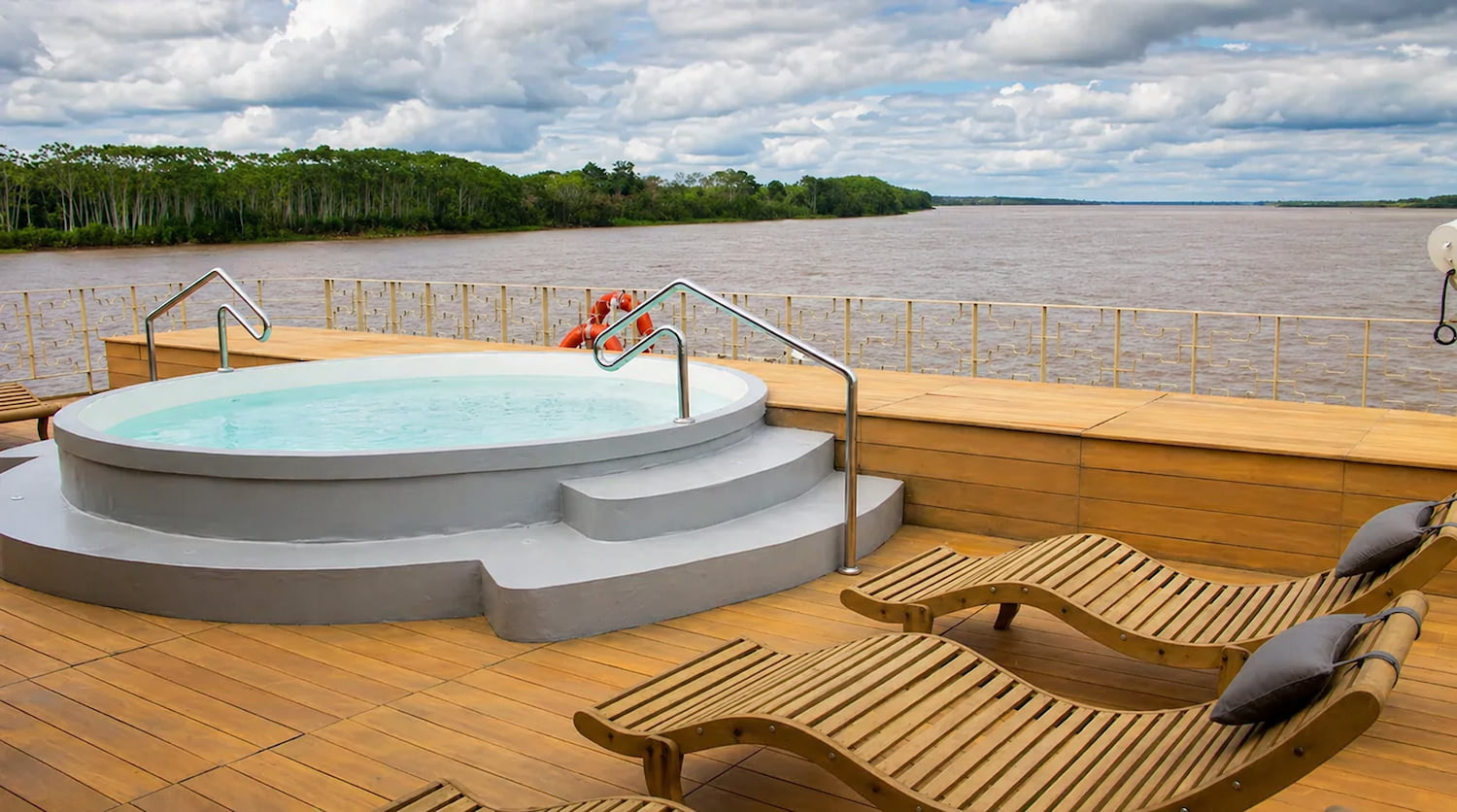
Big open windows, an on-deck pool and a cool cabin make the Amazon a lot easier to enjoy between outings.
In Brazil, cruises start in Manaus, a city of two million at the heart of the Amazon. Here, the Tucano, a comfortable boat built in the style of a classic river steamer, takes just 18 guests up the quieter tributaries of the Rio Negro on six-day trips, with outings planned each day.
To explore the full length of the river, take the 18-day HANSEATIC Inspiration expedition, which sails all the way from Belém to Iquitos. It is a much bigger ship that can take just under 200 guests, a full expedition ship with the comforts to match. Given the trip is essentially a transcontinental river voyage, the extra space and comforts are a big incentive for many.
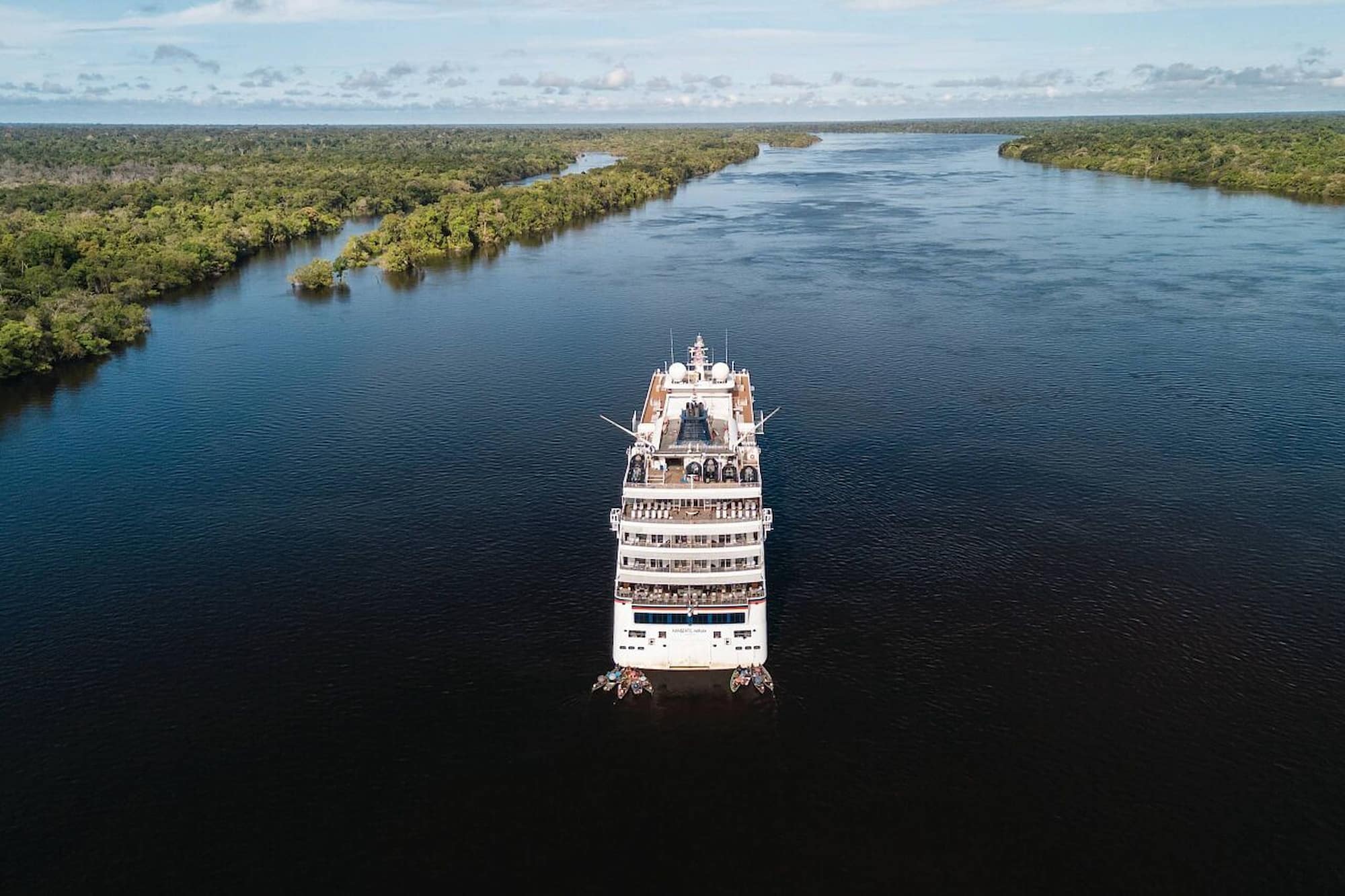
Size-wise, the HANSEATIC is on the upper end of the small ship cruise scene, offering exquisite luxury on much longer and more immersive Amazon journeys.
Ecuador’s river cruises set off from Coca along the Napo River, with two ships to choose from: the Manatee, which takes up to 30 guests, and the Anakonda. Both have air-conditioned, river-facing suites with floor-to-ceiling windows, and both mix wildlife outings with visits to Kichwa communities along the river.
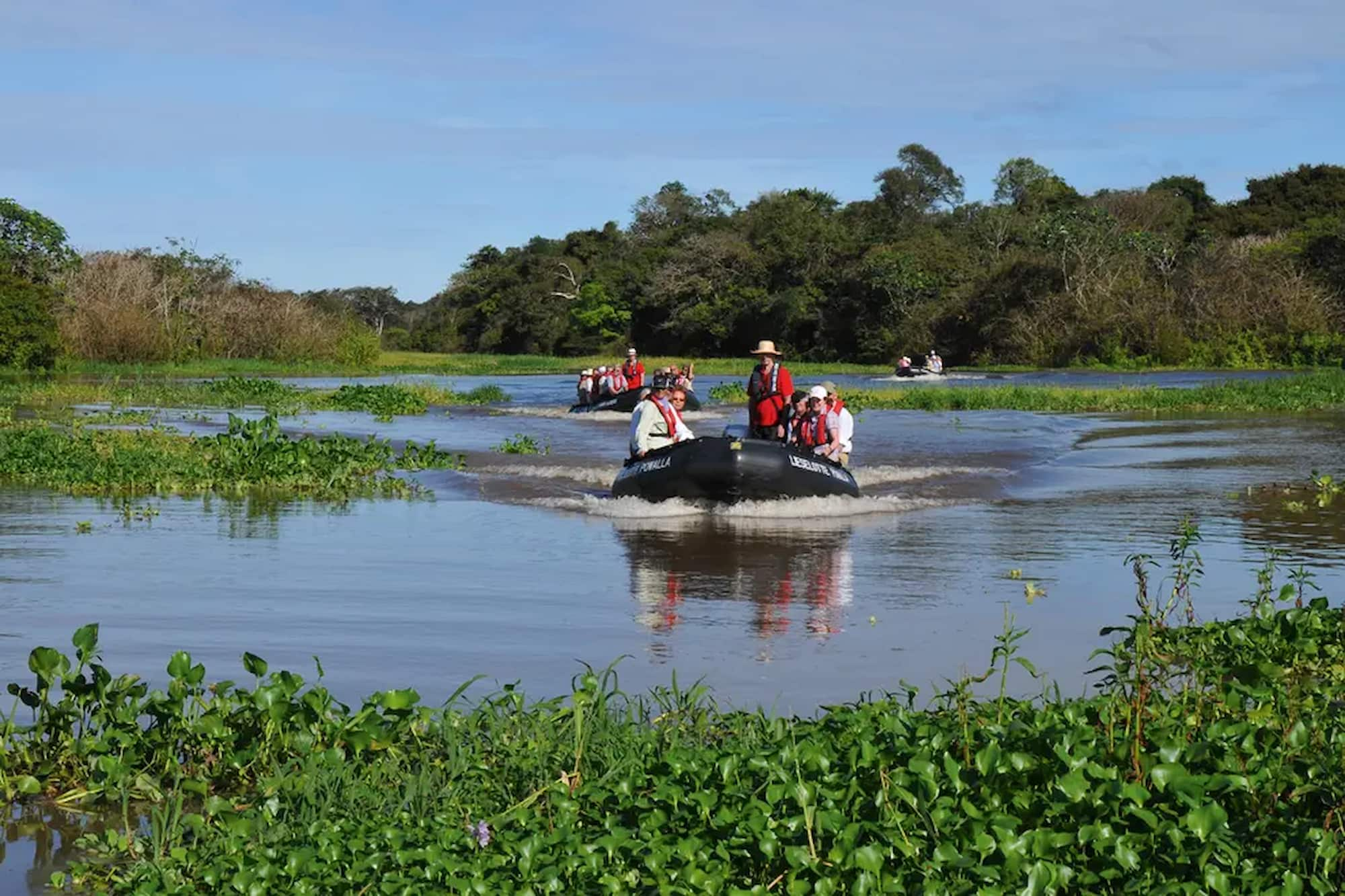
No matter how small the ship you cruise on, exploring narrower canals by skiff is still an integral part of the experience.
If you're still deciding where to start, our guide to choosing your Amazon country looks at lodges and river cruises side by side.
What are AmaWaterways' new Magdalena River cruises in Colombia like?
Colombia is the newest name on South America's river cruise map, and it's one we're excited about. In 2025, AmaWaterways became the first major river cruise line to sail the Magdalena, the great river that runs from the Andes to the Caribbean. It now has two ships there: the 60-guest AmaMagdalena and the 64-guest AmaMelodia, which was christened in Barranquilla in April 2026.
Both ships sail the same two eight-day itineraries. The Magic of Colombia cruise runs from Barranquilla to Cartagena, and Wonders of Colombia follows the same route in reverse. Along the way, you'll visit Mompox, a colonial island town famous for its filigree jewellery, and Palenque, founded by people who escaped slavery and recognised as the first free town in the Americas. Barranquilla welcomes you with a private Carnaval celebration on board. Later, families from El Banco come aboard to play cumbia, the music that was born along this stretch of river.
This is where river cruises offer something unique. Getting between these river towns by road is a long and roundabout business, and the ship links them with ease, while small excursion boats take you into the wetlands near Magangué for early birdwatching. Excursions, port charges, Wi-Fi and a nightly cocktail hour are all included, with fares from around US$3,500 per person sharing at the time of writing.
“A Magdalena River cruise is the trip I recommend to returning clients who've done all the major highlights, like Machu Picchu and the Galapagos. It's ideal for those who want to explore way off the beaten path, somewhere that still feels new and unexplored. Many have never even heard of it! It's a cultural journey more than a wildlife one, and Mompox alone makes it worthwhile."
- Pia Knarston, Destination Specialist, Viva Expeditions
For a day-by-day look at the route and life on board, read our guide to AmaWaterways' Colombia river cruises and Pia's latest cruise review.
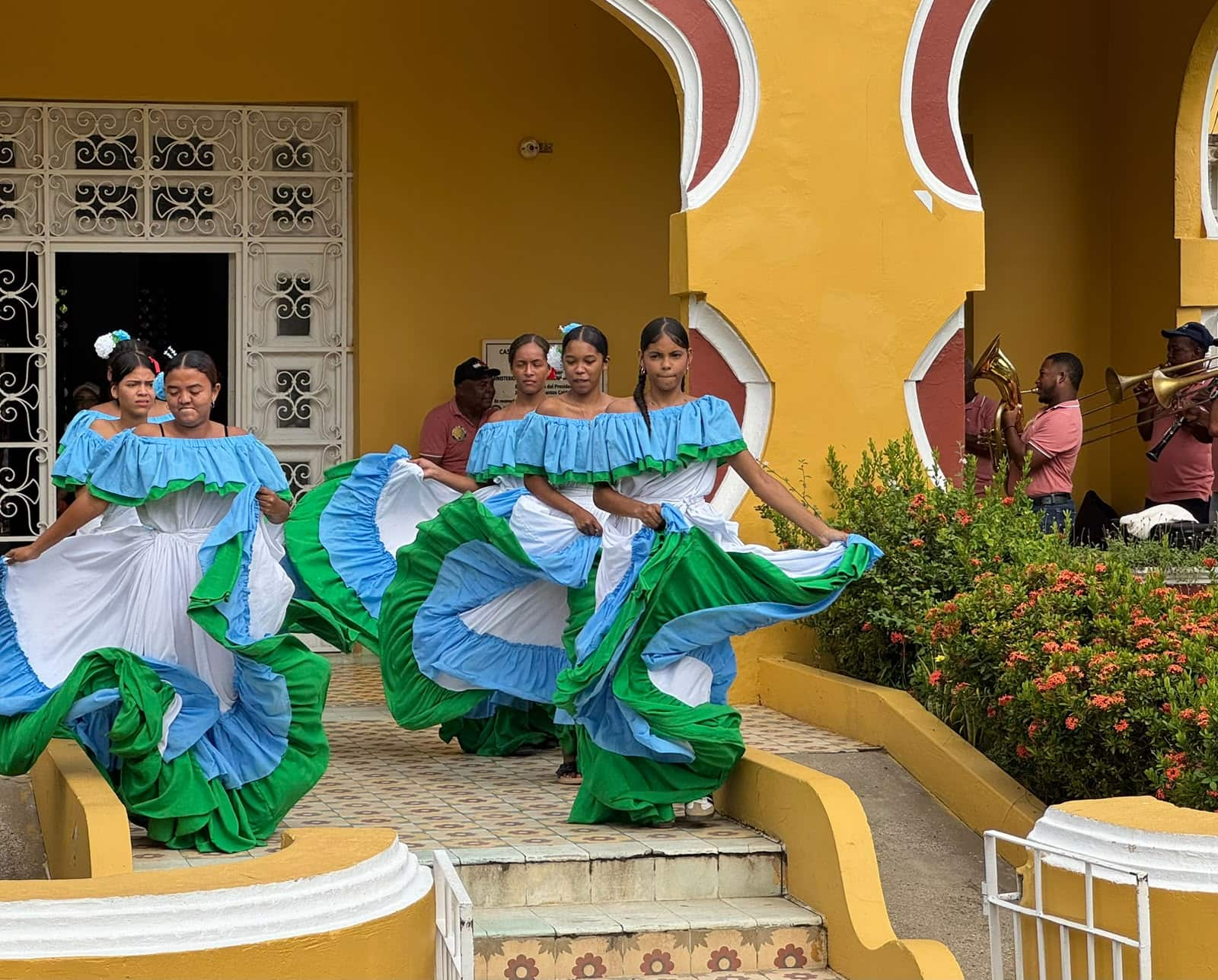
Before the first cruise set sail on the Magdalena, AmaWaterways consulted local riverside communities, so that every village you visit is one that chose to open its doors.
Why cruise Patagonia's fjords rather than drive?
Patagonia is South America's classic road-trip country. The drives to Torres del Paine and El Calafate are unmissable highlights of any trip south. But the very tip of the continent, where the Andes break apart into the islands and channels of Tierra del Fuego, is a different world. Glacier Alley and Cape Horn can only be explored by sea, as can most of the tidewater glaciers tumbling down from the Cordillera Darwin.
Australis cruises link Punta Arenas in Chile with Ushuaia in Argentina over four to eight nights, with Zodiac outings to places like Wulaia Bay and, weather permitting, a landing on Cape Horn itself.
The Patagonia Explorer Cruise aboard the Ventus Australis is a five-day taster, while the 15-day Deep Patagonia: Tierra del Fuego and Chilean Fjord voyage is more immersive and goes much further into Chile's fjords.
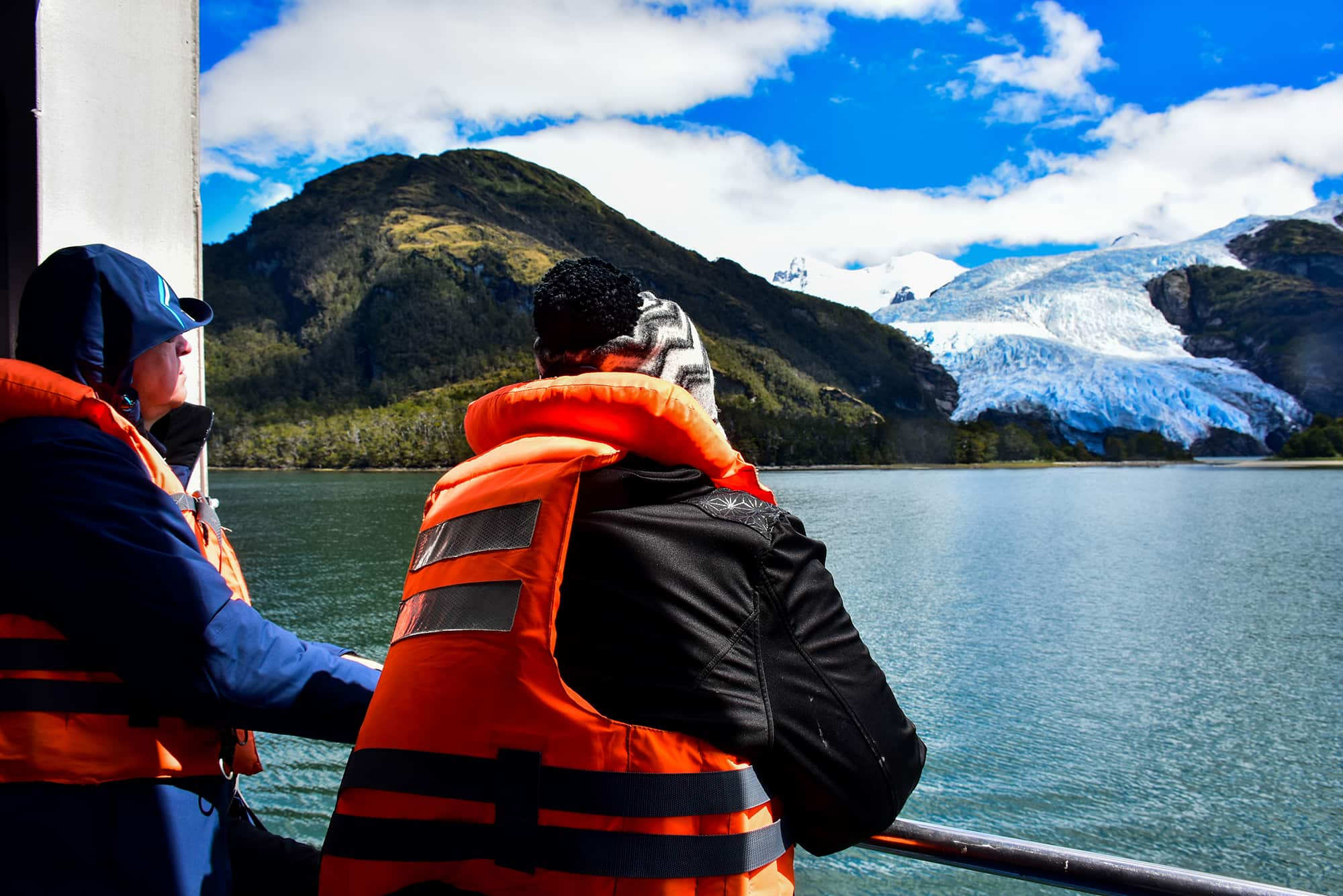
Soaking up the sights of Tierra del Fuego’s fjords.
Cruises run from late September to early April, and they work well alongside a hiking stay in the national parks further north. Our Patagonia cruise guide covers the season month by month.
Heading further south?
Antarctica might not be part of South America, but most Antarctic Peninsula voyages sail from Ushuaia, so it’s easy to add on to a Patagonia trip. Our explainer on what an Antarctic expedition cruise involves is a good place to start, and voyages such as Antarctic Peninsula: The Classic Voyage show what’s possible.
Who are small ship cruises in South America best suited to?
Anyone who would rather spend their days outdoors than in a ship's casino. Most of our small ship guests are over 50, travelling as couples or with friends, and they love the mix of active mornings and slow afternoons on deck. Solo travellers fit in easily, and we’re seeing more of them each season. The sociable dining set-up and overall camaraderie of small ship cruises mean you're never short of company.
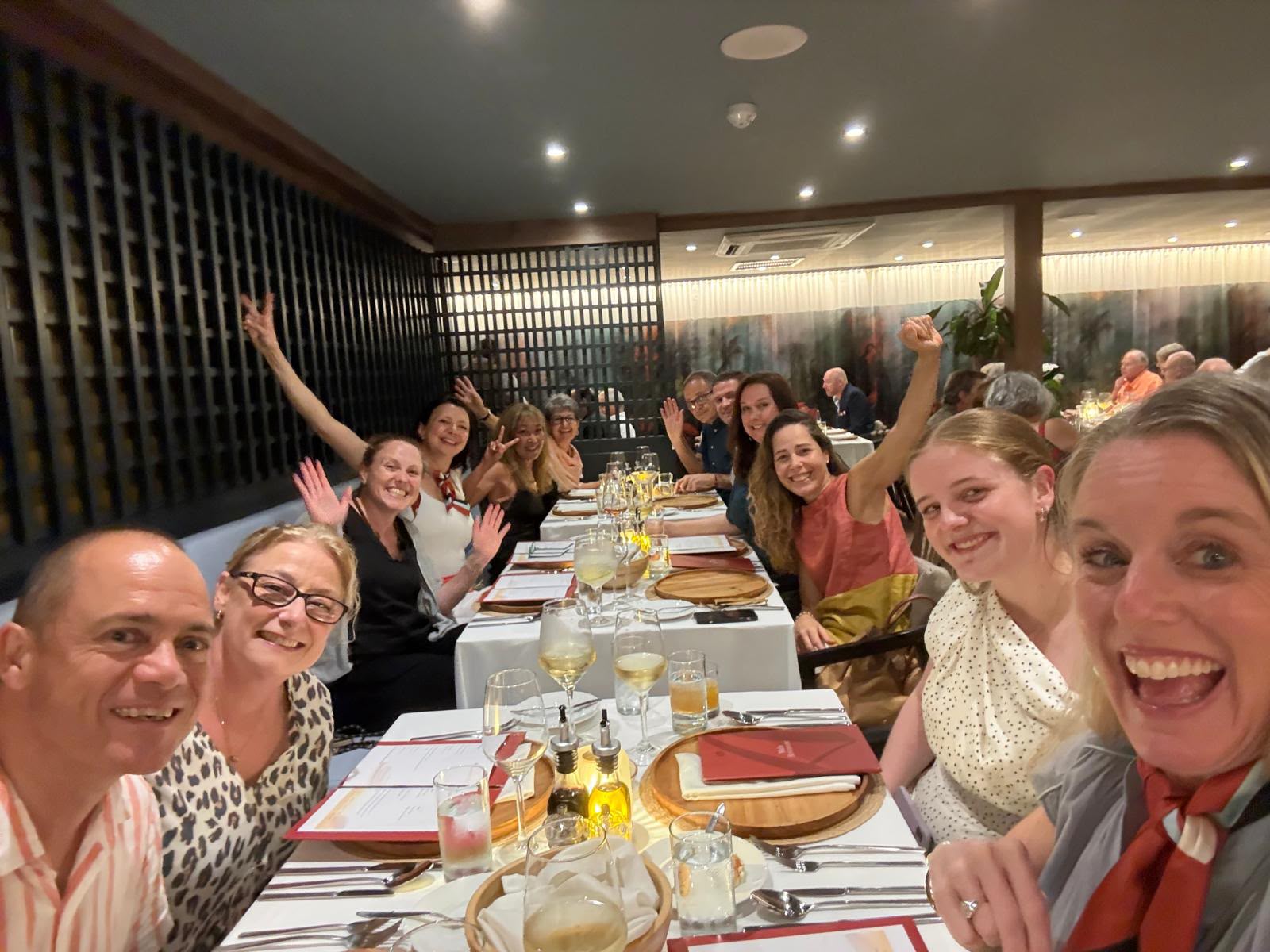
Meals on a small ship tend to be sociable affairs, so solo travellers never dine alone.
For a shortlist overview, see our pick of expedition cruises for travellers over 50.
A couple of things worth checking: families should look at minimum ages allowed, which vary by ship (seven on the Endemic, for example). If mobility is a concern, ask about Zodiac transfers, which need a steady footing, and about stairs, since some river ships, AmaMelodia included, have no lift.
What should you know before booking a small ship cruise?
-
Book early: with only a handful of cabins on each ship, popular Galapagos and Patagonia departures often fill a year or more ahead.
-
Expect some motion at sea: Galapagos and some Patagonia crossings can be choppy, while river cruises are almost always calm. Tara's seasickness tips help on any sea voyage.
-
Decide how active you’d like to be: some ships include activities like kayaking or paddleboarding in the fare, while others charge extra or don’t offer them at all. Let us know how much you plan to do, and we’ll point you to a ship that gives you value for the trip you want.
-
Arrive a day early: flights in South America do run late quite often, and ships won't wait. A night or two in your departure city before you sail takes the pressure off.
-
Pack soft and light: cabin storage is limited, and soft bags stow more easily than hard cases.
Which small ship is right for you?
With dozens of ships across the continent, choosing one can feel like the hardest part of planning. Luckily, it’s the part where we can be of most help. Our Destination Specialists have sailed these waters themselves, and they know which ships suit a keen photographer and which suit someone who mainly wants a comfortable cabin and excellent food.
So, tell us which region is calling out to you and how you like to travel, and we'll match you with the right ship.
Talk to a Destination Specialist about your small ship cruise today!
Laura Pattara
Laura Pattara writes for Viva Expeditions with a special love for all things Latin America. She had guided overland tours across the continent, reached Machu Picchu five times on foot, and even dressed up as a giant toucan for Carnaval. With a degree in languages and two decades of global travel experience behind her, Laura has a long-standing love for the Andes, soaring condors, and a truly delicious empanada.
|