Does a longer Galapagos cruise show you more of the same, or does it change the experience entirely? Discover how the best cruise length is determined by what you want to see, first and foremost.
There are plenty of destinations where a longer cruise simply buys you more time on the same route. The Galapagos is different. Here, a 4-day cruise and an 8-day cruise can take you to completely different corners of the archipelago, with the chance to see wildlife found nowhere else.
So, when choosing the best Galapagos cruise length, start with what you want to see. The islands you want to visit will ultimately determine how many days you need to cruise.
While most Galapagos cruises run 4, 5, 7 or 8 days, the first and last days are mostly spent on transfer logistics. A 4-day cruise gives about 2 full days of exploring one region, an 8-day cruise gives 6 full days and a full eastern or western loop. 7–8 days is the most popular length, letting you reach a broader stretch of the archipelago without a huge time commitment.
Let’s walk you through how it all works.
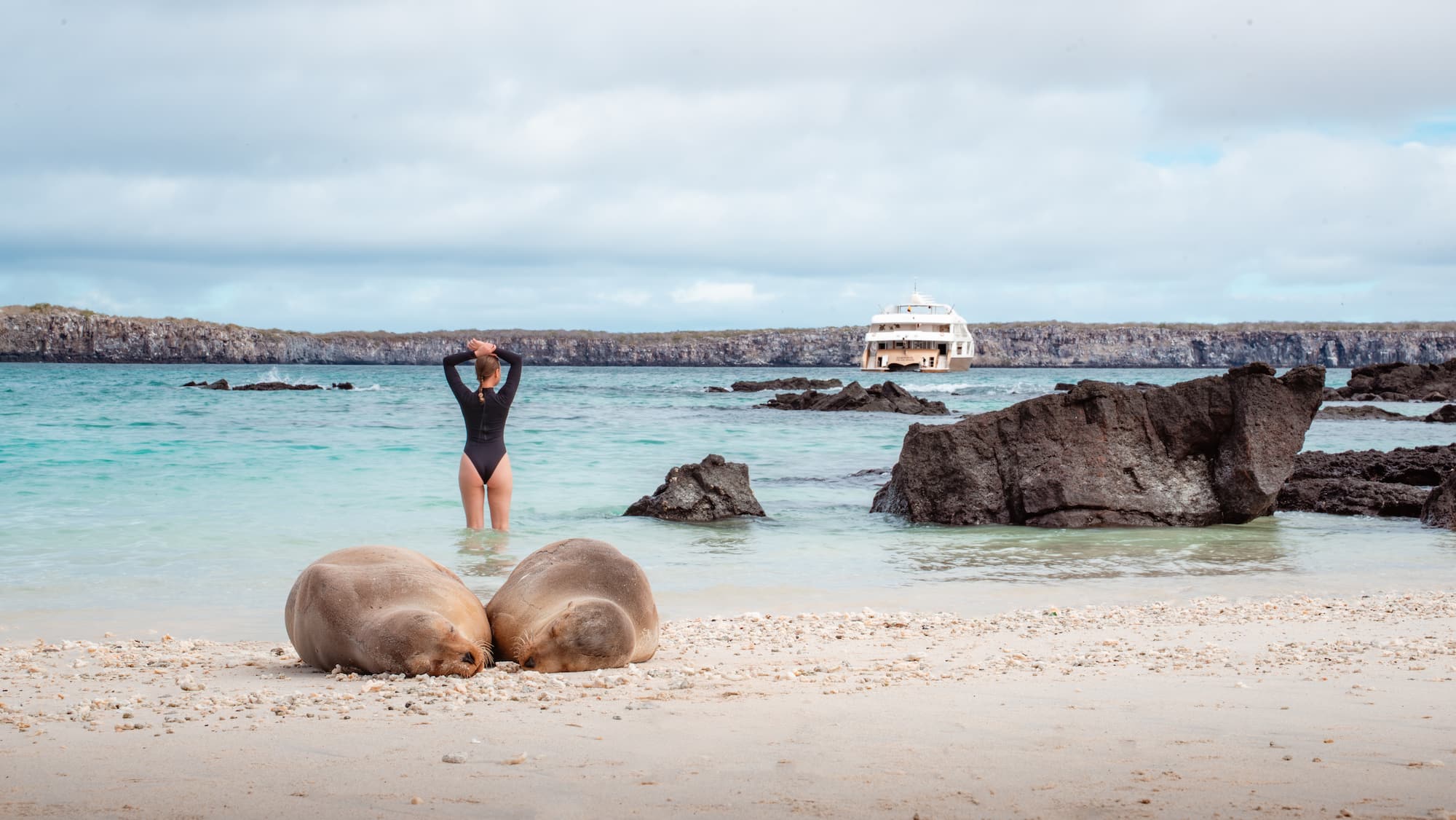
How many days for a Galapagos cruise does one need? If they are like THIS, we’ll take as many as we can get.
Here’s all we cover in this guide:
The best Galapagos cruise length – what to know first
How do the cruise lengths compare?
How many days do you need for each Galapagos loop?
What can you see on a 4 or 5-day Galapagos cruise?
Is a 7 or 8-day Galapagos cruise worth it?
What is the best Galapagos cruise length for you?
Can you combine or extend a Galapagos cruise?
The best Galapagos cruise length – what to know first
When deciding how many days to allow for a Galapagos cruise, keep three key factors in mind.
1. A cruise day is not necessarily a full day exploring.
Cruises are advertised by the number of days they last, but the first and last days are largely taken up with transfers.
You fly to the islands on the morning of day one, get collected at the airport, transfer to your ship and usually make your first outing in the afternoon. That first day is mostly about settling in and meeting your fellow passengers. On the final day, you might have time for a short early morning excursion after breakfast before heading back to the airport for your flight to the mainland.
That means a 4-day Galapagos cruise gives you roughly two full days of exploring, while a 5-day cruise gives you about three. By the time you reach an 8-day Galapagos cruise, you are getting closer to a full week in the islands.
Beke Grossmann, Destination Specialist @ Viva Expeditions and recent visitor to the Galapagos, says that those travel days can easily trip you up.
“You haven’t come all this way to feel like you’ve barely scratched the surface. On a 4-day Galapagos cruise you might feel you’ve only just unpacked and it is time to leave again. The islands are extraordinary and their remoteness is a huge reason for that. But it does take a while to reach them. And once you do, you’ll never want to leave. Adding just a couple more days to the cruise makes such a difference.”
– Beke
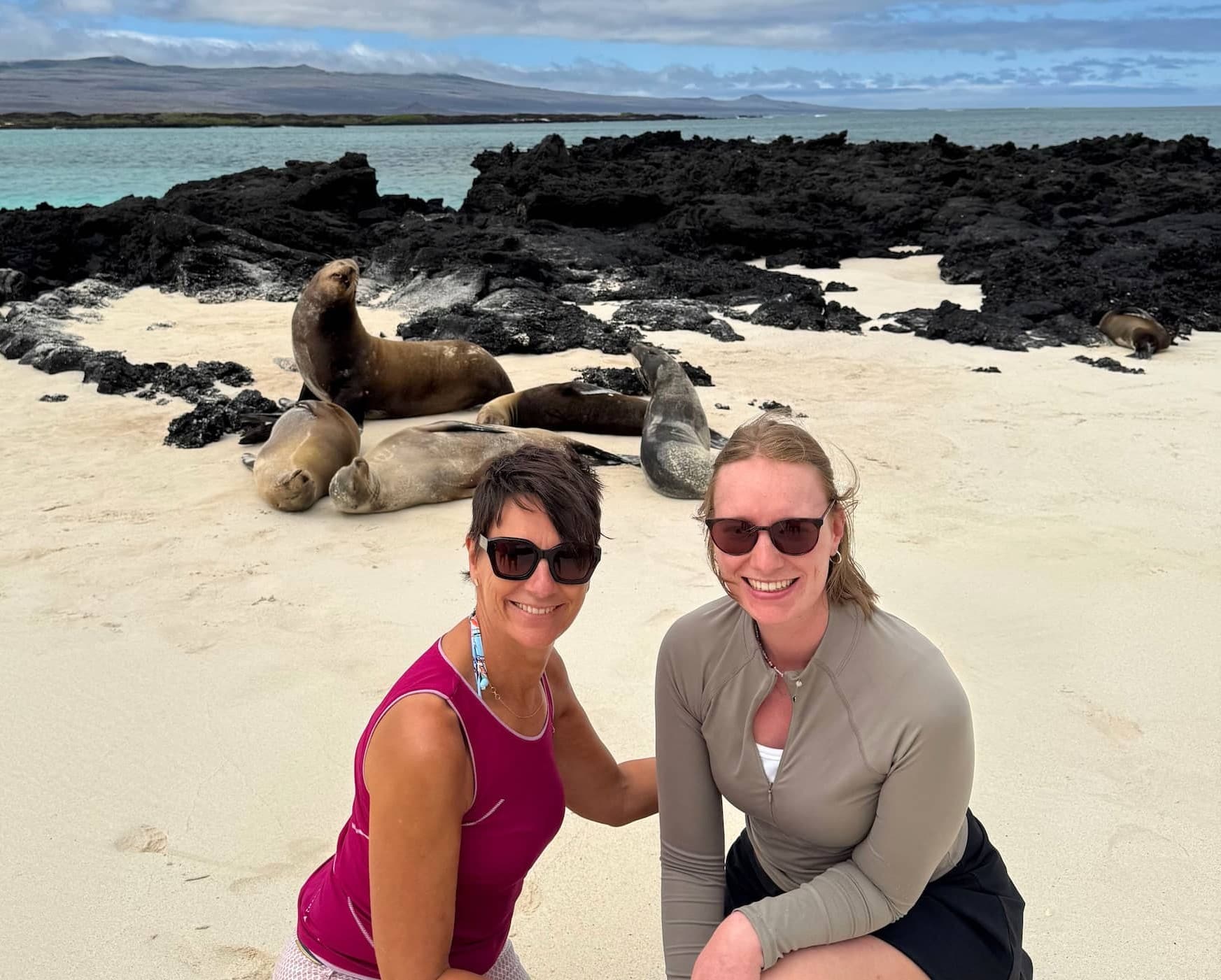
Cruise days are all about exploring islands and meeting local wildlife. Every stop has its own highlights, so the experience changes as you move through the archipelago.
2. You need to allow for at least one night on mainland Ecuador.
The Galapagos Islands sit about 1,000 kilometres off Ecuador’s coast, and access is by air from Quito or Guayaquil to Baltra (serving Santa Cruz departures), or San Cristobal. The flight takes around 2.5 hours, and because departures are generally early in the morning, most travellers spend the previous night on the mainland.
In practical terms, reaching the islands takes one full day before the cruise even gets a chance to set off.
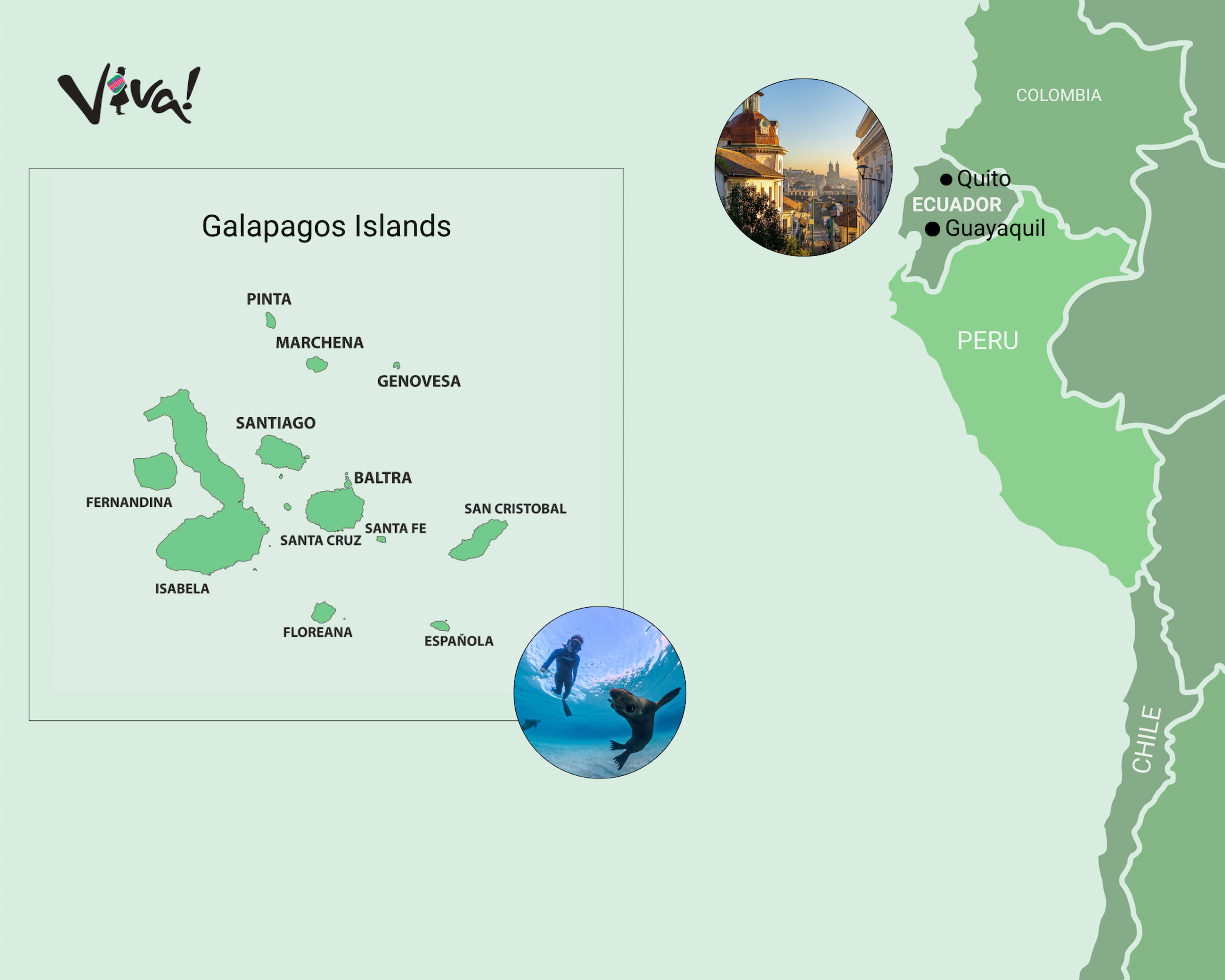
Every visit to the Galapagos starts with a 2.5hr flight from mainland Ecuador.
3. The distance between islands is considerable.
Galapagos cruises are designed to maximise your time exploring rather than sailing during the day, so vessels generally cruise overnight and arrive at a new island or landing site the following morning.
Waking up to the sight of a different island every morning is an amazing experience but there is still only so far a ship can travel overnight. That is what makes cruise length so important: the number of days available determines how far around the archipelago your itinerary can reach.
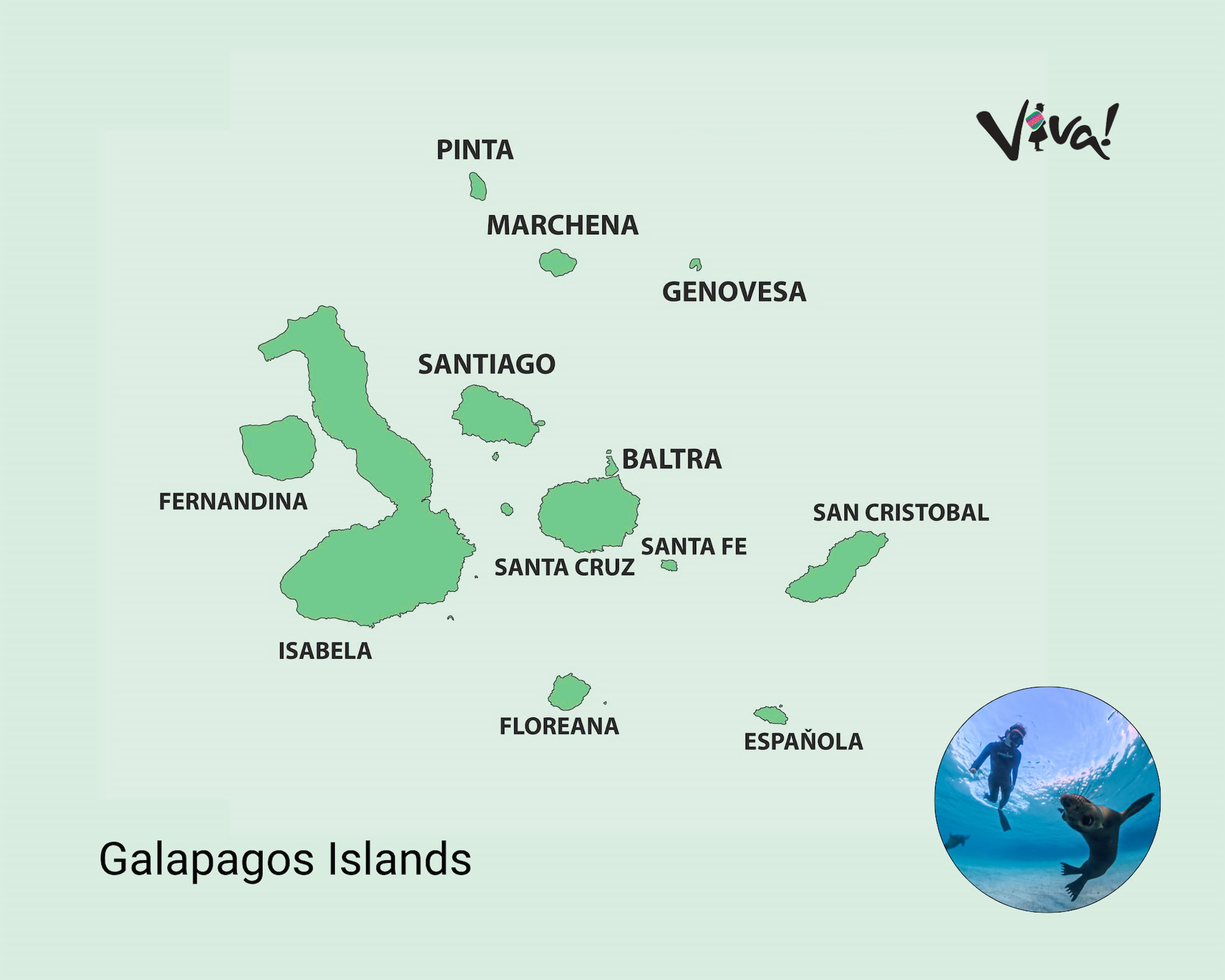
The two embarkation islands sit in the centre of the cluster. The further an island lies from them, the more sailing time it takes to reach.
The Galapagos is a year-round destination, so when you go matters far less than how long you stay. Our guide to the best time to visit the Galapagos runs through the seasonal wildlife highlights if you want to fine-tune the timing.
How do the cruise lengths compare?
The short and sweet version first.
|
Cruise Length
|
Full days exploring
|
What you can explore
|
| 4 days |
2 |
One region, usually central and southern islands |
| 5 days |
3 |
One region, in a little more depth with more stops |
| 7 days |
5 |
A fuller loop, often eastern or western |
| 8 days |
6 |
The classic full itinerary, east or west, with more stops |
| 12 days |
10 |
The opportunity to combine eastern and western regions |
If you also want to weigh up which ship suits you and which islands each vessel visits, our companion guide to the best Galapagos cruise ships breaks the fleet down by size and itinerary.
How many days do you need for each Galapagos loop?
The archipelago can be regarded as four general cruising areas, although when you are looking at booking options, you will usually see itineraries described as eastern or western. Both include the central islands before heading further east and south or west towards the volcanic islands. Genovesa and the northern islands are often incorporated into longer itineraries rather than offered on their own.
The important thing to remember is that these are quite broad route patterns, not rigid rules for every cruise. Two cruises of the same length can visit totally different islands.
Central/inner loop, around 4 to 5 days
These are the islands closest to the main starting points, with relatively short distances between them. Santa Cruz sits at the heart of the route, with Santiago and Bartolome nearby. See giant tortoises in the highlands, volcanic scenery and the iconic Pinnacle Rock viewpoint. A 4 or 5-day itinerary can give you a good introduction to this part of the archipelago.
Southern loop, around 5 to 7 days
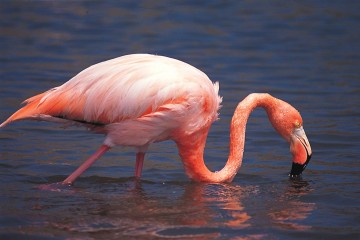
Heading south and east brings you towards Española, Floreana and San Cristobal. Española is famous for being the world’s only nesting site for waved albatross (best spotted from April to November), as well as its dramatic clifftop blowhole. Floreana and San Cristobal add their own wildlife highlights, including flamingos and busy sea lion colonies.
Western and outer loop, around 7 to 8 days
The western islands require a longer journey, but that extra sailing time opens up some of the most remote parts of the archipelago. Isabela and Fernandina are the big draws, with wildlife including flightless cormorants and Galapagos penguins. Reaching this far west is usually achievable on a week-long itinerary.
Northern loop, around 8 days or as part of a combined trip
Genovesa (aka Bird Island) is among the most remote destinations in the archipelago and is particularly rewarding for birdlife, especially red-footed boobies and frigatebirds. It is often incorporated into longer itineraries, although a few shorter routes do make a direct dash to it.
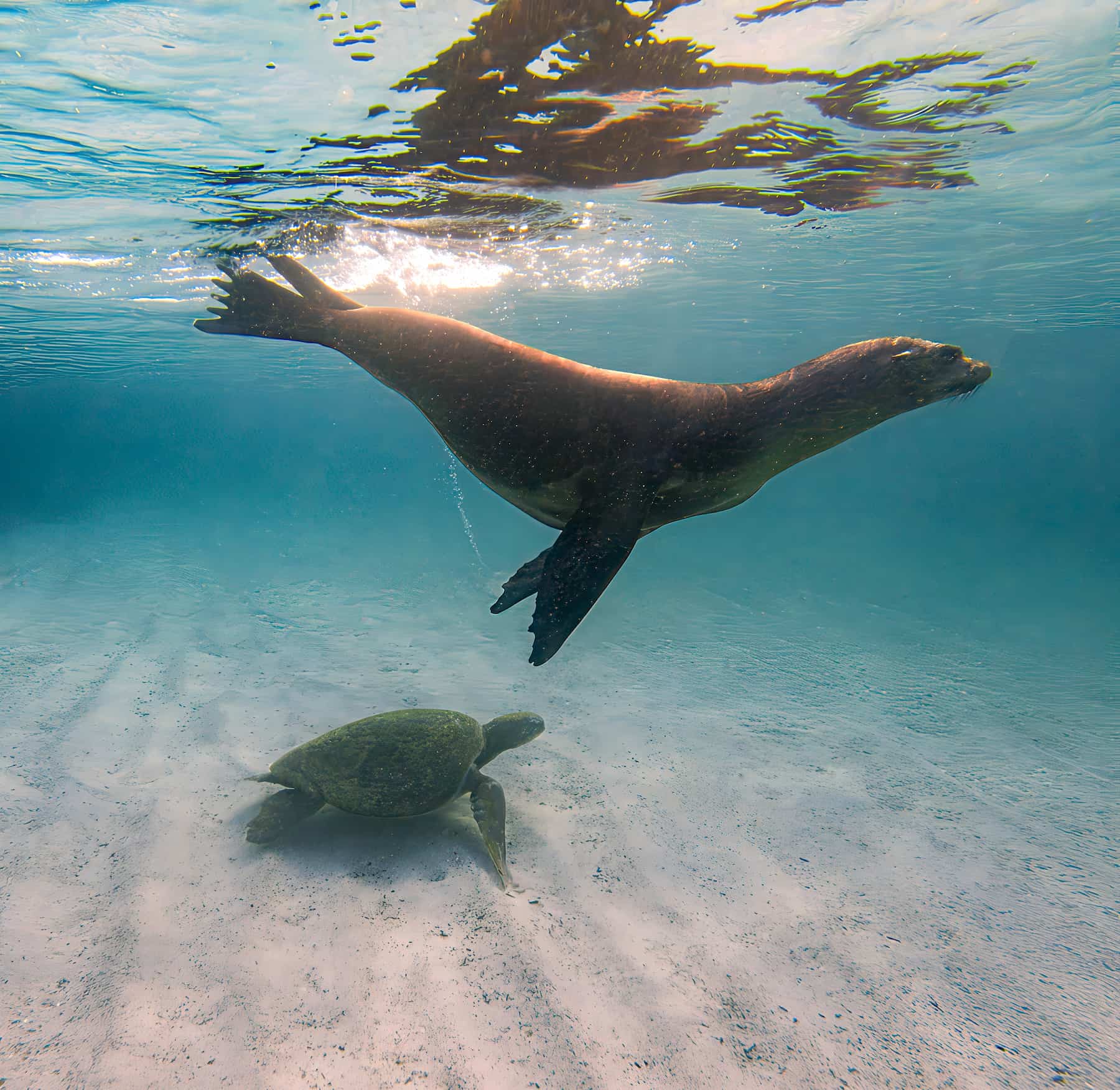
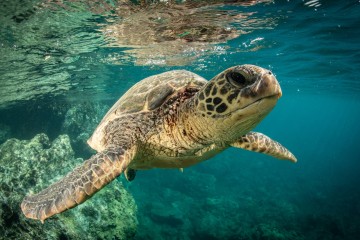
Ask anyone their favourite Galapagos highlight and snorkelling comes up first. Longer cruises give you more chances in the water with sea lions and green turtles.
What can you see on a 4 or 5-day Galapagos cruise?
A shorter cruise is not necessarily a lesser cruise. For travellers with limited time, four or five days can provide a very good introduction to the Galapagos, particularly when the islands are being added to a larger South American trip.
The trade-off is range. You can experience the highlights of one part of the archipelago, but you cannot experience the Galapagos’ full variety of landscapes and wildlife. A 4-day cruise such as the Grand Majestic stays among the central and southern islands, with chances to see giant tortoises and snorkel in the exceptionally rich waters around the islands.
A 5-day cruise such as the Seaman Journey gives you an additional night and roughly a third full day of exploration. Depending on the itinerary, that can mean reaching another island such as San Cristobal.
There is plenty of variety in the itineraries of 4 and 5 day Galapagos cruises. If there is a particular animal, island or landscape you most want to see, let us know, and we’ll find the cruises that will deliver. Also note that snorkelling is a major part of the experience on all these routes. Our guide to snorkelling in the Galapagos covers the top sites and what you can expect to see below the surface.
“A lot of our clients from further afield add a short Galapagos cruise onto the Amazon or Machu Picchu, and that works really well. You come home with an abundance of wildlife memories without needing to take three weeks off work.”
– Tara Sutherland, General Manager, Viva Expeditions
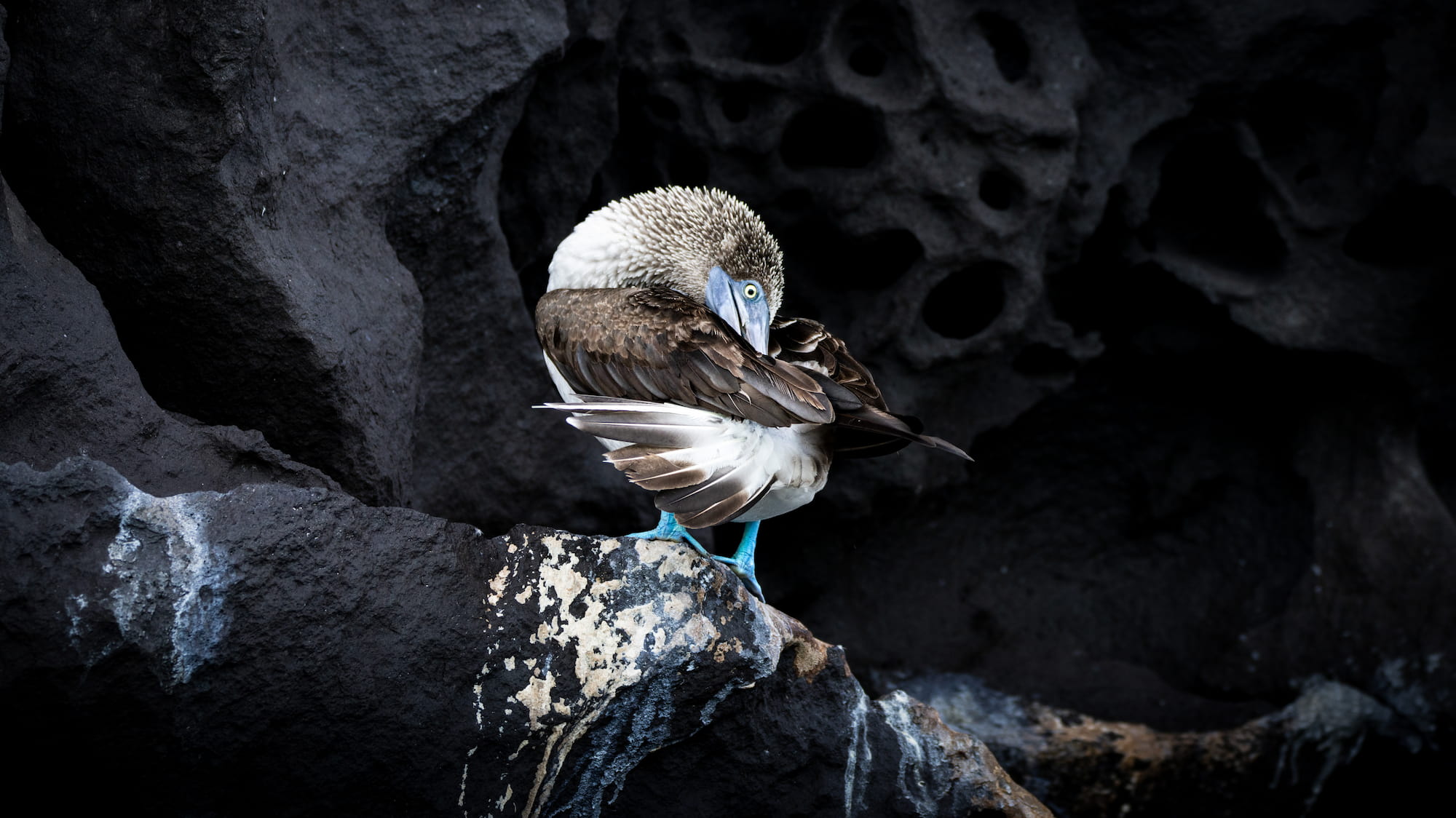
The good news is that even a short cruise delivers the icons, like this blue-footed beauty.
Is a 7 or 8 day Galapagos cruise worth it?
Seven or eight days give you enough time to move beyond the central islands and reach a much broader section of the archipelago. If geographic variety is high on your list, this is where the longer itineraries start to really pay dividends.
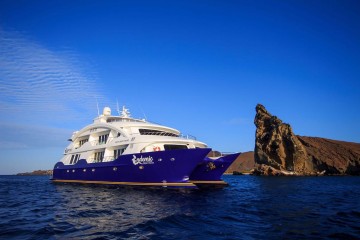
An 8-day Galapagos cruise, such as Viva Expeditions’ voyage aboard the M/C Endemic, is long enough to complete a full eastern or western itinerary rather than covering only part of a route. Choose the western itinerary, and you can reach the remote volcanic islands of Isabela and Fernandina, where the wildlife and landscapes are very different from those around the central loops.
A 7-day cruise, such as the Treasure of Galapagos, offers a similar advantage with slightly less time aboard. It can take you considerably further than a 4 or 5-day cruise while still fitting comfortably into a wider South American itinerary.
Week-long cruises remain the most popular option for first-time visitors, partly for historical reasons. When Galapagos cruising began in earnest in the 1980s, flights to the islands were limited and reportedly ran as little as once a week. As a consequence, the 7-night cruise therefore became the standard, and that format has lasted for decades.
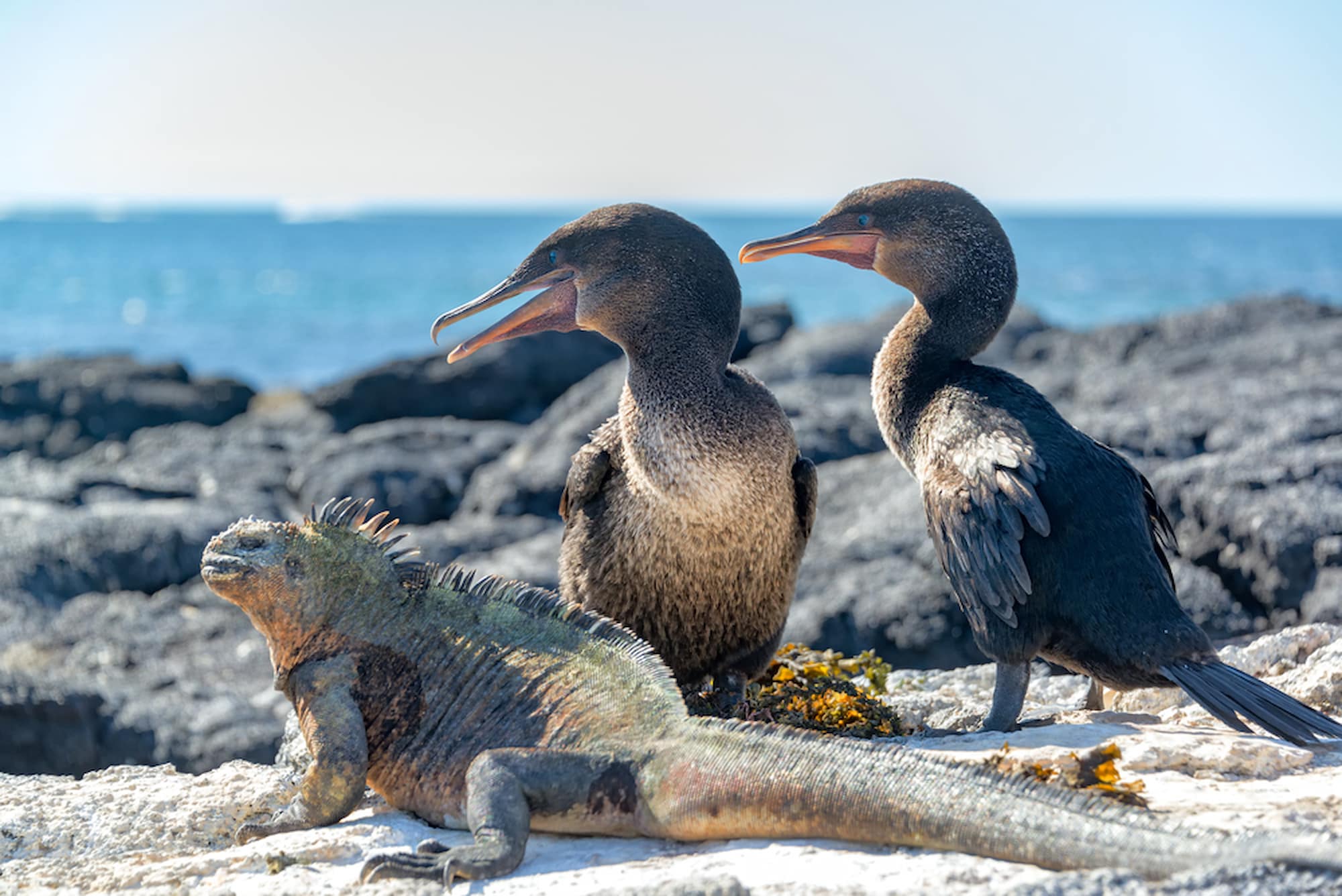
The flightless cormorant is found only in the western Galapagos, so if you’d love to see them, choose a 7- or 8-day western itinerary.
What is the best Galapagos cruise length for you?
The best way to find the answer is to consider your time, budget and priorities, then look for an itinerary that fits.
Where are you travelling from?
Reaching the Galapagos is a serious journey for anyone coming from New Zealand and Australia. Once you have crossed the Pacific and made your way to Ecuador, spending only two full days on the islands might feel like a huge investment for relatively short returns. If you are coming from the United States, though, a shorter cruise is an easier fit into a week-long holiday.
What’s your budget?
Stretching your trip by a few nights often delivers far better value than the cruise price suggests, because a good chunk of your Galapagos costs are fixed no matter how long you sail. The national park entry fee is US$200 per adult, the transit control card another US$20, and your flights and pre-cruise hotel night cost the same whether you sail for four days or eight. Because those fixed costs do not budge, a short cruise works out more expensive per day.
What do you most want to see?
This is by far the biggest consideration. If the Galapagos is a lifelong dream and you don’t think you’ll have the chance to return, it makes sense to give yourself enough time to reach the islands that interest you most. If it is one stop on a much broader adventure and you can envisage returning, then a shorter cruise might be perfectly fine.
Have you set your heart on a particular ship?
Check its itinerary before booking. Vessels operate on fixed routes, so a ship a friend loved may visit a completely different part of the archipelago from the one you want to explore.
Viva Expeditions’ advice is simple: choose the route first and the ship second. Once you know which islands you want to reach, you can compare the vessels operating that itinerary and find the right fit.
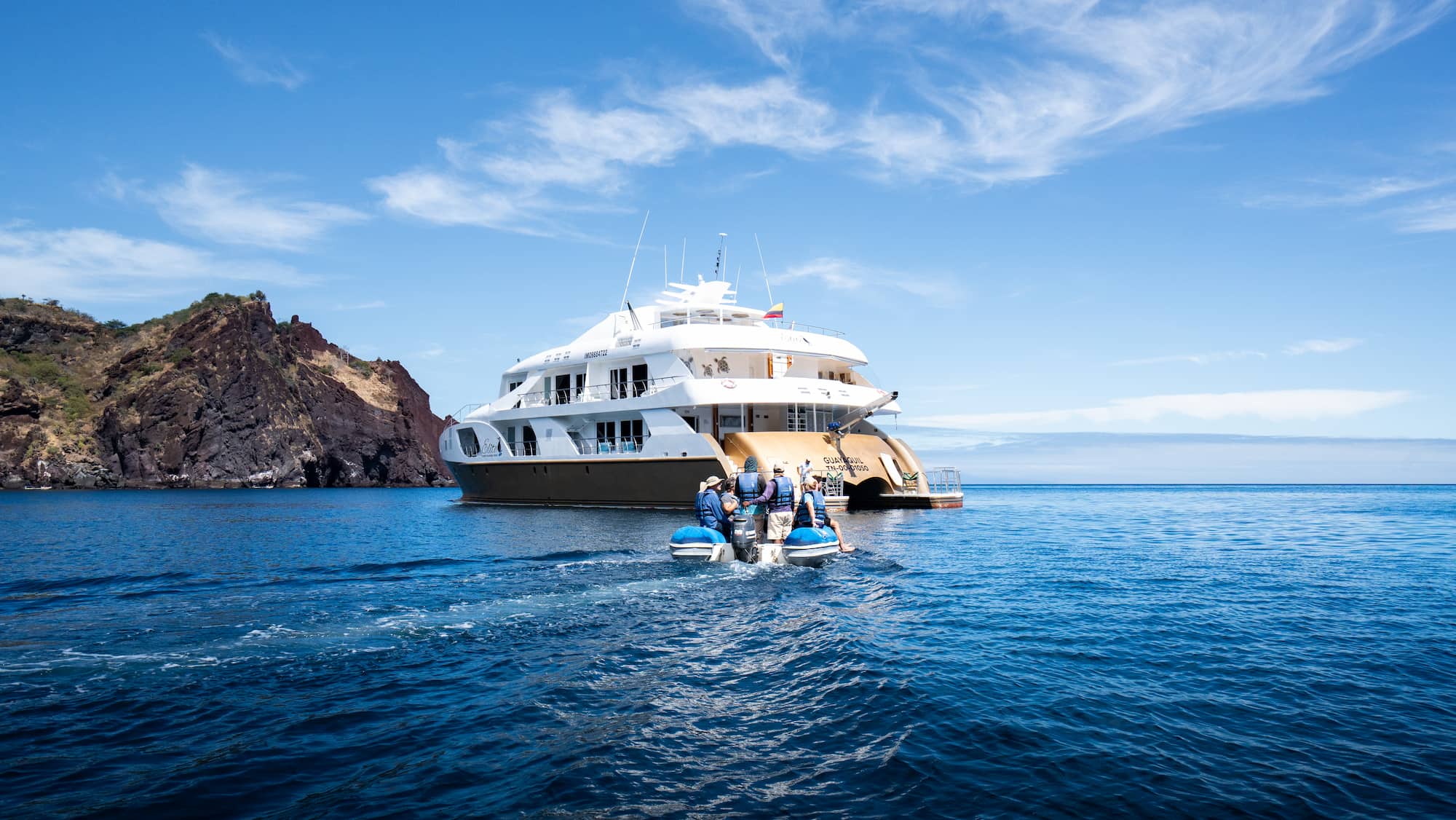
On your average Galapagos cruise day, you are transferred on land by inflatable to explore on foot. The post-lunch hours are usually reserved for snorkelling and swimming.
Can you combine or extend a Galapagos cruise?
Yes. Vessels operate on fixed cycles, so a 12-day Galapagos cruise can combine two shorter routes back-to-back on the same ship. You keep the same cabin while the itinerary changes, allowing you to cover both the eastern and western regions instead of making you choose between them.
You can also extend your stay on land, if you prefer. Some travellers cap off their cruise with a few nights at a base such as the beachside Finch Bay Eco Hotel on Santa Cruz, swapping daily boat excursions for a little more independent on-land exploring.
And because Ecuador connects easily with the rest of South America, the Galapagos fits in well as part of a longer trip. Our Machu Picchu and Galapagos Adventure combines the islands with Machu Picchu and the Sacred Valley over a couple of weeks.
Viva Expeditions works with more than 30 vessels in the Galapagos, so there are options across different cruise lengths, routes and ship styles.
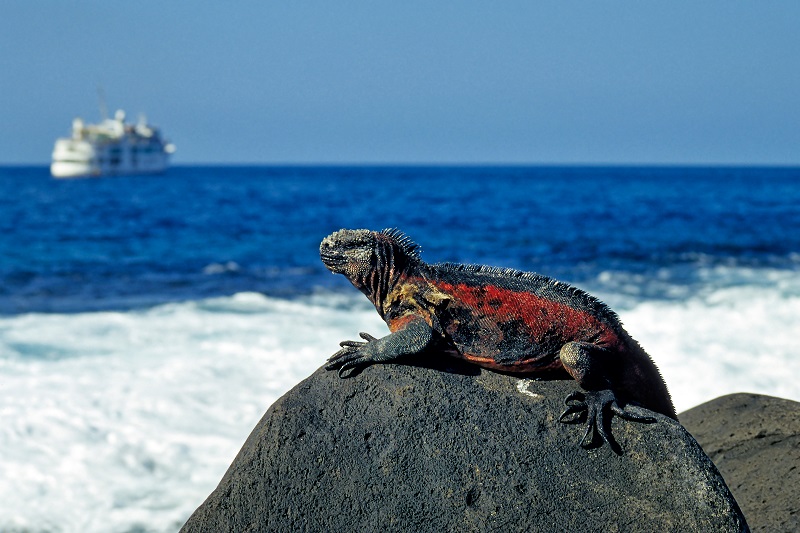
The famous marine iguana of the Galapagos, another local legend you will see no matter where or how long you cruise.
Ready to plan your Galapagos cruise? We're here to help.
The best Galapagos cruise length is ultimately the one that gives you enough time to experience the islands you have come to see. We are also putting together a companion guide comparing the Galapagos islands one by one, to help you choose an itinerary around the wildlife you most want to see.
Alternatively, if you tell us how much time you have and what you most want to experience, our Destination Specialists can match you to the cruise and itinerary that fit. We can also arrange the flights and park formalities from start to finish.
Browse our full range of Galapagos cruises, or get in touch to work out exactly how long you need.
FAQs: Galapagos cruise length
How many days do you need for a Galapagos cruise?
Most Galapagos cruises run 4, 5, 7, 8 or 12 days. A 4-day cruise gives about 2 full days of exploring, a 5-day cruise about 3, a 7-day cruise about 5, and an 8-day cruise about 6 — because the first and last days are largely taken up with flights and transfers. Which length suits you depends on which islands you most want to see.
Is 4 days enough for a Galapagos cruise?
Yes, for a good introduction. A 4-day cruise gives you roughly 2 full days exploring one region, usually the central and southern islands, and works well paired with a longer South American trip. You won't see the full variety of the archipelago in that time, so it suits travellers who are short on time or adding the Galapagos onto a wider itinerary.
What is the most popular Galapagos cruise length?
7 and 8-day cruises are the most popular, especially for first-time visitors, partly for historical reasons — when Galapagos cruising took off in the 1980s, flights were scarce and the 7-night cruise became the standard. These lengths give enough time to complete a full eastern or western loop of the archipelago.
Is a 7 or 8-day Galapagos cruise worth it?
Yes, if you want to see more than one region of the archipelago. Seven or eight days is enough to complete a full eastern or western itinerary, including remote islands like Isabela and Fernandina, rather than the single region a 4 or 5-day cruise covers.
How many days do you need to see the whole Galapagos archipelago?
Covering the full archipelago, including both eastern and western regions, typically takes around 12 to 15 days. Viva Expeditions' 12-day itineraries combine two shorter routes back-to-back on the same ship so you can cover both regions in one trip without switching vessels.
Can you combine a Galapagos cruise with Machu Picchu?
Yes. Ecuador connects easily with the rest of South America, so a Galapagos cruise is commonly combined with Machu Picchu and Peru's Sacred Valley, typically over a couple of weeks in total. It's a popular way to see two of South America's headline destinations in one trip.
What's the difference between an eastern and western Galapagos itinerary?
Eastern itineraries head towards Española, Floreana and San Cristobal, known for waved albatross, flamingos and sea lion colonies. Western itineraries reach the more remote Isabela and Fernandina, home to flightless cormorants and Galapagos penguins. Both include the central islands; a 12-day cruise can combine both regions in one trip.
Laura Pattara
Laura Pattara writes for Viva Expeditions with a special love for all things Latin America. She had guided overland tours across the continent, reached Machu Picchu five times on foot, and even dressed up as a giant toucan for Carnaval. With a degree in languages and two decades of global travel experience behind her, Laura has a long-standing love for the Andes, soaring condors, and a truly delicious empanada.
|