Spotting a polar bear in the wild is one of the most powerful wildlife encounters the Arctic can offer. It is also one of the most misunderstood.
Many travellers assume that booking any Arctic cruise automatically means polar bear sightings. In reality, spotting polar bears comes down to how well timing and location work together, coupled with being on the right expedition and having a pinch of good luck on your side. Bears roam huge distances each year, following the seasonal movement of sea ice and the seals they depend on. Any place can be the right place if you visit it at the right time.
This guide aims to pull all the threads together to help you find the best cruise to see polar bears. First though, it helps to understand how these majestic animals migrate through the Arctic during the cruising season, and why certain regions work better at specific times. We also cover the latest wildlife protection rules, including new regulations in Svalbard, so you know exactly what to expect.
Here’s what we'll cover in this guide.
How Polar Bears Move Around the Arctic
The Arctic Cruising Season Explained
Best Place to See Polar Bears in the Arctic
Spitsbergen and Svalbard (Norway)
Greenland
Canadian Arctic
How to Choose the Best Polar Bear Cruise
Responsible Travel to the Arctic
FAQs

Polar bear sightings can’t be guaranteed, but thoughtful planning can improve your chances.
How Polar Bears Move Around the Arctic
Polar bears' survival is inextricably linked to sea ice, which is used as a base to hunt seals, travel long distances, mate, and take much-needed rest between hunts. In the northern hemisphere summer, when temperatures rise and sea ice begins to melt, polar bears are enticed to continually travel further north in search of pack ice. For this reason, and to increase your chances of seeing them on your cruise, you ought to hone in on destinations that still boast plenty of ice at the time of year you plan to visit. The later in the cruising season you visit the Arctic, the further north you should be heading.
To call polar bear sightings on Arctic cruises a 'fluid' situation would be an understatement. Sightings vary from place to place and year to year, and seeing bears in one spot one season does not guarantee they will be there the next.
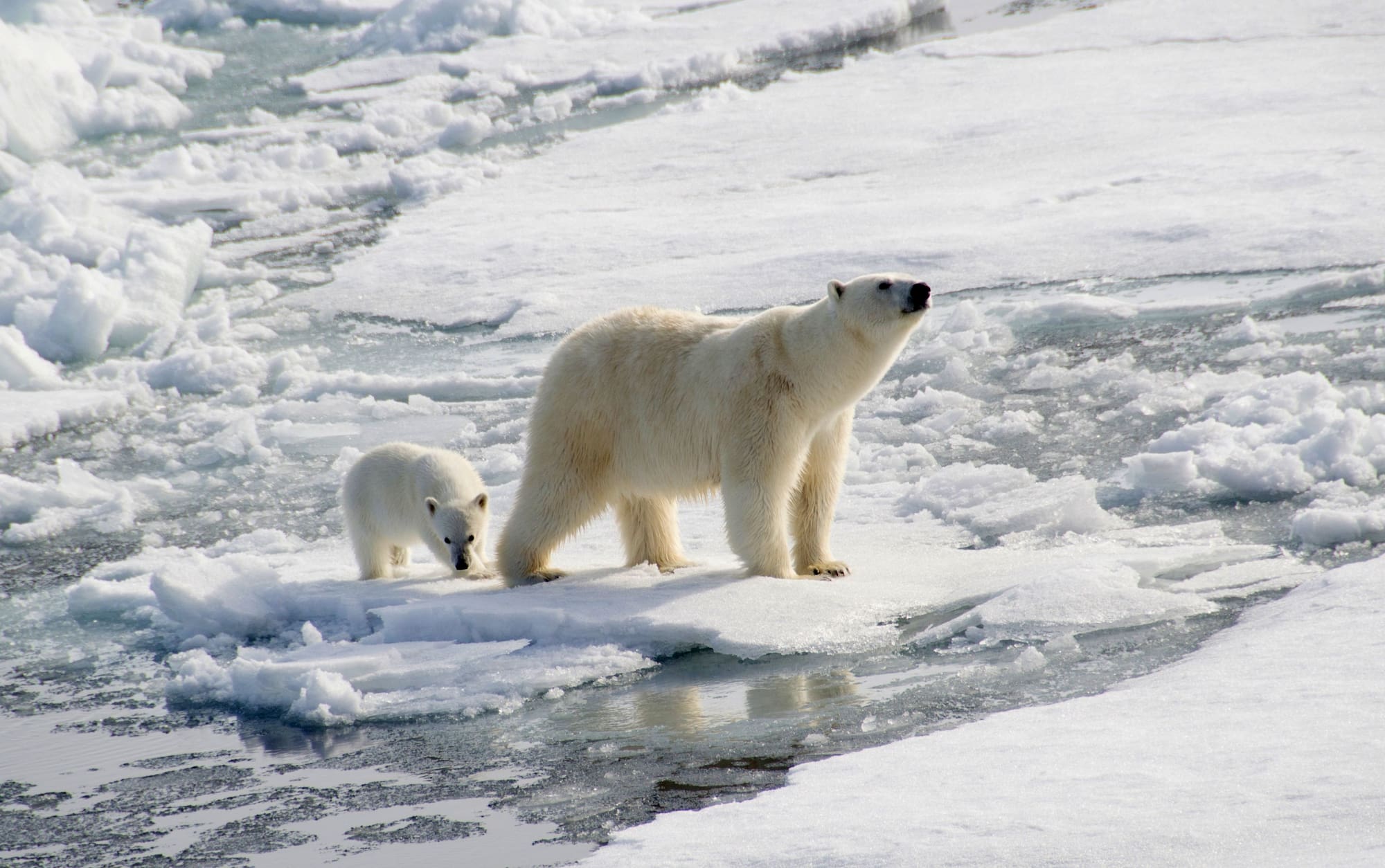
The best cruise to see polar bears is one that matches timing with destination.
The Arctic Cruising Season Explained
Arctic expedition cruises typically operate from mid May through mid-September. Each part of the season offers different conditions that dictate how easy (or not) it is so spot polar bears in the region.
Mid May to June marks the beginning of the season. Sea ice is still widespread, temperatures remain low, and the Arctic feels raw, pristine, and wintry. This is a time when polar bears are actively travelling across drifting ice in search of feeding grounds after winter. The best places to see polar bears this early is on open water, where they’re typically spotted on freshly broken ice floes.
July and August form the heart of the Arctic summer. Sea ice has retreated significantly, and ever more as the years pass, allowing ships to reach farther north and explore on longer itineraries. During these months, polar bears are usually spotted on remaining pack ice, closer to well-known seal colonies. Provided you are on an expedition ship that travels far enough north, and on a longer itinerary, these months offer the best overall chances of sightings.
September is the tail end of the cruising season, when ice begins to reform once more, daylight hours shorten drastically, and conditions become more unpredictable. Although it sounds good on paper, newly formed sea ice is often too thin and scattered to support seal hunting, which means polar bears are less concentrated and consequentially harder to spot. Late-season voyages tend to attract travellers drawn more by extreme adventure (like this expedition to the North Pole) than purely wildlife sightings.
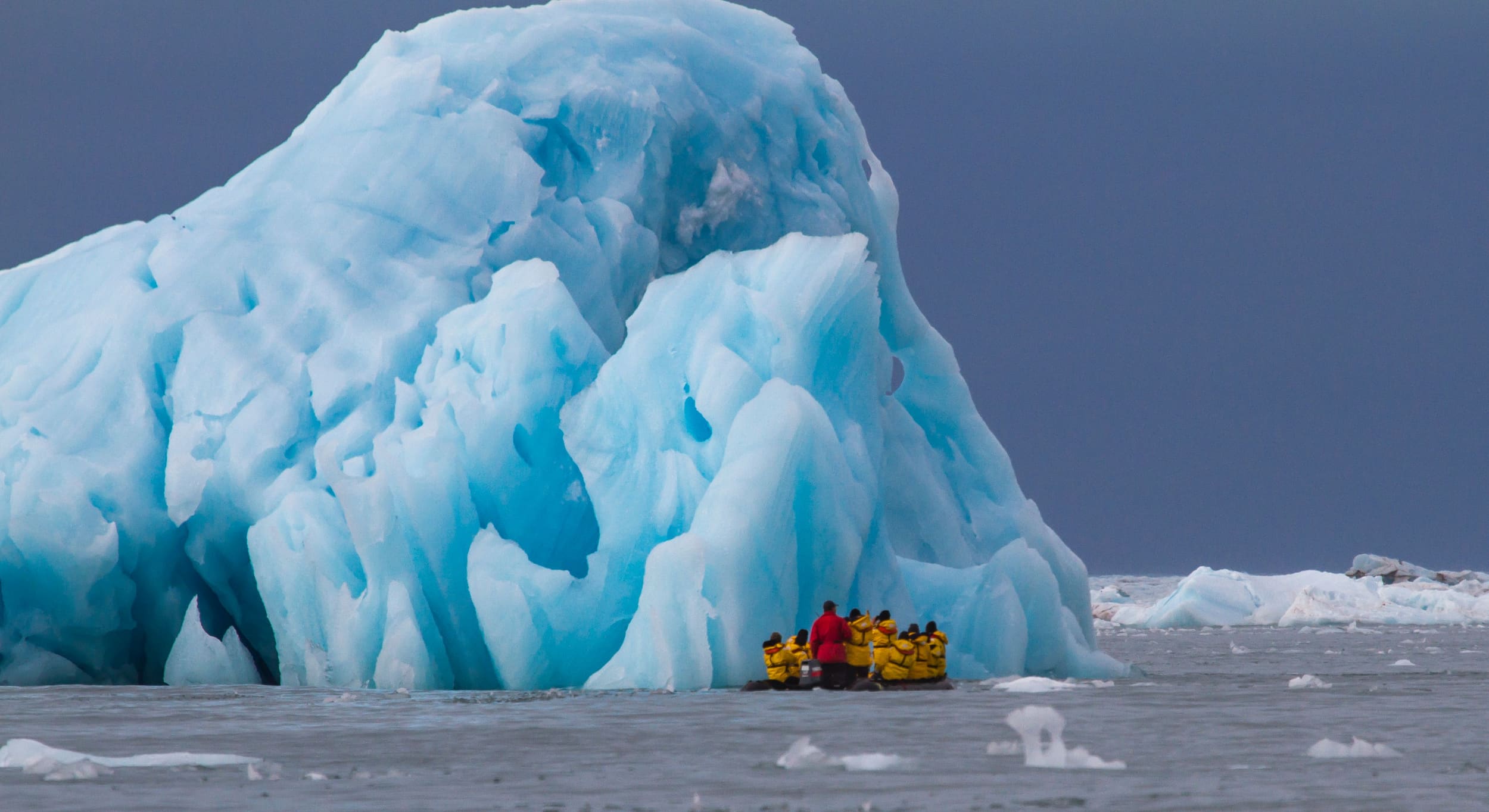
Everyone wants to be on the best cruise to see polar bears, but it’s important to note that Arctic expeditions offer far more than a singular wildlife sighting.
Best Place to See Polar Bears in the Arctic
Spitsbergen and Svalbard (Norway)
Spitsbergen and the wider Svalbard archipelago offer some of the best chances of seeing polar bears in summer. The area sits about halfway between mainland Norway and the North Pole, and falls within what's known as the Barents Sea polar bear range, home to an estimated 3,000 polar bears. Numbers fluctuate throughout the year as bears move between the islands here and nearby Franz Josef Land, in Russia.
Early in the season, polar bears are spread out across drifting sea ice, so sightings tend to be more scattered and more reliant on sheer good luck. Later in the summer, though, as ice retreats, bears gather in fewer areas farther north, which can make sightings more frequent there.
The only issue is that no one knows exactly where these areas will be in any given year, which is why circumnavigation cruises (like our Realm of Polar Bears & Ice Expedition or Spitsbergen Circumnavigation Cruise) are particularly effective. If you were after the best cruise and best place to see polar bears, this would be a top contender.
→ See all our Spitsbergen & Svalbard Expeditions
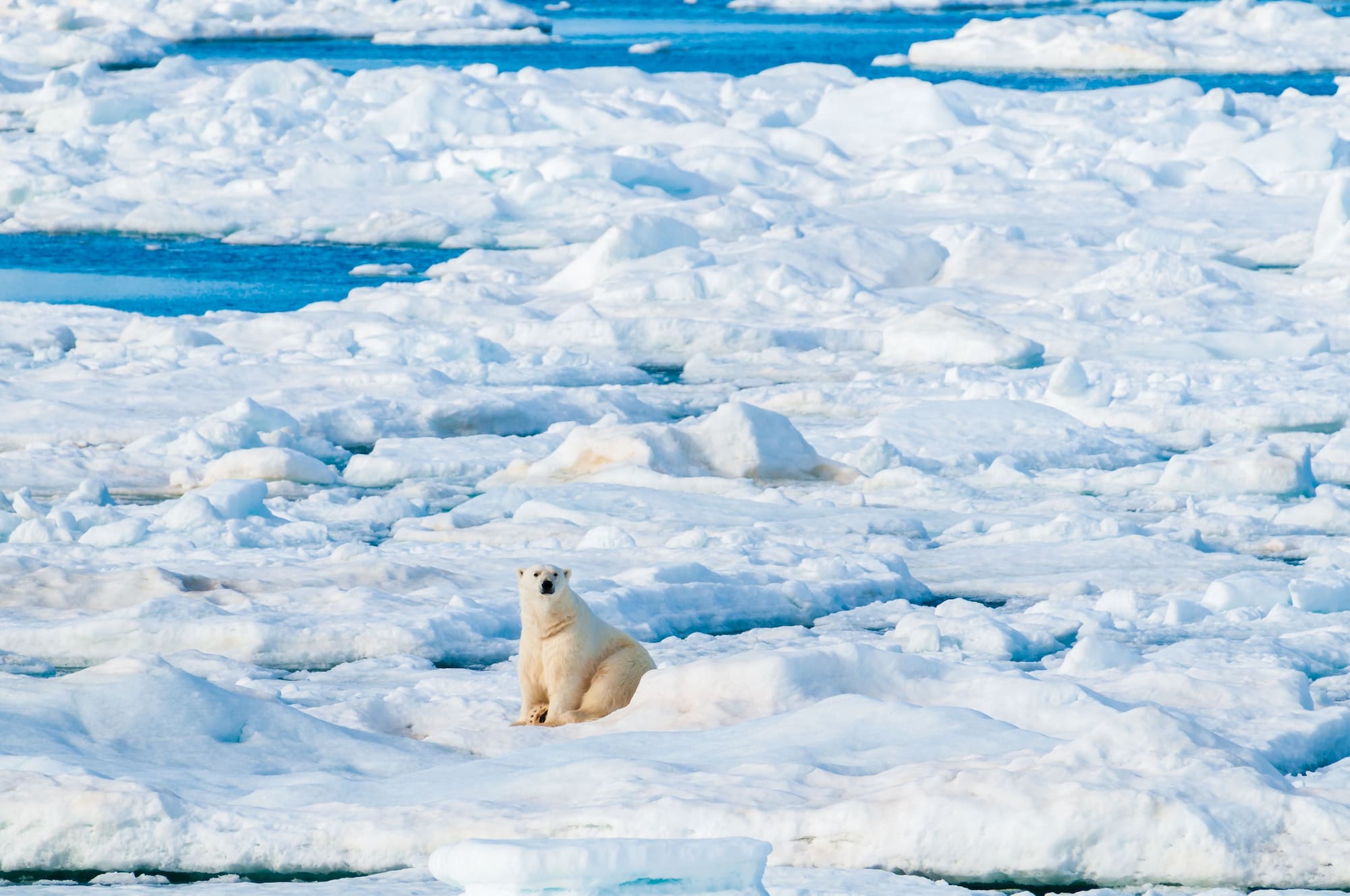
Circumnavigation cruises adjust their routes as conditions change, spending more time in areas where pack ice and wildlife are found.
Greenland
Greenland is the world's largest island and one of the wildest places accessible by expedition cruise. Polar bears are found along the east, north and west coasts, though sightings are more likely in remote northern and eastern regions where human activity is limited. Temperatures here are also colder so ice conditions remain favourable longer into the cruising season.
Cruises that approach Greenland from Spitsbergen (like our Three Arctic Islands Tour) reach the island from the north-east, where sea ice and wildlife density is higher during summer.
Because of Greenland's vast size, Arctic itineraries here tend to reward patience and flexibility. Sightings are less predictable than in Svalbard, but the sheer scale and remoteness of the landscape make encounters especially memorable.
→ Expedition Cruises to Iceland and Greenland
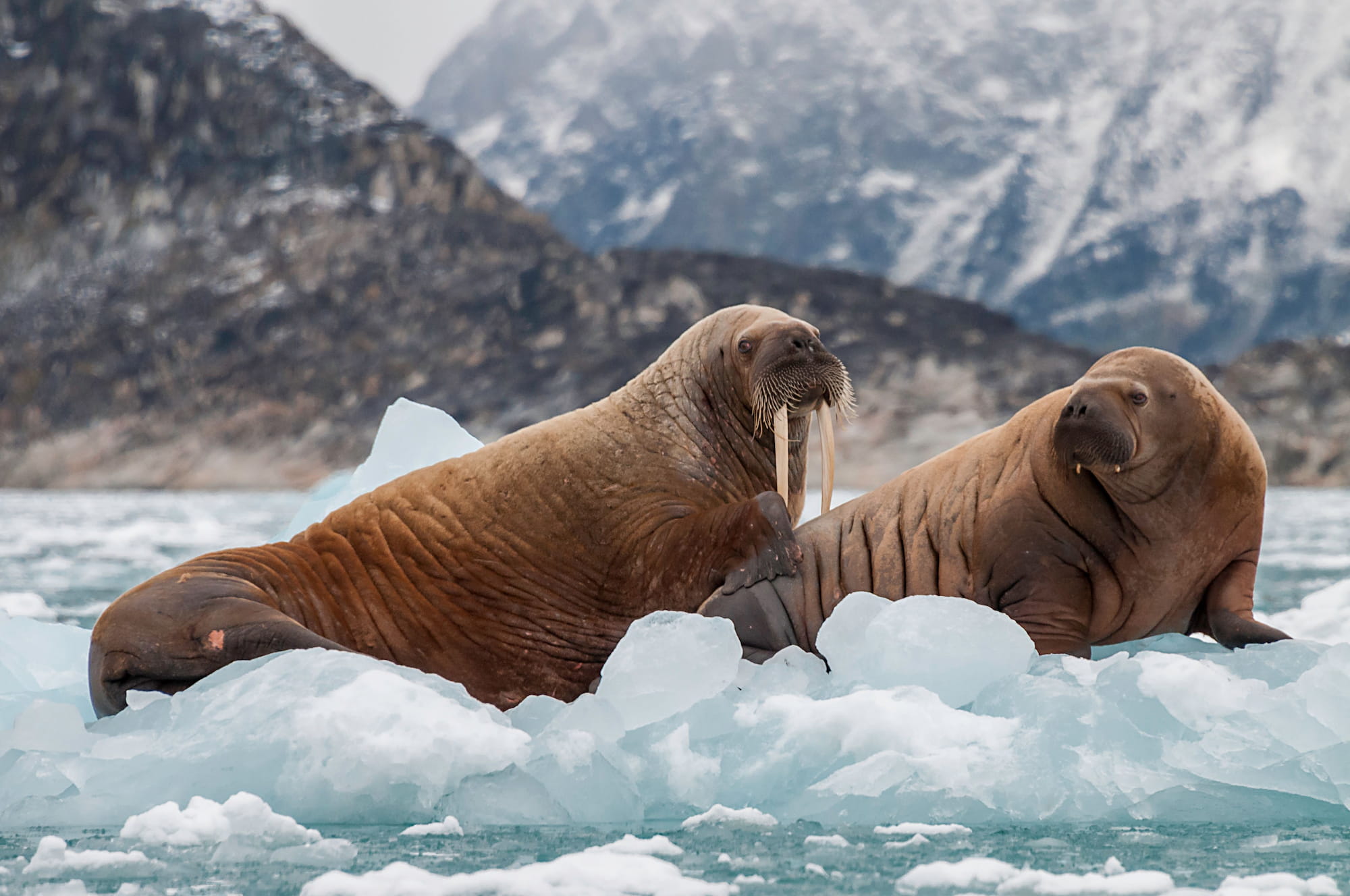
Polar bear resting, calmly observing its surroundings.
Canadian Arctic
The Canadian Arctic offers a wealth of wildlife and dramatic scenery, though polar bear sightings during the summer cruising season are more variable. Regions such as Baffin Island, on the western fringes of Baffin Bay, are part of well-known polar bear migration corridors later in the year, particularly in autumn when bears gather near newly forming sea ice.
By the time most summer cruises operate in the region, many polar bears have already moved north as sea ice retreats. Sightings can still happen, especially along isolated coastlines, but summer expeditions here tend to be defined by other (equally amazing) Arctic wildlife sightings.
→ Canadian Arctic Cruises
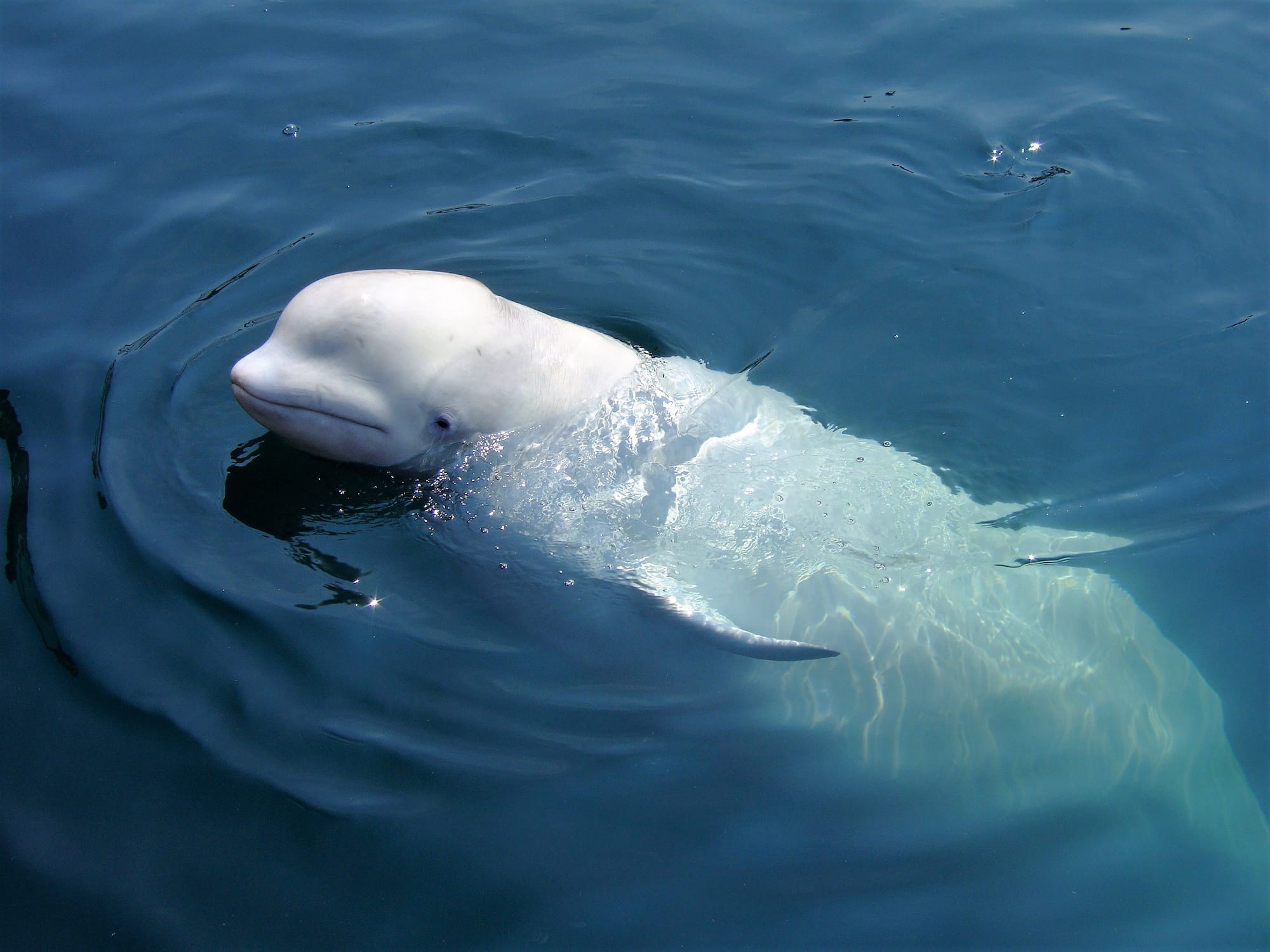
Canada may not be the best place to see polar bears on a summer expedition cruise, but it shines for other wildlife, from beluga and bowhead whales to narwhals, seals, and cliffs blanketed by seabirds.
How to Choose the Best Polar Bear Cruise
After years exploring both the Arctic and Antarctica, our one major recommendation is to choose the smallest ship that fits within your budget.
Timing and destination might play a huge role in your chances of seeing polar bears but being aboard a small and compact expedition ship can exponentially increase those chances. Smaller ships (around 200 guests) can explore narrower inlets and coves that bigger ships cannot go. They also sail closer to coastlines and iceberg, which is priceless when you consider most polar bear sightings are along the Arctic coastlines and atop flowing ice just off the shores. Aside from more in-depth itineraries, smaller ships also offer a more intimate experience, with more time on Zodiacs offered to each guest and more personalised service overall.
Here's a case in point: Viva’s founder, Rachel Williams, spotted four polar bears when she explored Svalbard on a 10-day expedition aboard Ultramarine in June, 2025. There's no doubt that luck played a big part, but Rachel was also on a small, highly capable expedition ship designed specifically for remote explorations. One that could also follow current ice conditions and spend time in places where wildlife activity was high. In this specific case, the right vessel, the right timing, and a bit of good fortune all came together.
→ Read Rachel’s review on her voyage aboard Ultramarine in Svalbard

If spotting polar bears is the goal, choose a vessel for the experience of its captain and crew, not for promised stops or landmarks.
Responsible Travel to the Arctic
Polar bears are considered a threatened species and strictly protected across the Arctic. In Svalbard, new regulations introduced from 2025 require vessels and visitors to maintain a minimum distance of 300 meters (980ft) from polar bears, increasing to 500 meters (1640ft) in high-season, between March and June. If a bear approaches closer than the distance allowed, vessels are required to move farther away. These rules are in place to protect both people and animals and to reduce stress on bears in a rapidly changing environment.
Responsible operators keep group excursion sizes small, follow strict biosecurity measures, and take time to explain how to watch wildlife respectfully. You may not get close-up shots (that's where the binoculars and good camera lenses come in), but what you gain instead is something far more meaningful: the chance to see polar bears behaving naturally, in a landscape that remains as wild and pristine as possible. And that's the most priceless experience of all.
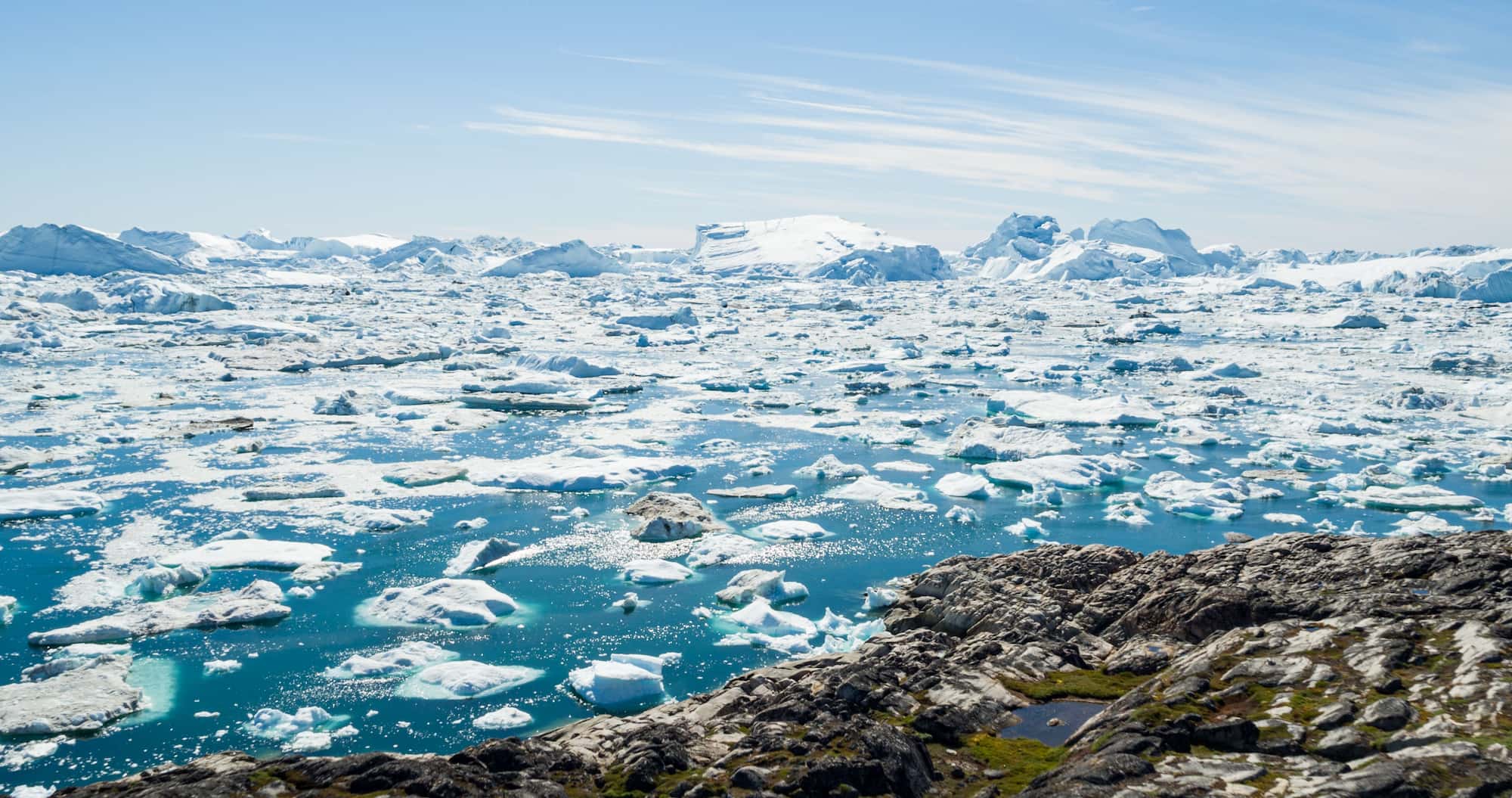
Exploring the harsh yet fragile Arctic landscape is an incredible privilege.
FAQs
What is the best place to see polar bears in the Arctic?
Svalbard and Spitsbergen consistently offer some of the strongest chances during the Arctic summer, thanks to high polar bear populations and favourable sea ice conditions.
Where are polar bears easiest to see on a cruise?
Polar bears are generally easiest to see on summer cruises that travel far north and follow remaining sea ice. Cruises around Svalbard from May to August often provide the most consistent opportunities.
When is the best time of year to see polar bears?
May, June, July, and August offer the best balance of access and wildlife movement, with mid-summer often producing the most concentrated sightings in the very far north.
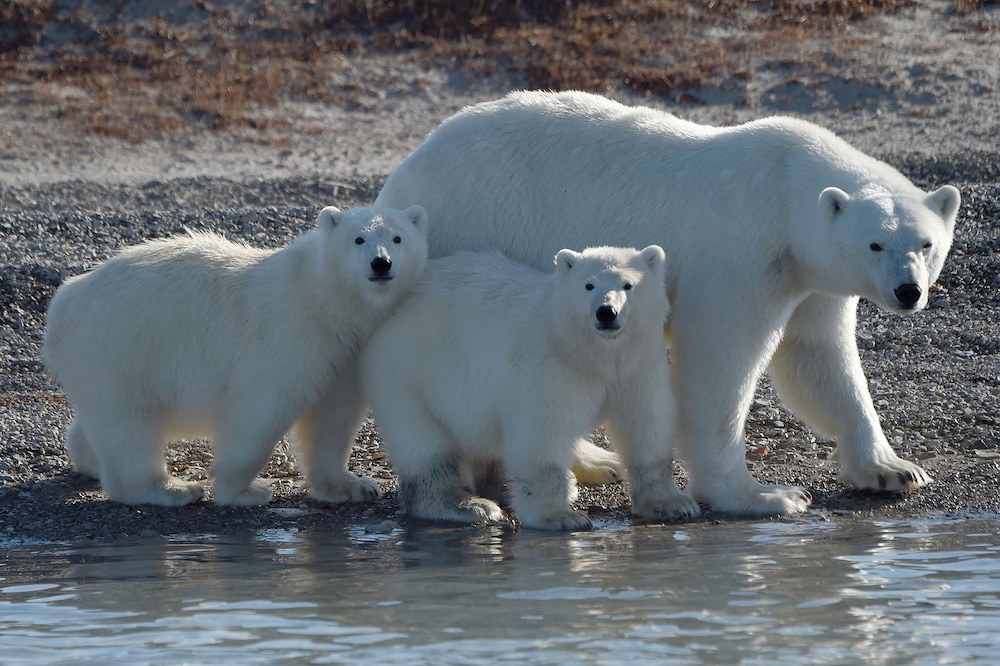
Mid-summer is an ideal time for polar bear sightings and wildlife experiences.
What is the best cruise to see polar bears?
The best cruise is a small ship expedition with itineraries shaped by ice and wildlife conditions rather than fixed schedules.
Are polar bear sightings guaranteed?
No. Sightings depend entirely on natural conditions, though well-planned expeditions during peak season offer excellent chances.
Can you see polar bears in Svalbard year-round?
Polar bears live in the region year-round, but expedition cruises only operate in summer when sea ice conditions allow safe passage.
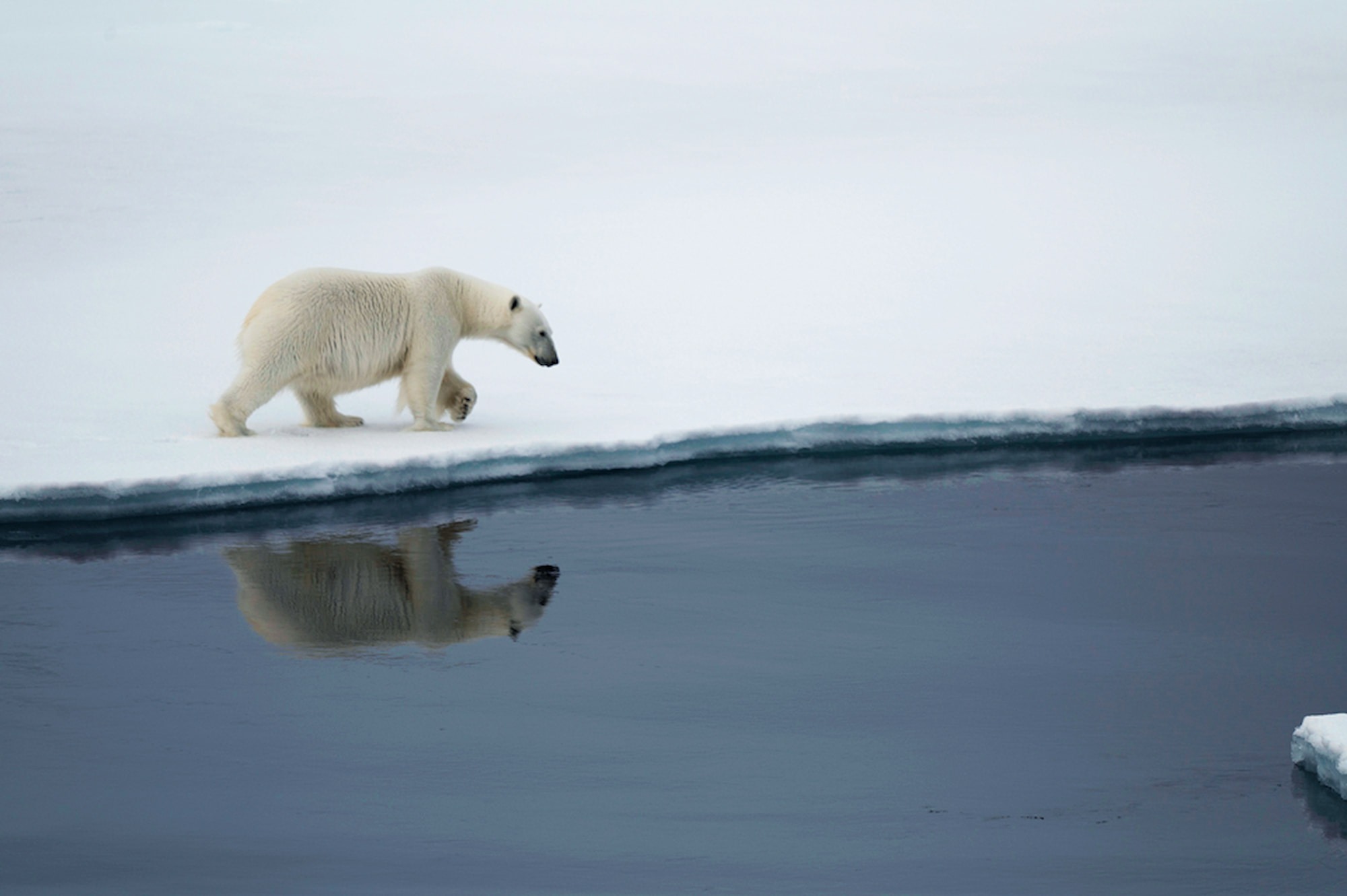
Polar bear sightings in Svalbard depends on timing and expedition conditions.
Can you see polar bears in Greenland or Canada?
Yes, polar bears live in both Greenland and the Canadian Arctic. Sightings are possible on expedition cruises, though they are generally less predictable in summer than in Svalbard.
How close can ships get to polar bears?
Minimum distances are legally enforced across the Arctic. In Svalbard, vessels must keep at least 300 meters (980ft) away from polar bears, and 500 meters (1640ft) between March and June.
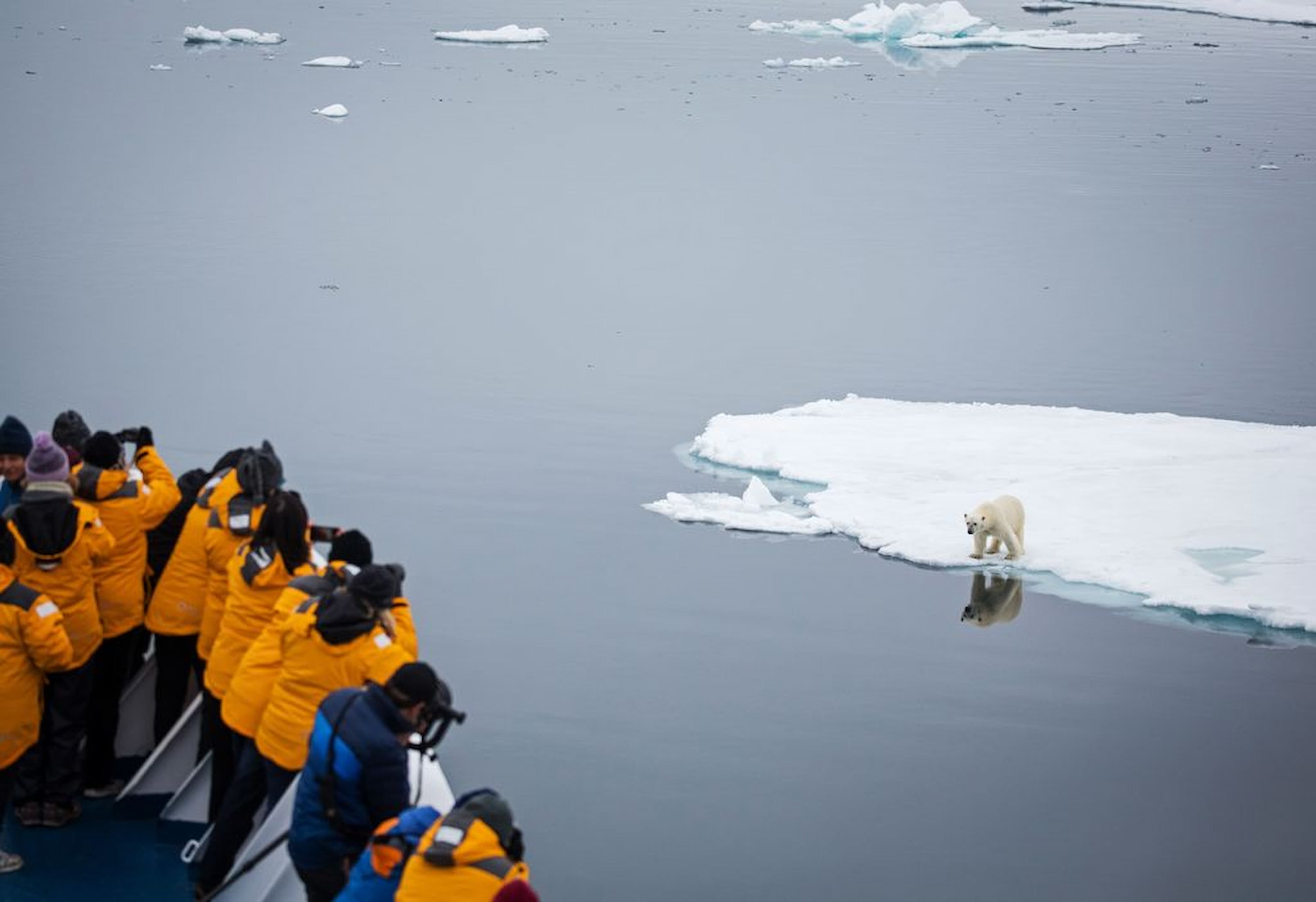
Small ship journeys ideal for landscape photography and wildlife spotting.
Are polar bear cruises ethical?
As long as they are operated responsibly, yes. Ethical cruises prioritise wildlife welfare, follow strict regulations, and avoid disturbing animals.
Is it safe to see polar bears on an Arctic cruise?
Yes. Arctic expedition cruises are led by trained guides who manage wildlife encounters carefully and follow established safety and environmental protocols.
If you want to explore your options in more detail, contact Viva’s Destination Specialists, who are on hand to offer honest, experience-based guidance. We’ll help you find the ship, trip and destination that’s just right for you.
Laura Pattara
At Viva Expeditions, Laura Pattara writes about the Arctic with a focus on wildlife, seasonal travel, and small-ship voyages. She holds a BA in Interpreting and Translation and uses those storytelling skills to shape expert insights into guides that bring the polar north to life. Her most recent cold-climate thrill was spending a morning with puffins in Newfoundland, camera in one hand and coffee in the other.
|