Our listed species represent some of the most unusual Galapagos Islands animals you’re likely to encounter, both on land and below the surface.
Marine Iguana
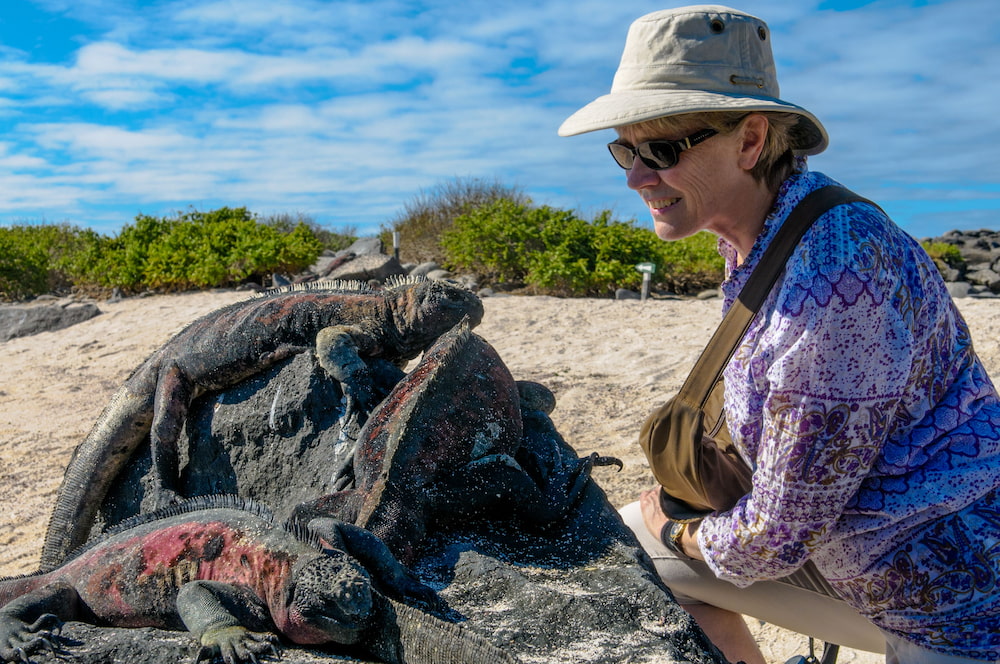
The marine iguana is the only lizard on Earth that forages in the sea, and it does so with complete confidence. These reptilian free divers regularly plunge to depths of around 30 meters, clinging to submerged rocks while grazing on algae. They can hold their breath for up to 30 minutes, slow their heart rate, and then haul themselves back onto lava rocks to warm up again.
They also sneeze. Like, a lot. Excess salt from seawater is expelled through glands near their nostrils, resulting in dramatic, salty blasts that look far ruder than they are.
Perhaps the strangest trick of all is their ability to physically shrink during food shortages caused by El Niño events, then grow again when conditions improve.
Give us evolution, but with adjustable sizing. Please and thank you.
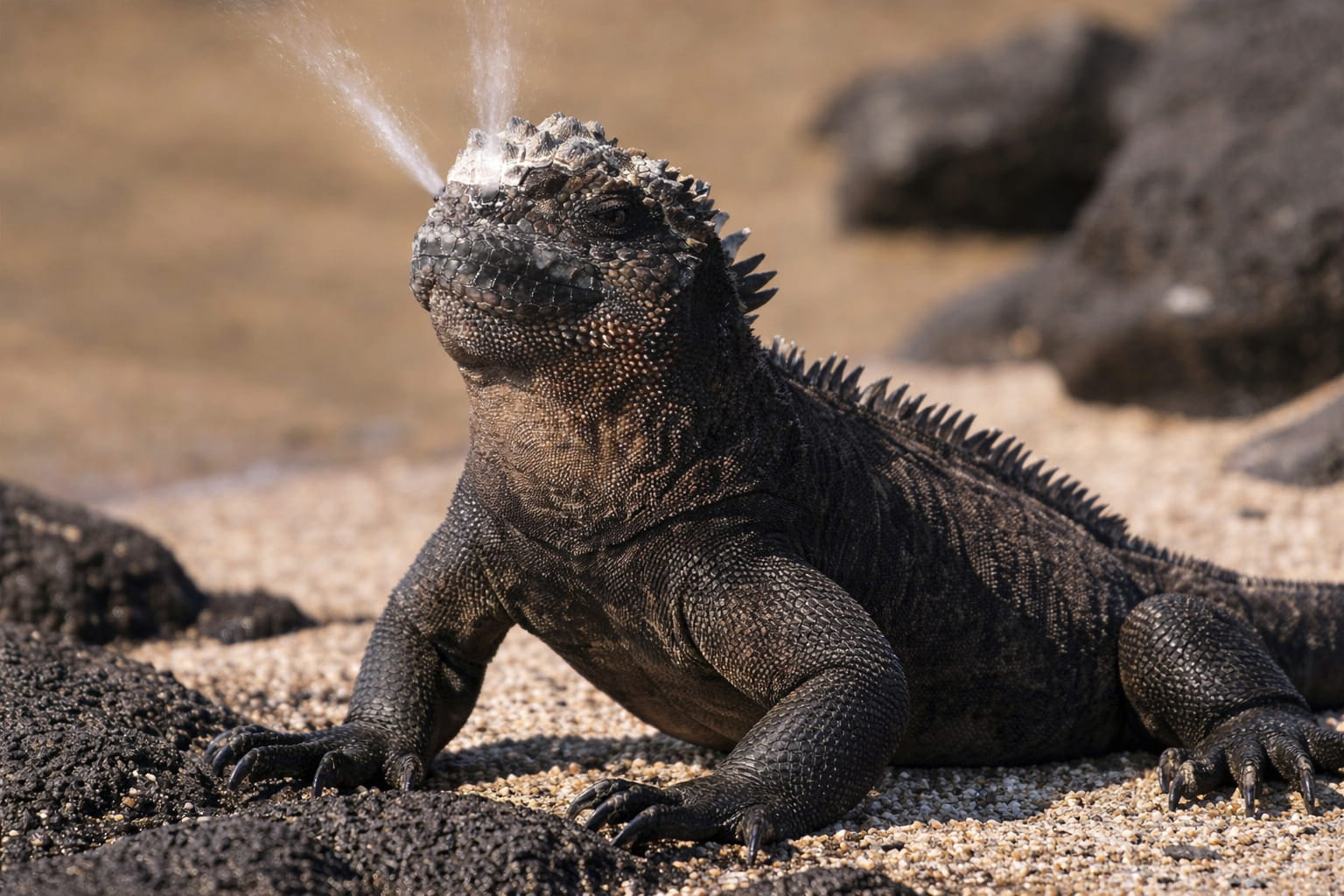
Marine iguanas literally sneeze salt after feeding at sea, leaving white crusts on their faces like badly applied sunscreen.
Where to see them
Marine iguanas are found on almost every island, often piled together on black lava shorelines. Española, Fernandina, Isabela, and Santa Cruz are especially reliable iguana hotspots.
→ Discover our classic small-ship Signature Galapagos Islands Tour
Blue-footed Boobies
It is often said that every group needs a clown and, in the case of the Galapagos wildlife, that honour befalls the one with the blue floppy feet.
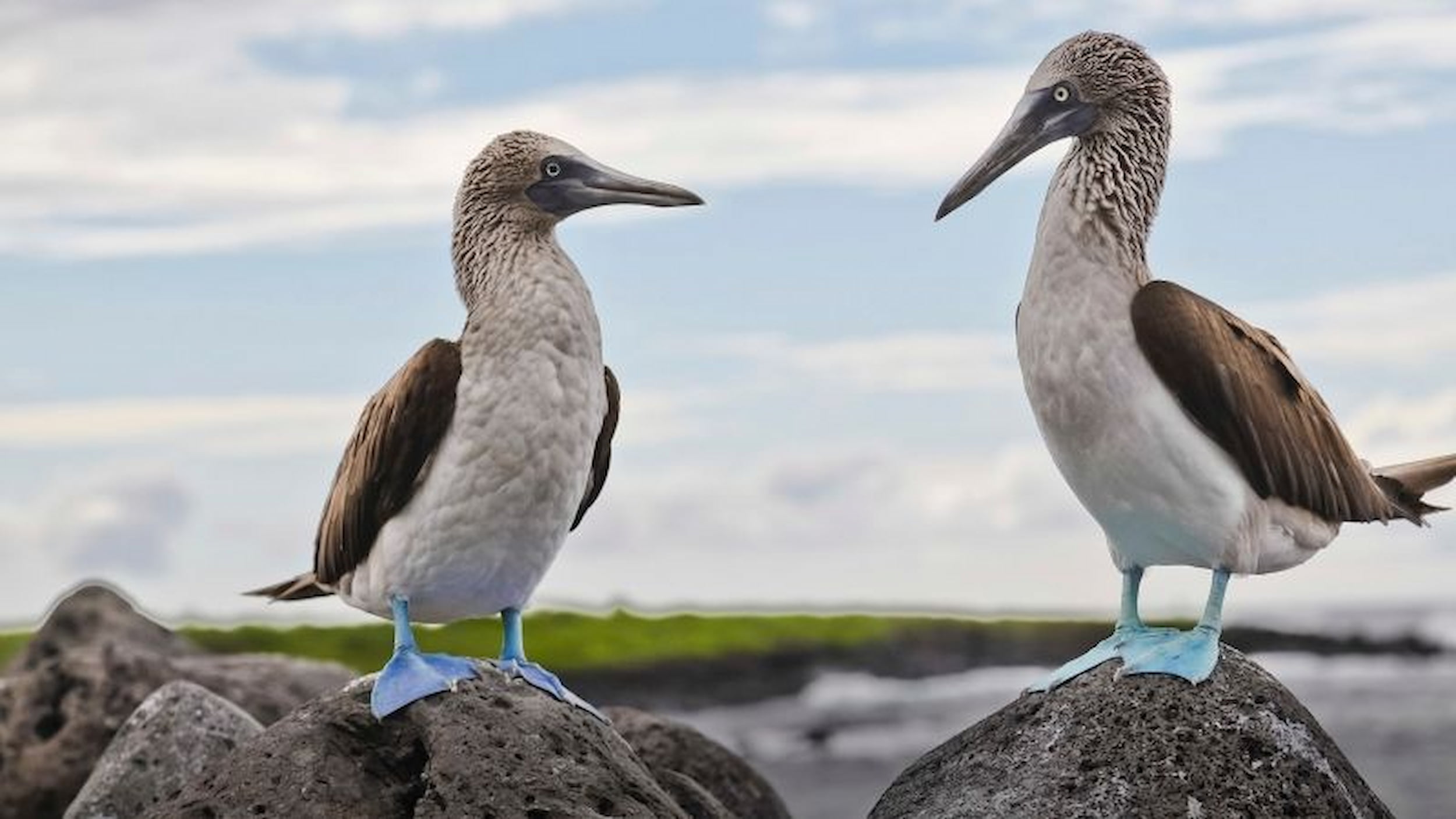
Blue-footed boobies choose partners based on foot colour, making leg day an evolutionary priority.
The adorable bird with the cutest name is one of the Galapagos' most beloved creatures, its sweet waddle and ever-startled expression making it seem more like a satirical caricature than an actual animal. Used to shelter chicks in the first few weeks of life, the wide, floppy, bright blue feet of the Booby are an essential tool for courtship, being waved around in a waltz-like dance that is beyond gorgeous to see.
Witnessing this mesmerising courtship display is one of the most rewarding wildlife spotting experiences you can have on a Galapagos cruise.
Interestingly, those absurdly bright feet are not purely decorative; they are actually a health signal. The brighter the blue, the better the mate!
If only humans were that clever...
The name ‘booby’ is a derivative of the Spanish word bobo, meaning clown.
Because if the shoe fits!
Where to see them
North Seymour, Española, and Santa Cruz are brilliant for close-up encounters. Insider’s hot tip: blue-footed boobies can be seen in the Galapagos year-round, but June to August is when their mating and courtship displays really shine. Expect exaggerated strutting, dramatic pauses, and some very committed dance moves!
→ Our 9-day Seaman Galapagos Cruise covers the best of both north and south islands.
Red-Footed Booby
Often overshadowed by their blue-footed relatives, red-footed boobies bring a different kind of weird elegance to the Galapagos. They are smaller, more arboreal, and the only booby species here that nests in trees rather than on the ground.
They come in multiple colour morphs, from white to chocolate brown, and spend long stretches at sea hunting fish and squid. Their bright red feet add a splash of colour against the sparse island vegetation.
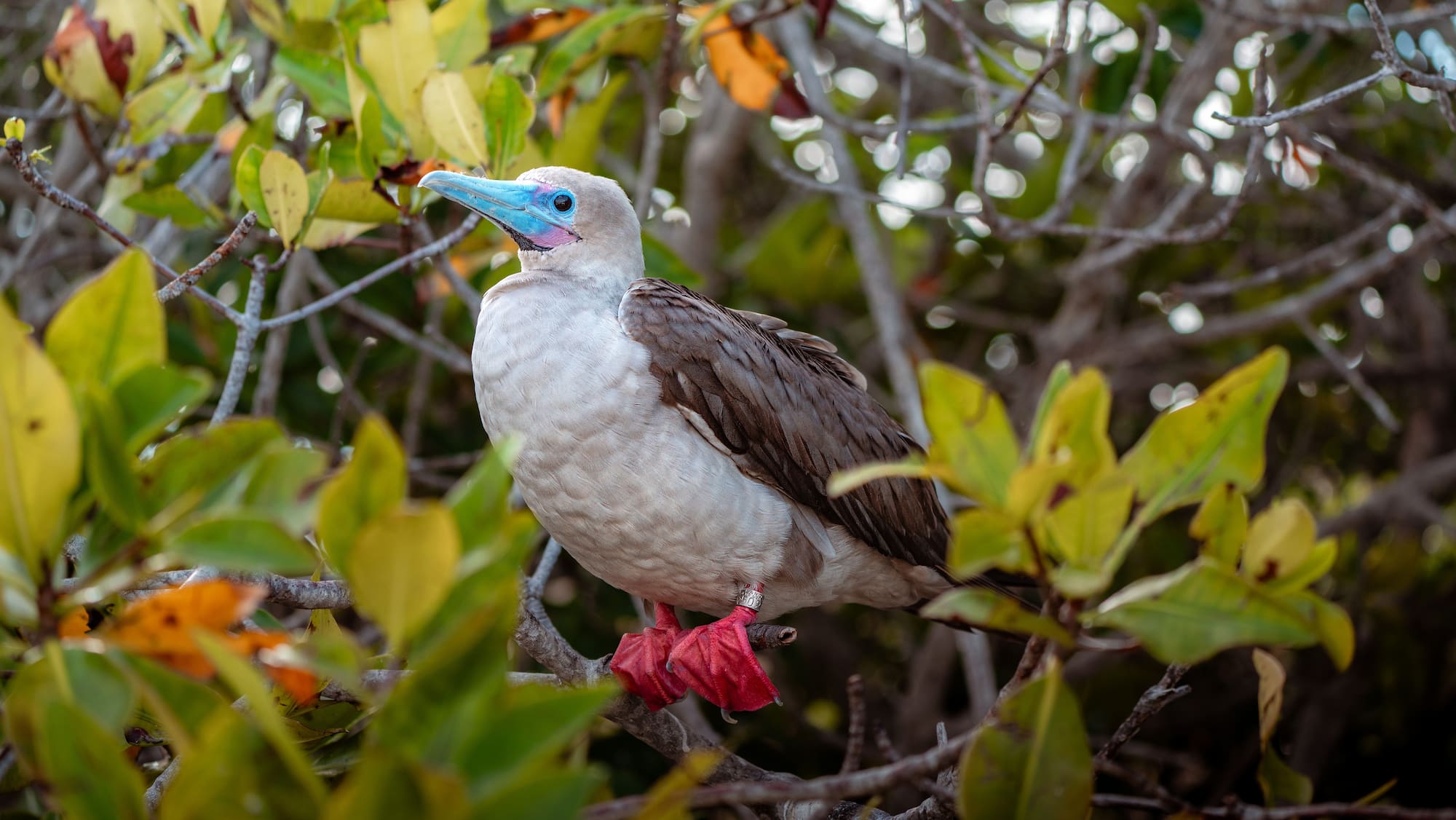
Red-footed boobies are the only boobies in the Galapagos that prefer trees over cliffs for nesting.
Where to see them
Genovesa Island hosts one of the largest red-footed booby colonies in the world.
→ Explore all Viva Expeditions cruises that visit Genovesa Island.
Sally Lightfoot Crabs
Bright red, electric blue, and constantly in motion, Sally Lightfoot crabs look like someone let loose with a paint palette along the shoreline. They are fast, opportunistic scavengers, feeding on algae, dead animals, leftover scraps, ticks, and occasionally even other crabs if the opportunity presents itself.
The greedy guts of the Galapagos are not unique to these islands; they can also be spotted along the Central and South American western coastline. Yet here they play a pivotal role in the ecosystem, keeping it clean and waste-free.
Agile, swift and beautifully tinted, they are among the most photogenic subjects you’ll discover on your Galapagos cruise.
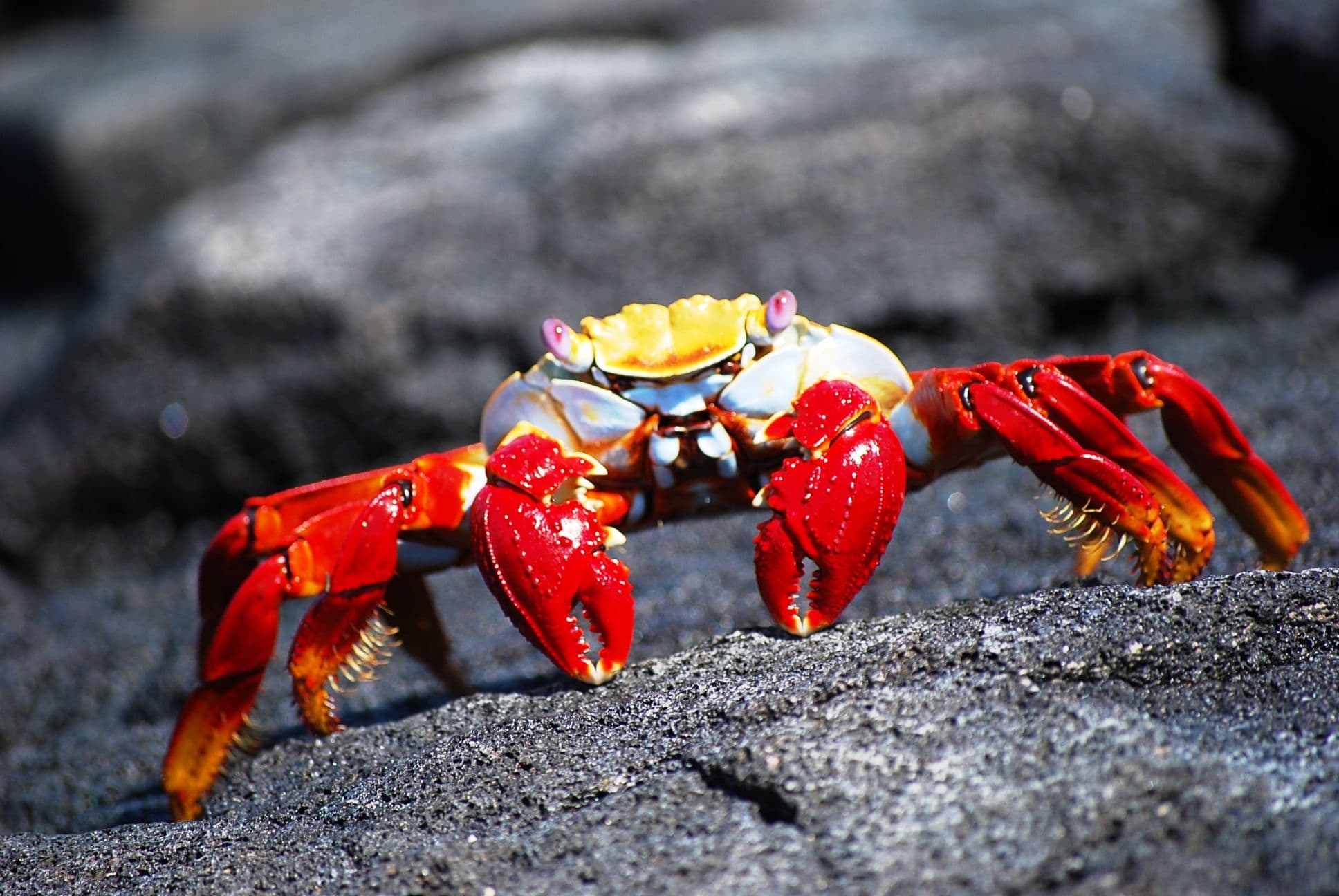
Sally Lightfoot crabs are Mother Nature’s most colourful waste disposal units!
Where to see them
Every rocky shoreline in the Galapagos seems to have a resident population. Fernandina and Isabela are particularly rewarding.
→ See all cruises to the westernmost island of Fernandina
Hammerhead Sharks
It may look like it’s been hit in the snout with a ginormous hammer – part of the reason it makes such a great character in animated movies – yet this comical creature is one of the most formidable hunters of the Galapagos seas.
That wide, flattened head gives them enhanced vision and sensory perception, allowing them to detect prey hidden in the sand below. The Galapagos are one of the few places on Earth where scalloped hammerheads gather in massive schools, sometimes numbering in the hundreds.
Luckily, they are docile and not known to attack humans and are the main drawcard for SCUBA divers on Galapagos cruises.
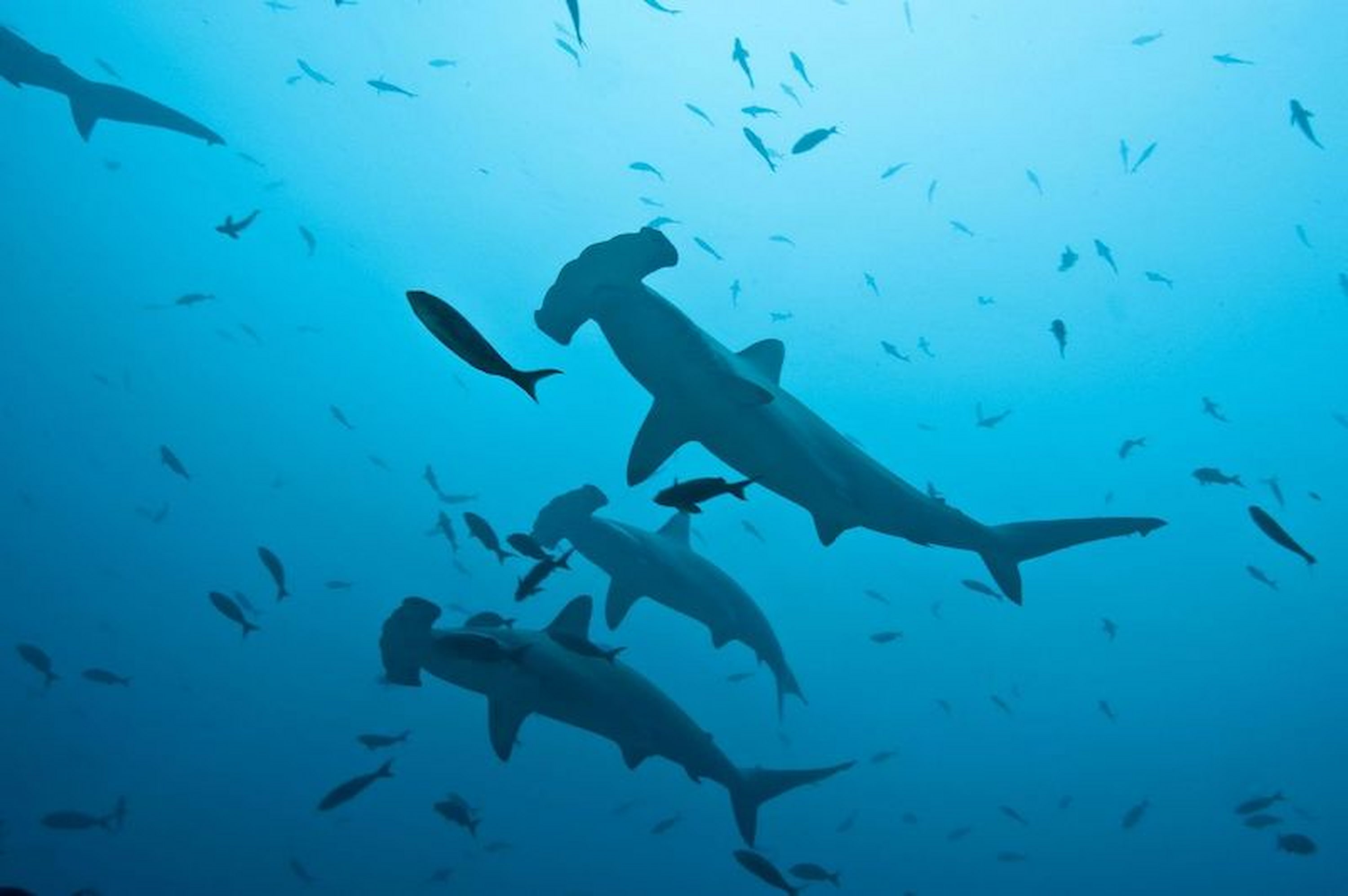
The Galapagos is one of the rare places where hammerhead sharks gather in schools of up to 100 individuals.
Where to see them
Hammerhead sharks are most reliably seen around the remote northern islands of the Galapagos, particularly Darwin Island and Wolf Island. These sites are famous for large schools that gather near steep walls and cleaning stations, often in strong currents. Elsewhere in the archipelago, sightings are far less predictable and usually involve only small groups or passing individuals. Although they are occasionally spotted by snorkellers near San Cristóbal, reliable sightings are far more likely on dedicated diving trips.
→ See hammerhead sharks on Galapagos dive cruises
Galapagos Penguin
Yes, penguins. On the equator. Because, why not?!
The Galapagos penguin is the only penguin species that lives in the northern half of our planet, surviving thanks to cool upwelling currents that bring nutrient-rich water to the islands.
These adorable little guys are compact, fast swimmers and expert fish hunters, often seen darting through the water like underwater torpedoes. On land, they nest in lava crevices to stay cool and avoid predators.
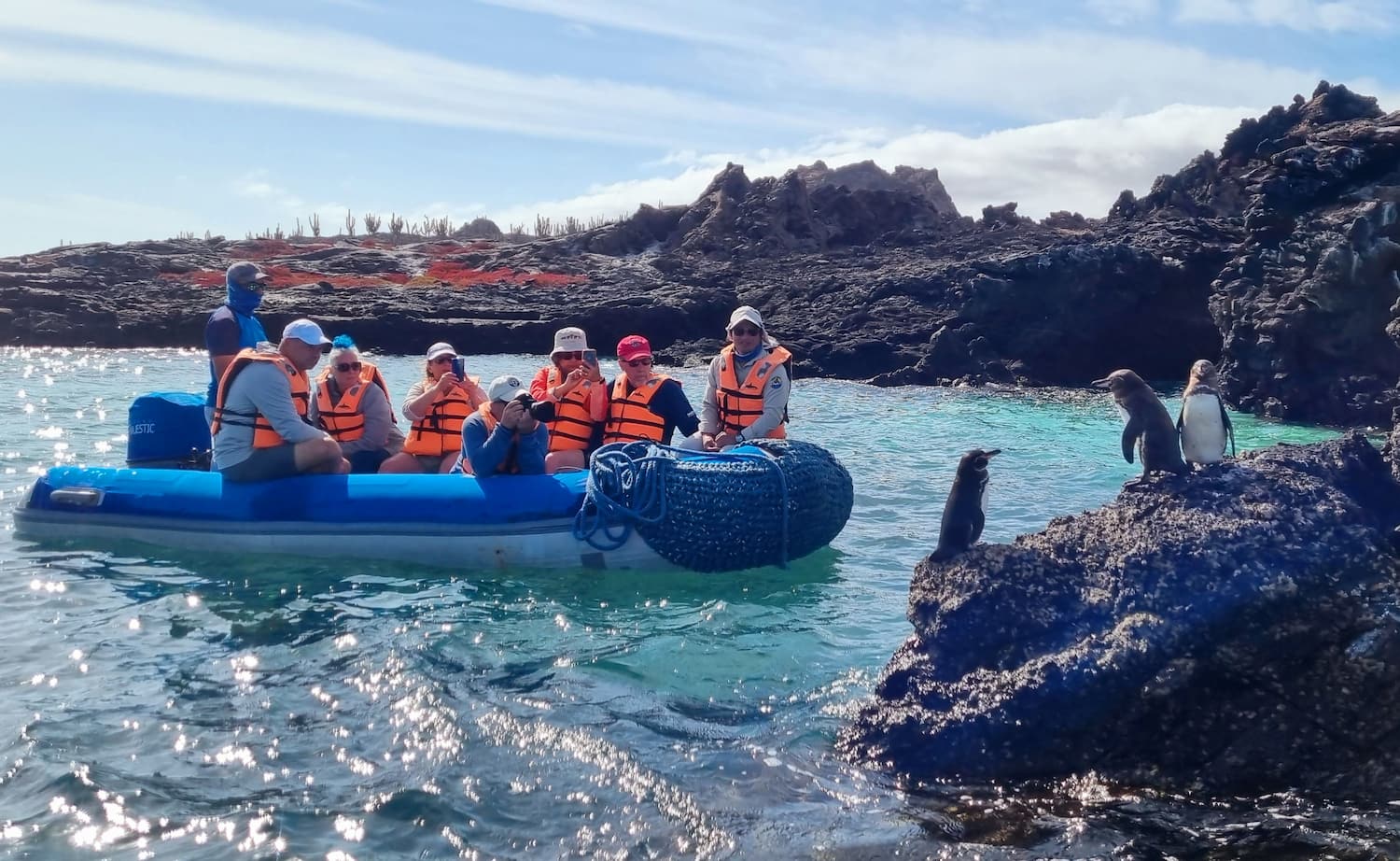
The Galapagos penguin population is small and vulnerable, so every sighting feels truly special.
Where to see them
Most commonly spotted on the rocky coastlines near Isabela and Fernandina Islands.
Magnificent Frigatebird
With a wingspan stretching over two meters and the ability to stay airborne for days on end, frigatebirds are aerial specialists. Males are instantly recognisable by their bright red throat pouch, which they inflate like a balloon during breeding displays.
They are also unapologetic pirates, harassing other seabirds mid-air until they drop their catch. Graceful? Yes. Well-behaved? Not today. Probably not tomorrow, either.
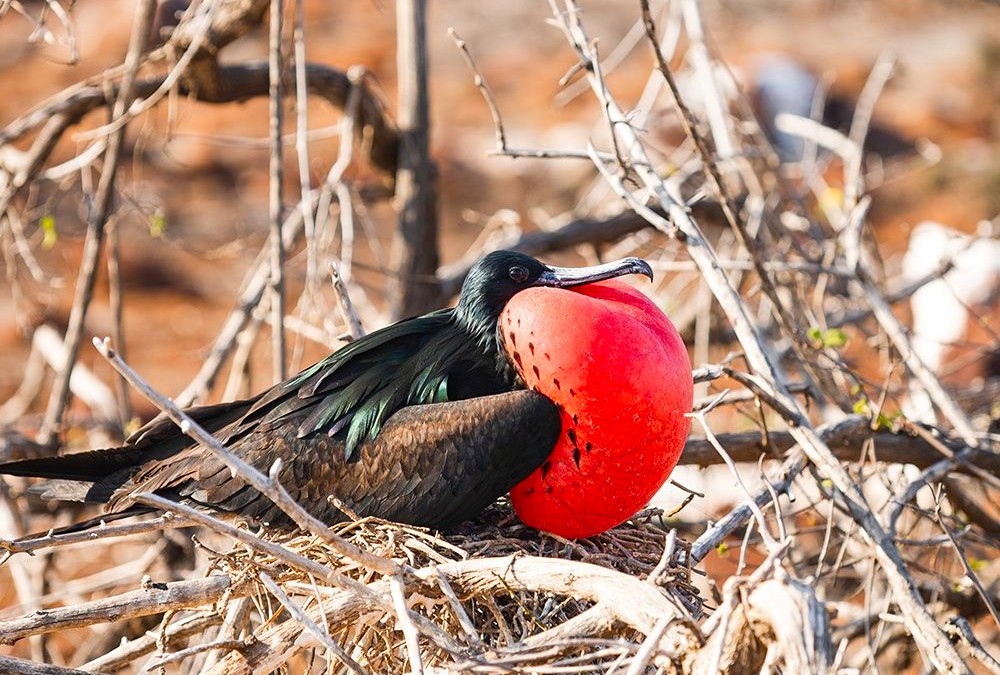
The male frigatebird’s inflated pouch is one of the most striking animal displays you can see in the Galapagos.
Where to see them
North Seymour and Genovesa Islands offer excellent viewing, especially during breeding season, between December and April.
Red-Lipped Batfish
Possibly the strangest fish in the Galapagos, the red-lipped batfish looks permanently unimpressed. Bright red lips, a flattened body, and limb-like fins give it the appearance of a fish that decided walking was more dignified than swimming.
It does swim, albeit reluctantly, but prefers to shuffle along the seafloor hunting small invertebrates. Its lips are thought to play a role in species recognition rather than romance, despite common misconceptions.
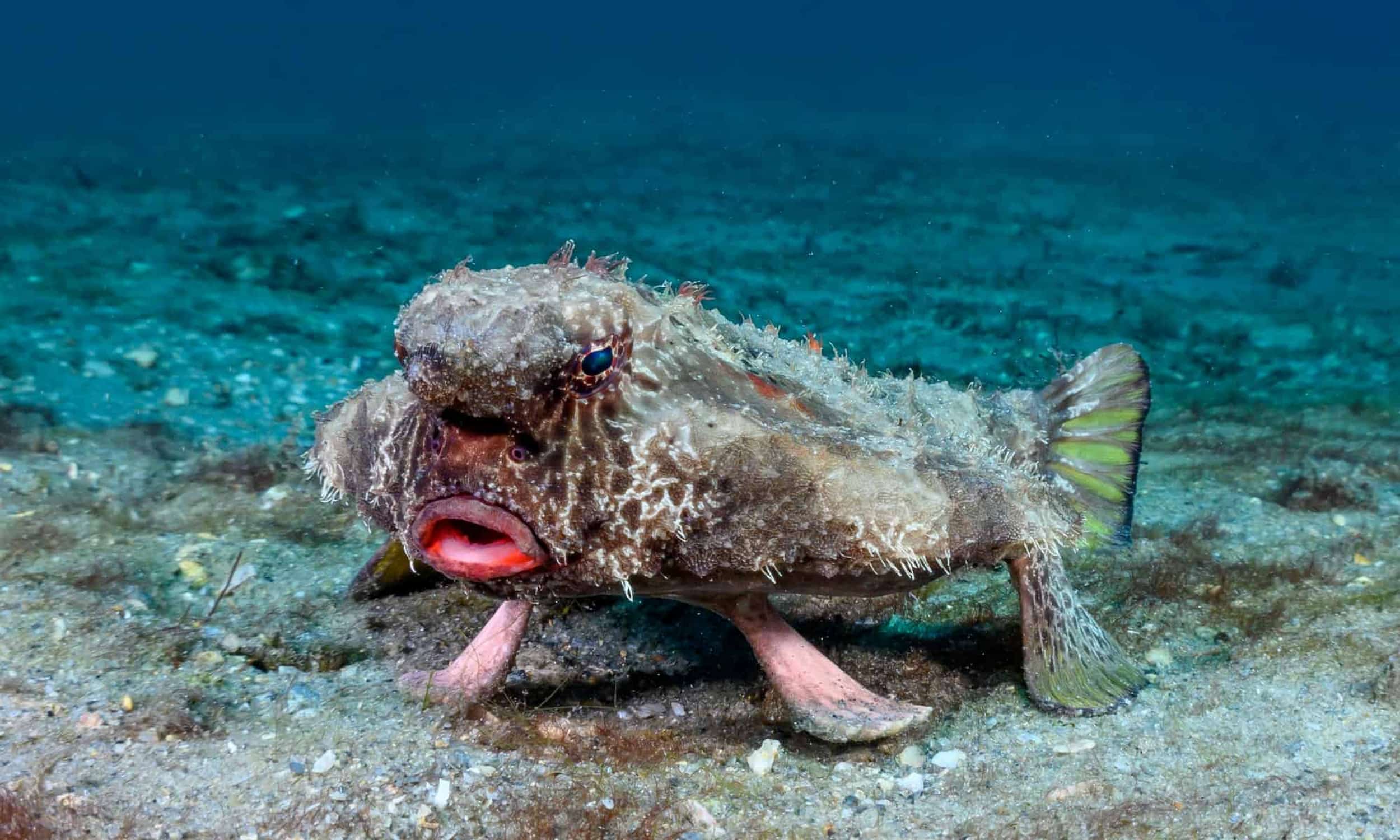
Proof that bold lips existed long before cosmetic injectables, the red-lipped batfish is 100% natural!
Where to see them
Usually found at depth around Santa Cruz and Isabela, it is often spotted by divers rather than snorkellers.
Giant Tortoise
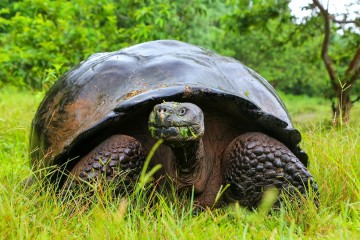
If the Galapagos had royalty, the giant tortoise would wear the crown. Living well beyond 100 years, they are the longest-lived vertebrates on the planet. They can also survive up to a year without food or water, an ability that once made them tragically useful to passing ships.
Historically, the Galapagos hosted 18 distinct tortoise species, each adapted to its island. Today, conservation programs are slowly rebuilding populations after centuries of exploitation.
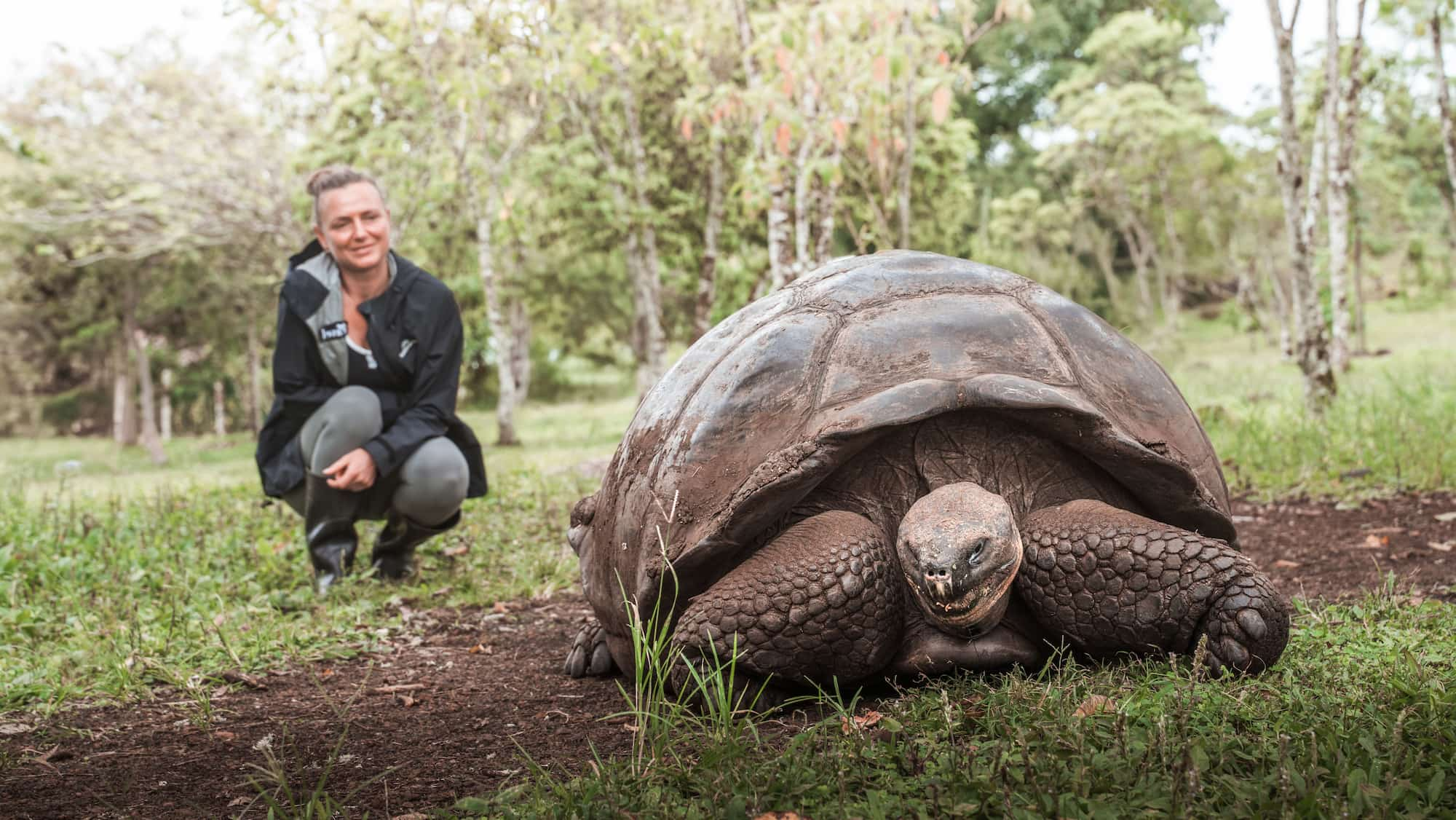
Each island once supported its own distinct tortoise species, shaped by terrain and vegetation, and genetically separate from those on neighbouring islands.
Where to see them
Highlands of Santa Cruz, Isabela, and San Cristóbal, as well as the main Charles Darwin Research Station on Santa Cruz.
The best way to see wildlife in the Galapagos
The Galapagos have been protected for a long time, and it shows. Visitor numbers are limited, landings are carefully controlled, and wildlife encounters are managed with a light but firm hand. The focus has always been on keeping ecosystems intact, whether that means protecting habitats, managing invasive species, or supporting breeding programs for animals that need extra help.
Because the islands are spread across a vast marine reserve, the most effective way to see Galapagos wildlife is still by small ship. Sailing between islands usually happens overnight, which frees up the days for shore visits, snorkelling, and time in the water. That is often where some of the strangest and most memorable encounters happen.
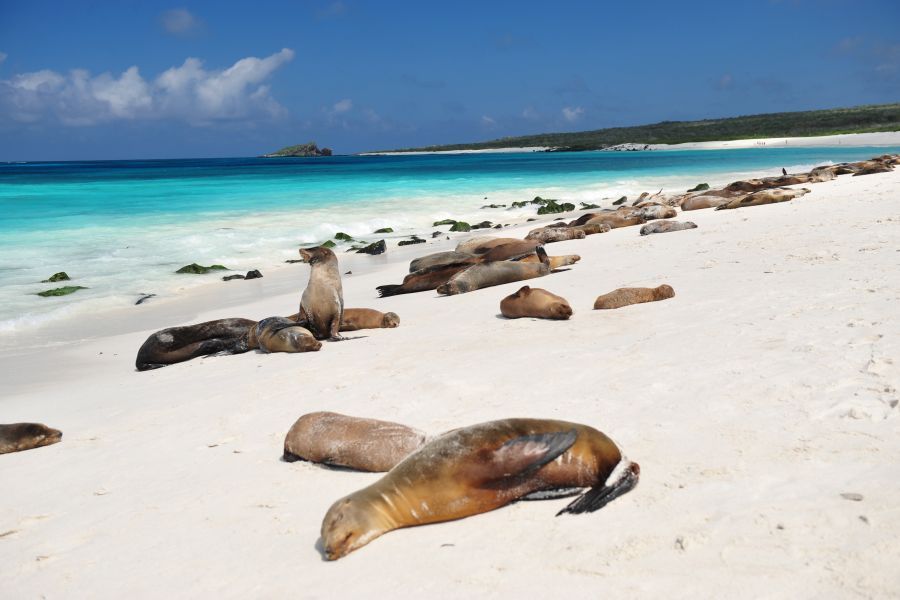
Even a relatively short trip can deliver an extraordinary variety of Galapagos Islands animals.
→ Meet the animals of the Galapagos on this stunning luxury Galapagos cruise
FAQs: Spotting Wildlife in the Galapagos
When is the best time to see wildlife in the Galapagos?
Wildlife viewing is excellent year-round. Seasonal changes affect animal behaviour rather than presence, so there is always something remarkable to see.
Do animals in the Galapagos really ignore humans?
Many species show little fear and plenty of curiosity due to a lack of natural predators, but strict rules still require visitors to keep a safe distance.
Is it better to visit on a cruise or stay on the islands?
Cruises offer broader access to remote islands and marine life, with island-based stays offering fewer but still very rewarding wildlife encounters.
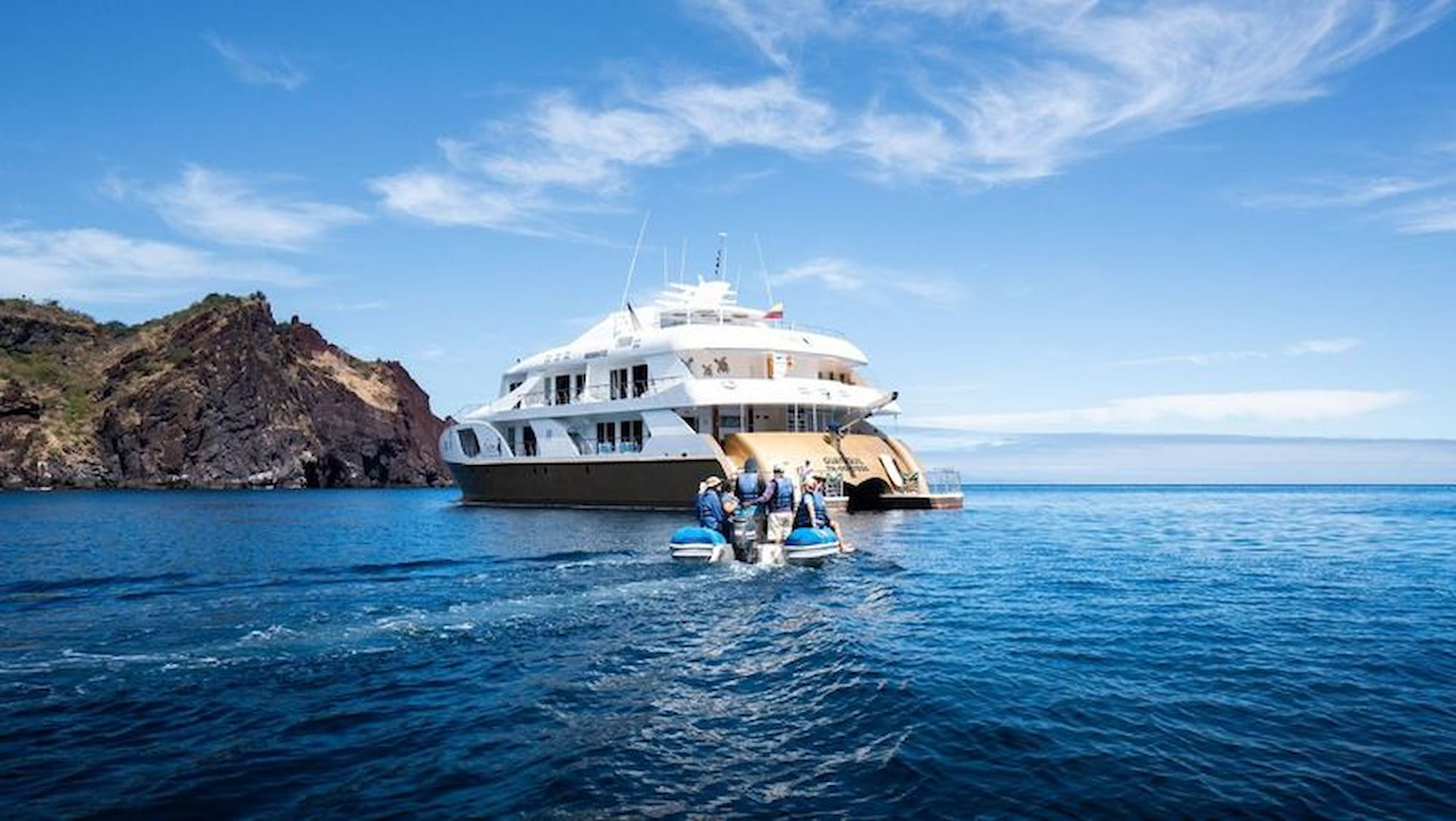
Small ship cruising is the best way to explore the Galapagos Islands, allowing you to travel overnight and explore a new island every day.
Can you see marine and land animals on the same day?
Absolutely! It’s common to snorkel with sea lions in the morning and walk among giant tortoises or iguanas later the same day.
Do you need to be a diver to see the best Galapagos wildlife?
No. Many iconic species are visible from shore, while snorkelling reveals much of the marine life without specialised training. Diving is primarily aimed at those who want to see hammerhead sharks.
If you’re already picturing yourself there, you can explore our full range of Galapagos Islands tours and dig a little deeper into planning on the blog. We’ve shared practical guides on
And if questions start popping up, that’s exactly what we’re here for. Whether you’re just browsing or ready to plan a wildlife-focused Galapagos cruise, our team is always happy to talk things through and help you figure out what makes the most sense for you.
Reach out to our Galapagos Specialists today!
Laura Pattara
Laura Pattara writes for Viva Expeditions with a special love for all things Latin America. She had guided overland tours across the continent, reached Machu Picchu five times on foot, and even dressed up as a giant toucan for Carnaval. With a degree in languages and two decades of global travel experience behind her, Laura has a long-standing love for the Andes, soaring condors, and a truly delicious empanada.
|