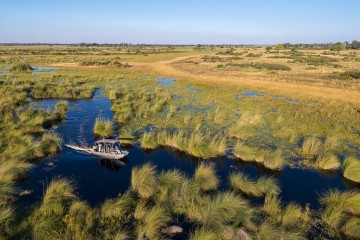
Imagine looking down from a small plane at 1,000 feet somewhere over northern Botswana, watching the world below you change, and you will understand why the Portuguese called Botswana terra do fim do mundo, the land at the end of the Earth. Below you lies a maze of winding waterways, green islands and wide floodplains that stretch as far as the eye can see.
The Okavango Delta is a unique inland oasis where the Okavango River fans out across the Kalahari Desert rather than emptying into the sea. The Delta feels surreal, a lush wetland in the middle of one of Africa's largest dry regions. This is what makes the Okavango so remarkable, and nothing you have read or seen or been told quite prepares you for the moment you see it for the very first time. It is recognised as a UNESCO World Heritage Site, and it is one of the last great natural wetland systems left on Earth.
Botswana's strict, low-volume tourism policies protect this pristine ecosystem, keeping it genuinely wild, remote, and untouched. It is the mecca for wildlife enthusiasts on safari in Botswana.
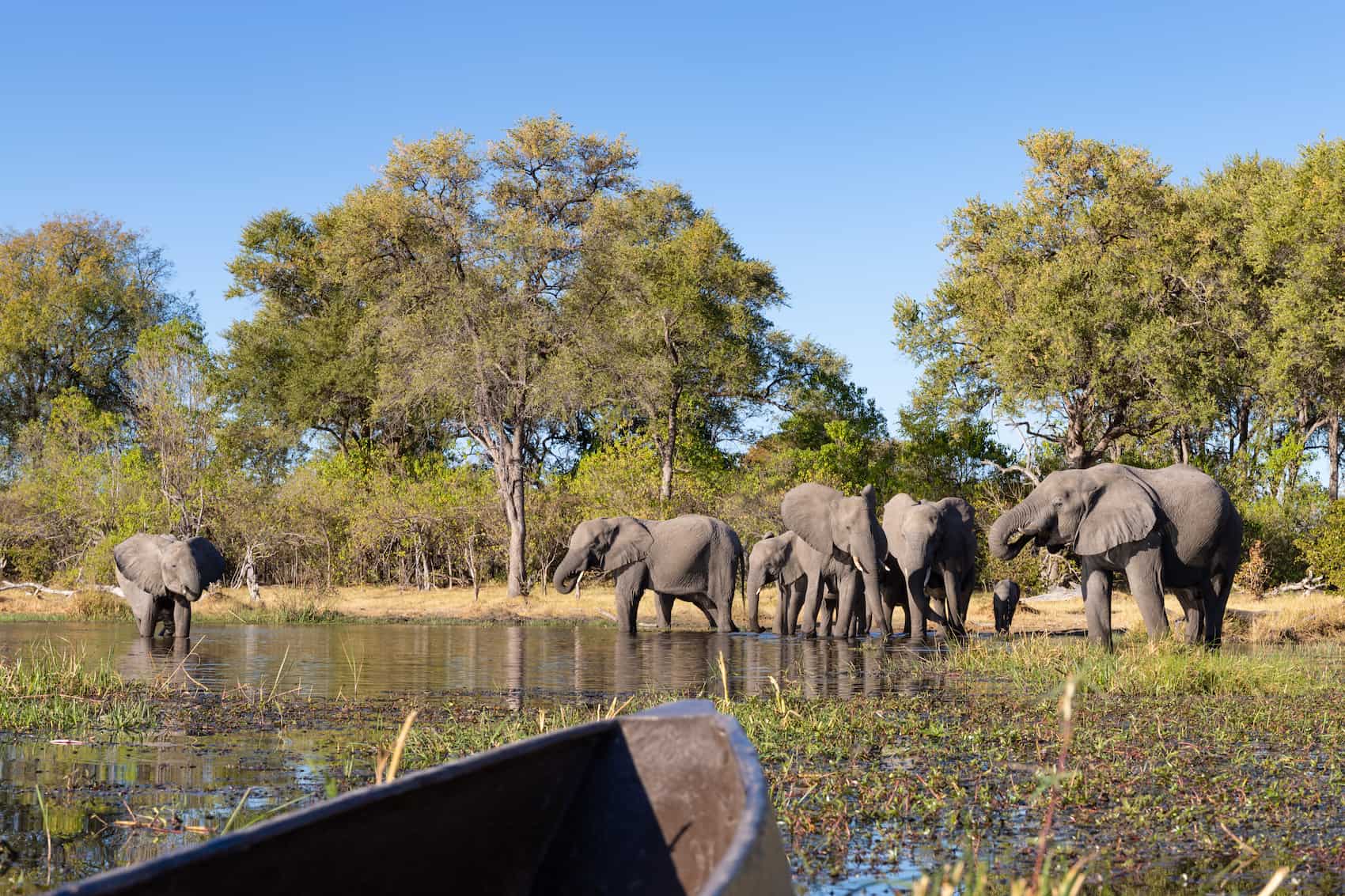
The Okavango Delta's seasonal floodwaters transform the landscape into a thriving wildlife haven, where iconic species like the African elephant find food, water, and sanctuary.
How the Winter Flood Triggers a Wildlife Miracle
The true miracle of the Okavango is its timing. While the rest of southern Africa enters its driest, dustiest winter months (June and July), rainwater travelling from the Angolan highlands finally reaches the heart of the delta region. The floodplains triple in size almost overnight, turning a cracked desert into a lush paradise fueled by nutrient-rich sediment.
Driven by this seasonal transformation, animals converge on the oasis from every direction. Water is the main life driver here. As the floods rise and fall, they dictate exactly where animals travel, what they eat, and how they behave. From endangered African wild dogs to lions and leopards, every single species in the delta region organises its daily life, hunting strategies, and migration patterns around the shifting water levels.
No two visits to the Okavango are ever the same, as the water's power continuously carves new paths and transforms the dry landscape into a wetland.
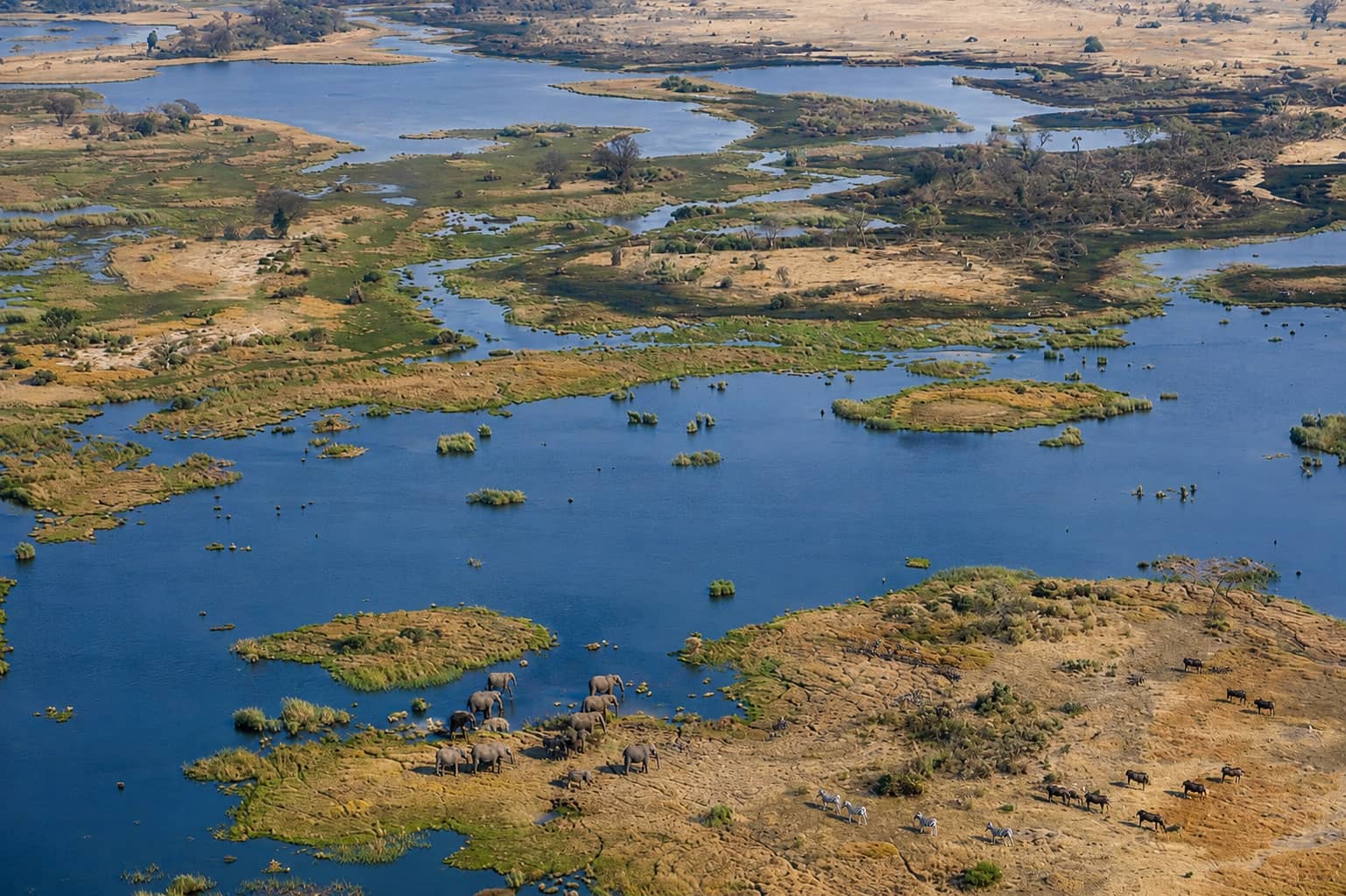
From above, the Okavango Delta reveals a thriving mosaic of winding waterways, lush floodplains, and abundant wildlife—one of Africa's most spectacular natural ecosystems.
Read More: Fascinating Facts About Botswana That Will Make You Want To Visit
The Ecosystem Engineers: How Wildlife Physically Builds the Okavango
This dynamic ecosystem did not form by chance alone. Over millions of years, animals have helped shape and maintain the Delta. Among the most important are African elephants and termites, two unlikely engineers whose constant work helps create the channels, islands, and fertile floodplains that keep the Okavango alive.
The Giant Herds That Guide the Water
Botswana is home to around 132,000 elephants, the largest population of African elephants on Earth. The Okavango Delta region is at the centre of their range. These herds move between the Okavango, the Chobe, the Linyanti, and the Savute. As the seasons change, these giants follow ancient routes passed down through generations of matriarchs, who carry decades of accumulated knowledge about where to find water, food and safe passage.
As elephant herds push through the flooded grasslands along the reed beds and the shallow channels, they widen the existing waterways and force open new ones, which directs the flow of floodwater deeper into the system. Their weight and movement physically change the direction of the water. They knock down trees and trample the dense vegetation, converting the forested areas into the open grasslands that zebras, African buffaloes, and wildebeests depend on.
During the dry months, they dig for water in the dry riverbeds, creating waterholes that Okavango lions, mongoose and dozens of other species rely on to survive. When the elephant numbers fall, it impacts the delta. The channels silently close, the grasslands thicken, and the delta begins to lose the extraordinary biodiversity that depends on all of it.
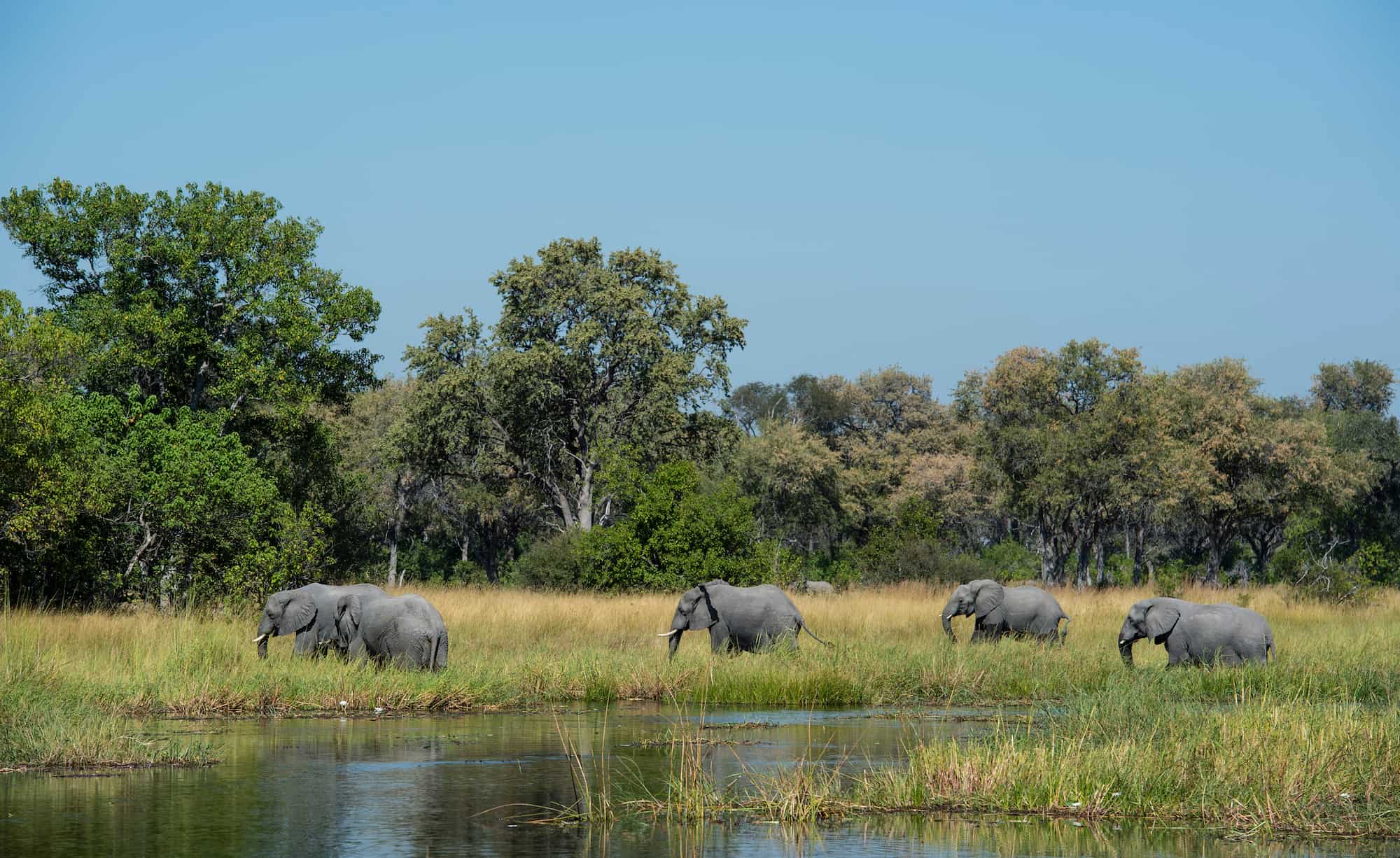
Elephants carve paths through flooded grasslands, riparian zones, and low-lying waterways—widening existing channels and opening new routes that guide floodwaters deeper into the Okavango Delta.
The Termites Build the Delta's Islands
If the elephants are the ones engineering the water, the termites are the ones who build the land.
Around 70% of the Okavango's islands started as termite mounds. Termites of the Macrotermes species build their mounds from the deep Kalahari subsoil, raising material above the surrounding waterline to create a stable, elevated platform. The soil they bring up is mineral-rich and drains well, making it ideal for plant growth.
Seeds are deposited on these mounds by wind, water, birds and animals passing through. A tree takes root. Its roots hold the mound together and pull nutrients from below. More plants follow. Over the mound a thicket grows and eventually becomes a proper island, with wild fig trees, date palms and dense woodlands. These islands give animals a dry haven to rest during the flood season and support both aquatic and land-based life.
Without termites there would be no islands. Without islands there would be no raised ground above the floodwaters. Without that raised ground, fish eagles, Pel's fishing owls and countless nesting birds would lose their homes.
Termites also feed the food chain directly. At the start of the summer rains each year, millions of the winged termites swarm out of their mounds at once. The air fills with them, and the birds, reptiles, bats, frogs, and the mammals that descend on this feast turn it into one of the most dramatic wildlife events the delta produces.
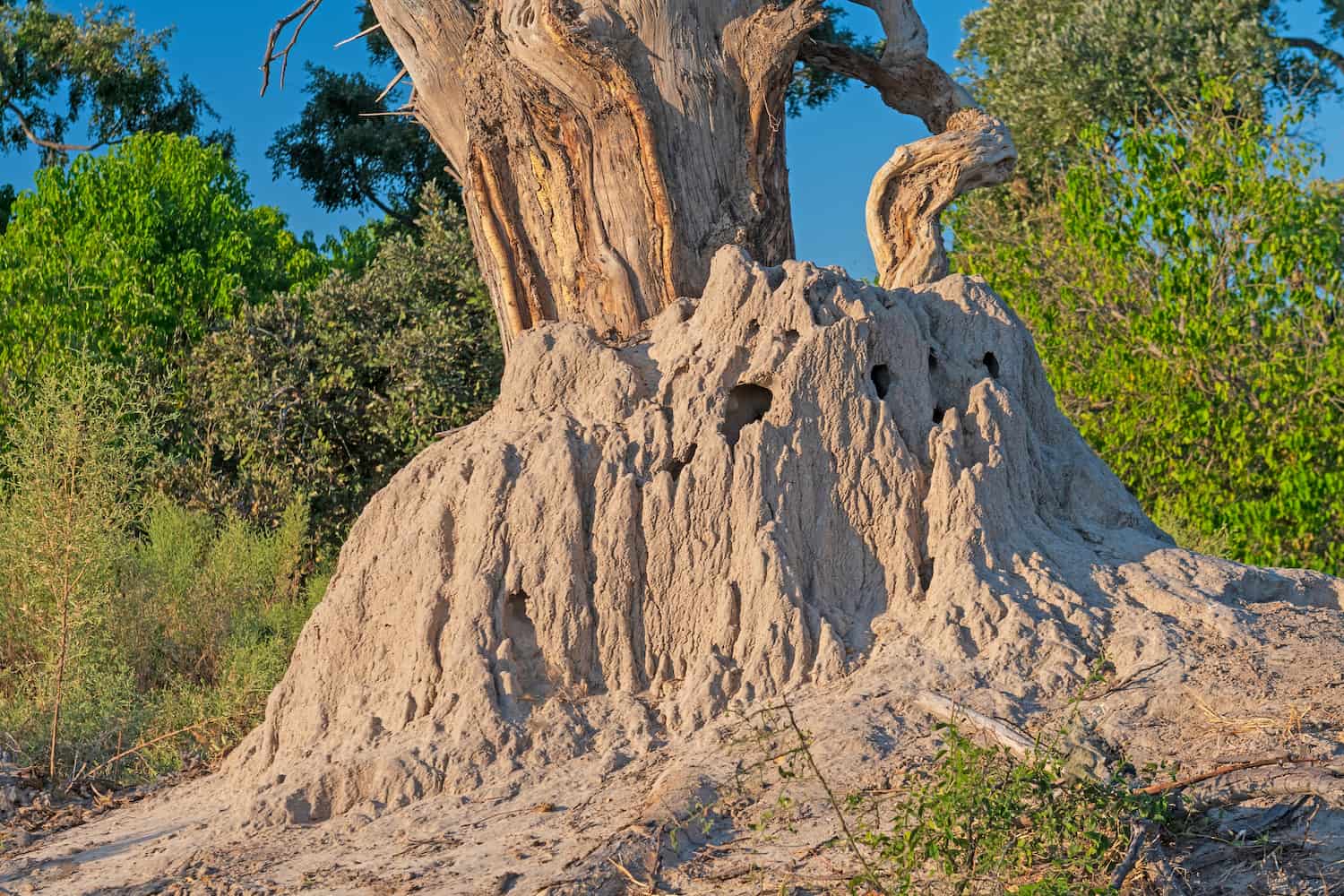
Building towering mounds that eventually become lush islands, these tiny termites are the unsung architects behind the breathtaking landscapes of the Okavango Delta!
The Intricate Balance of the Delta's Ecosystem
Every Okavango Delta animal plays an important role in the ecosystem. Remove one species and the system begins to shift. This is not a place where the wildlife happens to live. It is a place that the wildlife has spent thousands of years building, maintaining, and depending on. The elephant population and termites may build the structures, but others are just as important to maintain the delicate environment.
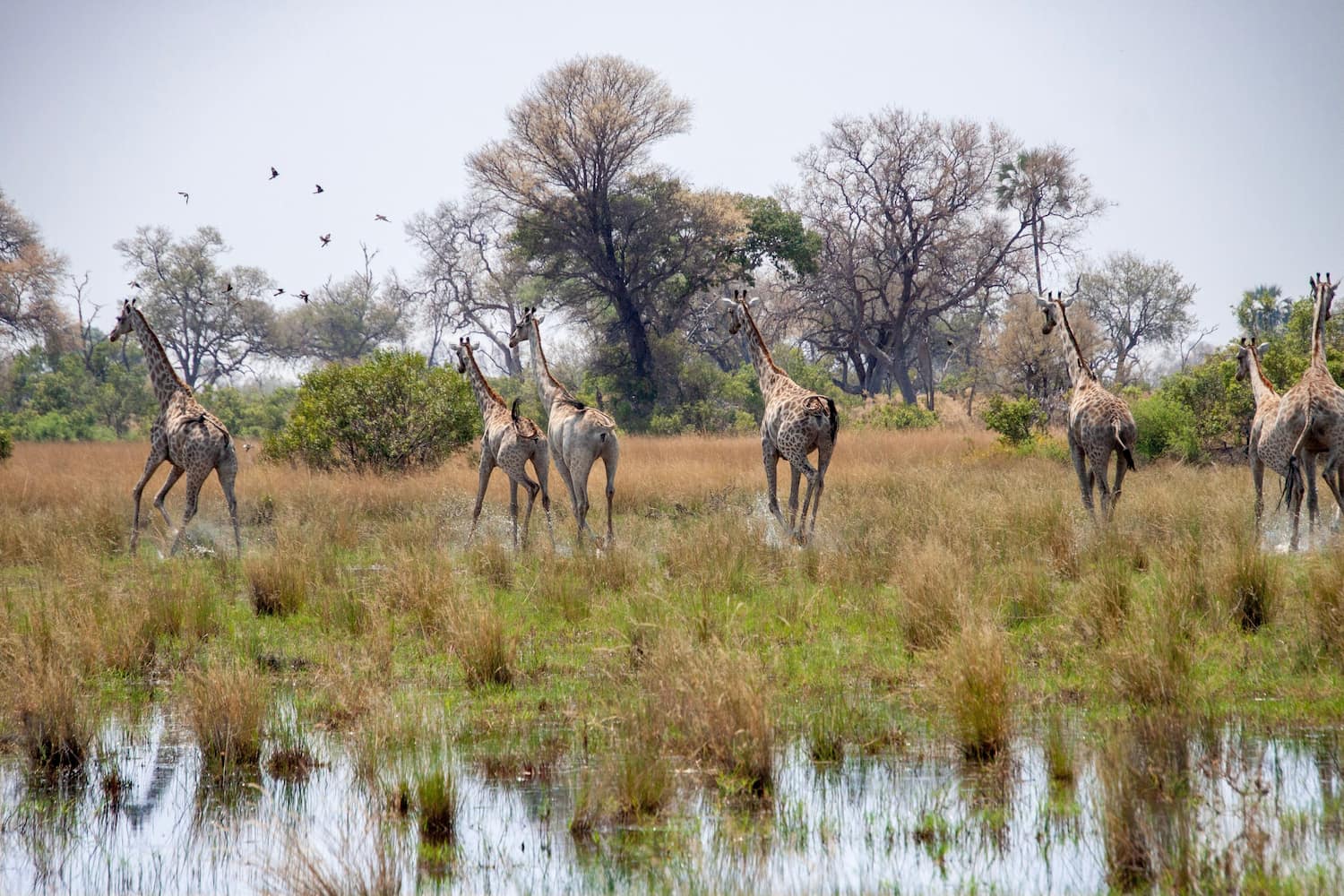
Across the Okavango Delta, countless species work together to sustain rich biodiversity and keep the ecosystem in balance.
Bird Species in the Delta
While elephants act as the physical engineers of the Okavango Delta, birds are its biological managers.
With more than 500 bird species recorded here, the delta is one of the most important avian habitats on the planet. Birds aren’t just passive residents enjoying the water; they actively maintain the health, balance, and structure of the entire ecosystem. Birds occupy every single level of the food chain, keeping populations of insects, fish, rodents, and reptiles in perfect check.
For birdwatchers, the sheer abundance of species is why this region should be on your bucket list, from the call of the African fish eagle in the early morning to the Pel's fishing owls, which are almost mythologically elusive, hunting the deep channels at night. Everywhere you look, there are remarkable species. Watch African jacanas walk effortlessly across lily pads, while wattled cranes, African skimmers, malachite kingfishers and saddle-billed storks fill the skies. Every habitat, from open floodplains to dense woodland, is alive with birdlife.
For those visiting at the start of summer rains, one of the delta's most spectacular and overlooked wildlife events can be witnessed when millions of winged termites swarm from their mounds simultaneously, and the sky briefly fills with birds descending on the feast from every direction.
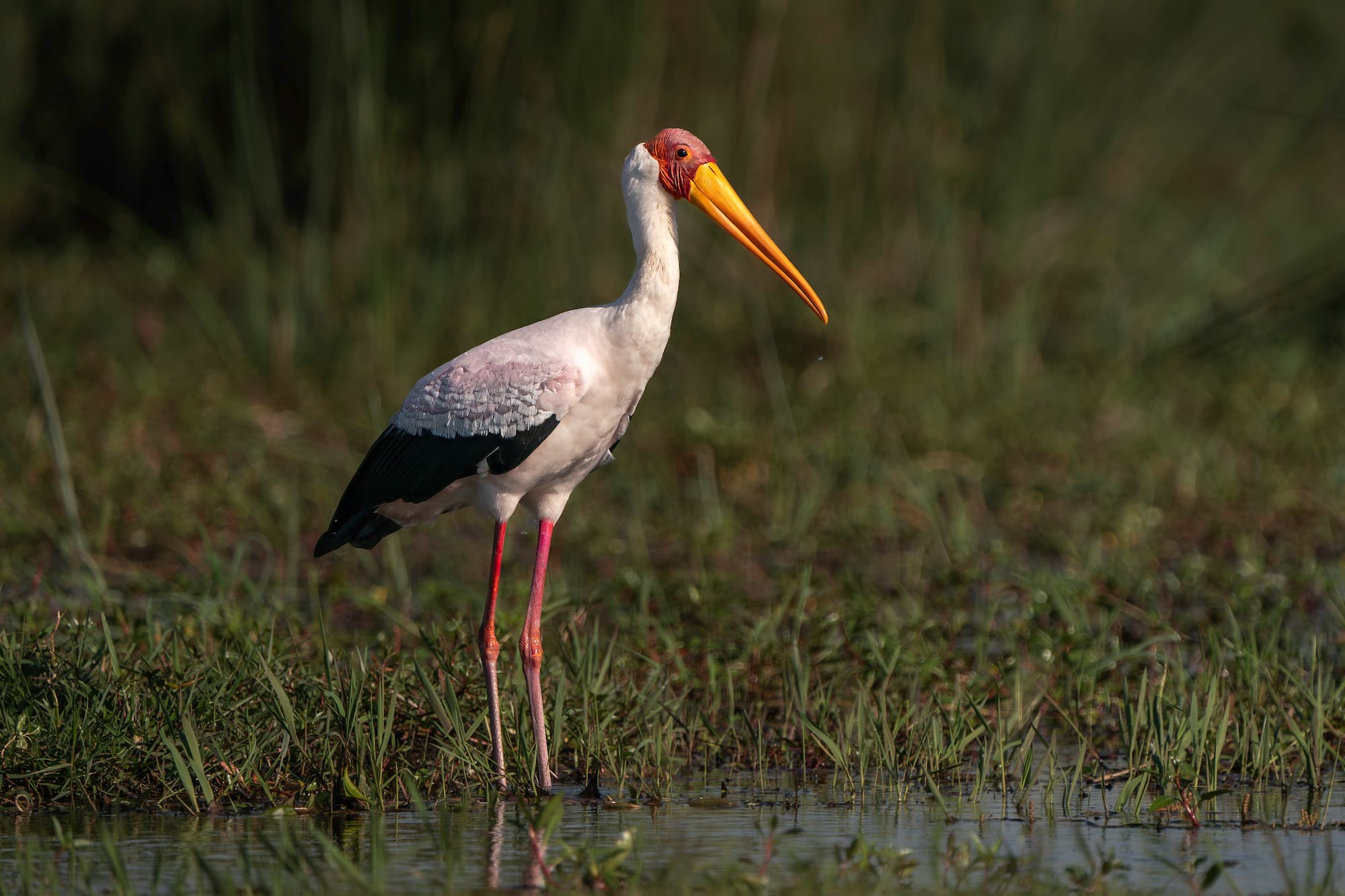
Birdlife thrives across the wetlands, from wading species like the Yellow-billed Stork probing the mud for prey to countless others that depend on these ever-changing habitats.
On the Edge: The Fight for the Delta’s Endangered Species
Beneath the grand spectacle of the Okavango lies a quieter, more urgent story. The delta has become a sanctuary for species on the edge—a vital stronghold for creatures fighting to hold on in a rapidly shrinking world. To travel here is to witness some of the rarest wildlife encounters left on Earth, where every sighting is a testament to an extraordinary scale of conservation.
The Endangered African Wild Dog: The Ultimate Pack Hunters
Fewer than 6,000 African wild dogs remain on the planet, making them one of Africa's most endangered carnivores. The Okavango is one of their last true bastions. Across the open floodplains and woodland fringes, these packs operate with a level of intelligence and cooperative hunting skill that few predators can match. Because they are incredibly elusive, witnessing a pack on a hunt—coordinated, relentless, and moving like a single organism—is a profound, adrenaline-charged experience that stays with you forever.
Go in search of African Wild Dogs in Botswana on our Essential Botswana tour.
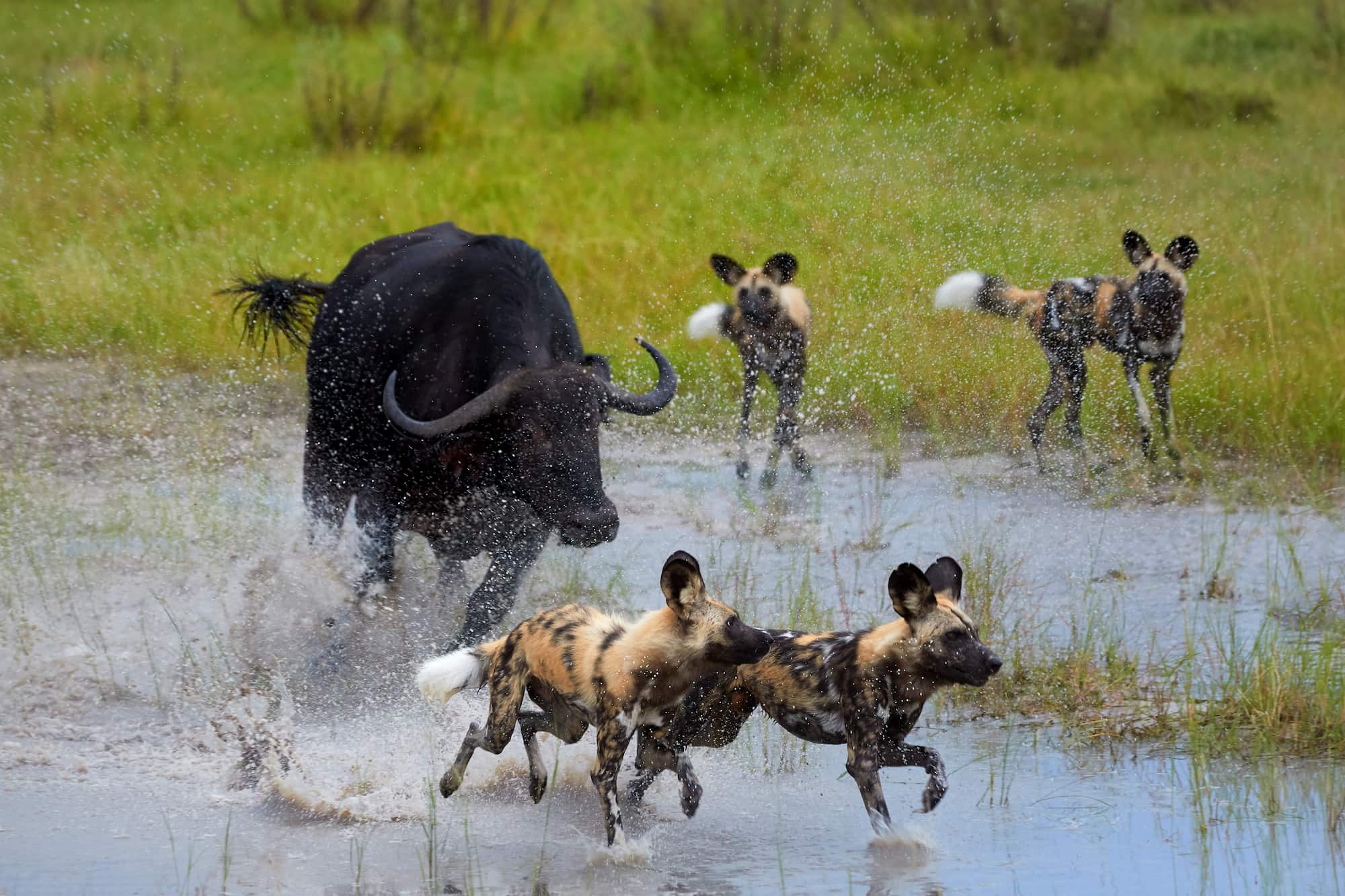
Endangered African wild dogs in a tense moment of flight, showcasing their speed, coordination, and the challenges they face as one of Africa’s most endangered predators.
The Rhinoceros: Icons Under Guard
Both the black and white rhinoceros find refuge in Botswana’s strictly protected areas. Decades of devastating poaching pressure across the continent have left both species critically endangered, meaning rhino encounters in the delta are rare and genuinely exceptional. Every individual you see in this landscape represents a monumental, heavily guarded commitment to bringing these iconic giants back from the brink.
Learn more about the importance of Rhino conservation with a visit to Khama Rhino Sanctuary on our Botswana Adventure Small Group Tour.
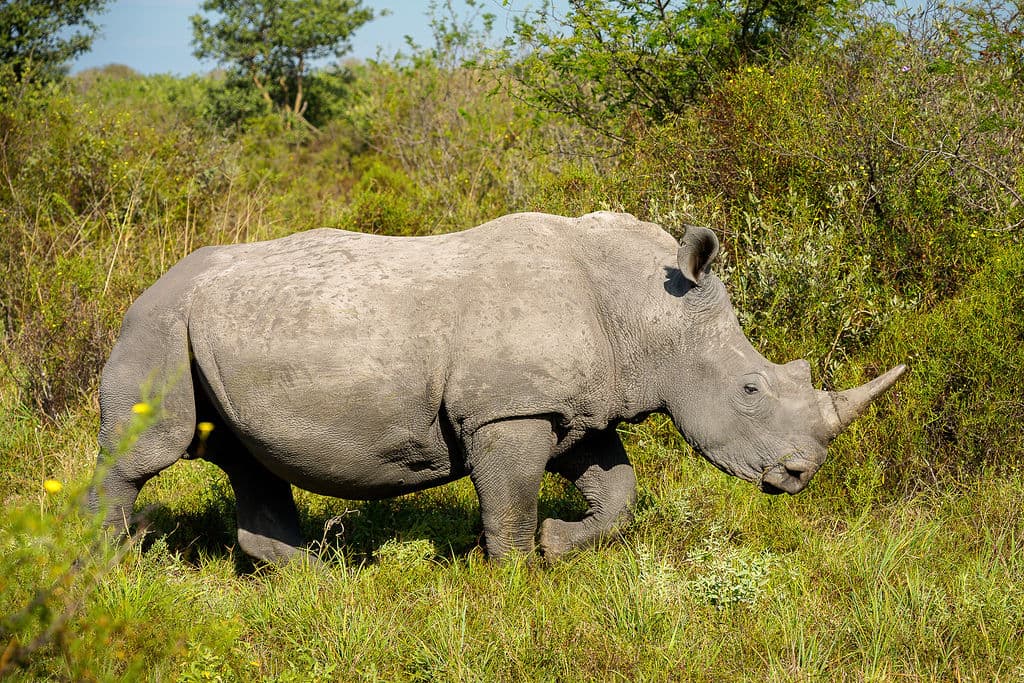
Rhinoceroses remain enduring icons of the wetland, protected through intensive conservation efforts aimed at preventing their decline.
The Cheetah: Built for Speed and Sightlines
Classified as vulnerable and facing declining numbers globally, the cheetah finds its ideal habitat in the Okavango. The open grasslands—meticulously cleared and maintained by the delta's elephants and hippos—provide the exact terrain cheetahs require: long, unobstructed sightlines and wide-open spaces to build explosive speed. Catching an encounter in the early morning when they are most active offers some of the most dramatic wildlife photography in Africa.
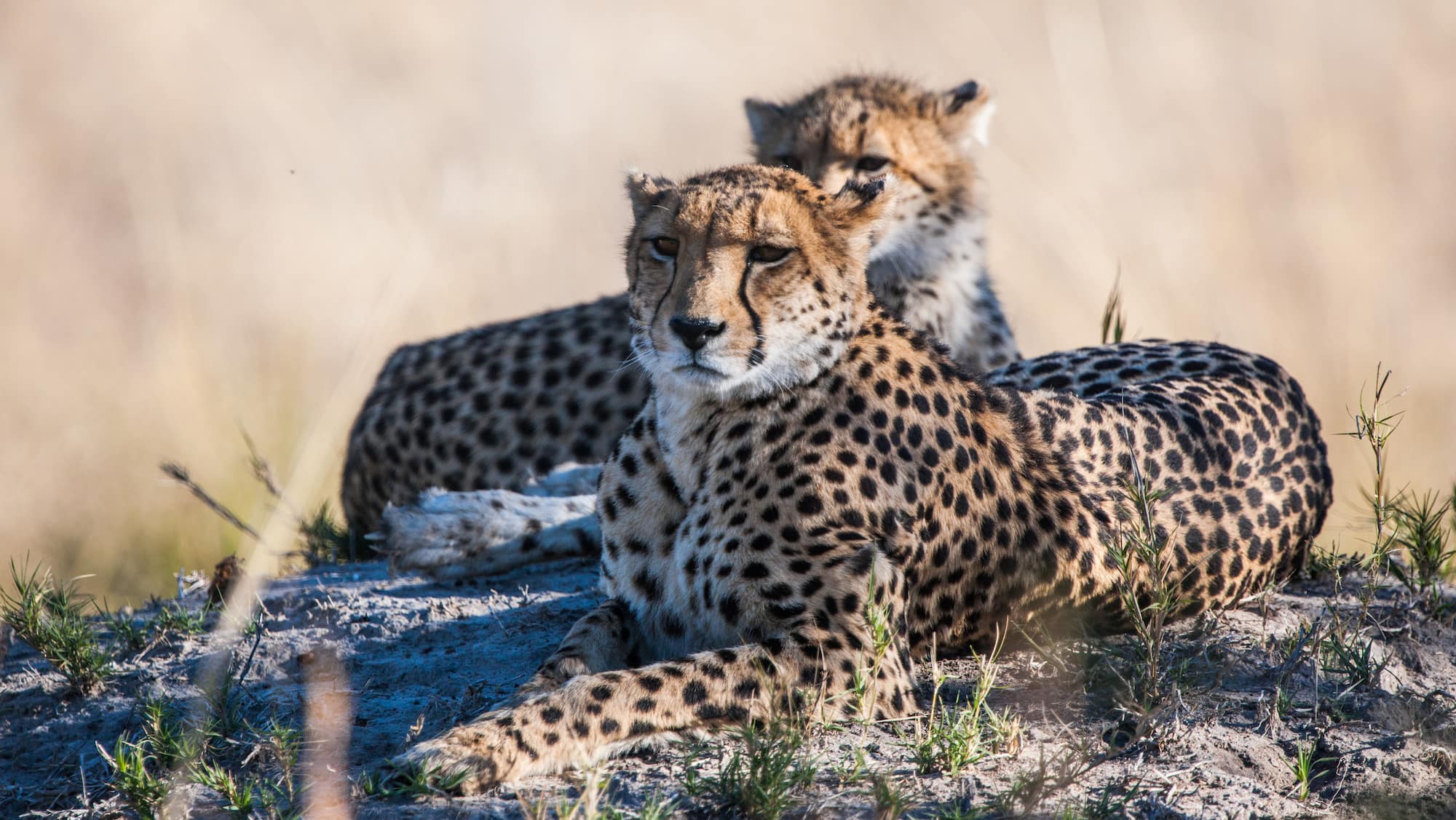
The Okavango Delta's open floodplains provide the perfect hunting grounds for the endangered cheetah, whose remarkable speed and keen eyesight make it nature's ultimate sprinter.
The Wattled Crane: A Wetland Indicator
It is not just the mammals that rely on this oasis; the Okavango’s permanent wetlands are the primary breeding grounds for the wattled crane. As Africa’s tallest and most endangered crane, there are fewer than 8,000 left globally. Watching these stately, elegant birds quietly pick their way through the shallow, crystal-clear water carries a weight that goes far beyond simple birdwatching.
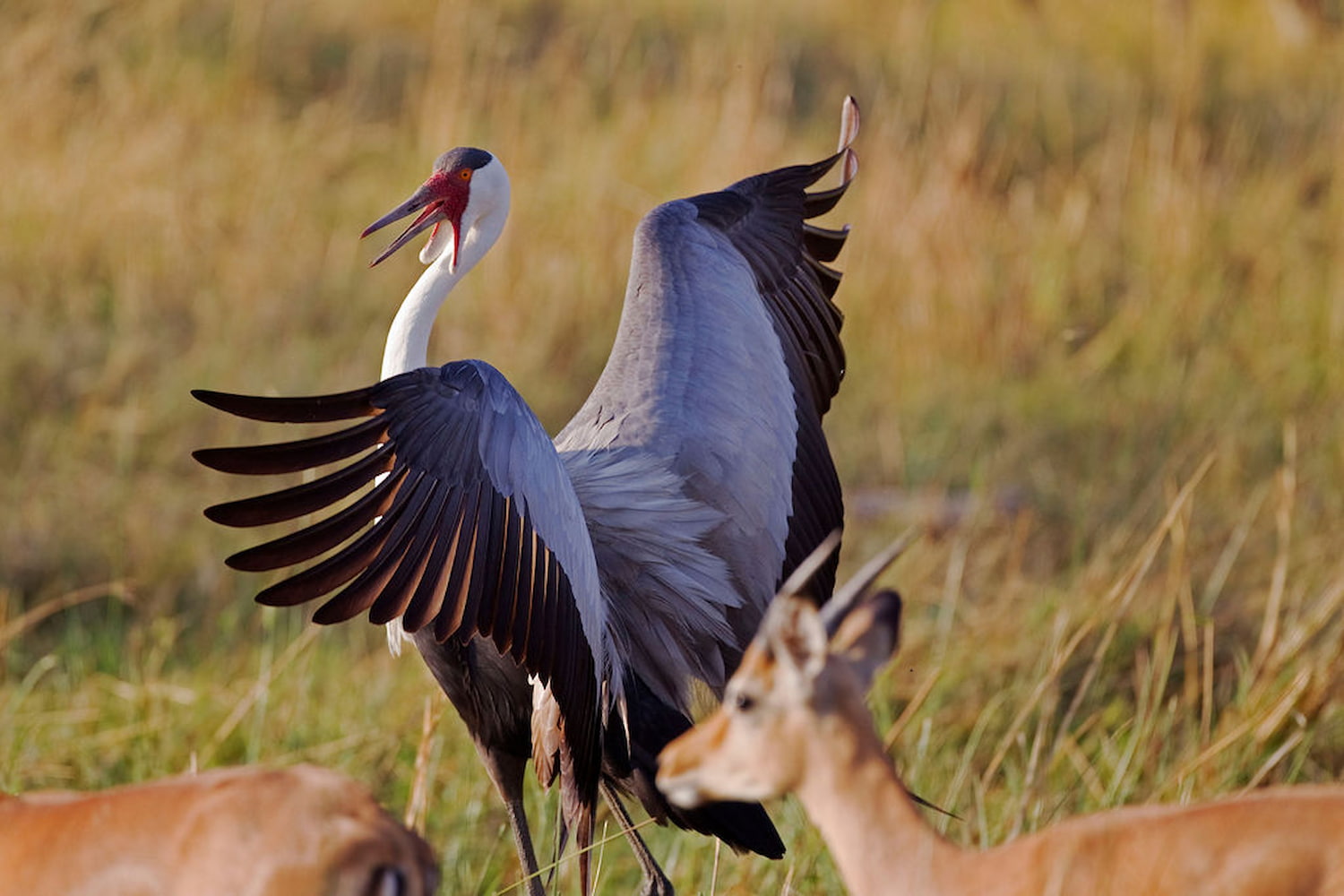
Graceful and vulnerable, the Wattled Crane is a flagship species of healthy wetlands, relying on the Okavango Delta's seasonal floodplains to thrive.
Protecting the Ecosystem
What connects all of these vulnerable species is the delicate web of life that the delta’s natural engineers have spent millennia constructing. If we protect the system—the seasonal floods, the islands, and the channels—these animals have a chance. If we lose it, they don't.
Botswana understands this balance better than almost any nation on Earth. By choosing to travel here responsibly, with operators genuinely committed to low-impact conservation, travellers play a direct role in funding the protection of this irreplaceable wild sanctuary.
Finding Your Perfect Moment: When to Witness Animal Magic
Timing your Okavango Delta safari depends entirely on the wildlife spectacles you wish to witness. Because Botswana deliberately limits visitor numbers to protect its pristine wilderness, you won't encounter crowds or vehicle convoys—just an exclusive, uninterrupted front-row seat to nature.
The Dry Season (May to October): Peak Wildlife Congregation
If your main goal is to see Africa’s famous predators and massive herds, this is the busiest window.
-
Daily Rhythms: Early morning game drives catch lions and leopards tracking prey before the heat sets in, while afternoon drives plunge you into a golden, cinematic light as elephants gather along the deep channels.
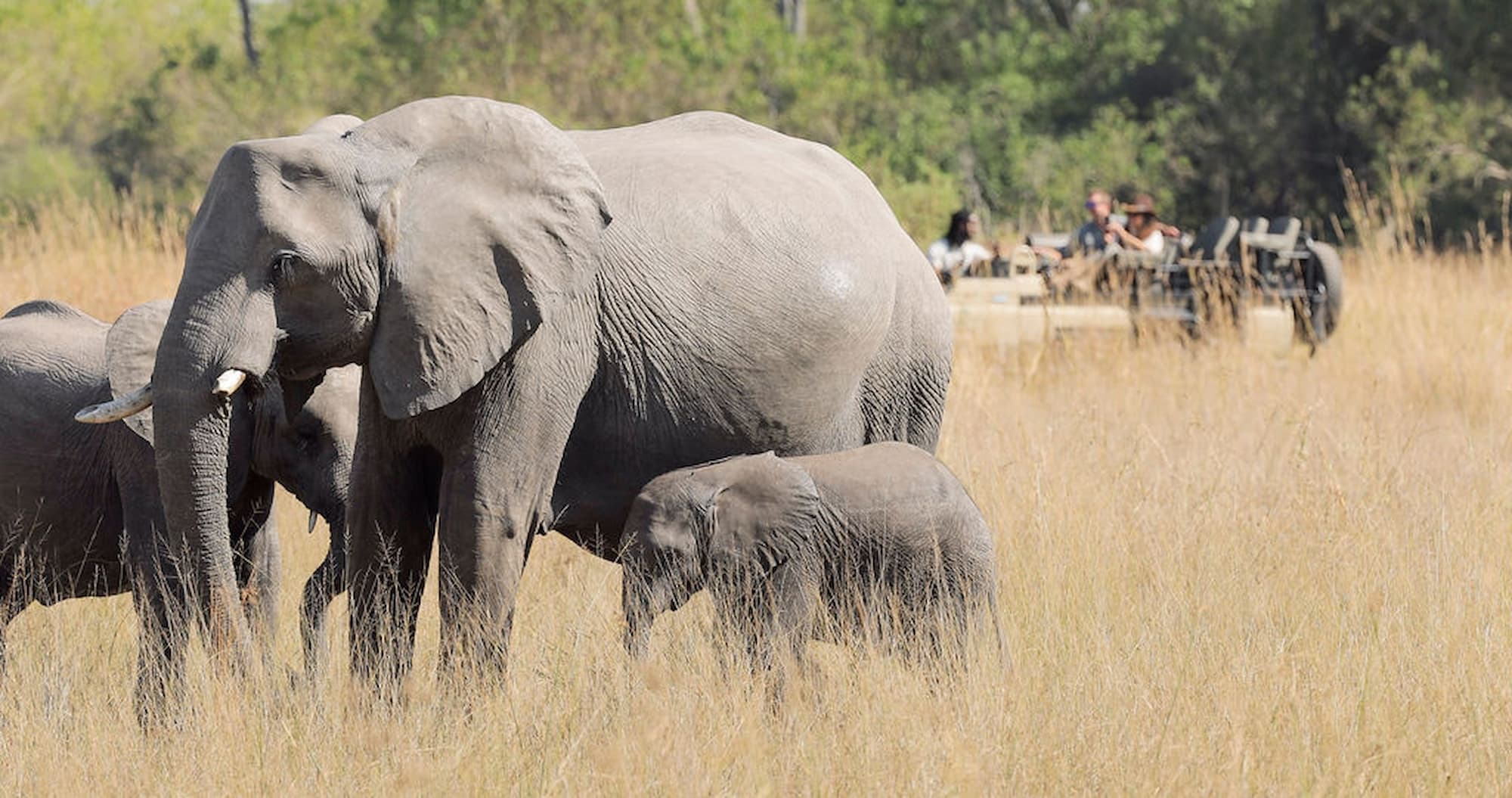
The dry season is the Okavango Delta's busiest wildlife window, bringing together iconic predators, massive herds, and exceptional game viewing.
The Green Season (November to April): The Great Rebirth
For travellers seeking dramatic landscapes and high-energy biological events, the summer rains transform the delta into a lush, vibrant oasis.
Read More: What to know before you go to the Okavango Delta
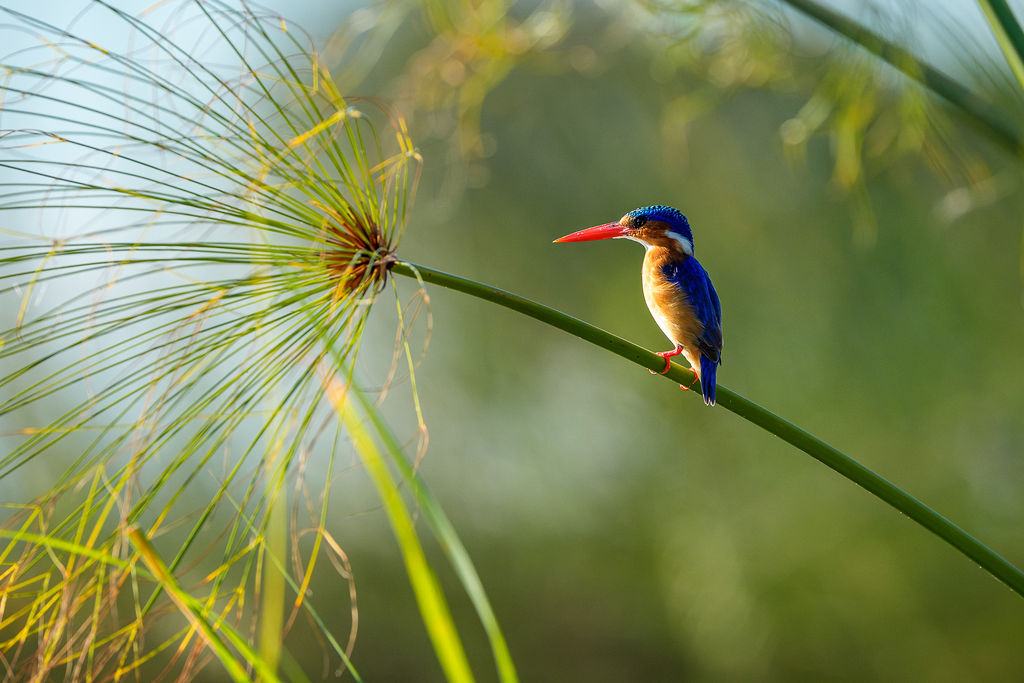
The green season transforms the Okavango Delta into a lush paradise, with breathtaking landscapes and spectacular birdlife at every turn.
Read More: Top 5 Activities in Botswana's Okavango Delta
Why Responsible Travel Matters for Botswana
Some wildlife populations that move through Botswana have fallen by 90% in just fifteen years. Keeping the delta healthy means protecting these populations and diverse habitats that hold it together.
The country has made a deliberate choice to protect its wilderness by limiting the number of visitors who can access it at any one time, as it faces real pressure to survive. Oil exploration, water extraction upstream in Angola and Namibia, climate change, and growing human settlement are all stressing a system that does not have much room for error.
Travelling with an operator that prioritises conservation is an important consideration when planning your trip. Responsible tourism directly funds anti-poaching units and local community livelihoods, turning your journey into an act of preservation. That choice means that when you are in the Okavango, the landscape is yours. No crowds. No convoys of vehicles. Just the delta, the animals, and the silence.
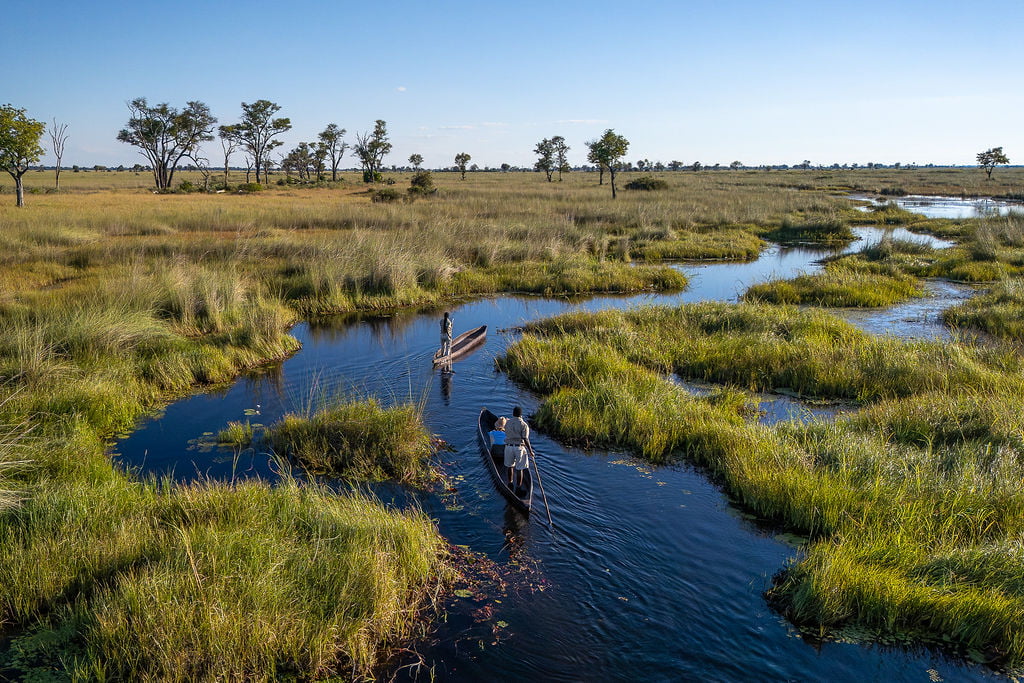
Experience the Okavango Delta and create your ultimate Botswana safari with Viva Expeditions.
Discover Botswana with Viva Expeditions
The Okavango Delta is a place that fundamentally changes how you see the world. Imagine watching a breeding herd of elephants cross a glowing Okavango River at sunset or floating through the morning mist in total silence.
Every Okavango Delta safari is different, and choosing the right camps, season and experiences can make all the difference. Botswana is one of the safest countries in Africa to visit, and our Africa specialists can design a bespoke itinerary that matches your interests, travel style and budget.
Ready to plan your African safari? Explore our range of specially crafted Botswana Safari Itineraries or contact our team today to start planning your trip.