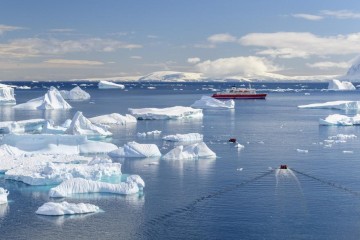
South Georgia and the Falklands are often included on longer Antarctica expeditions. On paper, they seem to just add sailing time. In reality, they add an entirely different dimension to the journey. For many of our travellers at Viva Expeditions, South Georgia becomes the highlight.
If you’re considering adding the two alluring island clusters to your itinerary, here’s the info you’ll want to know: how far is South Georgia from Antarctica, how to visit, the best time to travel, and what makes these islands so special that they warrant a side-trip.
That’s what we’re here to answer.
In this guide:
Where Is South Georgia And How Far Is It From Antarctica?
How To Visit South Georgia
What Is South Georgia Known For?
The Falklands And South Georgia: What’s The Difference?
The Falklands
South Georgia
Best Time To Visit South Georgia And The Falklands
Why Is South Georgia Becoming More Popular?
Meeting Researchers Along The Way
How Physically Demanding Are The Landings?
What Does A Falklands And South Georgia Itinerary Look Like?
Planning Your South Georgia Expedition With Viva Expeditions
Where Is South Georgia And How Far Is It From Antarctica?
Both the Falklands and South Georgia sit in the Southern Ocean, far east of southern Patagonia. The Falklands are roughly 500 km (about 310 miles) off the coast of Argentina, while South Georgia lies much further southeast, around 1,400 km (about 870 miles) from the Falklands and about 1,300 km (around 800 miles) northeast of the Antarctic Peninsula.
Take a look...
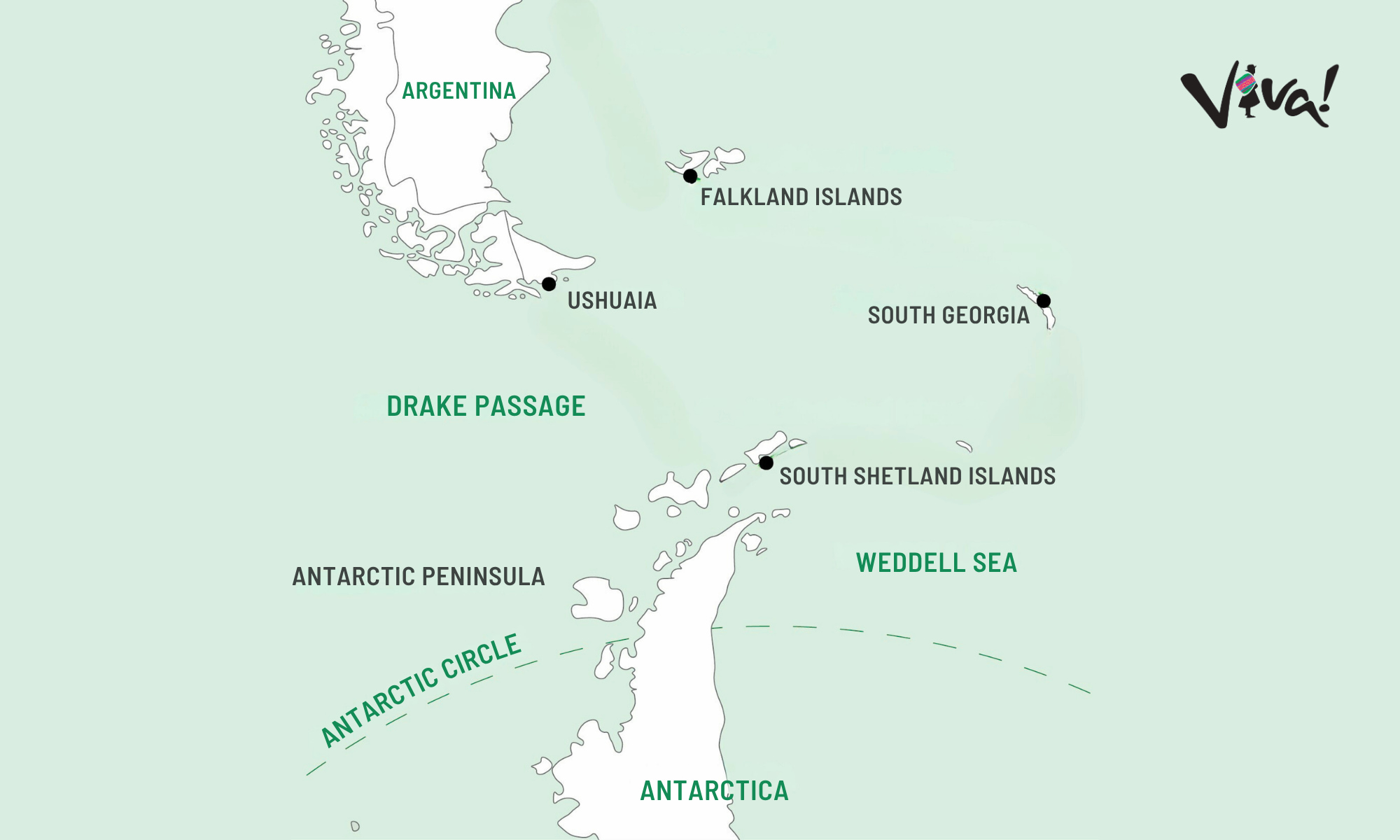
A map showing the distance between South Georgia and Antarctica
So when travellers ask, how far is South Georgia from Antarctica? The answer is far enough to feel remote and completely separate, yet close enough that they can be included on longer expedition routes to Antarctica departing from South America.
But what does it mean in practical terms?
Adding South Georgia and the Falklands to a classic Antarctic Peninsula expedition extends the journey by an extra six to ten days. Some of those days are spent solely at sea, while others are spent exploring the islands. But it’s important to note that this isn’t about extending “more of the same.”
Our very own General Manager, Tara Sutherland, who undertook this epic expedition in 2023, explains that those extra sea days should not be seen as just a stretch on the itinerary.
“You pass through different wildlife zones before even reaching Antarctica, from albatross-filled waters near the Falklands to the dense penguin and seal colonies of South Georgia. By the time you reach the Antarctic Peninsula, you have already experienced a wide cross-section of the Southern Ocean. The experience feels comprehensive rather than repetitive.”
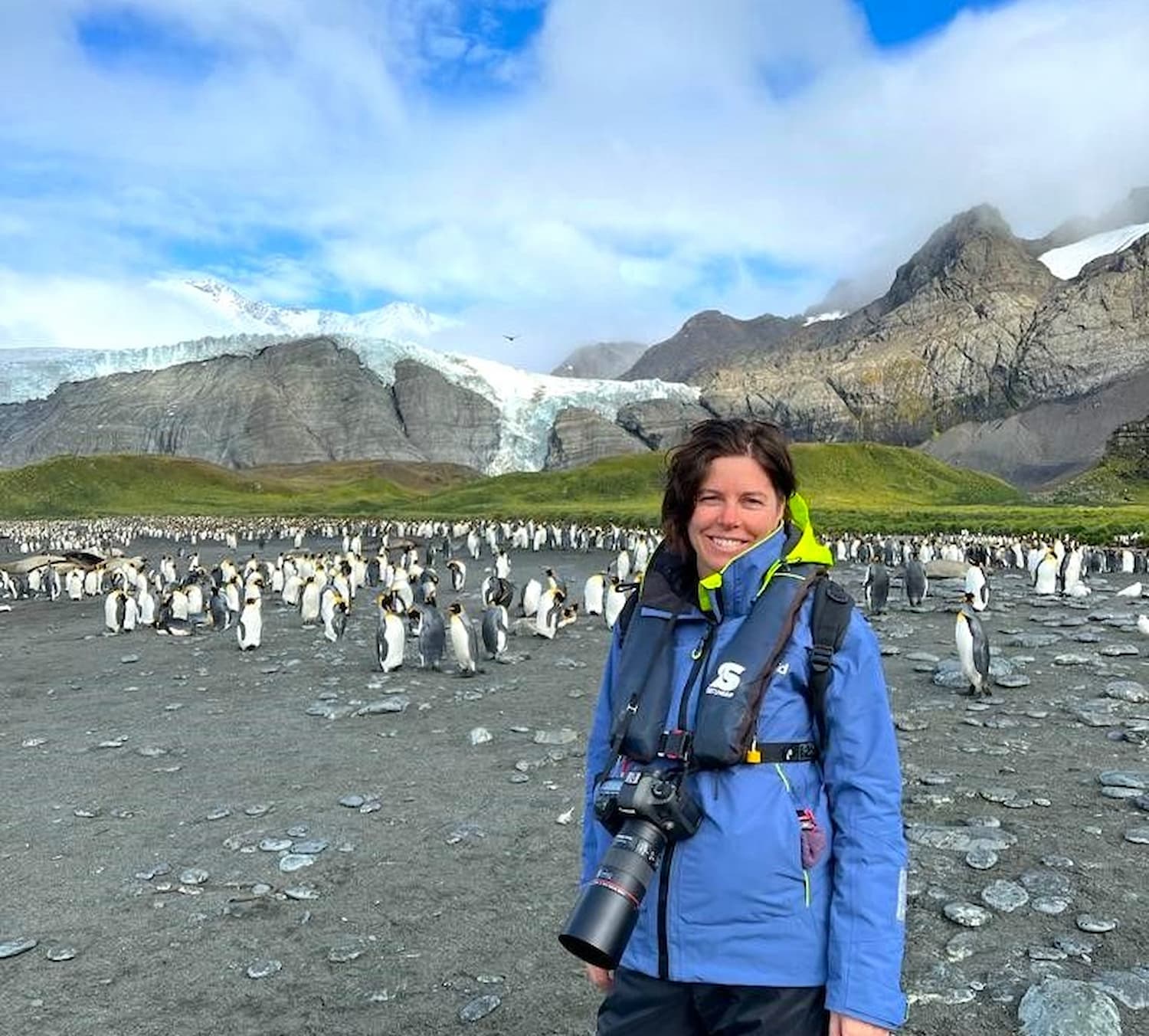
Tara had an unforgettable encounter with the residents of South Georgia—a colony of king penguins and elephant seals
How To Visit South Georgia
A common question we receive is: can you fly to South Georgia Island? The answer is no; unfortunately, you cannot. And that makes a visit all the more special.
There is no airport and no permanent settlement on South Georgia, so access is only possible by expedition ship during the Antarctic cruising season, which runs from October through March.
While you can fly to the Falklands year-round, South Georgia remains reachable solely by sea, which is why most visits to the islands are part of a longer Antarctica voyage.
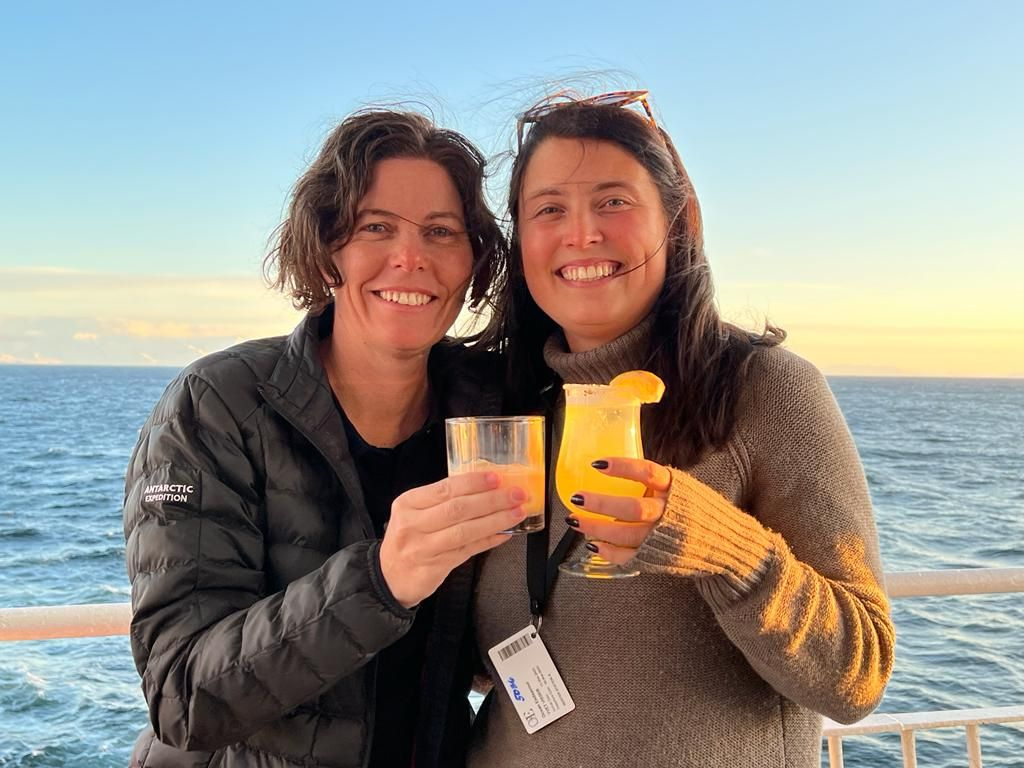
Tara says more sailing days means more time to get to know your fellow passengers and enjoy the less talked-about luxuries of expedition life. Like cocktails at lunchtime!
What Is South Georgia Known For?
If you consider Antarctica the land of ice, then think of South Georgia as the land for Antarctic wildlife.
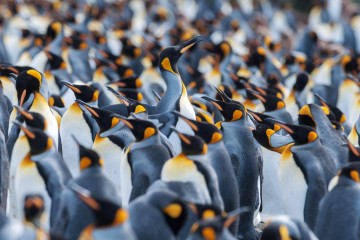
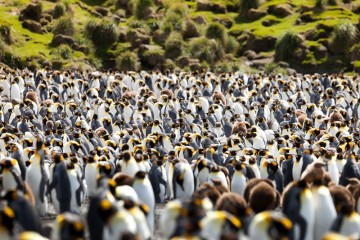
This remote and hard-to-reach island is home to the largest King Penguin colonies in the world. At St. Andrews Bay, hundreds of thousands gather in one sweeping arc along the beach. Macaroni Penguins nest higher on the slopes, while Antarctic fur seals line the shoreline. Southern Elephant Seals like to dominate entire stretches of sand.
The scale and density of the wildlife concentration on South Georgia are quite hard to comprehend.
Tara says it is a sensory overload like few others:
“You think you’ve seen wildlife colonies before. Then you step ashore and realise you haven’t seen anything like this. The sound, smell, and energy of the place are indescribable."
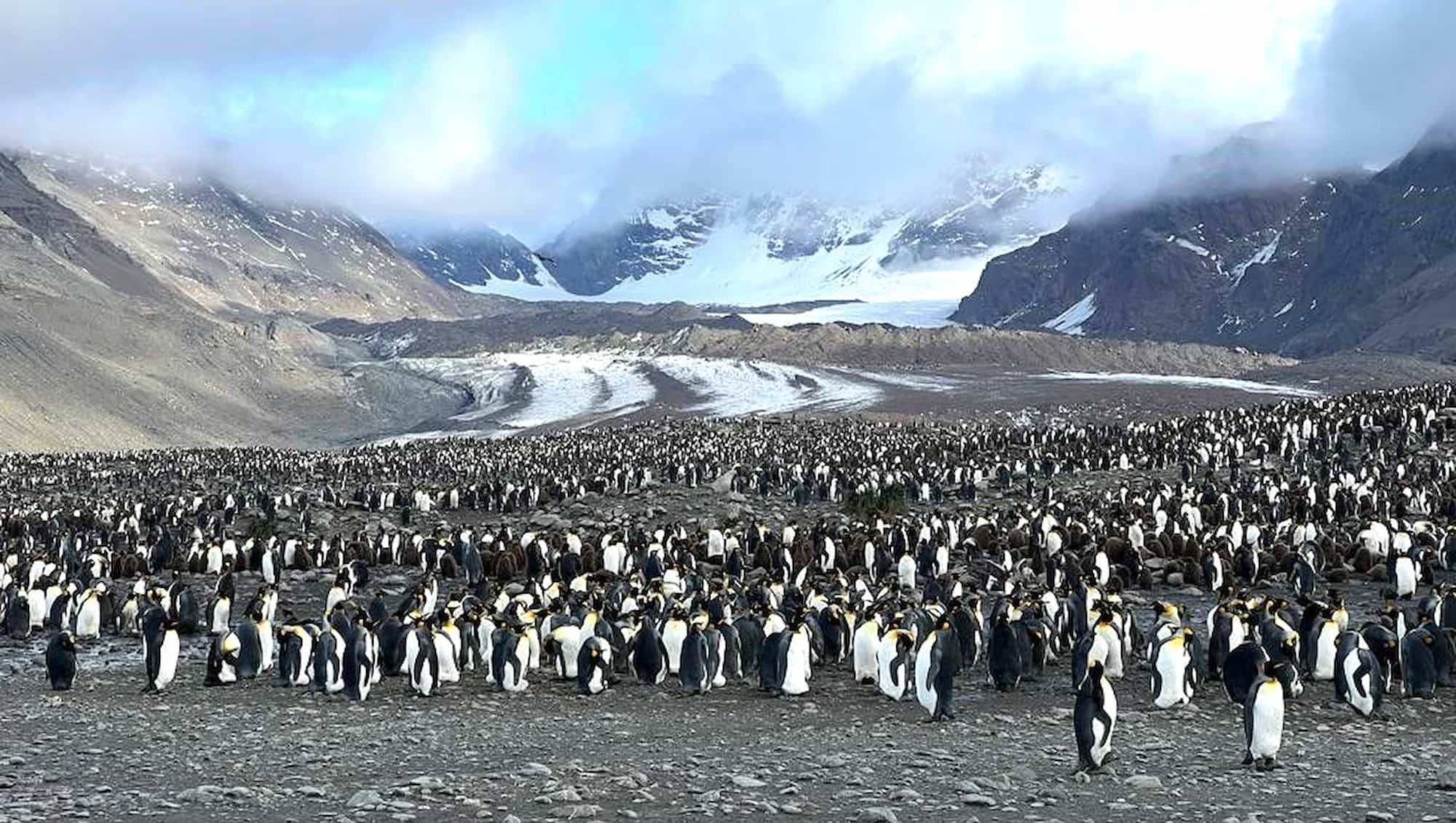
The scale of South Georgia becomes clear at colonies like this, where King Penguins stretch across entire valleys. Photo by Tara Sutherland.
South Georgia also carries a strong historical presence. Grytviken, the former Norwegian whaling station, is now home to the South Georgia Museum, and Sir Ernest Shackleton is buried nearby. During the Antarctic summer season, a small team of around 20 to 30 people is based on the island. This typically includes a couple of government officers, scientists, and the seasonal heritage staff who operate the museum and post office at Grytviken.
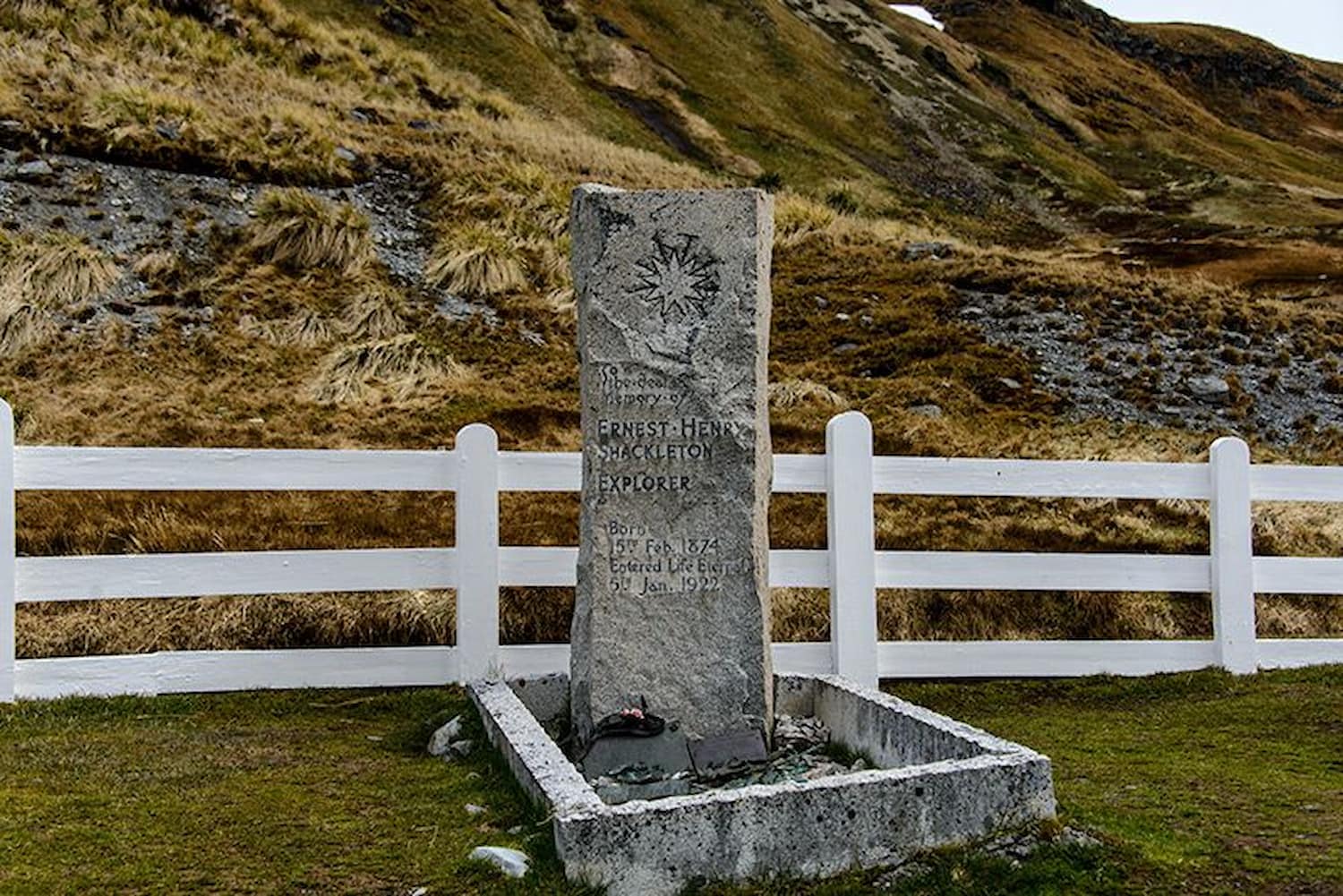
Shackleton chose to be buried in South Georgia, the island that played such a crucial role in his Antarctic story.
The island also represents one of the Southern Ocean’s biggest conservation success stories. A large-scale rodent eradication programme has allowed native bird species to recover, including the South Georgia pipit. Ongoing research continues throughout the summer season.
The Falklands VS South Georgia: What’s The Difference?
Although frequently paired on itineraries, the Falklands and South Georgia look and feel quite distinct.
The Falklands
The Falklands are inhabited and have a local identity that’s all their own. Around 4,000 people live here, most of them in the capital, Stanley, with smaller settlements spread across the east and west parts of the island. Sheep farming has long shaped local life and, nowadays, fishing and tourism also play important roles in the economy.
Stanley itself is compact but surprisingly characterful. You can stroll its waterfront, visit the Falkland Islands Museum to understand the islands’ complex history, and see reminders of the 1982 conflict between the UK and Argentina.
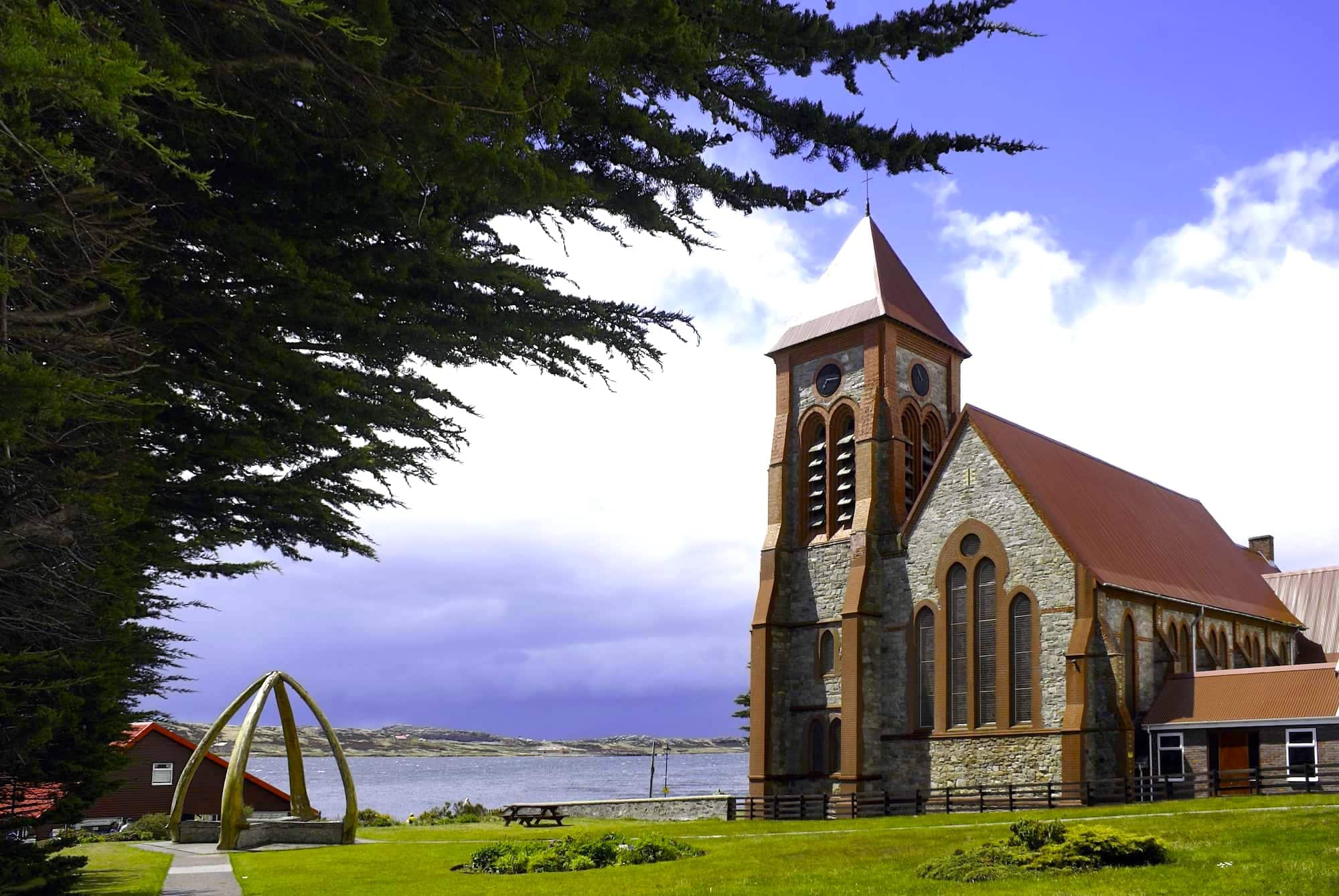
Stanley’s Christ Church Cathedral, the southernmost Anglican cathedral in the world, is pictured here beside the “whalebone arch.” It was made from actual blue whale jawbones in 1933 to mark a century of British administration.
There is a working harbour, brightly painted houses, and you get the sense that this is a fully functioning, albeit very laid-back, community. Wildlife is abundant here, but it exists alongside daily human life.
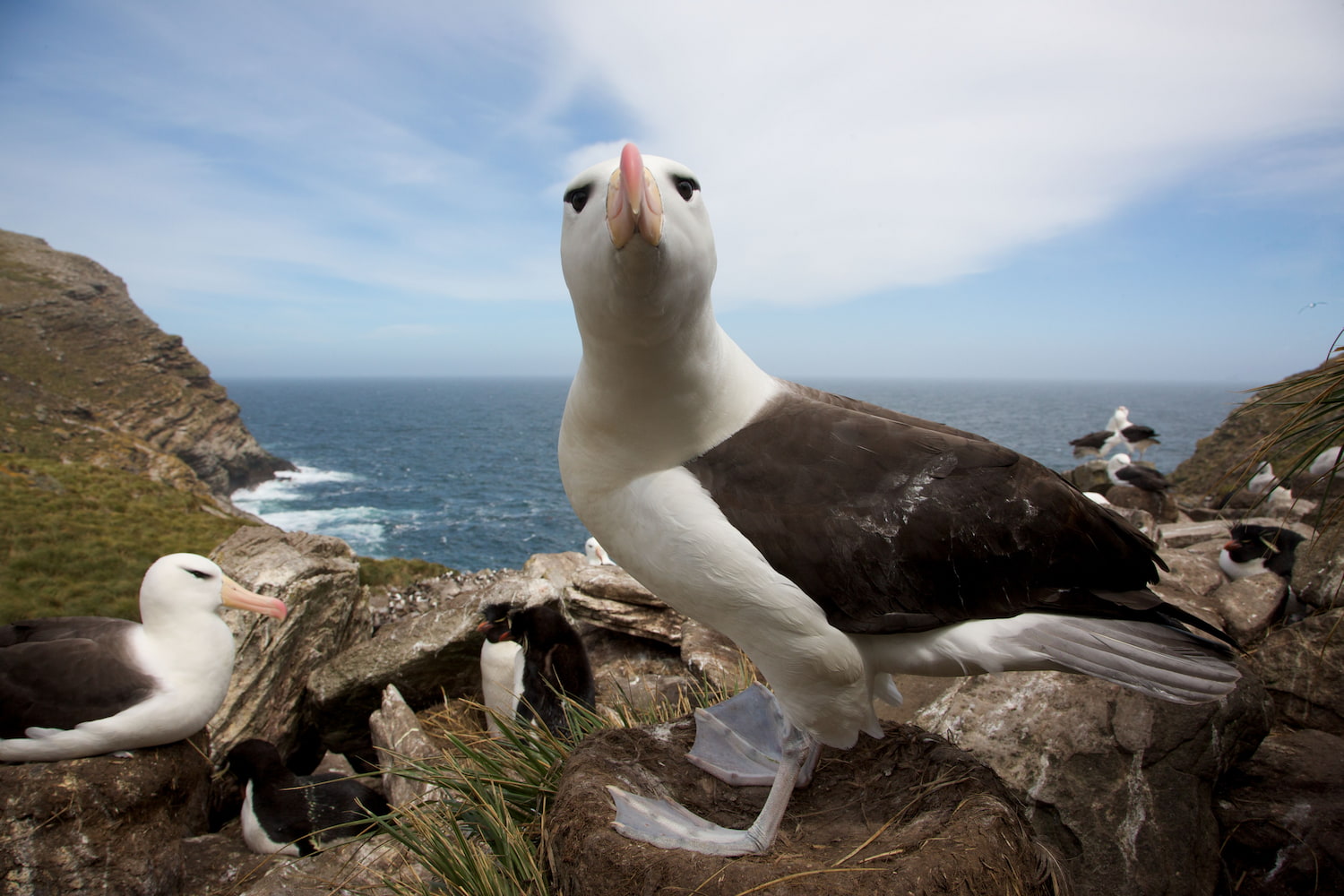
Beyond Stanley, you can visit remote farms, walk rolling coastal trails, explore historic battle sites, and spend time spotting wildlife (like this black bowed albatross), in wide open landscapes.
South Georgia
South Georgia is an altogether different destination to discover, given the lack of permanent or extensive human presence. Snow-covered peaks rise directly from the sea, and wildlife concentrations are larger and more intense. The terrain feels steeper and more alpine, and landing sites are focused on seals and penguins rather than settlements.
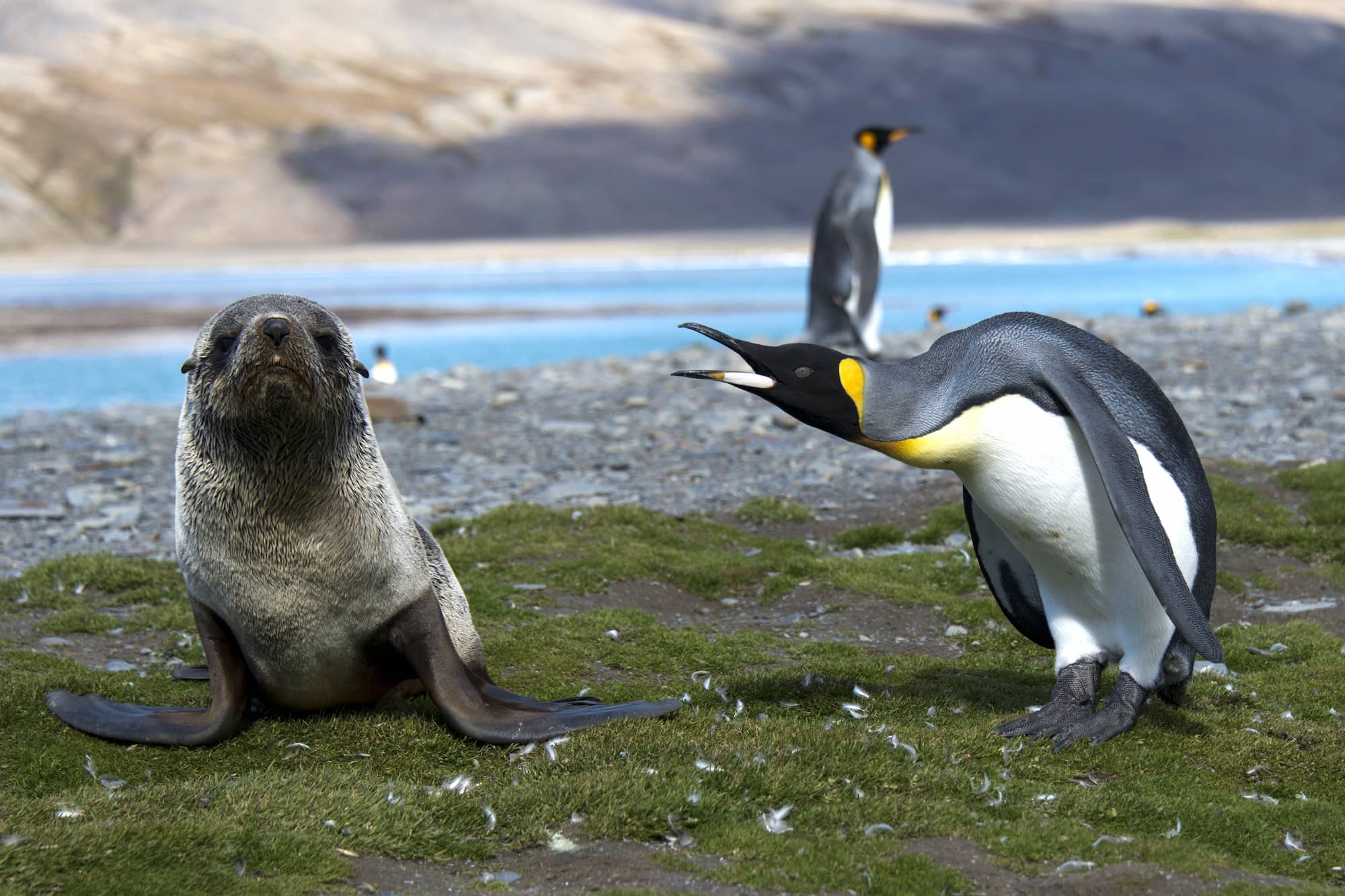
No towns. No traffic. No permanent residents. Silence? Also, no.
In the Falklands, wildlife is spread across open space, often with long horizons and big skies. In South Georgia, you step straight into dense colonies that blanket entire bays.
Both are incredibly enticing, but in very different ways.
Best Time To Visit South Georgia And The Falklands
As mentioned earlier, travel to South Georgia and the Falklands is limited to the Antarctic season. Within that window, the experience can shift as the months progress.
Early in the season, in October and November, the landscapes often feel crisp and unspoiled after winter. South Georgia’s peaks can still be dusted with snow, and wildlife activity is just starting to build. King Penguins are establishing breeding territories, elephant seals are arriving, and albatross are returning to their yearly nesting grounds.
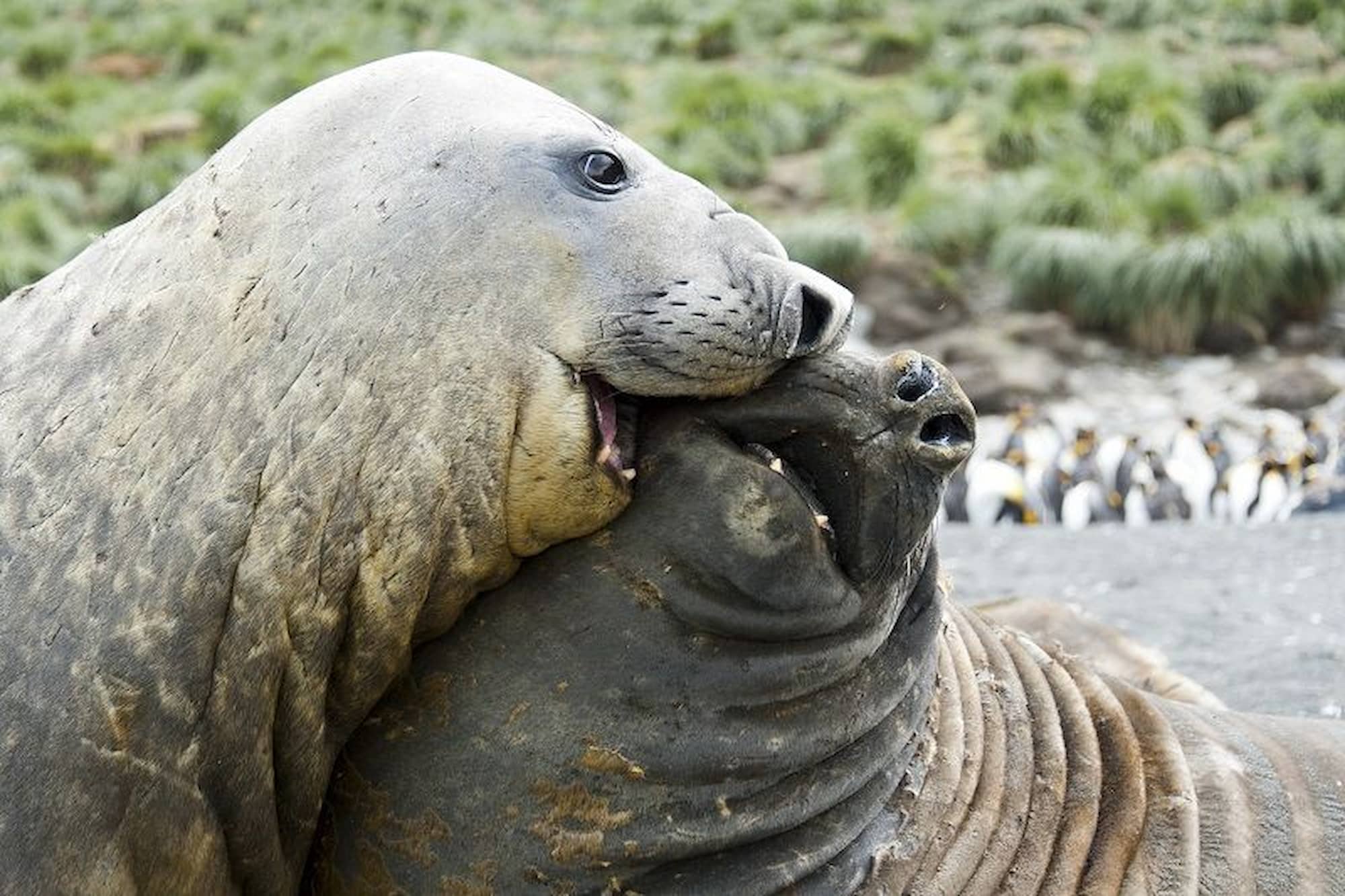
Elephant seal season in South Georgia is loud, chaotic, and one of the island’s greatest spectacles.
As the season settles into its busiest period, in December and January, colonies are at their fullest. You’ll see penguin chicks waddling and fur seals becoming more numerous along the beaches. Birdlife, meanwhile, is in constant movement across both island groups. In the Falklands, this is an excellent time to see Rockhopper, Gentoo, Magellanic, King, and even Macaroni Penguins, often within relatively short distances of one another.
Toward the latter part of the season, the focus moves slightly offshore. Whale sightings tend to increase in the surrounding waters, particularly around South Georgia, while penguins move through moulting cycles along the beaches and fur seal pups are very curious and active. With less snow on the ground, it’s an excellent time for hiking.
Why Is South Georgia Becoming More Popular?
South Georgia has traditionally attracted seasoned polar travellers, the kind of people who had already been to Antarctica once and wanted to go deeper the second time around. Recently, though, we’ve seen a most noticeable change: more first-time Antarctica guests are choosing to include it from the start.
Part of that comes down to awareness. Wildlife photography from South Georgia has become more widely shared, documentaries have highlighted the scale of the colonies, and expedition cruising itself feels far less mysterious and a lot more feasible than it once did. Travellers are doing more research, asking more detailed questions, and understanding what makes these islands different.
It was actually something Tara noticed during her trip, as well.
“There were definitely more younger travellers than I expected,” she said. “People who had decided that if they were coming all this way, and investing in an Antarctica expedition, then they wanted to do it properly and include everything.”
Even with that growing interest, the experience does not feel crowded. Visitor numbers are carefully regulated under IAATO guidelines, with limits on how many passengers can be ashore at any given time. Biosecurity checks are thorough, and landing schedules are managed closely by expedition teams.
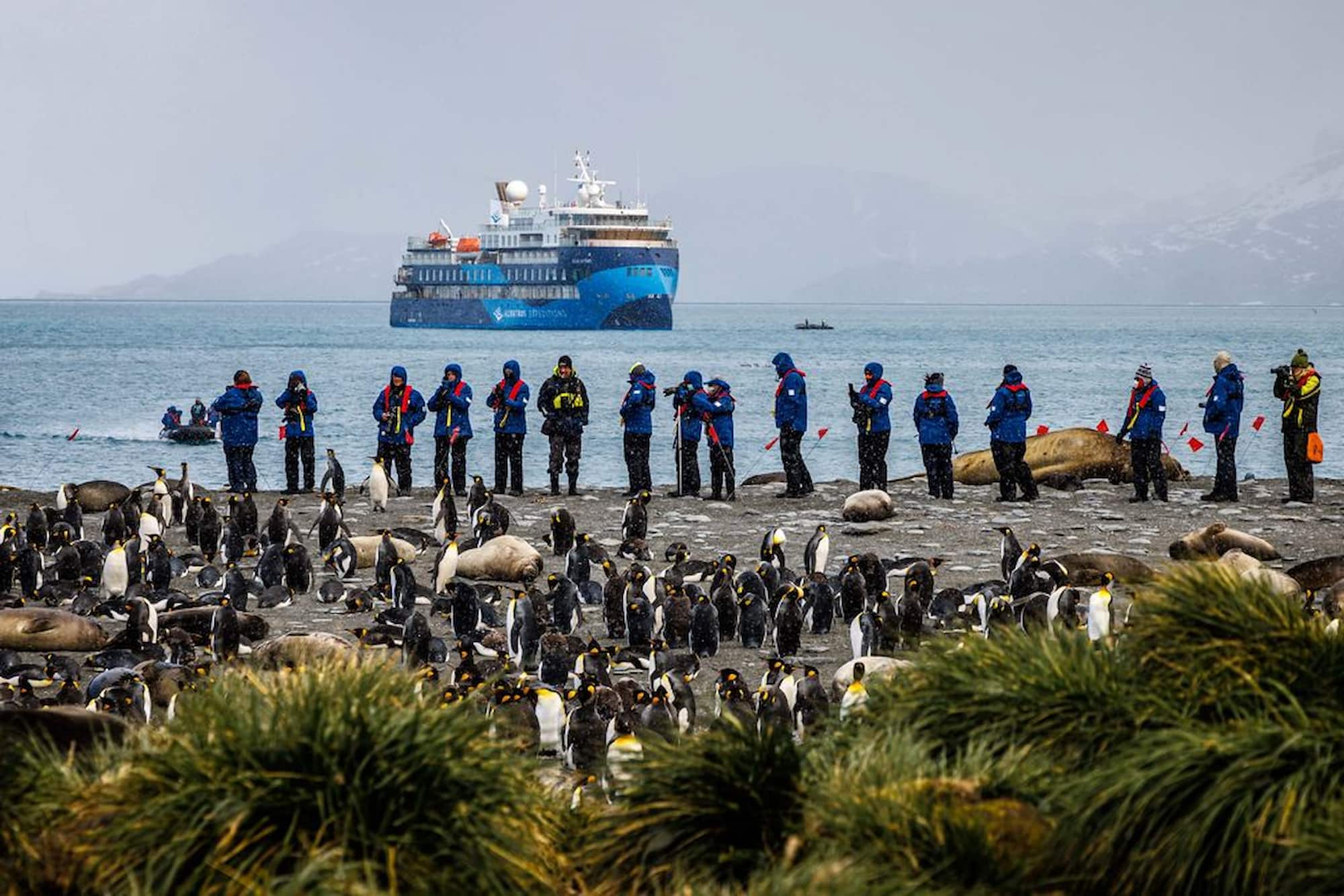
Although South Georgia is gaining popularity, it still feels measured and remarkably calm once you step ashore.
→ The Cost of an Antarctica Cruise: What to Expect in 2026
Meeting Researchers Along The Way
On Tara’s voyage, researchers finishing fieldwork in South Georgia were given passage to the Falklands, something that happens quite often during the summer.
“It was really fascinating,” she said. “You’re travelling through this extraordinary place, and then you’re sitting at dinner with scientists who’ve spent months studying bird populations and recovery projects. It makes the whole journey feel so much more connected.”
Expedition ships often assist with transport logistics where possible. It’s a practical way tourism and research intersect in a remote part of the world.
How Physically Demanding Are The Landings?
For many travellers, one practical question lingers: how strenuous are the landings?
It’s a question Tara and the rest of our experts at Viva Expeditions are used to answering.
“People imagine it’s going to be extreme because the landscapes are,” Tara says. “In reality, most landings are steady walks over uneven ground rather than full-on hikes. You step off a Zodiac, follow marked paths, and spend time standing and observing. If you’re reasonably mobile and comfortable walking on beaches or gentle slopes, you’ll be absolutely fine.”
Landings are always weather dependent, and terrain varies from flat beaches to short inclines, but they are not endurance treks. Expedition teams move at a measured pace, and there is always flexibility built into the schedule. There are also special activities like kayaking to enjoy.
For those wanting to push a little further, there are two distinct Shackleton experiences worth knowing about.
The Shackleton’s Walk is an approximately 6km (3.7 mile) hike tracing Shackleton’s final footsteps before he reached help, from Fortuna Bay to the abandoned whaling station at Stromness. The route crosses a mountain pass and takes around three to four hours, with remarkable views throughout. It’s typically offered as a “surprise” activity when conditions allow, and requires a moderate level of fitness. For those opting out, there are always gentler alternatives nearby, with historic sites to explore and plenty of wildlife to spot at a slower pace.
On select expeditions, there is also the option to attempt the full Shackleton’s Crossing, a 35 to 50km multi-day traverse crossing glaciers and alpine passes over two to three days, with the exact distance depending on conditions. This is a serious undertaking that must be booked well in advance and requires prior alpine climbing experience.
“Completing Shackleton’s Walk was one of the highlights of my whole 21-day expedition cruise. I am in awe of Shackleton’s survival story, so to have been able to hike the last pass — trying to imagine what it was like for him to come over the ridge, and hear the sounds of the whaling station knowing there was now hope of rescue — was one of those pinch-me moments.”
→ 10 Questions About Expeditions to Antarctica – What to Know Before You Go
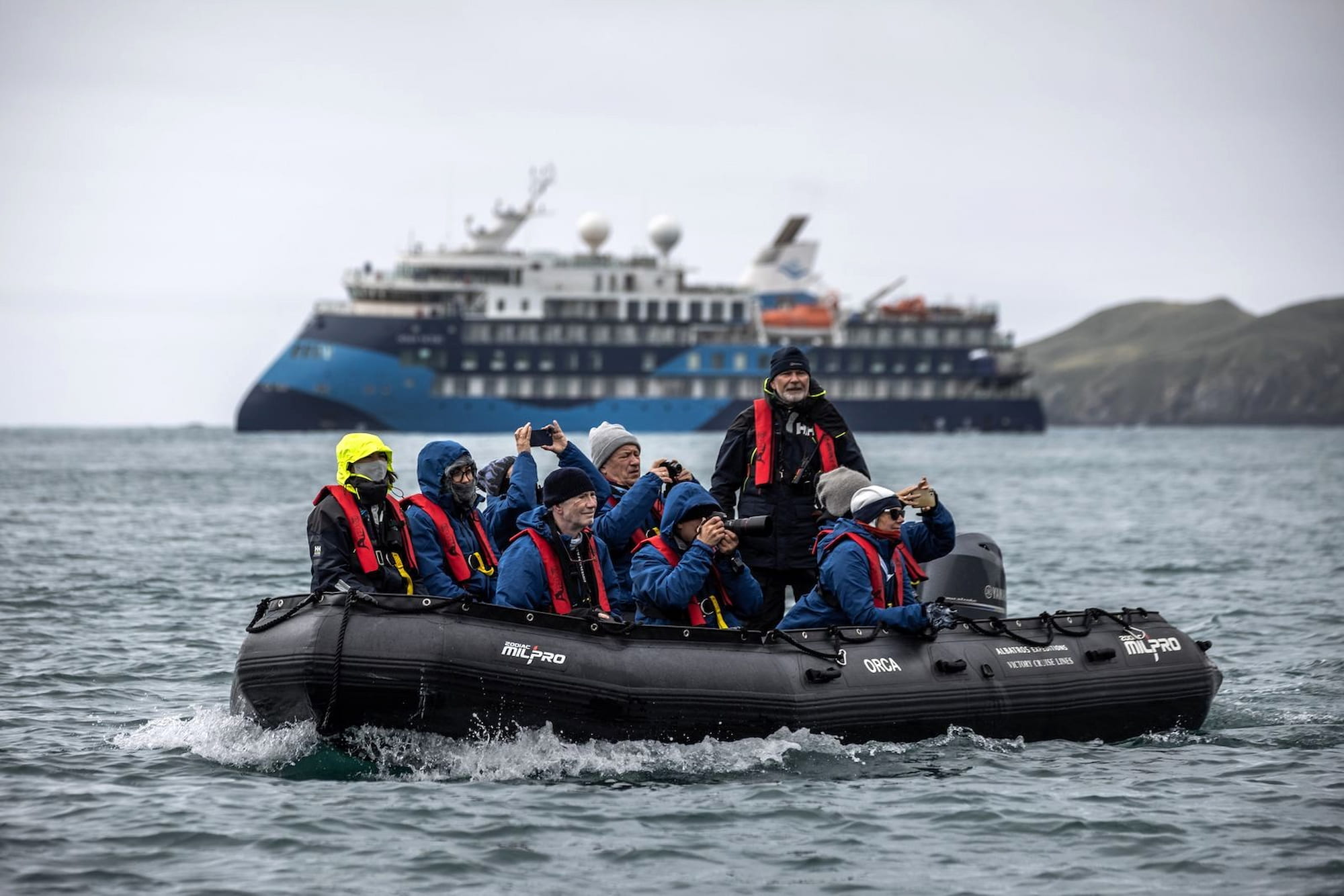
Getting in and out of Zodiacs requires a bit of balance and flexibility, but there are always experienced hands ready to help.
What Does A Falklands And South Georgia Itinerary Look Like?
Some itineraries, like this 22-day voyage, begin in Montevideo before sailing south to join the Southern Ocean route. Others, like our Spirit of Shackleton Expedition, depart directly from Ushuaia.
Either way, the first few days are spent at sea, settling into life onboard, attending briefings and lectures, and scanning the horizon for albatross, petrels, and the occasional whale.
The Falklands are usually the first landings. You might spend two or three days here, combining wildlife sites with time in Stanley. One morning could see you walking among Rockhopper and Gentoo penguins; the next, exploring the museum or visiting historic battle sites that shaped the islands’ identity.
From there, the ship turns southeast toward South Georgia. The crossing typically takes a couple of days, and the seabird life often intensifies as you approach.
South Georgia itself allows for several full landing days. They might include St. Andrews Bay with its vast King Penguin colony, Salisbury Plain where elephant seals run amok, and Grytviken to visit Shackleton’s grave and the museum. Each bay feels a little different: some are broad and wildlife-heavy, others narrower and backed by sharp, glaciated peaks.
After South Georgia, the ship heads southwest toward the South Shetland Islands and the Antarctic Peninsula proper. That crossing takes time, but by this stage, you've already experienced two entirely distinct ecosystems before even reaching Antarctica.
From there, the expedition continues with multiple days exploring ice-filled bays, penguin rookeries, and glacier-lined channels before crossing the Drake Passage back to South America.
Or of course, you may opt for a voyage that does all of the above, just in reverse...either way, it will be one epic adventure.
→ What Activities Can I do in Antarctica?
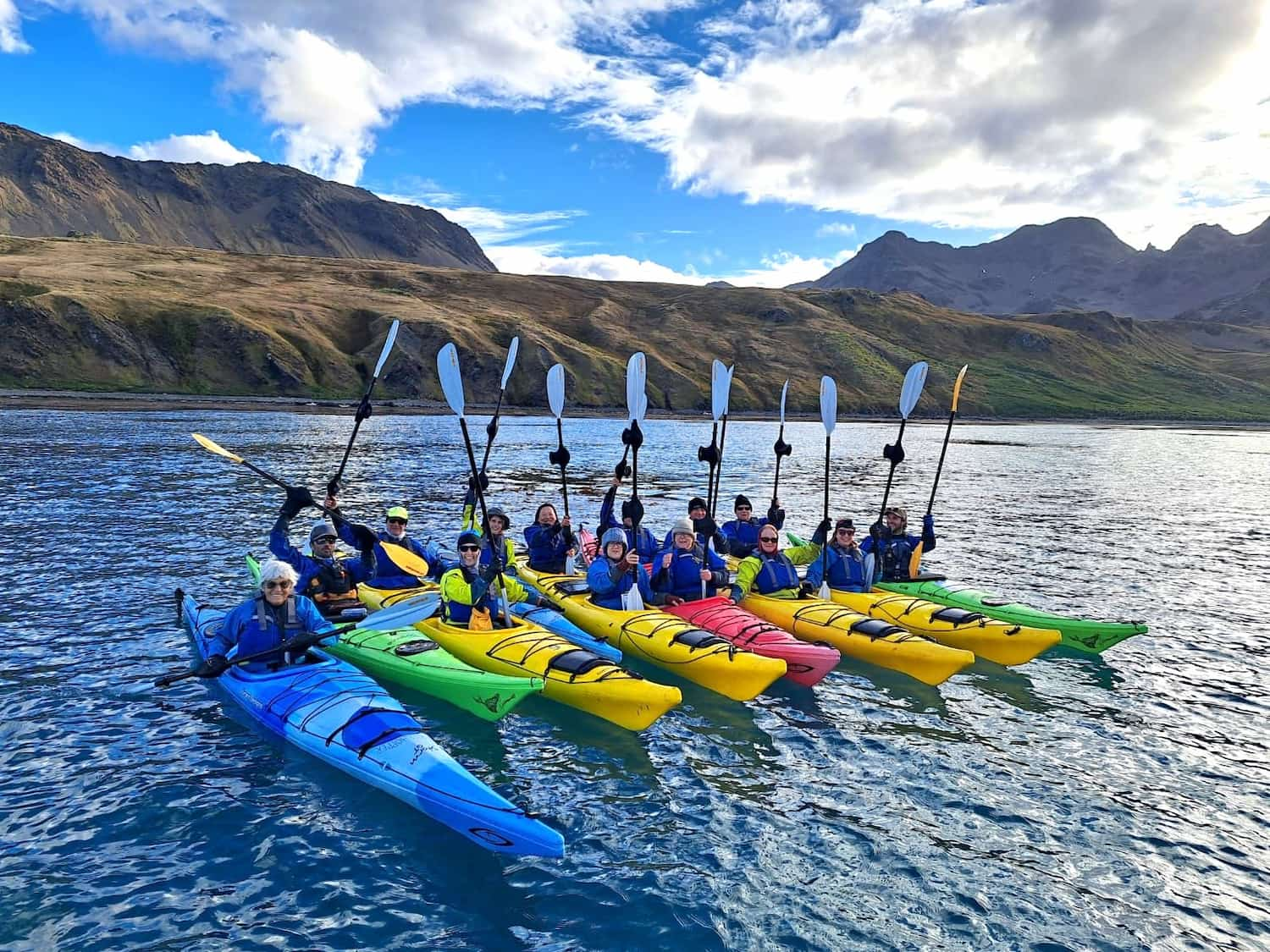
Sea kayaking is a popular add-on in Antarctica, with options ranging from a single paddle to a full kayaking programme across multiple days.
Planning Your South Georgia Expedition With Viva Expeditions
At Viva Expeditions, we focus on matching the right itinerary to the way you want to travel. Some guests are drawn primarily to Antarctica’s ice and glaciers. Others are especially interested in wildlife concentrations, in which case South Georgia often becomes central to the decision. If you are already travelling this far south, it is worth considering what lies along the way.
→ See all our South Georgia and the Falklands Expeditions
If you would like to talk through your options, our Destination Specialists would be delighted to help you weigh up the routes, timing, and ship styles to find the right fit.
Reach out to Viva Expeditions, and we’ll help you build a Southern Ocean journey that feels well-planned and genuinely aligned with what you want to experience.
Laura Pattara
Laura Pattara has spent more than a decade writing about polar cruising at Viva Expeditions. While she has not yet set foot on the southern ice herself, she has mastered the art of turning expert accounts and field notes into guides that feel like the next best thing. Laura has a soft spot for penguins, perfectly packed duffel bags, and a well-earned cocktail in a wild place.
|