
9 days
Jewels of Zambia: South Luangwa & Victoria Falls
Experience the untamed wilderness and breathtaking landscapes of South Luangwa National park and Victoria Falls in one extraordinary journey.
What makes Zambia one of Africa’s most reliable places to see leopards?
If you have recently watched the latest David Attenborough documentary, Kingdom, you’re not alone in considering Zambia for your upcoming African safari. If you have yet to see the stellar documentary, it is well worth watching (you can find it here.)
The series has put a spotlight on one particular corner of Zambia, the South Luangwa National Park, focusing specifically on its leopards. The documentary is beautifully filmed, gripping, and very honest about what life looks like for predators trying to raise cubs in such a competitive landscape.
Aside from blowing you away with its breathtaking cinematography, the programme sparks a very practical question.
If you did want to see leopards in Zambia, what would that actually involve?
Given we’re such huge fans of Zambia here at Viva Expeditions, we’ve created this guide to help you better understand what leopard safari trips are all about. We’re not here to offer guarantees or grand promises. Instead, we outline everything that makes Zambia such a stellar safari destination for leopard sightings, covering the kind of experience you can expect, where your chances of seeing these elusive cats are highest, and how to plan your trip around seasons, timing, and practical logistics.
Here’s what we’ll cover.
Why Zambia Works So Well For Leopard Spotting
South Luangwa National Park: Where It All Comes Together
Join A Leopard Safari In Zambia With Viva Expeditions
A Morning to Remember (by Robin Pope Safaris)
FAQs About Leopard Safaris In Zambia
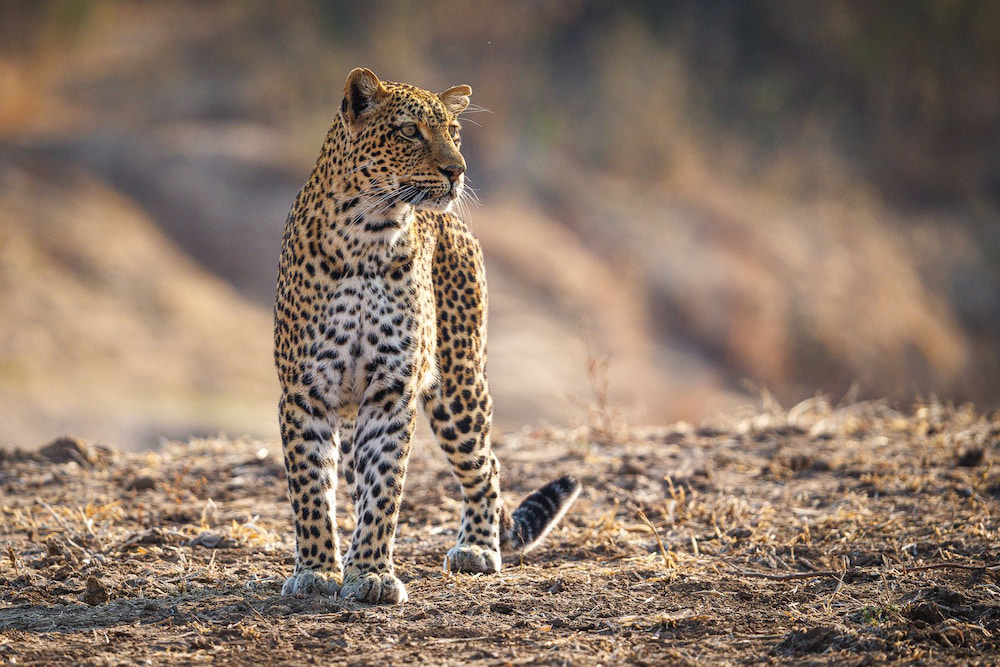
For many travellers hoping to see leopards in Zambia, South Luangwa is where planning usually begins.
Zambia is well-known among wildlife experts as one of Africa’s most reliable places to encounter leopards in the wild. A handful of practical factors explain why:
River-based habitat rather than open savannah
Much of Zambia's prime leopard country, particularly in South Luangwa National Park, is shaped by permanent rivers. The Luangwa River nourishes dense riverine woodlands with very large, mature trees, loads of shaded river banks, and thick cover, just the kind of environment leopards thrive on. Compared with wide, open savannah landscapes elsewhere in Africa, this heavily wooded terrain suits leopard behaviour far better.
There’s plenty of vertical cover here, not just hiding places at ground level.
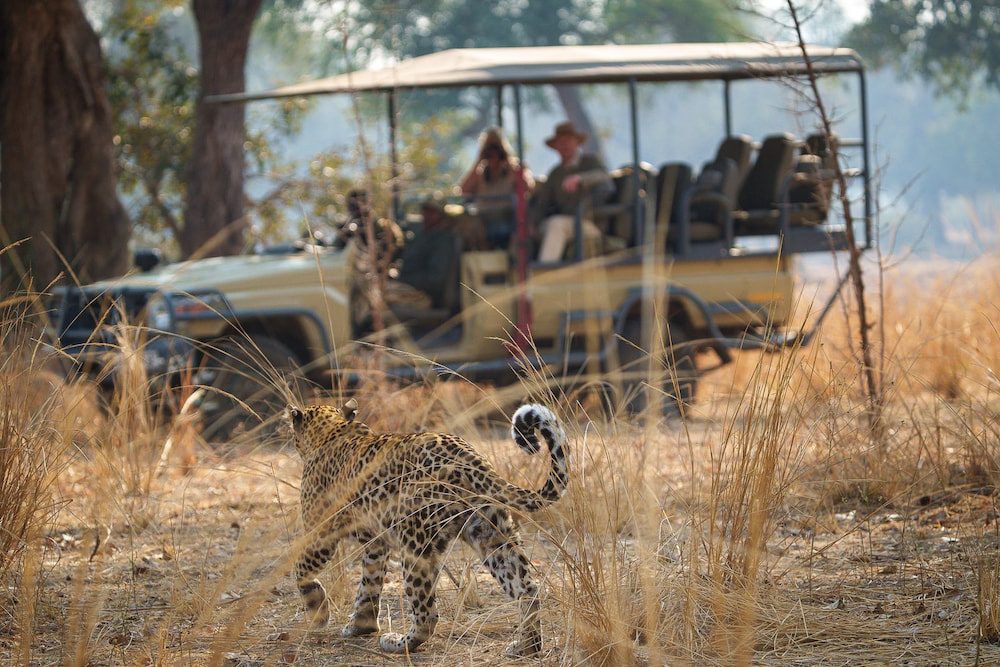
Leopards are among the most arboreal of all the big cats. Unlike lions, for example, that will climb in a pinch, leopards actually prefer and have superior confidence in trees, using them to rest, stash kills away from other sneaky predators, and to survey their surroundings. The tall tree cover of South Luangwa gives leopards frequent access to elevated resting places and, as a result, they are often seen during daylight hours, typically stretched out along a branch after a busy night of hunting.
In many other parts of Africa, where suitable trees are less abundant or more widely spaced, leopard sightings are more likely to occur after dark, often as animals cross roads or game paths during night drives.
Abundant prey and compact territories
The Luangwa Valley supports healthy populations of the kind of prey leopards favour, like impala, puku, bushbuck, and other medium-sized antelope species. Because food is so reliable here and water is never far away, leopards don’t really need to roam across vast distances.
And since leopards don't need to cover huge distances, neither do you.
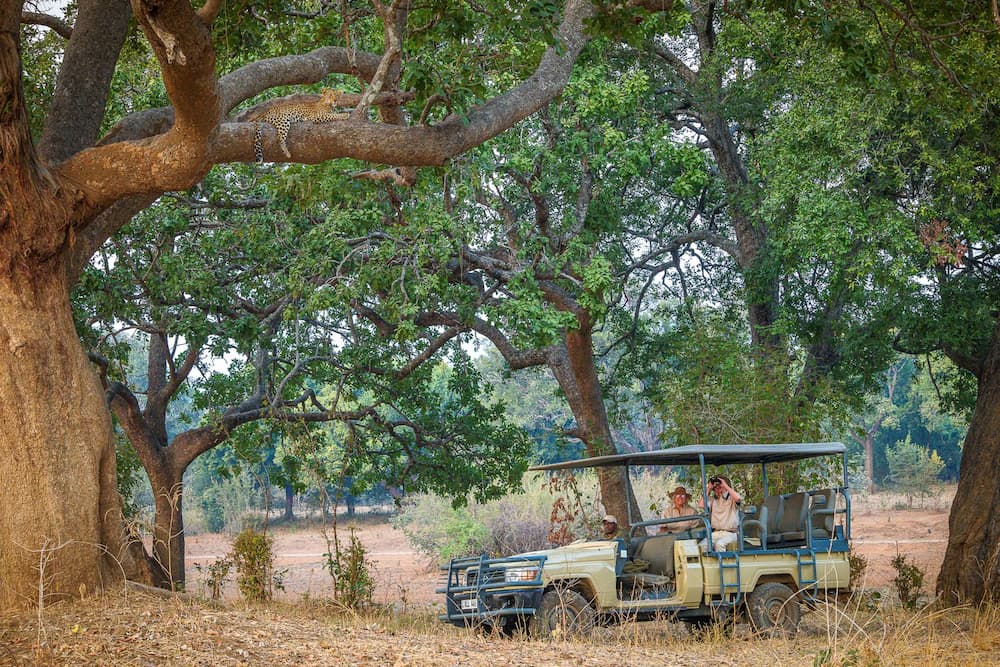
On a Zambian safari in South Luangwa National Park, you spend less time driving around and more time in well-known hangout spots.
Guiding here is focused on experience, not radio contact.
The deep knowledge of the reserve and its leopards means Zambian guides also don’t rely on shared radio calls for sightings, something that’s common in bigger and more touristed wildlife reserves across Africa. Many work the same sections of the park year after year, learning which trees are used repeatedly, where kills are often dragged, and how individual leopards tend to move through their territory over time.
That approach rewrds patience over speed and distance, and it also means that when you do come across a leopard, it is often on your own terms. More often than not, your vehicle will be the only one there, and you won’t have the sense that a line of other 4WDs is about to descend on your spot.
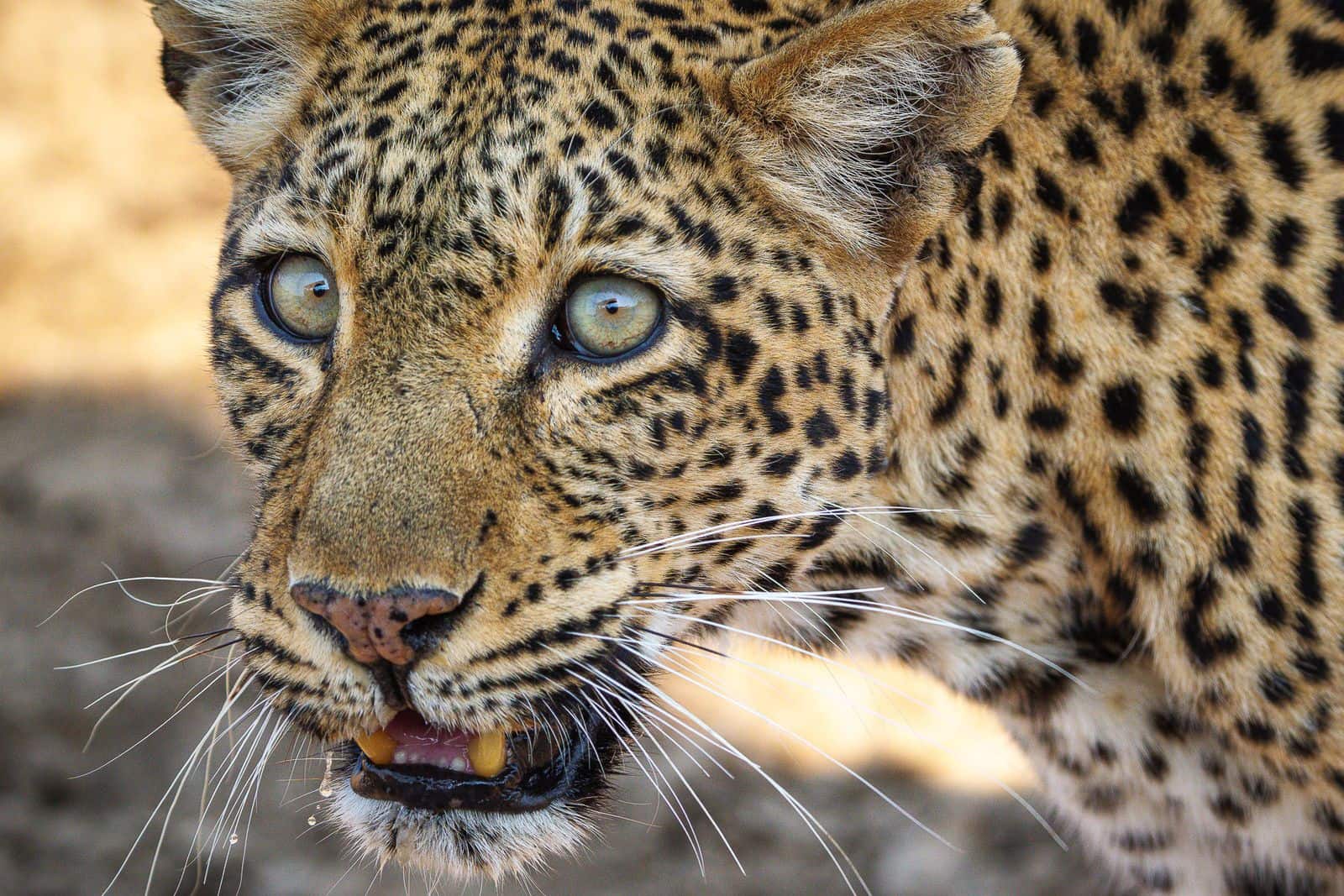
Experienced guides often scan particular tree species first, as leopards tend to reuse the same resting and feeding trees over many seasons.
Night drives here are an added highlight.
South Luangwa might offer great chances of seeing leopards draped over trees during the day, but it also offers night safaris, exponentially increasing your chances of a sighting.
Zambia, overall, is a beacon for predator conservation
South Luangwa National Park reflects decades of consistent wildlife management and conservation in Zambia. That long-term approach has helped create an environment where predators are not under constant pressure and competition is far more balanced.
As a result, leopards here are accustomed to vehicles that move predictably and keep a respectful distance, and, over time, this has shaped how they respond to safari activity. Rather than retreating at the first sign of a vehicle, many remain settled, allowing you to really soak up a close-up sighting.
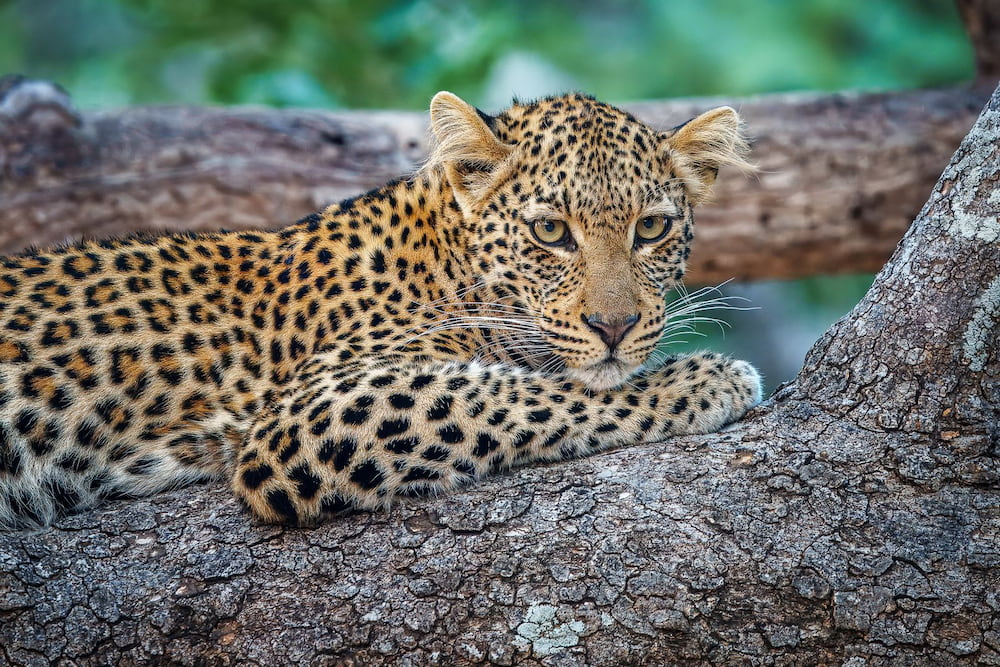
South Luangwa boasts one of the highest observable leopard densities in southern Africa, largely thnaks to habitat preservation.
Although all of the above-mentioned factors exist in one form or another in different parts of Zambia, South Luangwa is where they come together more consistently than anywhere else.
Since the park's layout tends to naturally funnel wildlife along familiar routes and locations, you will typically visit certain locations repeatedly. You'll also notice the same tracks being checked, the same stretches of road where guides slow down, and the same trees always worthy of another look. It is not unusual to encounter the same leopard more than once, and that brings a sense of continuity to your safari.
Within South Luangwa, one area comes up repeatedly when leopards are mentioned, and that’s Nsefu.
Nsefu sits along a particularly fertile stretch of the Luangwa River and has supported established leopard territories for decades. Guides working here tend to have a clear sense of what has been moving through recently and where activity has been building. This perspective is one of the reasons the area was chosen as the primary filming location for Kingdom, as you probably noticed in the trailer video.
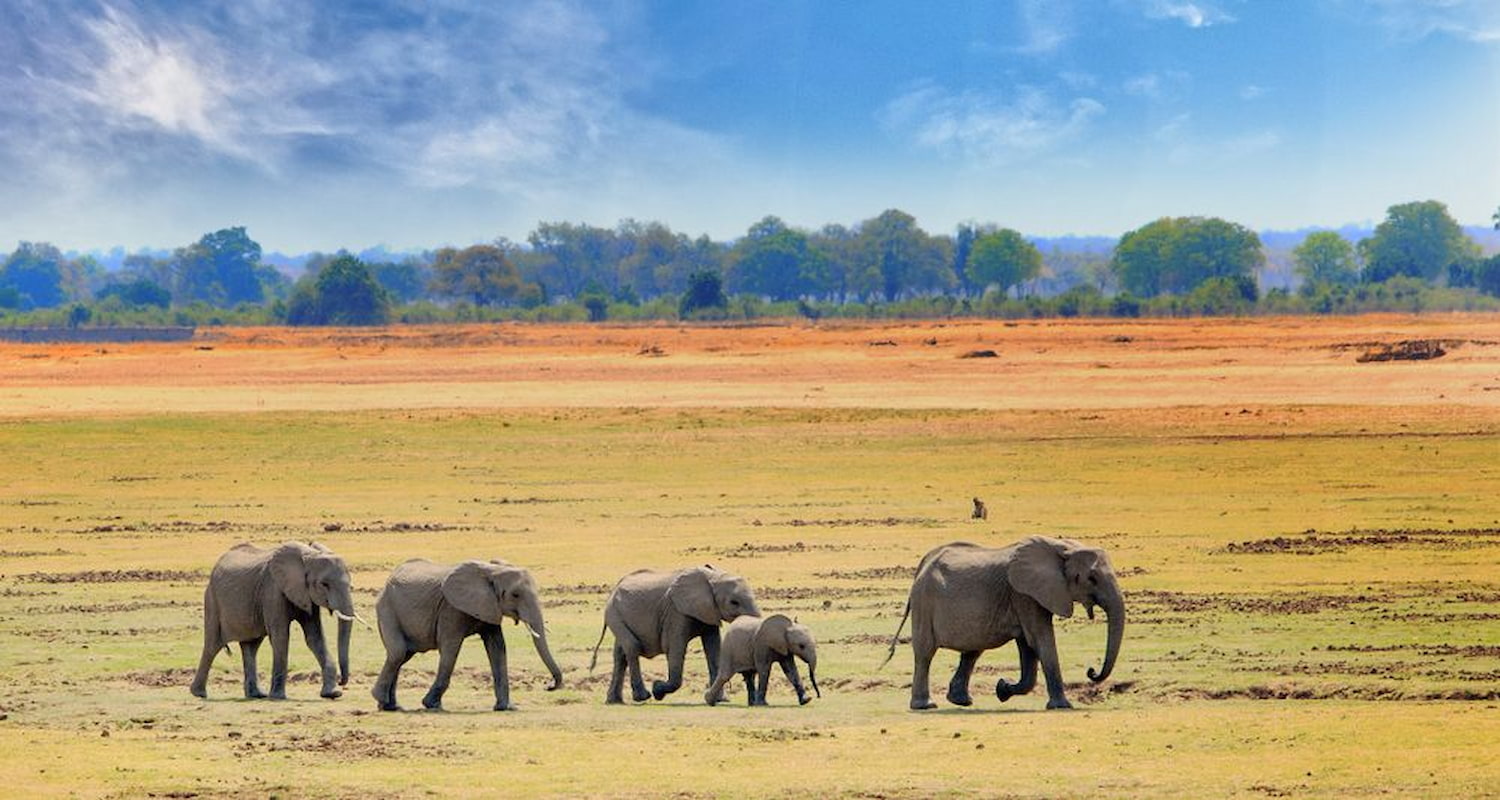
Leopard safaris in Zambia might be having a moment right now, but South Luangwa offers far more than a single headline species. Lions, wild dogs, elephants, buffalo, and hyenas are regularly seen, supported by dense antelope populations and rich birdlife along the river.
We offer several Zambia tours that would be ideal for your leopard-spotting endeavours.
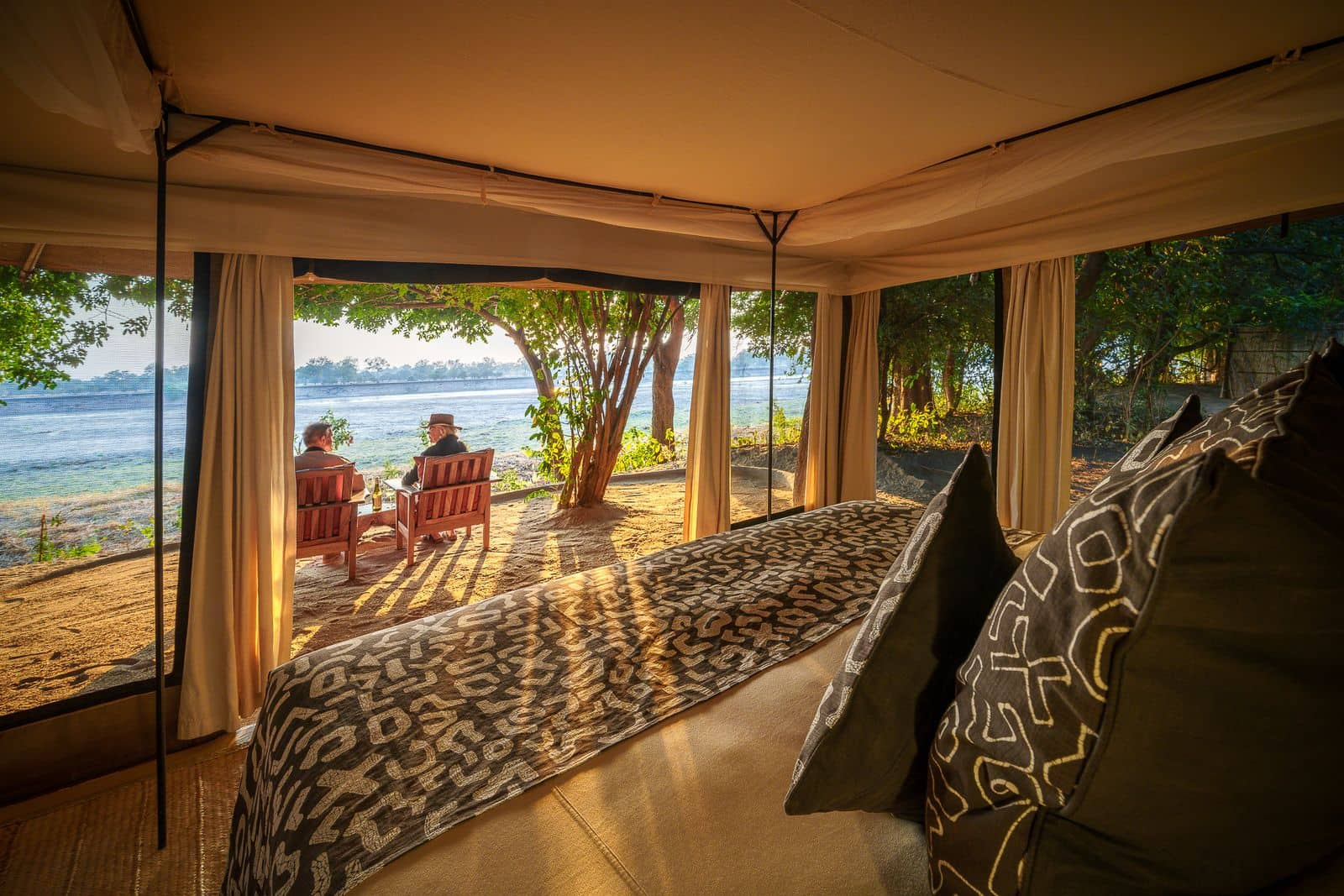
First up is the immersive walking safari through the Luangwa Wilderness Trails, mixing your days with walking safaris and game drives and staying at a mobile camp along the way, right in the heart of Nsefu.
→ Why a walking safari is the best way to experience African wildlife
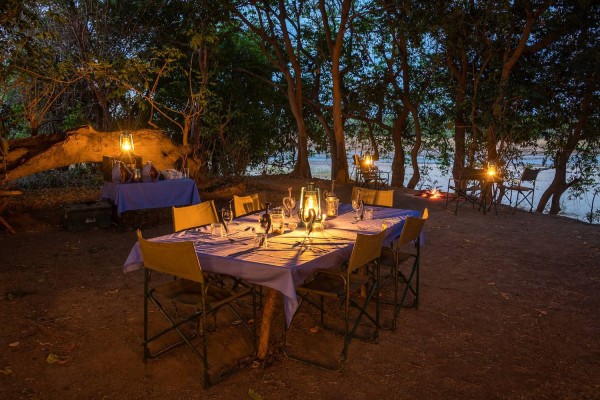
Walking tours staying in mobile camps offer arguably the most immersive safari experience in Zambia.
Our 10-day Ultimate Safari combines South Luangwa with the Lower Zambezi, offering a much wider scope and also including a walking safari experience. You can also soak up more of the country’s highlights on a Jewels of Zambia Safari that includes a visit to jaw-dropping Victoria Falls.
For the ultimate all-encompassing experience, check out our Taste of Zambia Tour, where culinary delights complement game drives, boat rides and walks in South Luangwa, more of the same on the Lower Zambezi, also culminating in a visit to Victoria Falls.
The one thing that all our Zambia tours have in common is that none of them aim to rush you through a whirlwind experience. The emphasis is on staying long enough in each location for familiarity to develop and to increase chances of leopard spotting.
After several months volunteering at a rural school near Mfuwe, Katie and David decided to end their time in Zambia with a short safari in South Luangwa. They stayed at Tena Tena Camp with a simple hope. If they were fortunate enough, they might just see a leopard.
On their first morning, their guide noticed baboons calling at dawn and knew well enough to follow the sound. Not long after, they came across a mother leopard, and her cub stretched out in a tree, bellies full from a recent kill. Later, the pair climbed down and walked along the road, barely acknowledging a few rather unimpressed warthogs.
Later that same morning, another leopard appeared. This one had a name.
“That’s Olimba,” the guide said, identifying a leopard many people now recognise from Kingdom. Seeing her in the wild felt surreal, like stepping into a story they already knew.
As the drive back to camp drew to a close, a fourth leopard crossed the road, paused briefly, and disappeared into the bush.
Four leopards in one morning, for two people who had only been hoping to see one.
Welcome to Zambia!
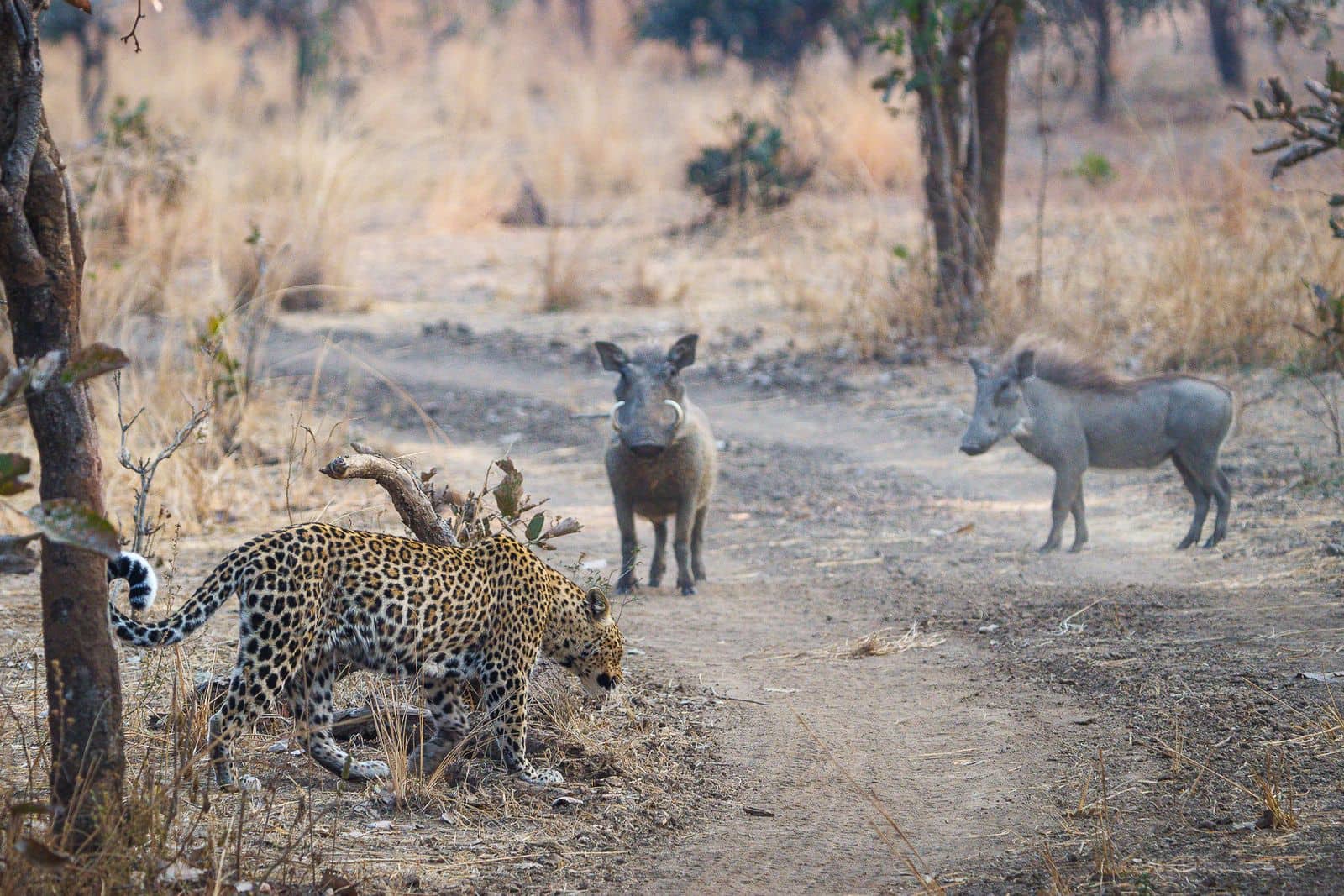
While hunting for Zambia’s elusive big cats, you’ll also encounter the diverse wildlife roaming South Luangwa.
When is the best time to see leopards in Zambia?
The dry season, from June to October, is generally the most reliable period. Vegetation thins, visibility improves, and leopards are more easily followed around water sources and established paths.
Is South Luangwa National Park the best place for leopard sightings in Zambia?
Generally, yes, South Luangwa is widely regarded as Zambia's most reliable destination for leopard sightings.
Are leopard sightings guaranteed on safari?
No wildlife sighting can ever be guaranteed. That said, spending several nights in South Luangwa during the dry season offers some of the best chances for seeing leopards in all of Africa.
What makes Nsefu particularly good for leopards?
Nsefu supports established leopard territories and has been observed closely over many years.
Do night drives improve the chances of seeing leopards?
They sure do! Leopards are far more active after dark, so although you might spot one lazying around on a tree during the day, join a night drive for the chance of seeing one on the move.
How many nights should I allow for a leopard-focused safari?
Three to four nights in one area is a sensible minimum, so most itineraries focus on, say, two different bases over a week or 10 days.
Is Zambia suitable for a first safari focused on predators?
Yes! Zambia is not only home to large predator colonies but also offers world-class guiding, fewer vehicles, and a more immersive pace than many busier safari destinations.
At Viva Expeditions, our Zambia tours are designed with all these considerations in mind. If you would like to talk through options, our Destination Specialists are always happy to help you plan a trip that suits your priorities and travel style. Get in touch today!
Laura PattaraLaura Pattara has guided overland trips across Africa and now focuses her writing on the continent for Viva Expeditions. She once camped beneath a marula tree that an elephant tore apart during the night, yet somehow she still sleeps best in a tent. But make it glam! From sunrise balloon rides over the Serengeti to following the rhythms of wildlife migrations, Laura brings the wild heart of Africa to life with warmth, depth, and the occasional muddy boot. |
Experience the untamed wilderness and breathtaking landscapes of South Luangwa National park and Victoria Falls in one extraordinary journey.
Luxury Tours: We design unique luxury holidays that allow you to experience the most spectacular and remote parts of the world. From the best hotels and lodges to luxury small ship cruises and exclusive heli-tours.
Discover Zambia's pristine wilderness and experience award-winning luxury at Puku Ridge Camp, Chiawa Camp, & Old Mondoro Camp, where wildlife awaits.
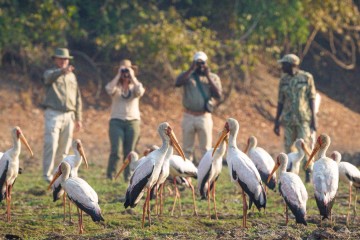
Experience Zambia on foot—luxury camps, expert guides, and unforgettable encounters in South Luangwa’s untamed beauty.